Integrating AI-Powered Automation into Your App Features

You’re likely aware of the growing trend of AI-powered automation in app development, and you may be wondering how to leverage this technology to enhance your app’s features. As you consider integrating AI-powered automation, you’ll need to assess your app’s capabilities and identify areas where automation can improve user experience and streamline processes. By doing so, you can create a more efficient and engaging app that sets you apart from the competition and drives business success.

Key Takeaways:

  • Integrating AI-powered automation into your app features can significantly enhance user experience by providing personalized and efficient interactions, such as automated chatbots and tailored content recommendations.
  • A key benefit of AI-powered automation is its ability to streamline processes and reduce manual labor, allowing developers to focus on more complex and creative tasks, and improving overall app performance and reliability.
  • To successfully integrate AI-powered automation, it’s vital to identify areas of your app where automation can add the most value, such as data analysis, customer support, or content generation, and develop a clear strategy for implementation.
  • AI-powered automation can also help improve app security by detecting and preventing potential threats, such as fraud and data breaches, through advanced machine learning algorithms and real-time monitoring.
  • As AI technology continues to evolve, it’s important to stay up-to-date with the latest developments and advancements in AI-powered automation, and consider how these can be leveraged to drive innovation and growth in your app and business.
Core AI Integration Fundamentals

The foundation of integrating AI-powered automation into your app features lies in understanding the underlying principles of AI and its applications. You will need to consider how AI can enhance your app’s functionality and user experience.

Machine Learning Model Selection

To determine the best approach for your app, you should evaluate different machine learning models and their suitability for your specific use case, considering factors such as data quality and complexity.

API Architecture Planning

Central to a successful AI integration is designing a robust API architecture that can support the exchange of data between your app and the AI system, ensuring seamless communication and efficient processing.

Consequently, as you plan your API architecture, you will need to consider factors such as scalability, security, and data governance, ensuring that your app can handle the increased traffic and data exchange that comes with AI-powered automation, and that you can maintain control over your users’ data and ensure its privacy and integrity.

Automation Framework Design

There’s a need to carefully plan your automation framework design to ensure seamless integration of AI-powered automation into your app features. You will need to consider your app’s architecture, scalability, and security to create an effective design.

Workflow Mapping

By analyzing your app’s workflows, you can identify areas where automation can bring the most value, streamlining your processes and improving efficiency. You will be able to visualize your workflows and pinpoint bottlenecks.

Process Identification

Framework development begins with identifying the processes that can be automated, allowing you to focus on high-impact areas. You will need to assess your app’s functionality to determine which tasks can be automated.

And as you research deeper into process identification, you will discover that it involves evaluating your app’s user interface, APIs, and data flows to determine the best automation approach. You will need to consider factors such as data formats, protocols, and system compatibility to ensure smooth automation integration, enabling you to make informed decisions about your automation strategy.

Feature Implementation Strategy

After finalizing your AI-powered automation features, you can start implementing them into your app. You can find a comprehensive guide on how to integrate AI into your app by visiting A guide on how to integrate AI into your mobile app to learn more about the process.

User Interface Integration

Above all, your user interface should be intuitive and seamless, allowing users to interact with AI-powered features effortlessly. You will need to design an interface that is both functional and visually appealing, making it easy for your users to navigate and use your app’s features.

Backend System Configuration

Around the time you start implementing AI-powered automation, you will need to configure your backend system to support these features. You will need to ensure that your system can handle the increased complexity and data processing requirements of AI-powered automation.

User experience is paramount when it comes to backend system configuration. You should consider how your backend system will impact the performance and functionality of your app’s AI-powered features, and make adjustments accordingly to ensure a smooth and efficient user experience. You will need to test and optimize your backend system to ensure that it can handle the demands of AI-powered automation, and make any necessary adjustments to your system architecture or infrastructure.

Data Processing Components

Unlike traditional automation methods, AI-powered automation relies on complex data processing components to drive your app’s features. You will need to integrate these components seamlessly to unlock the full potential of your app.

Input Data Management

One of the key aspects of data processing is managing the input data that fuels your AI-powered automation. You must ensure that your app can handle various data formats and sources, allowing you to leverage the power of AI to enhance your app’s functionality.

Output Handling Mechanisms

Before designing your app’s output handling mechanisms, you should consider how your AI-powered automation will generate and process output data. You need to ensure that your app can handle the output effectively, providing your users with relevant and useful information.

Data handling is a vital part of output handling mechanisms, as you will need to process and analyze the output data generated by your AI-powered automation. You should design your app to handle this data efficiently, using it to improve your app’s performance and provide your users with a better experience. As you integrate AI-powered automation into your app, you will need to consider how your output handling mechanisms will impact your app’s overall functionality and user experience.

Security and Privacy Measures

Once again, you’ll need to consider the security implications of integrating AI-powered automation into your app features, ensuring that your users’ data is protected and their privacy is respected.

Data Protection Protocols

To safeguard your users’ sensitive information, you should implement robust data protection protocols that adhere to industry standards and best practices, giving you a solid foundation for secure data handling.

Access Control Systems

For your app to be secure, you need to establish access control systems that restrict unauthorized access to sensitive areas, allowing only authorized personnel to manage and maintain your AI-powered automation features.

This access control system will enable you to assign roles and permissions, monitor user activity, and detect potential security breaches, giving you greater control over your app’s security and allowing you to respond quickly to any potential threats, ensuring your users’ data and privacy are protected at all times, and maintaining trust in your app.

Performance Optimization

Not only does AI-powered automation enhance your app’s features, but it also improves overall performance, allowing you to provide a better user experience.

Resource Management

At this stage, you will be able to allocate resources more efficiently, ensuring your app runs smoothly and effectively, which in turn, helps you achieve your goals.

Scaling Solutions

About the time you decide to integrate AI-powered automation, you will need to consider scaling solutions that can handle increased traffic and demand, allowing your app to grow with your user base.

It is vital to consider the scalability of your app when implementing AI-powered automation, as you will want to ensure that your app can handle the increased demands of automated processes, and you can do this by selecting solutions that can adapt to your growing needs, allowing you to focus on developing new features and improving your app’s overall performance, ultimately benefiting your users.

To wrap up

Taking this into account, you can enhance your app’s functionality by integrating AI-powered automation into your features. You will be able to streamline processes, improve user experience, and increase efficiency. By leveraging AI, you can make informed decisions and drive your app’s success. Your app will become more competitive, and you will stay ahead of the curve in the ever-evolving tech landscape. You can now confidently integrate AI-powered automation to take your app to the next level.

FAQ

Q: What are the benefits of integrating AI-powered automation into my app features?

A: Integrating AI-powered automation into your app features can bring numerous benefits, including enhanced user experience, increased efficiency, and improved accuracy. With AI-powered automation, you can automate repetitive tasks, provide personalized recommendations, and offer real-time insights, ultimately leading to increased customer satisfaction and loyalty. Additionally, AI-powered automation can help you stay ahead of the competition by enabling you to launch new features and services quickly and efficiently.

Q: How do I determine which app features to automate with AI-powered technology?

A: To determine which app features to automate with AI-powered technology, you should start by identifying areas where manual processes are time-consuming, prone to errors, or require significant resources. Consider features that involve data analysis, customer support, or content generation, as these are often ideal candidates for automation. You should also assess your app’s user journey and identify pain points where AI-powered automation can improve the user experience. Furthermore, consider the scalability and flexibility of your app’s architecture to ensure seamless integration of AI-powered automation.

Q: What are the key considerations for ensuring the successful integration of AI-powered automation into my app features?

A: To ensure the successful integration of AI-powered automation into your app features, you should consider several key factors. First, define clear goals and objectives for automation, and ensure that they align with your app’s overall strategy. Next, select the right AI-powered automation tools and technologies that fit your app’s architecture and scalability requirements. You should also prioritize data quality and security, as AI-powered automation relies on accurate and reliable data to function effectively. Finally, establish a robust testing and monitoring framework to ensure that AI-powered automation is working as intended and make adjustments as needed to optimize performance and user experience.

Developing Eco-Friendly Apps with Energy-Efficient AI Models

As you consider developing mobile apps, you’re likely thinking about user experience and functionality. However, you should also prioritize environmental sustainability. Your app’s carbon footprint can be significant, but with energy-efficient AI models, you can reduce its impact. By incorporating eco-friendly design principles and AI technologies, you can create apps that not only perform well but also contribute to a more sustainable future, making your development process more environmentally responsible and appealing to the growing demographic of eco-conscious users.

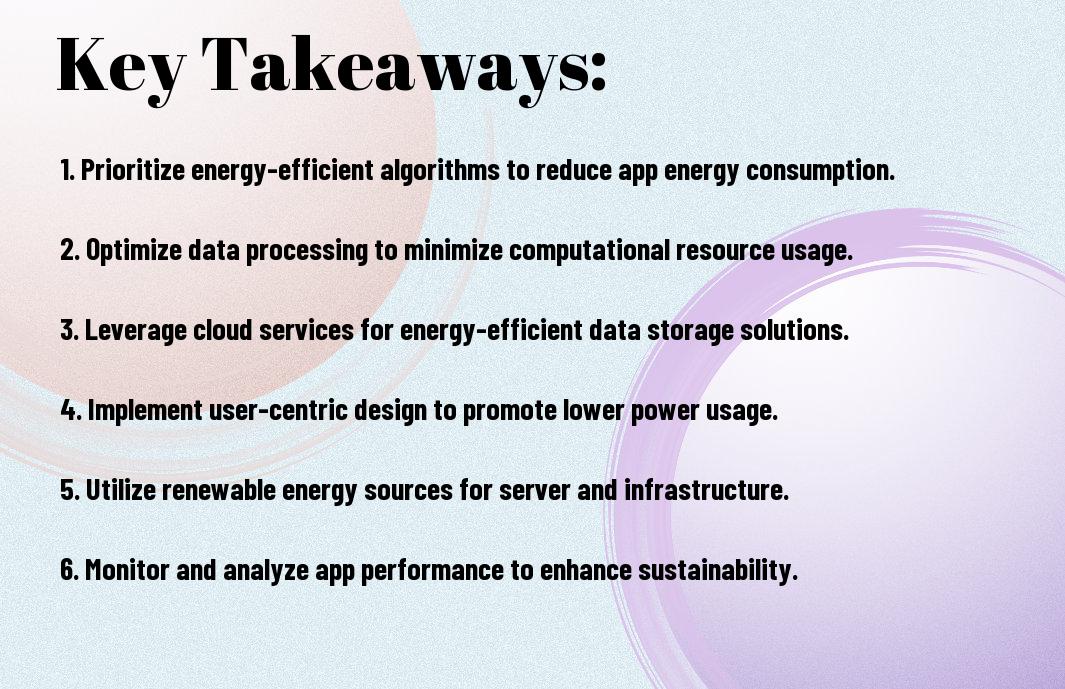
Key Takeaways:

  • Developing eco-friendly apps with energy-efficient AI models can significantly reduce the carbon footprint of digital technologies, contributing to a more sustainable future.
  • Energy-efficient AI models can be achieved through techniques such as model pruning, knowledge distillation, and quantization, which reduce computational requirements without sacrificing performance.
  • Mobile devices and cloud computing platforms can benefit from eco-friendly apps, as they can lead to extended battery life, reduced heat generation, and lower energy consumption.
  • Developers can use various tools and frameworks to design and optimize energy-efficient AI models, such as TensorFlow Lite, Core ML, and Android’s Neural Networks API.
  • By prioritizing energy efficiency in AI model development, developers can create apps that not only minimize environmental impact but also provide better user experiences through faster processing times and improved overall performance.

    Green Software Development Principles

    For developing eco-friendly apps, you need to consider the environmental impact of your software. You can achieve this by following green software development principles, which prioritize energy efficiency and sustainability in your coding practices.

    Energy Consumption Metrics

    Between the various factors that affect energy consumption, you will find that your choice of algorithms and data structures has a significant impact. You can measure energy consumption using metrics such as carbon footprint and energy usage per computation.

    Code Optimization Techniques

    Below the surface of your code, there are opportunities to optimize energy efficiency. You can use techniques such as caching, lazy loading, and parallel processing to reduce energy consumption and improve performance.

    Metrics such as execution time and memory usage can help you evaluate the effectiveness of your code optimization techniques. You can use these metrics to identify areas for improvement and refine your approach to achieve greater energy efficiency in your eco-friendly apps, allowing you to make informed decisions about your coding practices and minimize your environmental impact.

    AI Model Efficiency

    While developing eco-friendly apps, you need to focus on energy-efficient AI models to minimize environmental impact. Your goal is to create models that balance performance and power consumption.

    Model Compression Methods

    With various techniques available, you can reduce model size and computational requirements, making your app more energy-efficient. Your approach will depend on the specific needs of your project.

    Lightweight Architecture Design

    Along with model compression, designing lightweight architectures is vital for reducing energy consumption. You can achieve this by simplifying your models and using fewer resources.

    Model architecture plays a significant role in determining the energy efficiency of your AI models. You can design your models to be more lightweight by using fewer layers, reducing parameter counts, and leveraging transfer learning. By doing so, you can significantly decrease the computational requirements and energy consumption of your models, making your app more eco-friendly and efficient.

    Power Management Strategies

    All your efforts to develop eco-friendly apps can be enhanced by implementing effective power management strategies, which involve optimizing energy consumption and reducing waste. You can learn more about sustainable approaches by visiting Green AI: Exploring Sustainable Strategies for Energy-Efficient Systems and Eco-Friendly Innovations to discover innovative solutions.

    Background Process Optimization

    On the path to creating energy-efficient apps, you will need to optimize background processes to minimize power consumption. You can achieve this by streamlining tasks, reducing unnecessary computations, and leveraging advanced AI models that require less energy to operate.

    Resource Allocation Control

    Along with optimizing background processes, you should also focus on controlling resource allocation to ensure that your app is using system resources efficiently. You can achieve this by implementing smart resource allocation techniques that adapt to changing usage patterns and system conditions.

    In addition, as you examine deeper into resource allocation control, you will find that it involves dynamically adjusting the allocation of resources such as CPU, memory, and network bandwidth to match the changing needs of your app, allowing you to minimize energy waste and optimize overall system performance, which is imperative for developing eco-friendly apps with energy-efficient AI models that you can be proud of.

    Sustainable Cloud Integration

    Not only does sustainable cloud integration play a significant role in reducing your carbon footprint, but it also helps you develop eco-friendly apps with energy-efficient AI models. You can achieve this by choosing cloud services that use renewable energy sources and have a strong commitment to sustainability.

    Green Server Selection

    Selecting the right servers is crucial for your eco-friendly app development. You should consider servers that are designed with energy efficiency in mind, using components that minimize power consumption and reduce electronic waste.

    Data Center Efficiency

    Along with green server selection, you should also consider the efficiency of the data centers that host your app. You can look for data centers that use renewable energy sources, such as wind or solar power, and have implemented energy-efficient cooling systems.

    Indeed, data center efficiency is a key aspect of sustainable cloud integration. You can optimize your app’s performance by using data centers that have implemented advanced cooling systems, such as air-side or water-side economization, which can significantly reduce energy consumption. By choosing an efficient data center, you can minimize your app’s carbon footprint and contribute to a more sustainable future.

    Mobile Device Considerations

    Despite the growing demand for eco-friendly apps, you need to consider the limitations of mobile devices when developing energy-efficient AI models. Your goal is to create an app that not only reduces its carbon footprint but also provides a seamless user experience.

    Battery Impact Analysis

    One of the key factors to consider is the battery life of mobile devices, as your app’s energy consumption can significantly affect it. You should analyze how your app’s features and AI models impact the battery life to make informed decisions.

    Performance-Energy Trade-offs

    Above all, you need to balance your app’s performance with its energy efficiency, as these two factors often have an inverse relationship. You should optimize your AI models to achieve the best possible performance while minimizing energy consumption.

    Considerations for performance-energy trade-offs involve evaluating your app’s requirements and prioritizing features that are imperative to its functionality. You can then optimize your AI models to focus on these key features, reducing energy consumption without compromising the user experience. By doing so, you can create an eco-friendly app that meets your users’ needs while minimizing its environmental impact.

    Testing and Monitoring

    Keep your eco-friendly app’s performance in check by testing and monitoring its energy efficiency. You can learn more about how AI can assist in creating sustainable business models by visiting How can AI assist in creating a sustainable and eco-friendly business model for startups to optimize your app’s environmental footprint.

    Energy Profiling Tools

    Against the backdrop of rising energy consumption, you can utilize energy profiling tools to measure your app’s energy usage and identify areas for improvement, allowing you to make data-driven decisions to reduce your app’s carbon footprint.

    Environmental Impact Assessment

    Environmentally conscious developers like you can conduct thorough assessments to evaluate the potential environmental impacts of your app, from development to deployment, and make informed decisions to minimize harm.

    Tools like life cycle assessments and carbon footprint calculators can help you evaluate the environmental impacts of your app, providing valuable insights to inform your development process and ensure your app is as eco-friendly as possible, enabling you to make a positive impact on the environment with your sustainable app.

    Summing up

    The development of eco-friendly apps with energy-efficient AI models is a significant step towards reducing your carbon footprint. As you commence on this journey, you will be able to create innovative solutions that not only benefit your users but also contribute to a sustainable future. By leveraging your skills and knowledge, you can design apps that minimize energy consumption, making your digital products more environmentally friendly and efficient, ultimately enhancing your impact on the environment.

    FAQ

    Q: What are the benefits of developing eco-friendly apps with energy-efficient AI models?

    A: Developing eco-friendly apps with energy-efficient AI models offers several benefits, including reduced carbon footprint, improved user experience, and increased energy savings. By utilizing AI models that are optimized for energy efficiency, app developers can minimize the environmental impact of their applications while also providing faster and more seamless user interactions. Additionally, energy-efficient AI models can help reduce the strain on device batteries, resulting in longer battery life and reduced electronic waste.

    Q: How can developers optimize their AI models for energy efficiency in eco-friendly app development?

    A: Developers can optimize their AI models for energy efficiency by using techniques such as model pruning, knowledge distillation, and quantization. Model pruning involves removing redundant or unnecessary neurons and connections in the AI model, resulting in a more streamlined and energy-efficient architecture. Knowledge distillation involves transferring knowledge from a large, complex model to a smaller, more efficient one, while quantization involves reducing the precision of model weights and activations to reduce computational requirements. By applying these techniques, developers can significantly reduce the energy consumption of their AI models and create more eco-friendly apps.

    Q: What role can eco-friendly apps with energy-efficient AI models play in promoting sustainable development and reducing environmental impact?

    A: Eco-friendly apps with energy-efficient AI models can play a significant role in promoting sustainable development and reducing environmental impact by encouraging users to adopt more sustainable behaviors and practices. For example, apps that provide personalized recommendations for reducing energy consumption, conserving water, or reducing waste can empower users to make more informed choices and live more sustainably. Additionally, eco-friendly apps can help raise awareness about environmental issues and promote education and community engagement, ultimately contributing to a more sustainable and environmentally conscious future. By developing and using eco-friendly apps with energy-efficient AI models, individuals and organizations can work together to reduce their environmental footprint and create a more sustainable world.

Using AI for Real-Time Fraud Detection in Mobile Applications

As you develop and manage mobile applications, you need to protect your users from fraudulent activities. You can leverage artificial intelligence (AI) to detect and prevent fraud in real-time. By implementing AI-powered solutions, you can significantly reduce the risk of fraud and improve your app’s security. For more information on this topic, you can visit Leveraging AI for Real-Time Fraud Detection – GoPenAI to learn how to safeguard your mobile application and your users’ sensitive data.

Key Takeaways:

  • Implementing AI-powered fraud detection in mobile applications can significantly reduce the risk of financial losses by identifying and preventing fraudulent transactions in real-time, thereby protecting users’ sensitive information.
  • AI algorithms can analyze vast amounts of data, including user behavior and transaction patterns, to detect anomalies and predict potential fraud, enabling swift action to be taken to prevent financial losses.
  • Machine learning models can be trained on historical data to improve the accuracy of fraud detection, allowing for more effective identification of legitimate and fraudulent transactions, and reducing the number of false positives.
  • Real-time fraud detection using AI can also help to enhance the overall user experience by minimizing the risk of account takeovers and unauthorized transactions, thereby increasing trust and confidence in mobile applications.
  • Continuous monitoring and updating of AI models is necessary to stay ahead of emerging fraud patterns and techniques, ensuring that mobile applications remain secure and protected against increasingly sophisticated fraud attempts.

AI Architecture in Mobile Fraud Detection

Before designing an AI-powered fraud detection system for your mobile application, you need to understand the underlying architecture. You will be using a combination of machine learning models and neural networks to identify and prevent fraudulent activities in real-time.

Neural Network Components

Against the backdrop of increasing fraud attempts, you will be utilizing neural network components that can analyze patterns and anomalies in user behavior. You can use these components to build a robust system that can detect and prevent fraud.

Machine Learning Models

By leveraging machine learning models, you can develop a system that can learn from data and improve its detection capabilities over time. You will be able to identify potential fraud patterns and take proactive measures to prevent them.

A key aspect of machine learning models is their ability to adapt to new fraud patterns and behaviors. As you collect more data, you can refine your models to improve their accuracy and effectiveness in detecting fraud, allowing you to better protect your users and prevent financial losses.

Real-Time Detection Mechanisms

You can leverage AI-powered solutions to detect fraud in real-time, and to learn more about this, you can visit How AI is Helping Companies Combat Fraud | Machine Learning, Predictive Analytics, and Real-Time Threat Detection to explore the possibilities.

Behavioral Pattern Analysis

To identify fraudulent activities, you need to analyze user behavior and detect anomalies in their patterns, enabling you to take prompt action against suspicious transactions.

Transaction Monitoring Systems

The key to effective fraud detection lies in implementing robust transaction monitoring systems that can track and analyze your transactions in real-time.

But as you explore deeper into transaction monitoring systems, you will discover that they can be customized to fit your specific needs, allowing you to set rules and parameters that align with your business goals, and enabling you to respond quickly to potential threats, thereby protecting your users and your reputation.

Data Processing Pipeline

Your data processing pipeline is the backbone of your fraud detection system, enabling you to analyze user behavior and identify potential threats in real-time.

Data Collection Methods

Any mobile application can leverage various data collection methods, such as user input, device information, and transaction history, to gather relevant data for fraud detection.

Feature Extraction Techniques

On the surface, feature extraction techniques may seem complex, but they involve converting raw data into meaningful features that your AI model can analyze to detect fraudulent patterns.

Consequently, you will need to select the most effective feature extraction techniques for your specific use case, such as natural language processing or machine learning algorithms, to ensure your AI model can accurately identify fraudulent activity and alert you in real-time.

Security Implementation

Not all security measures are created equal, and when it comes to real-time fraud detection in mobile applications, you need to ensure that your security implementation is robust and effective.

Encryption Protocols

By utilizing advanced encryption protocols, you can protect your users’ sensitive data and prevent unauthorized access to your application, giving you an added layer of security against potential threats.

Authentication Layers

Beneath the surface of your application, you can implement multiple authentication layers to verify user identities and detect suspicious activity, allowing you to respond quickly to potential security breaches.

Indeed, as you research deeper into the world of authentication layers, you will find that implementing a combination of password protection, biometric authentication, and behavioral analysis can significantly enhance your application’s security, giving you greater control over who accesses your platform and when, allowing you to focus on providing a seamless user experience while maintaining the integrity of your application.

Performance Optimization

Once again, you’ll need to focus on optimizing your AI-powered fraud detection system for maximum performance, ensuring it can handle the demands of real-time processing without compromising your mobile application’s overall user experience.

Response Time Management

Against the backdrop of rising user expectations, you must prioritize response time management, ensuring your system can detect and flag fraudulent activity swiftly, typically within milliseconds, to prevent financial losses and maintain user trust.

Resource Utilization

Any inefficiency in resource utilization can significantly impact your system’s performance, so you should closely monitor and optimize your AI model’s computational resources, such as CPU and memory usage, to ensure seamless and efficient operation.

Management of your resources is key to maintaining optimal performance, and you can achieve this by implementing strategies such as load balancing, caching, and scaling, which will enable your system to handle sudden spikes in traffic or usage, ensuring your AI-powered fraud detection system remains effective and efficient in detecting and preventing fraudulent activity in real-time.

Risk Assessment Framework

After implementing AI in your mobile application, you need to establish a risk assessment framework to identify potential threats and vulnerabilities, enabling you to take proactive measures to prevent fraud.

Threat Level Classification

Besides identifying threats, you must classify them based on their severity and potential impact on your application, allowing you to prioritize your efforts and allocate resources effectively to mitigate these threats.

Alert Generation Systems

After detecting suspicious activity, you can set up alert generation systems to notify you of potential fraud, enabling you to take swift action to prevent financial losses and protect your users.

A key aspect of alert generation systems is their ability to provide you with real-time notifications, allowing you to respond quickly to emerging threats and minimize the risk of fraud in your mobile application, thereby protecting your business and maintaining your users’ trust in your services.

Summing up

From above, you can see that using AI for real-time fraud detection in mobile applications enhances your security. You can protect your users’ sensitive information and prevent financial losses. Your mobile application’s reputation will also improve, as you can detect and prevent fraudulent activities efficiently. You will be able to provide a safer experience for your users, which is vital for your business’s success.

FAQ

Q: What are the benefits of using AI for real-time fraud detection in mobile applications?

A: The use of AI for real-time fraud detection in mobile applications provides several benefits, including enhanced security, improved user experience, and reduced financial losses. AI-powered systems can analyze vast amounts of data in real-time, identifying patterns and anomalies that may indicate fraudulent activity. This enables swift action to be taken, protecting both the user and the application from potential threats. Furthermore, AI-driven fraud detection systems can learn and adapt over time, becoming increasingly effective at identifying and preventing fraud.

Q: How does AI-powered real-time fraud detection work in mobile applications?

A: AI-powered real-time fraud detection in mobile applications typically involves the use of machine learning algorithms that analyze user behavior, transaction data, and other relevant information to identify potential fraud. These algorithms can be trained on historical data to learn patterns and anomalies associated with fraudulent activity. In real-time, as users interact with the application, their behavior is compared against these patterns, and if suspicious activity is detected, alerts can be triggered, and appropriate actions can be taken. This process happens rapidly, often in a matter of milliseconds, allowing for immediate intervention when necessary.

Q: What kinds of fraud can AI detect in real-time in mobile applications, and how accurate is it?

A: AI can detect a variety of fraud types in real-time in mobile applications, including but not limited to, phishing attempts, account takeover attacks, and transactional fraud. The accuracy of AI in detecting fraud depends on several factors, including the quality of the training data, the sophistication of the algorithms used, and the specific characteristics of the fraud attempts. Advanced AI systems, particularly those utilizing deep learning techniques, can achieve high accuracy rates, often exceeding 90%. However, the effectiveness of AI in fraud detection also depends on continuous updates and refinements to the system, as fraud patterns and methods evolve over time.

Harnessing AI to Boost App User Retention

As you strive to increase user engagement, you’re likely exploring innovative strategies to retain your app’s users. Your goal is to create a seamless and personalized experience that keeps users coming back. By leveraging Artificial Intelligence (AI), you can analyze user behavior, identify patterns, and develop targeted approaches to boost retention rates and drive long-term growth for your app. You can unlock new opportunities to enhance your users’ experience and ultimately, your app’s success.

Key Takeaways:

  • Implementing AI-powered personalization can significantly enhance user experience, leading to increased app user retention by providing tailored content and recommendations that cater to individual preferences.
  • AI-driven analytics can help identify patterns and trends in user behavior, enabling developers to pinpoint areas of improvement and optimize their app to better meet user needs.
  • Integrating AI-powered chatbots and virtual assistants can provide users with instant support and guidance, reducing frustration and increasing the likelihood of long-term engagement.
  • AI can help automate routine tasks and streamline app functionality, freeing up resources for more strategic and creative endeavors that drive user retention and overall app success.
  • By leveraging machine learning algorithms, developers can predict user churn and proactively implement targeted retention strategies, minimizing the risk of losing valuable users and maximizing the overall return on investment.

    The Psychology of App Engagement

    Before exploring into the world of AI-powered app retention, you need to understand what drives your users to engage with your app in the first place, and what factors influence their decision to stay or leave, as this knowledge will help you create a tailored strategy to boost user retention.

    Behavioral Patterns in App Usage

    The key to successful app retention lies in identifying the behavioral patterns of your users, as you can then use this information to inform your retention strategy and create a more engaging experience that meets their needs and expectations.

    User Experience Touchpoints

    Around every interaction with your app, you have the opportunity to shape the user experience and influence their decision to continue using your app, so it’s imperative to consider the impact of each touchpoint on your users’ overall experience.

    Experience is at the heart of app retention, and you can enhance it by leveraging AI to personalize and optimize each user’s journey, from onboarding to regular engagement, and by doing so, you can increase the chances of your users becoming loyal and long-term fans of your app.

    AI-Driven Retention Strategies

    Clearly, implementing AI-driven strategies can significantly enhance your app’s user retention rates, allowing you to better understand and cater to your users’ needs, ultimately leading to increased engagement and loyalty.

    Predictive Analytics Implementation

    AI-Driven predictive analytics helps you identify patterns and trends in user behavior, enabling you to anticipate and address potential issues before they lead to churn, allowing you to make data-driven decisions to optimize your app’s performance and improve user experience.

    Personalization Algorithms

    With advanced personalization algorithms, you can create tailored experiences for your users, providing them with relevant content and offers that meet their individual needs and preferences, increasing the likelihood of long-term engagement and retention.

    Analytics play a significant role in personalization, as they help you gain a deeper understanding of your users’ behavior, preferences, and interests, enabling you to refine your algorithms and deliver highly targeted and effective experiences that resonate with your audience, driving loyalty and encouraging continued use of your app.

    Machine Learning for User Segmentation

    For effective user retention, you need to understand your users’ behavior and preferences. Machine learning helps you segment your users based on their interactions with your app, enabling you to tailor your strategies to specific groups.

    Behavioral Clustering Methods

    Around the concept of user segmentation, you can utilize behavioral clustering methods to group users with similar characteristics, allowing you to analyze and address their needs more accurately.

    Dynamic User Profiling

    By creating detailed profiles of your users, you can gain a deeper understanding of their preferences and behaviors, enabling you to develop targeted retention strategies that cater to their unique needs.

    Machine learning algorithms can help you build and update these profiles in real-time, taking into account changes in user behavior and preferences over time. As you collect more data on your users, you can refine your profiles and develop more effective retention strategies, ultimately leading to increased user engagement and loyalty to your app.

    Real-time Engagement Optimization

    Not only can AI enhance your app’s user experience, but it can also help you optimize engagement in real-time. You can learn more about Leveraging AI and Machine Learning for User Retention to improve your strategy.

    Smart Notification Systems

    By utilizing AI-powered notification systems, you can send personalized messages to your users, increasing the likelihood of re-engagement and retention.

    Content Adaptation Mechanics

    Realtime content adaptation allows you to adjust your app’s content to suit individual user preferences, making their experience more enjoyable and engaging.

    The content adaptation mechanics involve using machine learning algorithms to analyze user behavior and adjust the content accordingly, enabling you to provide a tailored experience that meets your users’ unique needs and interests, ultimately boosting your app’s user retention rates, as you strive to create a more personalized and interactive experience for your users.

    Retention Metrics and AI Analysis

    Keep track of your app’s performance with AI-powered analytics, enabling you to make informed decisions. You can learn more about How to Use AI for Onboarding: 8 Tools to Boost Retention to improve your strategy.

    Key Performance Indicators

    Assessment of your app’s performance is key to understanding user behavior, helping you identify areas for improvement and optimize your retention strategy, allowing you to focus on what matters most to your users.

    Data-Driven Decision Making

    Once you have collected data, you can start making informed decisions to enhance your app and boost user retention, using the insights gained to create a more engaging experience for your users.

    Metrics such as user engagement, retention rates, and churn rates are vital in understanding how your app is performing, and by leveraging AI analysis, you can uncover patterns and trends in your data, enabling you to make targeted improvements to your app, and as a result, increase your user retention rates, ultimately driving the success of your app, and helping you achieve your goals, by providing your users with a better experience.

    AI-Powered User Journey Mapping

    All aspects of your app’s user journey can be optimized with AI, enabling you to create a more engaging experience for your users. By leveraging AI, you can gain valuable insights into user behavior and preferences, allowing you to make data-driven decisions to improve your app.

    Interaction Pattern Recognition

    Matching user interactions with AI-driven analytics helps you identify patterns and trends, enabling you to refine your app’s user interface and overall experience, making it more intuitive and enjoyable for your users.

    Churn Prevention Tactics

    Among the most effective strategies for reducing user churn is personalization, which AI can facilitate by analyzing user behavior and providing tailored recommendations, allowing you to proactively address potential issues and improve user satisfaction.

    This approach enables you to anticipate and mitigate churn by identifying at-risk users and implementing targeted interventions, such as special offers or personalized support, to re-engage them and encourage continued use of your app, ultimately boosting your user retention rates and driving long-term growth.

    Final Words

    Taking this into account, you can leverage AI to significantly enhance your app’s user retention rates. By utilizing AI-driven insights, you can personalize your users’ experiences, leading to increased engagement and loyalty. As you implement AI-powered solutions, your app will become more intuitive and responsive to your users’ needs, ultimately driving long-term success and growth for your business. You will be able to make data-driven decisions, optimizing your app to meet your users’ evolving expectations.

    FAQ

    Q: What role does AI play in improving app user retention, and how can it be effectively harnessed?

    A: AI plays a significant role in improving app user retention by analyzing user behavior, personalizing experiences, and predicting churn. It can be harnessed through machine learning algorithms that analyze user data to identify patterns and trends, enabling the development of targeted strategies to enhance user engagement and reduce churn. By integrating AI into the app, developers can create a more dynamic and responsive user experience, increasing the likelihood of long-term user retention.

    Q: How can AI-driven personalization contribute to increased user retention in mobile apps?

    A: AI-driven personalization is key to increasing user retention in mobile apps. By leveraging user data and behavior, AI algorithms can create tailored experiences that cater to individual preferences, interests, and needs. This can include personalized content recommendations, customized notifications, and adaptive user interfaces. As a result, users are more likely to feel engaged and valued, leading to increased satisfaction and loyalty, which in turn boosts user retention rates. Moreover, AI-driven personalization can help to reduce user frustration and fatigue, common factors that contribute to app abandonment.

    Q: What strategies can app developers employ to ensure the effective integration of AI in boosting user retention, without compromising user privacy and trust?

    A: To ensure the effective integration of AI in boosting user retention without compromising user privacy and trust, app developers should employ strategies that prioritize transparency, security, and user consent. This includes clearly communicating how user data is collected and used, implementing robust data protection measures, and providing users with control over their data and AI-driven experiences. Additionally, developers should focus on developing explainable AI models that provide insights into decision-making processes, fostering trust and understanding among users. By prioritizing user-centric design and ethical AI development, app developers can harness the power of AI to boost user retention while maintaining the trust and loyalty of their user base.

Creating Interactive Virtual Reality Apps with AI

As you research into the world of virtual reality, you’ll discover the potential to create immersive experiences like never before. With the integration of Artificial Intelligence (AI), you can develop interactive virtual reality apps that simulate real-world environments, allowing your users to engage in unique ways. You’ll have the ability to design personalized experiences, adapting to your users’ needs and preferences, and opening up new avenues for entertainment, education, and training, enabling you to push the boundaries of what’s possible in this exciting field.

Key Takeaways:

  • Developing interactive virtual reality (VR) apps with artificial intelligence (AI) enables the creation of immersive and dynamic experiences that can simulate real-world environments and respond to user interactions in a more human-like way.
  • AI-powered VR apps can be used in various industries such as education, healthcare, and entertainment, allowing for personalized and engaging experiences that enhance learning, therapy, and enjoyment.
  • Integrating AI into VR apps requires a deep understanding of machine learning algorithms, computer vision, and natural language processing, as well as expertise in VR development tools and platforms.
  • Interactive VR apps with AI can provide real-time feedback and analysis, enabling users to track their progress, identify areas for improvement, and receive personalized recommendations for future interactions.
  • The development of AI-powered VR apps also raises important considerations around data privacy, user safety, and accessibility, highlighting the need for developers to prioritize these factors in the design and deployment of these applications.

Virtual Reality Fundamentals

Before stepping into creating interactive virtual reality apps with AI, you need to understand the basics of virtual reality. You will learn about the components and platforms that make up this technology, allowing you to create immersive experiences for your users.

VR Hardware Components

Alongside the development of virtual reality, you will encounter various hardware components such as head-mounted displays, sensors, and controllers that enable you to interact with virtual environments, making your experience more engaging and realistic.

Software Development Platforms

Platforms like Unity and Unreal Engine provide you with the tools and resources necessary to build and design your virtual reality applications, giving you the flexibility to create unique and interactive experiences for your users.

Hardware dependencies are minimized when using these software development platforms, as they support a wide range of devices and allow you to focus on creating engaging content for your virtual reality apps, enabling you to bring your vision to life and share it with your audience.

Artificial Intelligence Integration

Assuming you have a basic understanding of virtual reality, integrating artificial intelligence can enhance your app’s interactivity, allowing you to create more immersive experiences for your users.

Machine Learning Models for VR

Models such as decision trees and clustering algorithms can be used to analyze user behavior and adapt your virtual environment accordingly, enabling you to tailor your app to your users’ preferences.

Neural Networks in Interactive Environments

For instance, you can utilize neural networks to generate realistic responses to user input, creating a more engaging and dynamic experience in your virtual reality app.

At this point, you can leverage neural networks to analyze user interactions and generate personalized content, taking your virtual reality app to the next level, and allowing you to offer your users a unique and captivating experience that sets your app apart from others in the market.

User Experience Design

Many factors contribute to a successful virtual reality app, and you can learn more about The Power of Generative AI in VR: A Gateway to Innovation to improve your design. As you develop your app, consider the user’s experience and how you can create an immersive environment.

Spatial Interface Development

With a focus on spatial awareness, you can create an intuitive interface that allows users to navigate your virtual reality world with ease, making your app more engaging and user-friendly.

Interactive Element Placement

Interface design is key to creating an interactive virtual reality experience, and you should consider the placement of interactive elements to guide the user through your app.

It is necessary to balance interactive elements with the overall user experience, ensuring that your app is both engaging and easy to use, allowing you to create a virtual reality experience that draws the user in and keeps them invested in your app.

Development Framework

Now that you have a solid understanding of the concept, it’s time to investigate the development framework for creating interactive virtual reality apps with AI. You will need to choose a suitable framework that supports your requirements and integrates well with your AI model.

Core Programming Requirements

Any development framework you choose should have core programming requirements such as support for popular programming languages, a user-friendly interface, and extensive documentation. You should consider factors like scalability, performance, and compatibility with your AI model when selecting a framework.

AI Model Implementation

Between the various AI models available, you need to select one that aligns with your app’s requirements and integrates seamlessly with your chosen framework. You should consider factors like model complexity, training data, and computational resources when making your selection.

Also, as you implement your AI model, you will need to consider how to optimize its performance, ensure data privacy and security, and provide a seamless user experience. You should test and refine your model regularly to ensure it meets your app’s requirements and functions as expected, providing your users with an immersive and interactive experience.

Performance Optimization

Not all virtual reality apps are created equal, and you will need to optimize your app’s performance to ensure a seamless user experience. You can achieve this by implementing various techniques that reduce latency and improve rendering speeds.

Real-time Rendering Techniques

On the topic of rendering, you will need to utilize real-time rendering techniques to generate high-quality graphics quickly. You can use methods like level of detail and occlusion culling to reduce the computational load on your system.

Resource Management

Among the most important aspects of performance optimization is managing your app’s resources efficiently. You can use tools like profiling and monitoring to identify areas where your app is using excessive resources, and then optimize those areas to improve performance.

At the heart of effective resource management is understanding how your app uses resources like CPU, memory, and bandwidth. You can use this knowledge to optimize your app’s performance by reducing unnecessary resource usage, and allocating resources more efficiently to ensure a smooth and responsive user experience in your virtual reality app.

Testing and Debugging

Unlike traditional app development, testing virtual reality apps with AI requires a more immersive and interactive approach, where you need to ensure that your app responds correctly to user input and provides a seamless experience.

User Interaction Testing

With your virtual reality app developed, you will test how users interact with it, checking for any inconsistencies or bugs that may affect the overall experience, and making adjustments as needed to ensure a smooth and engaging interaction.

AI Response Validation

Any issues with your AI’s response can significantly impact the user experience, so you will need to thoroughly test and validate your AI’s responses to ensure they are accurate and relevant, and make adjustments as needed to improve the overall performance of your app.

Further, when validating your AI’s responses, you will want to consider factors such as context, user input, and environmental factors, to ensure that your AI is able to adapt and respond appropriately, providing a more realistic and engaging experience for your users, and helping you to refine and improve your app’s overall performance and functionality.

Summing up

To wrap up, you now have a solid foundation for creating interactive virtual reality apps with AI. You can leverage your knowledge to design immersive experiences, integrating AI-driven features that enhance user engagement. As you develop your skills, your ability to craft innovative VR apps will grow, enabling you to push the boundaries of what is possible in this exciting field, and deliver unique experiences that leave a lasting impact on your users.

FAQ

Q: What are the key components required to create interactive virtual reality (VR) apps with Artificial Intelligence (AI)?

A: To create interactive VR apps with AI, several key components are necessary. These include a powerful computer or device capable of handling VR and AI processing, a VR headset or device for the user to experience the virtual environment, and software development kits (SDKs) that support both VR and AI integration. Additionally, a programming language such as C#, Java, or Python is needed for developing the app, along with AI frameworks like TensorFlow or PyTorch for integrating machine learning models. Lastly, 3D modeling and animation tools are necessary for creating immersive and interactive virtual environments.

Q: How can AI enhance the user experience in virtual reality apps?

A: AI can significantly enhance the user experience in virtual reality apps by introducing dynamic and adaptive elements. For instance, AI-powered chatbots can provide personalized guides or assistants within the virtual environment, offering real-time information and support. AI-driven avatars can simulate realistic behaviors, making interactions within the VR world feel more natural and engaging. Furthermore, machine learning algorithms can analyze user behavior and preferences, allowing the VR app to adjust its difficulty level, content, or even the narrative in real-time to keep the user engaged and interested. This level of personalization and interactivity can make VR experiences feel more immersive and enjoyable.

Q: What are the potential challenges and limitations of developing interactive VR apps with AI, and how can developers overcome them?

A: Developing interactive VR apps with AI comes with several challenges and limitations. One of the main issues is the high computational power required to run both VR and AI smoothly, which can lead to hardware constraints and increased development costs. Another challenge is ensuring that the AI integration is seamless and does not compromise the VR experience with latency or glitches. To overcome these challenges, developers can utilize cloud computing for offloading AI processing, optimize their code for better performance, and conduct thorough testing to identify and fix any issues before release. Additionally, staying updated with the latest advancements in VR and AI technologies, as well as collaborating with experts from both fields, can help in navigating the complexities of developing interactive VR apps with AI.

Skip to content