You’re likely aware of the growing trend of AI-powered automation in app development, and you may be wondering how to leverage this technology to enhance your app’s features. As you consider integrating AI-powered automation, you’ll need to assess your app’s capabilities and identify areas where automation can improve user experience and streamline processes. By doing so, you can create a more efficient and engaging app that sets you apart from the competition and drives business success.
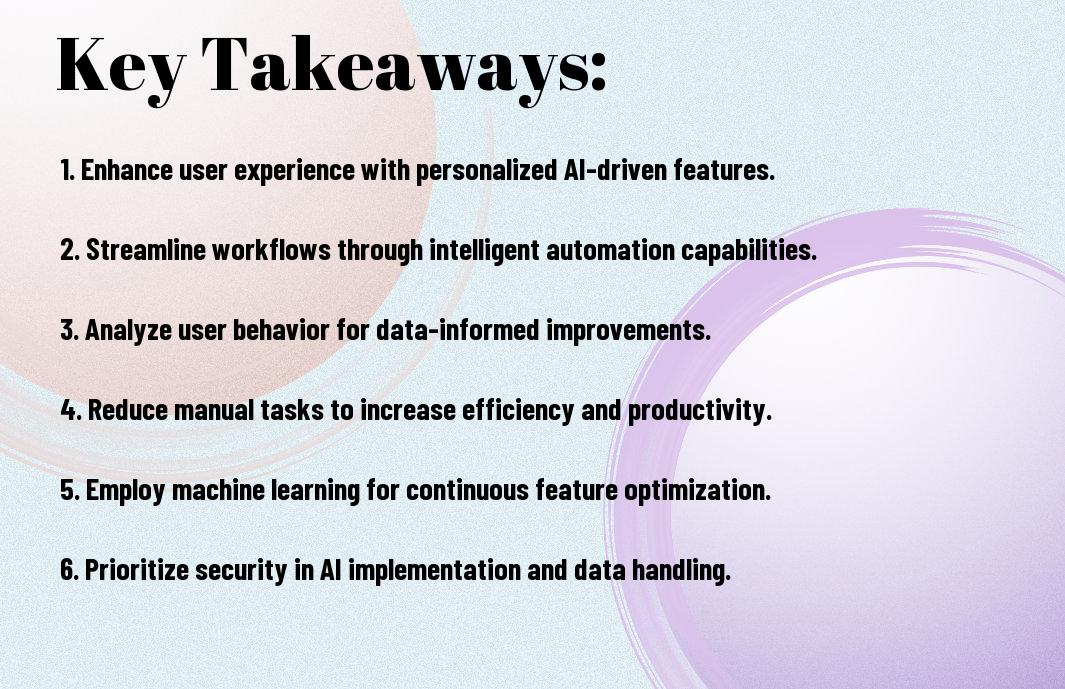
Key Takeaways:
- Integrating AI-powered automation into your app features can significantly enhance user experience by providing personalized and efficient interactions, such as automated chatbots and tailored content recommendations.
- A key benefit of AI-powered automation is its ability to streamline processes and reduce manual labor, allowing developers to focus on more complex and creative tasks, and improving overall app performance and reliability.
- To successfully integrate AI-powered automation, it’s vital to identify areas of your app where automation can add the most value, such as data analysis, customer support, or content generation, and develop a clear strategy for implementation.
- AI-powered automation can also help improve app security by detecting and preventing potential threats, such as fraud and data breaches, through advanced machine learning algorithms and real-time monitoring.
- As AI technology continues to evolve, it’s important to stay up-to-date with the latest developments and advancements in AI-powered automation, and consider how these can be leveraged to drive innovation and growth in your app and business.
Core AI Integration Fundamentals
The foundation of integrating AI-powered automation into your app features lies in understanding the underlying principles of AI and its applications. You will need to consider how AI can enhance your app’s functionality and user experience.
Machine Learning Model Selection
To determine the best approach for your app, you should evaluate different machine learning models and their suitability for your specific use case, considering factors such as data quality and complexity.
API Architecture Planning
Central to a successful AI integration is designing a robust API architecture that can support the exchange of data between your app and the AI system, ensuring seamless communication and efficient processing.
Consequently, as you plan your API architecture, you will need to consider factors such as scalability, security, and data governance, ensuring that your app can handle the increased traffic and data exchange that comes with AI-powered automation, and that you can maintain control over your users’ data and ensure its privacy and integrity.
Automation Framework Design
There’s a need to carefully plan your automation framework design to ensure seamless integration of AI-powered automation into your app features. You will need to consider your app’s architecture, scalability, and security to create an effective design.
Workflow Mapping
By analyzing your app’s workflows, you can identify areas where automation can bring the most value, streamlining your processes and improving efficiency. You will be able to visualize your workflows and pinpoint bottlenecks.
Process Identification
Framework development begins with identifying the processes that can be automated, allowing you to focus on high-impact areas. You will need to assess your app’s functionality to determine which tasks can be automated.
And as you research deeper into process identification, you will discover that it involves evaluating your app’s user interface, APIs, and data flows to determine the best automation approach. You will need to consider factors such as data formats, protocols, and system compatibility to ensure smooth automation integration, enabling you to make informed decisions about your automation strategy.

Feature Implementation Strategy
After finalizing your AI-powered automation features, you can start implementing them into your app. You can find a comprehensive guide on how to integrate AI into your app by visiting A guide on how to integrate AI into your mobile app to learn more about the process.
User Interface Integration
Above all, your user interface should be intuitive and seamless, allowing users to interact with AI-powered features effortlessly. You will need to design an interface that is both functional and visually appealing, making it easy for your users to navigate and use your app’s features.
Backend System Configuration
Around the time you start implementing AI-powered automation, you will need to configure your backend system to support these features. You will need to ensure that your system can handle the increased complexity and data processing requirements of AI-powered automation.
User experience is paramount when it comes to backend system configuration. You should consider how your backend system will impact the performance and functionality of your app’s AI-powered features, and make adjustments accordingly to ensure a smooth and efficient user experience. You will need to test and optimize your backend system to ensure that it can handle the demands of AI-powered automation, and make any necessary adjustments to your system architecture or infrastructure.
Data Processing Components
Unlike traditional automation methods, AI-powered automation relies on complex data processing components to drive your app’s features. You will need to integrate these components seamlessly to unlock the full potential of your app.
Input Data Management
One of the key aspects of data processing is managing the input data that fuels your AI-powered automation. You must ensure that your app can handle various data formats and sources, allowing you to leverage the power of AI to enhance your app’s functionality.
Output Handling Mechanisms
Before designing your app’s output handling mechanisms, you should consider how your AI-powered automation will generate and process output data. You need to ensure that your app can handle the output effectively, providing your users with relevant and useful information.
Data handling is a vital part of output handling mechanisms, as you will need to process and analyze the output data generated by your AI-powered automation. You should design your app to handle this data efficiently, using it to improve your app’s performance and provide your users with a better experience. As you integrate AI-powered automation into your app, you will need to consider how your output handling mechanisms will impact your app’s overall functionality and user experience.
Security and Privacy Measures
Once again, you’ll need to consider the security implications of integrating AI-powered automation into your app features, ensuring that your users’ data is protected and their privacy is respected.
Data Protection Protocols
To safeguard your users’ sensitive information, you should implement robust data protection protocols that adhere to industry standards and best practices, giving you a solid foundation for secure data handling.
Access Control Systems
For your app to be secure, you need to establish access control systems that restrict unauthorized access to sensitive areas, allowing only authorized personnel to manage and maintain your AI-powered automation features.
This access control system will enable you to assign roles and permissions, monitor user activity, and detect potential security breaches, giving you greater control over your app’s security and allowing you to respond quickly to any potential threats, ensuring your users’ data and privacy are protected at all times, and maintaining trust in your app.
Performance Optimization
Not only does AI-powered automation enhance your app’s features, but it also improves overall performance, allowing you to provide a better user experience.
Resource Management
At this stage, you will be able to allocate resources more efficiently, ensuring your app runs smoothly and effectively, which in turn, helps you achieve your goals.
Scaling Solutions
About the time you decide to integrate AI-powered automation, you will need to consider scaling solutions that can handle increased traffic and demand, allowing your app to grow with your user base.
It is vital to consider the scalability of your app when implementing AI-powered automation, as you will want to ensure that your app can handle the increased demands of automated processes, and you can do this by selecting solutions that can adapt to your growing needs, allowing you to focus on developing new features and improving your app’s overall performance, ultimately benefiting your users.
To wrap up
Taking this into account, you can enhance your app’s functionality by integrating AI-powered automation into your features. You will be able to streamline processes, improve user experience, and increase efficiency. By leveraging AI, you can make informed decisions and drive your app’s success. Your app will become more competitive, and you will stay ahead of the curve in the ever-evolving tech landscape. You can now confidently integrate AI-powered automation to take your app to the next level.
FAQ
Q: What are the benefits of integrating AI-powered automation into my app features?
A: Integrating AI-powered automation into your app features can bring numerous benefits, including enhanced user experience, increased efficiency, and improved accuracy. With AI-powered automation, you can automate repetitive tasks, provide personalized recommendations, and offer real-time insights, ultimately leading to increased customer satisfaction and loyalty. Additionally, AI-powered automation can help you stay ahead of the competition by enabling you to launch new features and services quickly and efficiently.
Q: How do I determine which app features to automate with AI-powered technology?
A: To determine which app features to automate with AI-powered technology, you should start by identifying areas where manual processes are time-consuming, prone to errors, or require significant resources. Consider features that involve data analysis, customer support, or content generation, as these are often ideal candidates for automation. You should also assess your app’s user journey and identify pain points where AI-powered automation can improve the user experience. Furthermore, consider the scalability and flexibility of your app’s architecture to ensure seamless integration of AI-powered automation.
Q: What are the key considerations for ensuring the successful integration of AI-powered automation into my app features?
A: To ensure the successful integration of AI-powered automation into your app features, you should consider several key factors. First, define clear goals and objectives for automation, and ensure that they align with your app’s overall strategy. Next, select the right AI-powered automation tools and technologies that fit your app’s architecture and scalability requirements. You should also prioritize data quality and security, as AI-powered automation relies on accurate and reliable data to function effectively. Finally, establish a robust testing and monitoring framework to ensure that AI-powered automation is working as intended and make adjustments as needed to optimize performance and user experience.