Automation

The Rise Of AI Agents – A Comprehensive Guide To Automating Your Business

As you navigate the ever-evolving landscape of business technology, you’re likely considering how to streamline your operations and stay ahead of the competition. You’re probably aware that artificial intelligence (AI) is revolutionizing industries, and AI agents are at the forefront of this transformation. You can leverage AI agents to automate repetitive tasks, enhance customer experiences, and drive growth. This guide will walk you through the process of implementing AI agents to automate your business, helping you make informed decisions about your technology investments and strategies.

Key Takeaways:

  • Implementing AI agents can significantly streamline business operations by automating repetitive tasks, allowing for increased productivity and efficiency across various departments and functions.
  • The integration of AI agents enables businesses to provide 24/7 customer support, enhancing user experience through instant responses and personalized interactions, which can lead to improved customer satisfaction and loyalty.
  • As AI technology continues to evolve, businesses can leverage AI agents to analyze large datasets, make informed decisions, and predict market trends, ultimately driving innovation and competitive advantage in their respective industries.
    The Evolution of AI Agents

    Before entering into the world of AI agents, you can learn more about their capabilities by visiting What are AI Agents? An Informative Guide – Automation to understand how they can transform your business.

    From Simple Automation to Intelligent Systems

    Along with the advancements in technology, you are now able to witness the transition of AI agents from simple automation tools to intelligent systems that can learn and adapt to your business needs.

    Key Technologies Driving AI Agents

    Intelligent technologies such as machine learning and natural language processing are driving the development of AI agents, enabling you to automate complex tasks and improve your business efficiency.

    Technologies like deep learning and computer vision are also playing a significant role in enhancing the capabilities of AI agents, allowing you to analyze large amounts of data and make informed decisions to grow your business.

    Core Components of Business AI Agents

    Some of the key elements that make up business AI agents include natural language processing, machine learning integration, and data analysis. As you explore these components, you’ll discover how they work together to automate your business processes.

    Natural Language Processing

    One of the most significant aspects of business AI agents is their ability to understand and generate human-like language, enabling you to interact with your customers more effectively. You can use this feature to automate customer support and improve user experience.

    Machine Learning Integration

    One key benefit of machine learning integration is its ability to analyze large datasets and make predictions, allowing you to make informed decisions about your business. You can use this feature to optimize your operations and improve efficiency.

    This machine learning integration enables your AI agent to learn from your data and adapt to your business needs over time. As you implement machine learning integration, you’ll be able to automate tasks such as data analysis, customer segmentation, and personalized marketing, freeing up more time for you to focus on strategic decision-making and growth.

    Implementation Strategies

    Many businesses are turning to AI agents to automate their operations, and you can do the same by developing a solid implementation strategy. This involves understanding your business needs and identifying areas where AI can add value.

    Assessment and Planning

    The first step in implementing AI agents is to assess your current systems and plan for integration, allowing you to identify potential roadblocks and develop a smooth transition plan, which you can use to guide your implementation process.

    Integration Frameworks

    Assessing your existing infrastructure is necessary to determine the best integration frameworks for your AI agents, enabling you to choose the most suitable tools and technologies for your business, and you will be able to make informed decisions about your implementation.

    Considering the various integration frameworks available, you will need to evaluate factors such as scalability, compatibility, and security to ensure seamless integration of AI agents into your business operations, and you should also consider the potential impact on your existing workflows and processes, allowing you to make adjustments as needed to maximize the benefits of AI automation.

    Business Process Transformation

    Your business can greatly benefit from AI agents, which can automate repetitive tasks and streamline operations, leading to increased efficiency and productivity.

    Workflow Optimization

    Around the concept of workflow optimization, you’ll find that AI agents can analyze your processes and identify areas for improvement, allowing you to make data-driven decisions and refine your workflows.

    Employee Adaptation

    Alongside the implementation of AI agents, you’ll need to consider how your employees will adapt to the new technology, as they will need to learn to work alongside these agents and understand how to leverage their capabilities.

    Another aspect of employee adaptation is the potential for AI agents to augment your employees’ skills, freeing them up to focus on higher-value tasks that require creativity, problem-solving, and human intuition, allowing you to get the most out of your team and the technology you’re investing in.

    Risk Management and Security

    After implementing AI agents in your business, you need to consider the potential risks and security threats. You must assess the vulnerabilities of your system and take measures to mitigate them, ensuring the protection of your data and operations.

    Data Protection Protocols

    The primary concern is safeguarding your sensitive information, and you should establish robust protocols to prevent unauthorized access and data breaches, ensuring your AI system’s integrity and security.

    Compliance Considerations

    Compliant with regulatory requirements, you should ensure your AI agents adhere to relevant laws and standards, such as data protection and privacy regulations, to avoid potential legal issues and reputational damage.

    Even when you have implemented compliance measures, you should continuously monitor and update your AI system to ensure it aligns with evolving regulatory requirements, protecting your business from potential risks and maintaining trust with your customers and stakeholders, as you navigate the complex landscape of AI-driven operations, you need to stay informed about the latest developments and best practices in AI risk management and security.

    Measuring AI Agent Success

    Once again, you’ll need to assess your AI agents’ effectiveness to ensure they’re meeting your business goals. This involves tracking key performance indicators and analyzing the return on investment.

    Performance Metrics

    Productively, you can evaluate your AI agents’ success by monitoring metrics such as task completion rates, accuracy, and user engagement. This data will help you identify areas for improvement and optimize your AI agents’ performance.

    ROI Analysis

    Behind every successful AI implementation is a thorough analysis of its financial impact. You’ll need to calculate the costs and benefits of using AI agents in your business to determine their overall value.

    Indeed, calculating the return on investment for your AI agents can be complex, but it’s vital to understanding their true value. You’ll need to consider factors such as cost savings, increased revenue, and improved efficiency, and weigh these against the costs of implementing and maintaining your AI agents. By doing so, you’ll be able to make informed decisions about your AI strategy and ensure that your AI agents are driving real business results.

    Conclusion

    Presently, you have gained a thorough understanding of the rise of AI agents and their potential to automate your business. You can now leverage this knowledge to streamline your operations, enhance efficiency, and drive growth. By implementing AI agents, you will be able to optimize your workflow, reduce costs, and improve your overall business performance, allowing you to stay ahead in the competitive market and achieve your goals.

    FAQ

    Q: What is the main purpose of implementing AI agents in business operations?

    A: The primary goal of integrating AI agents into business operations is to automate repetitive and mundane tasks, thereby increasing efficiency, reducing manual errors, and enhancing overall productivity. By leveraging AI agents, businesses can streamline their processes, free up human resources for more strategic and creative work, and ultimately drive growth and innovation.

    Q: How can AI agents be used to improve customer service and experience?

    A: AI agents can be employed to provide 24/7 customer support, helping to resolve queries and issues in a timely and personalized manner. They can be used to power chatbots, virtual assistants, and other interactive systems that offer instant responses to customer inquiries, route complex issues to human representatives, and analyze customer feedback to identify areas for improvement. By doing so, AI agents can significantly enhance the overall customer experience, leading to increased satisfaction, loyalty, and retention.

    Q: What are the key benefits of automating business processes with AI agents?

    A: The benefits of automating business processes with AI agents are numerous and include increased efficiency, reduced costs, improved accuracy, and enhanced scalability. AI agents can process large volumes of data quickly and accurately, identify patterns and anomalies, and make informed decisions in real-time. Additionally, AI agents can help businesses to reduce manual errors, minimize the risk of human bias, and optimize resource allocation, leading to significant cost savings and improved competitiveness.

    Q: How can businesses ensure the security and integrity of their data when using AI agents?

    A: To ensure the security and integrity of their data, businesses should implement robust security measures when using AI agents, such as encrypting sensitive information, using secure authentication protocols, and regularly updating software and systems. Additionally, businesses should establish clear guidelines and policies for AI agent usage, monitor their activity, and perform regular audits to detect and prevent potential security breaches. By taking these precautions, businesses can minimize the risk of data compromise and maintain the trust of their customers and stakeholders.

    Q: What is the future of AI agents in business, and how will they continue to evolve and improve?

    A: The future of AI agents in business is promising, with ongoing advancements in machine learning, natural language processing, and computer vision expected to drive significant improvements in their capabilities and applications. As AI agents become more sophisticated, they will be able to perform increasingly complex tasks, such as predictive analytics, decision-making, and strategy development. Moreover, the integration of AI agents with emerging technologies like blockchain, IoT, and cloud computing will enable businesses to create more seamless, efficient, and automated workflows, leading to unprecedented levels of innovation and competitiveness.

From Automation To Insights – The Comprehensive Impact Of AI On Marketing Practices

As you navigate the evolving landscape of marketing, you’re likely aware of the significant role artificial intelligence (AI) plays in shaping your strategies. You’re witnessing firsthand how AI transforms your marketing practices, from automating routine tasks to providing valuable insights that inform your decisions. Your ability to leverage AI effectively will be key to staying ahead of the competition, and understanding its comprehensive impact is imperative to maximizing your marketing potential.

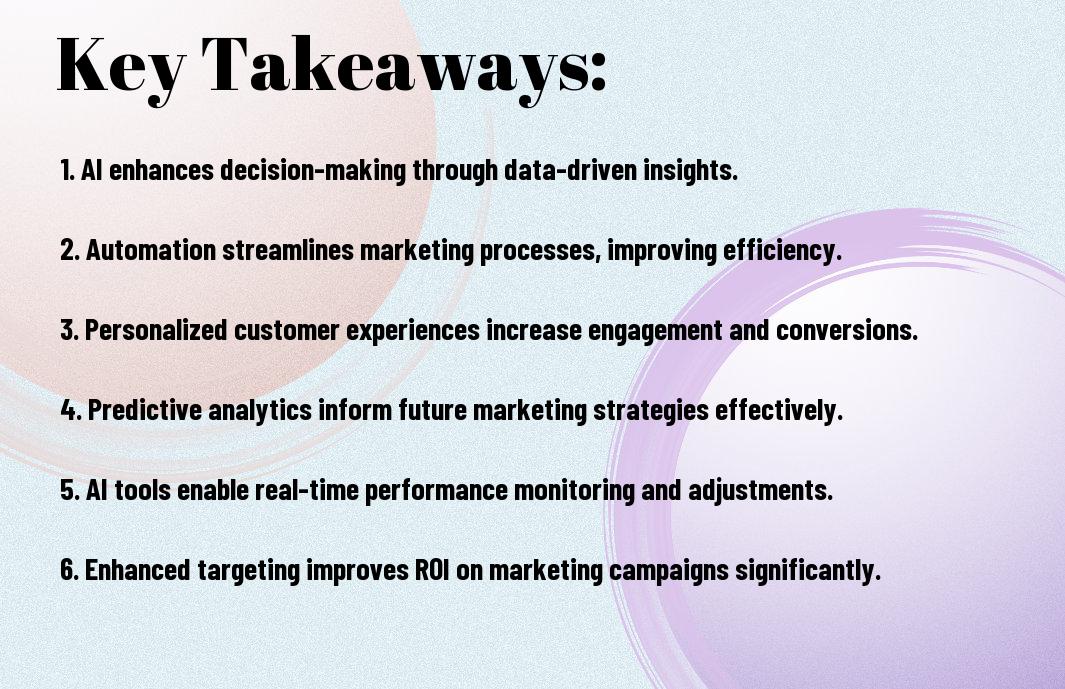
Key Takeaways:

  • The integration of AI in marketing practices has significantly enhanced the ability to automate repetitive tasks, allowing marketers to focus on strategic and creative aspects of their work, thereby increasing overall efficiency and productivity.
  • AI-driven analytics and machine learning algorithms provide marketers with deeper insights into consumer behavior, enabling them to create more personalized and targeted campaigns that resonate with their audience and drive better engagement.
  • The use of AI in marketing also raises important considerations around data privacy and ethics, highlighting the need for marketers to prioritize transparency and accountability in their use of consumer data to maintain trust and credibility with their target audience.

The Evolution of Marketing Automation

A significant shift has occurred in marketing practices, and you are now witnessing the impact of AI on your marketing strategies. As you explore the evolution of marketing automation, you will discover how AI has transformed the way you approach marketing, enabling you to make data-driven decisions and personalize your customer interactions.

Traditional Marketing vs AI-Enhanced Approaches

Markedly, your marketing efforts have changed with the introduction of AI-enhanced approaches, allowing you to target your audience more effectively and measure the success of your campaigns with greater precision, enabling you to refine your strategies and improve your overall marketing performance.

Key Technological Drivers in Marketing AI

Meanwhile, your understanding of marketing AI is influenced by the technological drivers that power it, and as you research deeper, you will find that machine learning, natural language processing, and data analytics are key components that enable you to leverage AI in your marketing practices, enhancing your ability to analyze customer data and create personalized experiences.

For instance, as you explore the capabilities of marketing AI, you will find that machine learning algorithms can help you analyze vast amounts of customer data, identifying patterns and preferences that inform your marketing strategies, while natural language processing enables you to create chatbots and virtual assistants that interact with your customers in a more human-like way, providing personalized support and enhancing their overall experience with your brand.

Data Analytics and Consumer Behavior

Even with the vast amount of data available, you need to leverage it to understand your consumers’ behavior and preferences, enabling you to make informed decisions and drive your marketing strategies.

Predictive Analytics in Customer Journey

Any attempt to analyze customer behavior without predictive analytics will fall short, as you will be able to forecast their actions and personalize their experiences, leading to increased engagement and loyalty.

Real-time Behavioral Pattern Recognition

Journey mapping is vital, but you can take it to the next level by recognizing patterns in real-time, allowing you to respond promptly to changes in your customers’ behavior and preferences.

Behavioral insights gathered through real-time pattern recognition enable you to tailor your marketing efforts to your audience’s needs, creating a more personalized and effective experience, and as you examine deeper into the data, you will uncover new opportunities to optimize your strategies and drive growth.

Personalization at Scale

Many marketers are leveraging AI to deliver personalized experiences, as discussed in The Impact of AI in Marketing: How Automation is Reshaping the Industry. This enables you to tailor your marketing efforts to individual preferences, increasing engagement and conversion rates.

Dynamic Content Generation

One key aspect of personalization is generating content that resonates with your target audience, allowing you to create messages that speak directly to your customers’ needs and interests.

Individual Customer Experience Mapping

With the help of AI, you can create detailed maps of your customers’ journeys, identifying touchpoints and pain points to inform your marketing strategies and improve your overall customer experience.

Experience is at the heart of individual customer experience mapping, as you seek to understand your customers’ thoughts, feelings, and behaviors at every stage of their interaction with your brand, enabling you to craft personalized experiences that meet their unique needs and preferences, and drive long-term loyalty and advocacy for your business.

AI-Powered Marketing Channels

For marketers, AI-powered marketing channels are revolutionizing the way you approach your campaigns, and as you can learn more about The Impact of AI on Marketing: Transforming Strategies and Enhancing Consumer Experiences, you’ll discover new opportunities to optimize your strategies.

Social Media Intelligence

Meanwhile, media platforms are leveraging AI to help you better understand your audience and create more effective social media campaigns, enabling you to make data-driven decisions.

Email Marketing Optimization

Around the clock, AI is working to optimize your email marketing efforts, helping you personalize your messages and improve your conversion rates, allowing you to reach your target audience more effectively.

For instance, with AI-powered email marketing optimization, you can analyze your subscribers’ behavior and preferences, creating targeted campaigns that resonate with your audience, and as a result, you can expect to see significant improvements in your email marketing performance, leading to increased engagement and ultimately, driving more sales and revenue for your business.

Marketing Decision Support Systems

Not surprisingly, you will find that marketing decision support systems are a vital component of your marketing strategy, enabling you to make informed decisions with the help of AI-driven insights and data analysis.

Automated Campaign Management

Prior to implementing AI, you had to manually manage your marketing campaigns, but now you can automate this process, allowing you to focus on higher-level tasks and improve your overall marketing efficiency.

Budget Allocation Intelligence

Automatically, you will be able to optimize your budget allocation with AI-powered marketing decision support systems, ensuring that your marketing spend is being utilized in the most effective way possible to achieve your goals.

Also, as you investigate deeper into budget allocation intelligence, you will discover that AI can help you identify areas where you can cut costs and allocate your budget more efficiently, allowing you to maximize your return on investment and make data-driven decisions to drive your marketing strategy forward.

Privacy and Ethical Considerations

Unlike other aspects of marketing, AI raises significant concerns about your customers’ data and privacy, which you must address to maintain trust and credibility.

Data Protection Frameworks

Among the various measures you can take, implementing robust data protection frameworks is important to safeguard your customers’ sensitive information and ensure compliance with regulations.

Ethical AI Implementation

For your AI systems to be effective and trustworthy, you need to prioritize ethical considerations, such as transparency, accountability, and fairness, in your AI implementation strategies.

Ethical AI implementation involves considering the potential impact of your AI systems on your customers and society as a whole, and taking steps to mitigate any negative consequences, such as bias or discrimination, to ensure that your AI systems align with your values and principles, and you can use them to make informed decisions that benefit your business and your customers.

Final Words

Following this comprehensive overview, you now understand the significant impact of AI on marketing practices. As you continue to navigate the evolving landscape, you can explore The Impact of AI on Market Research and Consumer Insights to further enhance your knowledge. By leveraging AI, you can unlock your marketing potential and drive your business forward with data-driven insights and automation, ultimately transforming your marketing strategy and boosting your brand’s success.

FAQ

Q: What is the role of Artificial Intelligence (AI) in transforming marketing practices?

A: AI is revolutionizing marketing by automating routine tasks, enhancing customer experiences, and providing data-driven insights. With AI, marketers can analyze vast amounts of data, identify patterns, and make informed decisions to optimize their marketing strategies. AI-powered tools enable personalization, predict customer behavior, and help marketers to create targeted campaigns that drive better engagement and conversion rates.

Q: How does AI impact the customer journey in marketing?

A: AI significantly enhances the customer journey by enabling personalized interactions, streamlining customer service, and offering tailored recommendations. AI-powered chatbots and virtual assistants provide 24/7 support, helping customers to find what they need quickly and efficiently. Moreover, AI-driven analytics help marketers to understand customer preferences, behaviors, and pain points, allowing them to create targeted content and offers that resonate with their audience.

Q: What are the key benefits of using AI in marketing analytics and reporting?

A: The key benefits of using AI in marketing analytics and reporting include improved data accuracy, faster insights, and enhanced decision-making capabilities. AI-powered analytics tools can process large datasets, identify trends, and detect anomalies, providing marketers with actionable insights to optimize their campaigns. Additionally, AI-driven reporting enables marketers to track key performance indicators (KPIs) in real-time, making it easier to measure the effectiveness of their marketing efforts and make data-driven decisions.

Q: Can AI replace human marketers, or is it a tool to augment their capabilities?

A: AI is designed to augment the capabilities of human marketers, not replace them. While AI can automate routine tasks, analyze data, and provide insights, human marketers are crucial for strategic decision-making, creativity, and empathy. AI helps marketers to focus on high-value tasks such as strategy development, content creation, and customer engagement, allowing them to work more efficiently and effectively. The collaboration between humans and AI enables marketers to achieve better outcomes and drive business growth.

Q: What are the future implications of AI on marketing practices, and how can marketers prepare for these changes?

A: The future implications of AI on marketing practices include increased use of automation, enhanced personalization, and greater emphasis on data-driven decision-making. To prepare for these changes, marketers should develop skills in AI, machine learning, and data analysis. They should also stay up-to-date with the latest AI trends, technologies, and best practices, and be willing to experiment and innovate in their marketing strategies. By embracing AI and its potential, marketers can stay ahead of the curve and drive business success in a rapidly evolving marketing landscape.

Automating App Testing and Debugging with AI Tools

As you develop and deploy your apps, you need to ensure they are thoroughly tested and debugged to provide a seamless user experience. You can streamline this process by leveraging AI tools, which enable you to automate testing and debugging, saving time and effort. With AI-powered solutions, you can identify and fix issues quickly, improving your app’s overall quality and reliability, allowing you to focus on enhancing your app’s features and functionality.

Key Takeaways:

  • Automating app testing and debugging with AI tools can significantly reduce the time and effort required to identify and fix issues, allowing developers to focus on improving the overall quality and user experience of their applications.
  • AI-powered testing tools can analyze large amounts of data and identify patterns, enabling them to detect bugs and errors that may be difficult or impossible for human testers to find, and provide detailed reports to facilitate debugging.
  • AI-driven automation can also help optimize testing workflows, prioritize test cases, and predict potential issues, making the testing process more efficient and effective, and reducing the risk of releasing faulty applications.
  • Integrating AI tools into the development pipeline can facilitate continuous testing and debugging, enabling developers to identify and address issues early on, and ensuring that applications meet the required standards and are reliable, stable, and secure.
  • By leveraging AI-powered testing and debugging tools, developers can improve the overall speed and accuracy of their testing processes, and deliver high-quality applications that meet user expectations and drive business success.

The Evolution of App Testing

A significant transformation has taken place in the app testing landscape, and you are now witnessing a new era of automation and efficiency. Your testing processes are becoming more streamlined, and the results are more accurate than ever before.

Traditional Testing Methods

Against the backdrop of manual testing, you had to rely on human testers to identify bugs and errors, which was time-consuming and prone to mistakes. Your team had to spend countless hours testing your app, and even then, some issues might have gone undetected.

Rise of AI-Powered Solutions

Across the industry, you see a shift towards AI-powered testing tools that can simulate user interactions, identify bugs, and provide insights into your app’s performance. Your testing process is becoming faster, more efficient, and accurate, thanks to these innovative solutions.

With the advent of AI-powered testing, you can now automate your testing processes, saving time and resources. You can test your app on multiple platforms, devices, and operating systems, ensuring that it works seamlessly across different environments. Your testing team can focus on more complex issues, while AI tools handle the repetitive and mundane tasks, making your overall testing process more efficient and effective.

Core AI Testing Components

Assuming you have a basic understanding of AI testing, you’ll need to familiarize yourself with the core components that make up this technology. These components work together to enable efficient and effective testing of your app.

Machine Learning Algorithms

Albeit complex, machine learning algorithms are a key part of AI testing, allowing you to analyze data and make predictions about your app’s performance, enabling you to identify and fix issues quickly.

Pattern Recognition Systems

Typically, testing involves identifying patterns in your app’s behavior, and pattern recognition systems help you do just that, enabling you to detect anomalies and bugs in your app.

This technology uses historical data to identify patterns, allowing you to anticipate and prevent issues, making your app more stable and reliable, and you can use this information to improve your app’s overall quality and user experience.

Automated Testing Frameworks

Once again, you’ll find that automated testing frameworks are crucial for streamlining your app testing process, allowing you to focus on development and innovation, as they enable you to write and execute tests efficiently, saving your time and effort.

Code Analysis Tools

Around this time, you will be using code analysis tools to examine your code, identifying potential issues and vulnerabilities, and providing you with insights to improve your code quality, making your app more stable and reliable.

Performance Monitoring

The key to ensuring your app’s smooth operation is performance monitoring, which helps you track your app’s performance in real-time, detecting bottlenecks and areas for optimization, enabling you to make data-driven decisions to improve your app’s user experience.

Frameworks like Appium and Selenium provide you with the tools to monitor your app’s performance, allowing you to identify issues before they affect your users, and you can use this information to optimize your app’s performance, ensuring that it runs smoothly and efficiently, which is crucial for providing a good user experience, and you can use your knowledge of performance monitoring to improve your app’s overall quality.

AI-Driven Debugging

All your efforts to automate app testing will be in vain if you don’t have a robust debugging process in place. AI-driven debugging helps you identify and fix errors quickly, saving you time and resources. With AI, you can analyze vast amounts of data and detect patterns that may indicate potential issues.

Predictive Error Detection

Akin to having a crystal ball, predictive error detection uses machine learning algorithms to forecast potential errors before they occur, allowing you to take proactive measures to prevent them, thus ensuring your app’s stability and performance.

Root Cause Analysis

Against the backdrop of complex software systems, root cause analysis helps you pinpoint the underlying causes of errors, enabling you to address the problem at its core, rather than just treating its symptoms, which helps you improve your app’s overall quality.

In fact, when you use AI-driven root cause analysis, you can analyze large amounts of data from various sources, such as logs and user feedback, to identify the root cause of an issue, and then use that information to fix the problem and prevent similar issues from arising in the future, ultimately improving your app’s reliability and user experience.

Real-Time Testing Solutions

Your application’s success relies on efficient testing and debugging, and AI tools can help you achieve this by providing real-time solutions that streamline your development process.

Continuous Integration

Testing your code continuously is imperative, and with AI-powered tools, you can automate this process, ensuring that your application is stable and functional at all times, allowing you to identify and fix issues quickly.

Dynamic Test Generation

Behind every successful application is a robust testing strategy, and AI-driven dynamic test generation can help you create tests that cover all scenarios, giving you confidence in your application’s performance and reliability.

Dynamic test generation allows you to create a wide range of tests, from simple to complex, and you can use these tests to validate your application’s functionality, identifying bugs and issues before they affect your users, and you can refine your testing strategy as you gather more data and insights from your tests.

Security Testing with AI

For your app’s security, AI tools can identify vulnerabilities and detect threats, ensuring your users’ data is protected. You can use AI-powered tools to scan your app’s code, detect anomalies, and predict potential security breaches.

Vulnerability Assessment

Assessing your app’s security is made easier with AI-powered tools that can scan your code and identify potential vulnerabilities, allowing you to take proactive measures to secure your app and protect your users’ data.

Threat Detection

Between various security threats, AI tools can help you detect and respond to potential threats in real-time, giving you peace of mind and ensuring your app’s security.

And as you explore deeper into threat detection, you’ll find that AI tools can analyze patterns and anomalies in your app’s behavior, detecting potential threats before they become incidents, and providing you with detailed reports and recommendations to improve your app’s security posture, allowing you to take swift action to protect your users and your business.

Summing up

The use of AI tools for automating app testing and debugging can significantly improve your development process. You can identify and fix issues faster, saving your time and resources. By leveraging AI-powered tools, you can optimize your testing and debugging workflow, ensuring your app meets the highest quality standards. You will be able to deliver a better user experience, increasing your app’s success and your overall productivity.

FAQ

Q: What are the benefits of automating app testing and debugging with AI tools?

A: Automating app testing and debugging with AI tools offers several benefits, including increased efficiency, reduced testing time, and improved accuracy. AI-powered tools can quickly identify and report defects, allowing developers to focus on fixing issues rather than manually testing the app. Additionally, AI tools can test apps under various scenarios and conditions, ensuring that the app is stable and functions as expected. This helps to enhance the overall quality of the app and improve user experience.

Q: How do AI tools assist in app testing and debugging, and what types of tests can they perform?

A: AI tools assist in app testing and debugging by leveraging machine learning algorithms to analyze the app’s behavior, identify patterns, and detect anomalies. These tools can perform various types of tests, including functional testing, performance testing, and security testing. They can also conduct exploratory testing, where the AI tool interacts with the app to discover new features and functionalities. Furthermore, AI tools can generate test cases, create test scripts, and even execute tests, freeing up human testers to focus on more complex and high-level testing tasks.

Q: What are the challenges and limitations of using AI tools for automating app testing and debugging, and how can they be addressed?

A: While AI tools can significantly enhance app testing and debugging, there are challenges and limitations to consider. One of the main challenges is the need for high-quality training data to ensure that the AI tool can effectively learn and adapt to the app’s behavior. Additionally, AI tools may struggle with complex, nuanced, or context-dependent testing scenarios. To address these challenges, developers can provide the AI tool with comprehensive training data, fine-tune the tool’s algorithms, and use a combination of automated and manual testing approaches. By doing so, developers can maximize the benefits of AI-powered testing and debugging while minimizing its limitations.

Automating Customer Support in Apps with AI

As you develop and maintain your mobile application, you’re likely aware of the importance of providing excellent customer support to your users. You understand that timely and effective support is key to building trust and loyalty. With the increasing demand for instant responses, you can leverage AI-powered automation to enhance your customer support experience, allowing you to focus on more complex issues while providing your users with swift and accurate solutions, thereby improving your overall app user experience.

Key Takeaways:

  • Implementing AI-powered chatbots in apps can significantly enhance customer support by providing instant responses to frequent inquiries, freeing human support agents to focus on more complex issues.
  • AI-driven support systems can analyze customer interactions and behavior, enabling personalized support experiences that improve user satisfaction and loyalty.
  • Automating customer support with AI can lead to substantial cost savings, as chatbots can handle a high volume of inquiries without the need for human intervention, reducing the workload and operational expenses.
  • AI-powered support tools can help apps to offer 24/7 support, ensuring that customers receive assistance whenever they need it, regardless of their location or time zone.
  • Integrating AI into customer support can also provide valuable insights into customer feedback and sentiment, allowing app developers to identify areas for improvement and make data-driven decisions to enhance the overall user experience.

The Evolution of Customer Support

A significant shift has occurred in customer support, and you are now at the forefront of this change, with technology playing a key role in shaping your customer experience.

Traditional Support Models

Along the lines of traditional methods, you will notice that phone and email support were the primary means of resolving customer issues, which often led to long wait times and frustrated customers.

Digital Transformation Needs

About the time you started to notice the need for change, digital transformation began to take hold, and you realized that your customers’ expectations had evolved, demanding faster and more efficient support channels.

It is vital to consider that your customers now expect personalized and instant support, and you must adapt to these changing needs by leveraging AI-powered chatbots and other digital tools to provide seamless and efficient customer support, allowing you to stay ahead of the competition and build strong relationships with your customers.

Core AI Technologies in Support

Assuming you want to automate customer support in your app, you’ll need to understand the core AI technologies involved. These technologies enable your app to understand and respond to customer inquiries effectively.

Natural Language Processing

With the help of Natural Language Processing (NLP), your app can comprehend the nuances of human language, allowing it to accurately interpret customer requests and provide relevant responses.

Machine Learning Algorithms

Machine learning capabilities enable your app to learn from customer interactions, improving its response accuracy over time and providing personalized support to your users.

Algorithms such as decision trees and neural networks are used to analyze customer data and develop predictive models that inform your app’s support responses, helping you to provide efficient and effective support to your customers.

Implementation Strategies

Unlike traditional support systems, automating customer support in apps with AI requires a strategic approach. You need to consider your app’s specific needs and choose the right tools to integrate AI-powered support features, ensuring a seamless user experience.

Chatbot Integration

Besides leveraging AI for automated responses, you can integrate chatbots to handle basic customer inquiries, freeing up your support team to focus on complex issues, and you can customize chatbots to fit your brand’s voice and tone.

Automated Ticket Routing

Beside chatbot integration, automated ticket routing is another key aspect of implementing AI in customer support, where you can use machine learning algorithms to categorize and assign tickets to the right agents, ensuring efficient issue resolution and you can set up automated routing rules based on ticket keywords, categories, or priorities.

Another benefit of automated ticket routing is that it enables you to analyze ticket data and identify patterns, allowing you to refine your support processes and improve your overall customer experience, and you can use this data to train your AI models, making them more accurate and effective in resolving customer issues, ultimately leading to increased customer satisfaction and loyalty to your app.

Data Management and Learning

To effectively automate customer support in your app, you need to manage data and enable learning capabilities, which involves collecting, processing, and analyzing customer interactions to improve your AI-powered support system.

Customer Interaction Analytics

One key aspect of data management is analyzing customer interactions to identify patterns and trends, allowing you to refine your support system and provide more personalized experiences for your users, enabling you to address their needs more effectively.

Continuous Improvement Systems

About developing a system that continually updates and refines your AI model, you should focus on integrating feedback mechanisms and monitoring performance metrics to ensure your support system improves over time, providing better support to your customers.

Learning from customer interactions and adapting to their needs is necessary for creating an effective automated support system, as you can identify areas for improvement and update your AI model to provide more accurate and helpful responses, ultimately enhancing the overall user experience in your app.

Human-AI Collaboration

After implementing AI in your customer support, you’ll notice a significant shift in how your team operates. You’ll be able to allocate tasks more efficiently, allowing your human agents to focus on complex issues that require empathy and problem-solving skills.

Agent Augmentation

To take full advantage of AI capabilities, you can use it to augment your agents’ abilities, providing them with relevant data and suggestions to enhance their decision-making process, thus improving overall customer experience.

Workflow Optimization

Agent productivity increases when AI handles routine tasks, freeing up time for more complex issues, and you can optimize your workflow by automating tasks such as data entry, allowing your agents to focus on high-value tasks.

A key aspect of workflow optimization is analyzing your support processes to identify areas where AI can have the most impact, and you can use this analysis to create a more efficient and streamlined workflow, enabling your agents to provide better support to your customers.

Performance Metrics

For evaluating the effectiveness of your AI-powered customer support, you need to track key performance metrics. This helps you identify areas of improvement and optimize your support system for better results.

Response Time Analytics

With the help of response time analytics, you can measure how quickly your AI support system responds to customer inquiries, allowing you to fine-tune your system for faster response times and improved customer experience.

Customer Satisfaction Indicators

Around the clock, you can monitor customer satisfaction indicators, such as ratings and feedback, to gauge the effectiveness of your AI support system in resolving customer issues and providing a positive experience.

Customer satisfaction is a key aspect of your AI-powered customer support, and you can gain valuable insights by analyzing customer feedback and ratings. By doing so, you can identify patterns and trends, and make data-driven decisions to improve your support system and increase customer satisfaction, ultimately leading to loyalty and retention of your customers.

To wrap up

From above, you can see how automating customer support in apps with AI enhances your user experience. You can learn more about implementing AI in your customer service strategy by visiting Everything You Need to Know about AI in Customer Service. By doing so, you will be able to provide your customers with efficient and personalized support, setting your business up for success.

FAQ

Q: What are the benefits of automating customer support in apps with AI?

A: Automating customer support in apps with AI offers several benefits, including 24/7 support availability, reduced response times, and increased efficiency. AI-powered chatbots can handle a large volume of customer inquiries simultaneously, freeing up human support agents to focus on more complex issues. Additionally, AI-driven support systems can provide personalized support experiences, improving customer satisfaction and loyalty. By automating routine support tasks, businesses can also reduce support costs and improve their overall customer support operations.

Q: How does AI-powered chatbots improve the customer support experience in apps?

A: AI-powered chatbots can significantly improve the customer support experience in apps by providing instant responses to common queries, helping customers navigate the app, and offering personalized recommendations. These chatbots can be integrated with the app’s knowledge base, allowing them to provide accurate and up-to-date information to customers. Moreover, AI-driven chatbots can analyze customer interactions and adapt their responses to better meet customer needs, leading to a more engaging and supportive experience. As a result, customers can quickly find the help they need, reducing frustration and increasing their overall satisfaction with the app.

Q: Can AI-powered customer support systems in apps handle complex customer issues?

A: While AI-powered customer support systems in apps are highly effective in handling routine and simple customer inquiries, they may not always be able to handle complex issues on their own. In such cases, AI-driven systems can escalate the issue to a human support agent, ensuring that the customer receives the help they need. Additionally, AI can assist human support agents by providing them with relevant customer information, conversation history, and suggested solutions, enabling them to quickly understand the issue and provide a more effective resolution. By combining the strengths of AI and human support, businesses can provide a comprehensive and effective customer support experience that meets the diverse needs of their customers.

Integrating AI-Powered Automation into Your App Features

You’re likely aware of the growing trend of AI-powered automation in app development, and you may be wondering how to leverage this technology to enhance your app’s features. As you consider integrating AI-powered automation, you’ll need to assess your app’s capabilities and identify areas where automation can improve user experience and streamline processes. By doing so, you can create a more efficient and engaging app that sets you apart from the competition and drives business success.

Key Takeaways:

  • Integrating AI-powered automation into your app features can significantly enhance user experience by providing personalized and efficient interactions, such as automated chatbots and tailored content recommendations.
  • A key benefit of AI-powered automation is its ability to streamline processes and reduce manual labor, allowing developers to focus on more complex and creative tasks, and improving overall app performance and reliability.
  • To successfully integrate AI-powered automation, it’s vital to identify areas of your app where automation can add the most value, such as data analysis, customer support, or content generation, and develop a clear strategy for implementation.
  • AI-powered automation can also help improve app security by detecting and preventing potential threats, such as fraud and data breaches, through advanced machine learning algorithms and real-time monitoring.
  • As AI technology continues to evolve, it’s important to stay up-to-date with the latest developments and advancements in AI-powered automation, and consider how these can be leveraged to drive innovation and growth in your app and business.

Core AI Integration Fundamentals

The foundation of integrating AI-powered automation into your app features lies in understanding the underlying principles of AI and its applications. You will need to consider how AI can enhance your app’s functionality and user experience.

Machine Learning Model Selection

To determine the best approach for your app, you should evaluate different machine learning models and their suitability for your specific use case, considering factors such as data quality and complexity.

API Architecture Planning

Central to a successful AI integration is designing a robust API architecture that can support the exchange of data between your app and the AI system, ensuring seamless communication and efficient processing.

Consequently, as you plan your API architecture, you will need to consider factors such as scalability, security, and data governance, ensuring that your app can handle the increased traffic and data exchange that comes with AI-powered automation, and that you can maintain control over your users’ data and ensure its privacy and integrity.

Automation Framework Design

There’s a need to carefully plan your automation framework design to ensure seamless integration of AI-powered automation into your app features. You will need to consider your app’s architecture, scalability, and security to create an effective design.

Workflow Mapping

By analyzing your app’s workflows, you can identify areas where automation can bring the most value, streamlining your processes and improving efficiency. You will be able to visualize your workflows and pinpoint bottlenecks.

Process Identification

Framework development begins with identifying the processes that can be automated, allowing you to focus on high-impact areas. You will need to assess your app’s functionality to determine which tasks can be automated.

And as you research deeper into process identification, you will discover that it involves evaluating your app’s user interface, APIs, and data flows to determine the best automation approach. You will need to consider factors such as data formats, protocols, and system compatibility to ensure smooth automation integration, enabling you to make informed decisions about your automation strategy.

Feature Implementation Strategy

After finalizing your AI-powered automation features, you can start implementing them into your app. You can find a comprehensive guide on how to integrate AI into your app by visiting A guide on how to integrate AI into your mobile app to learn more about the process.

User Interface Integration

Above all, your user interface should be intuitive and seamless, allowing users to interact with AI-powered features effortlessly. You will need to design an interface that is both functional and visually appealing, making it easy for your users to navigate and use your app’s features.

Backend System Configuration

Around the time you start implementing AI-powered automation, you will need to configure your backend system to support these features. You will need to ensure that your system can handle the increased complexity and data processing requirements of AI-powered automation.

User experience is paramount when it comes to backend system configuration. You should consider how your backend system will impact the performance and functionality of your app’s AI-powered features, and make adjustments accordingly to ensure a smooth and efficient user experience. You will need to test and optimize your backend system to ensure that it can handle the demands of AI-powered automation, and make any necessary adjustments to your system architecture or infrastructure.

Data Processing Components

Unlike traditional automation methods, AI-powered automation relies on complex data processing components to drive your app’s features. You will need to integrate these components seamlessly to unlock the full potential of your app.

Input Data Management

One of the key aspects of data processing is managing the input data that fuels your AI-powered automation. You must ensure that your app can handle various data formats and sources, allowing you to leverage the power of AI to enhance your app’s functionality.

Output Handling Mechanisms

Before designing your app’s output handling mechanisms, you should consider how your AI-powered automation will generate and process output data. You need to ensure that your app can handle the output effectively, providing your users with relevant and useful information.

Data handling is a vital part of output handling mechanisms, as you will need to process and analyze the output data generated by your AI-powered automation. You should design your app to handle this data efficiently, using it to improve your app’s performance and provide your users with a better experience. As you integrate AI-powered automation into your app, you will need to consider how your output handling mechanisms will impact your app’s overall functionality and user experience.

Security and Privacy Measures

Once again, you’ll need to consider the security implications of integrating AI-powered automation into your app features, ensuring that your users’ data is protected and their privacy is respected.

Data Protection Protocols

To safeguard your users’ sensitive information, you should implement robust data protection protocols that adhere to industry standards and best practices, giving you a solid foundation for secure data handling.

Access Control Systems

For your app to be secure, you need to establish access control systems that restrict unauthorized access to sensitive areas, allowing only authorized personnel to manage and maintain your AI-powered automation features.

This access control system will enable you to assign roles and permissions, monitor user activity, and detect potential security breaches, giving you greater control over your app’s security and allowing you to respond quickly to any potential threats, ensuring your users’ data and privacy are protected at all times, and maintaining trust in your app.

Performance Optimization

Not only does AI-powered automation enhance your app’s features, but it also improves overall performance, allowing you to provide a better user experience.

Resource Management

At this stage, you will be able to allocate resources more efficiently, ensuring your app runs smoothly and effectively, which in turn, helps you achieve your goals.

Scaling Solutions

About the time you decide to integrate AI-powered automation, you will need to consider scaling solutions that can handle increased traffic and demand, allowing your app to grow with your user base.

It is vital to consider the scalability of your app when implementing AI-powered automation, as you will want to ensure that your app can handle the increased demands of automated processes, and you can do this by selecting solutions that can adapt to your growing needs, allowing you to focus on developing new features and improving your app’s overall performance, ultimately benefiting your users.

To wrap up

Taking this into account, you can enhance your app’s functionality by integrating AI-powered automation into your features. You will be able to streamline processes, improve user experience, and increase efficiency. By leveraging AI, you can make informed decisions and drive your app’s success. Your app will become more competitive, and you will stay ahead of the curve in the ever-evolving tech landscape. You can now confidently integrate AI-powered automation to take your app to the next level.

FAQ

Q: What are the benefits of integrating AI-powered automation into my app features?

A: Integrating AI-powered automation into your app features can bring numerous benefits, including enhanced user experience, increased efficiency, and improved accuracy. With AI-powered automation, you can automate repetitive tasks, provide personalized recommendations, and offer real-time insights, ultimately leading to increased customer satisfaction and loyalty. Additionally, AI-powered automation can help you stay ahead of the competition by enabling you to launch new features and services quickly and efficiently.

Q: How do I determine which app features to automate with AI-powered technology?

A: To determine which app features to automate with AI-powered technology, you should start by identifying areas where manual processes are time-consuming, prone to errors, or require significant resources. Consider features that involve data analysis, customer support, or content generation, as these are often ideal candidates for automation. You should also assess your app’s user journey and identify pain points where AI-powered automation can improve the user experience. Furthermore, consider the scalability and flexibility of your app’s architecture to ensure seamless integration of AI-powered automation.

Q: What are the key considerations for ensuring the successful integration of AI-powered automation into my app features?

A: To ensure the successful integration of AI-powered automation into your app features, you should consider several key factors. First, define clear goals and objectives for automation, and ensure that they align with your app’s overall strategy. Next, select the right AI-powered automation tools and technologies that fit your app’s architecture and scalability requirements. You should also prioritize data quality and security, as AI-powered automation relies on accurate and reliable data to function effectively. Finally, establish a robust testing and monitoring framework to ensure that AI-powered automation is working as intended and make adjustments as needed to optimize performance and user experience.

Trip HP Skip to content