As you develop and maintain your mobile application, you’re likely aware of the importance of providing excellent customer support to your users. You understand that timely and effective support is key to building trust and loyalty. With the increasing demand for instant responses, you can leverage AI-powered automation to enhance your customer support experience, allowing you to focus on more complex issues while providing your users with swift and accurate solutions, thereby improving your overall app user experience.
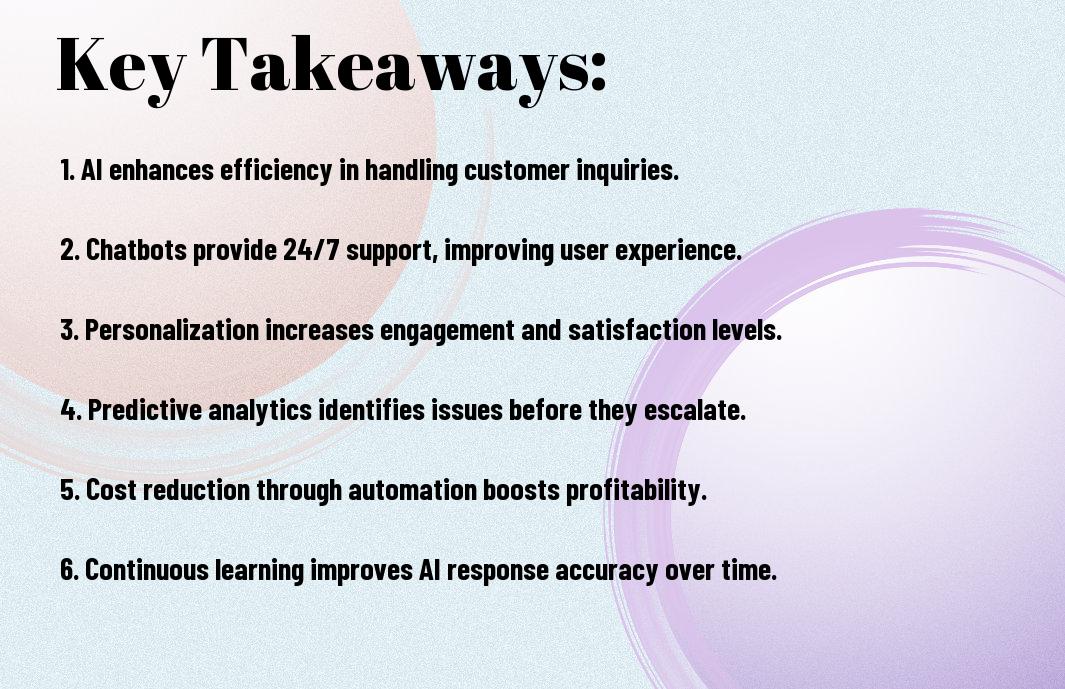
Key Takeaways:
- Implementing AI-powered chatbots in apps can significantly enhance customer support by providing instant responses to frequent inquiries, freeing human support agents to focus on more complex issues.
- AI-driven support systems can analyze customer interactions and behavior, enabling personalized support experiences that improve user satisfaction and loyalty.
- Automating customer support with AI can lead to substantial cost savings, as chatbots can handle a high volume of inquiries without the need for human intervention, reducing the workload and operational expenses.
- AI-powered support tools can help apps to offer 24/7 support, ensuring that customers receive assistance whenever they need it, regardless of their location or time zone.
- Integrating AI into customer support can also provide valuable insights into customer feedback and sentiment, allowing app developers to identify areas for improvement and make data-driven decisions to enhance the overall user experience.
The Evolution of Customer Support
A significant shift has occurred in customer support, and you are now at the forefront of this change, with technology playing a key role in shaping your customer experience.
Traditional Support Models
Along the lines of traditional methods, you will notice that phone and email support were the primary means of resolving customer issues, which often led to long wait times and frustrated customers.
Digital Transformation Needs
About the time you started to notice the need for change, digital transformation began to take hold, and you realized that your customers’ expectations had evolved, demanding faster and more efficient support channels.
It is vital to consider that your customers now expect personalized and instant support, and you must adapt to these changing needs by leveraging AI-powered chatbots and other digital tools to provide seamless and efficient customer support, allowing you to stay ahead of the competition and build strong relationships with your customers.

Core AI Technologies in Support
Assuming you want to automate customer support in your app, you’ll need to understand the core AI technologies involved. These technologies enable your app to understand and respond to customer inquiries effectively.
Natural Language Processing
With the help of Natural Language Processing (NLP), your app can comprehend the nuances of human language, allowing it to accurately interpret customer requests and provide relevant responses.
Machine Learning Algorithms
Machine learning capabilities enable your app to learn from customer interactions, improving its response accuracy over time and providing personalized support to your users.
Algorithms such as decision trees and neural networks are used to analyze customer data and develop predictive models that inform your app’s support responses, helping you to provide efficient and effective support to your customers.
Implementation Strategies
Unlike traditional support systems, automating customer support in apps with AI requires a strategic approach. You need to consider your app’s specific needs and choose the right tools to integrate AI-powered support features, ensuring a seamless user experience.
Chatbot Integration
Besides leveraging AI for automated responses, you can integrate chatbots to handle basic customer inquiries, freeing up your support team to focus on complex issues, and you can customize chatbots to fit your brand’s voice and tone.
Automated Ticket Routing
Beside chatbot integration, automated ticket routing is another key aspect of implementing AI in customer support, where you can use machine learning algorithms to categorize and assign tickets to the right agents, ensuring efficient issue resolution and you can set up automated routing rules based on ticket keywords, categories, or priorities.
Another benefit of automated ticket routing is that it enables you to analyze ticket data and identify patterns, allowing you to refine your support processes and improve your overall customer experience, and you can use this data to train your AI models, making them more accurate and effective in resolving customer issues, ultimately leading to increased customer satisfaction and loyalty to your app.
Data Management and Learning
To effectively automate customer support in your app, you need to manage data and enable learning capabilities, which involves collecting, processing, and analyzing customer interactions to improve your AI-powered support system.
Customer Interaction Analytics
One key aspect of data management is analyzing customer interactions to identify patterns and trends, allowing you to refine your support system and provide more personalized experiences for your users, enabling you to address their needs more effectively.
Continuous Improvement Systems
About developing a system that continually updates and refines your AI model, you should focus on integrating feedback mechanisms and monitoring performance metrics to ensure your support system improves over time, providing better support to your customers.
Learning from customer interactions and adapting to their needs is necessary for creating an effective automated support system, as you can identify areas for improvement and update your AI model to provide more accurate and helpful responses, ultimately enhancing the overall user experience in your app.
Human-AI Collaboration
After implementing AI in your customer support, you’ll notice a significant shift in how your team operates. You’ll be able to allocate tasks more efficiently, allowing your human agents to focus on complex issues that require empathy and problem-solving skills.
Agent Augmentation
To take full advantage of AI capabilities, you can use it to augment your agents’ abilities, providing them with relevant data and suggestions to enhance their decision-making process, thus improving overall customer experience.
Workflow Optimization
Agent productivity increases when AI handles routine tasks, freeing up time for more complex issues, and you can optimize your workflow by automating tasks such as data entry, allowing your agents to focus on high-value tasks.
A key aspect of workflow optimization is analyzing your support processes to identify areas where AI can have the most impact, and you can use this analysis to create a more efficient and streamlined workflow, enabling your agents to provide better support to your customers.
Performance Metrics
For evaluating the effectiveness of your AI-powered customer support, you need to track key performance metrics. This helps you identify areas of improvement and optimize your support system for better results.
Response Time Analytics
With the help of response time analytics, you can measure how quickly your AI support system responds to customer inquiries, allowing you to fine-tune your system for faster response times and improved customer experience.
Customer Satisfaction Indicators
Around the clock, you can monitor customer satisfaction indicators, such as ratings and feedback, to gauge the effectiveness of your AI support system in resolving customer issues and providing a positive experience.
Customer satisfaction is a key aspect of your AI-powered customer support, and you can gain valuable insights by analyzing customer feedback and ratings. By doing so, you can identify patterns and trends, and make data-driven decisions to improve your support system and increase customer satisfaction, ultimately leading to loyalty and retention of your customers.
To wrap up
From above, you can see how automating customer support in apps with AI enhances your user experience. You can learn more about implementing AI in your customer service strategy by visiting Everything You Need to Know about AI in Customer Service. By doing so, you will be able to provide your customers with efficient and personalized support, setting your business up for success.
FAQ
Q: What are the benefits of automating customer support in apps with AI?
A: Automating customer support in apps with AI offers several benefits, including 24/7 support availability, reduced response times, and increased efficiency. AI-powered chatbots can handle a large volume of customer inquiries simultaneously, freeing up human support agents to focus on more complex issues. Additionally, AI-driven support systems can provide personalized support experiences, improving customer satisfaction and loyalty. By automating routine support tasks, businesses can also reduce support costs and improve their overall customer support operations.
Q: How does AI-powered chatbots improve the customer support experience in apps?
A: AI-powered chatbots can significantly improve the customer support experience in apps by providing instant responses to common queries, helping customers navigate the app, and offering personalized recommendations. These chatbots can be integrated with the app’s knowledge base, allowing them to provide accurate and up-to-date information to customers. Moreover, AI-driven chatbots can analyze customer interactions and adapt their responses to better meet customer needs, leading to a more engaging and supportive experience. As a result, customers can quickly find the help they need, reducing frustration and increasing their overall satisfaction with the app.
Q: Can AI-powered customer support systems in apps handle complex customer issues?
A: While AI-powered customer support systems in apps are highly effective in handling routine and simple customer inquiries, they may not always be able to handle complex issues on their own. In such cases, AI-driven systems can escalate the issue to a human support agent, ensuring that the customer receives the help they need. Additionally, AI can assist human support agents by providing them with relevant customer information, conversation history, and suggested solutions, enabling them to quickly understand the issue and provide a more effective resolution. By combining the strengths of AI and human support, businesses can provide a comprehensive and effective customer support experience that meets the diverse needs of their customers.