
As you consider enhancing your application’s capabilities, you’re likely exploring the potential of artificial intelligence (AI). You can leverage AI-powered APIs to streamline processes, improve user experience, and drive innovation. By integrating these APIs into your application, you can tap into advanced technologies like machine learning and natural language processing, enabling your system to make informed decisions and interact more intuitively with users. This integration can significantly boost your application’s efficiency and effectiveness.

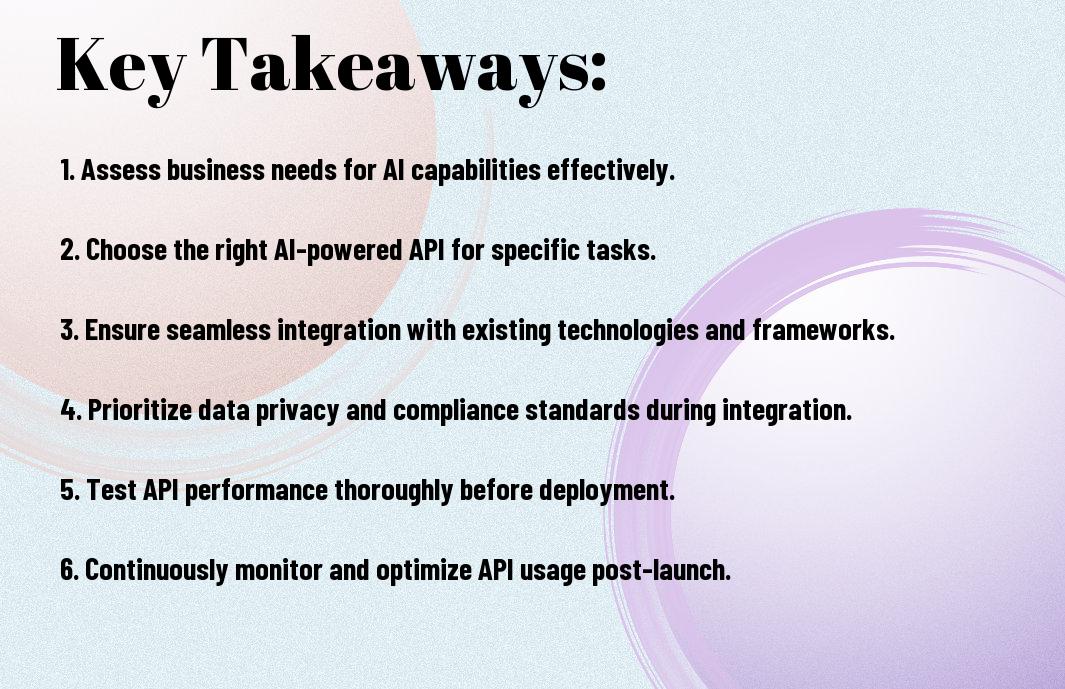
Key Takeaways:
- Integrating AI-powered APIs into your application can significantly enhance its functionality and user experience by providing advanced capabilities such as natural language processing, image recognition, and predictive analytics.
- When deciding on an AI-powered API, consider factors such as scalability, security, and compatibility with your existing infrastructure to ensure seamless integration and optimal performance.
- AI-powered APIs can help automate tasks, improve decision-making, and unlock new business insights, leading to increased efficiency and competitiveness in the market.
- Effective integration of AI-powered APIs requires a thorough understanding of the API’s capabilities, limitations, and potential biases, as well as ongoing monitoring and evaluation to ensure alignment with your application’s goals and objectives.
- By leveraging AI-powered APIs, developers can focus on building innovative applications and features, rather than investing time and resources in developing complex AI capabilities from scratch, thereby accelerating development timelines and reducing costs.
Core AI API Components
While integrating AI-powered APIs into your application, you will encounter several key components that enable seamless interaction with the AI system. These components work together to provide a robust and efficient API that you can rely on for your application’s needs.
REST API Architecture
One of the primary components is the REST API architecture, which allows you to send and receive data in a standardized format, making it easy to integrate with your application and ensuring a smooth exchange of information.
Authentication and Security Protocols
Among the crucial considerations when working with AI-powered APIs are the authentication and security protocols that protect your data and ensure secure communication between your application and the API.
Components such as API keys, access tokens, and encryption protocols are vital in safeguarding your data and preventing unauthorized access, allowing you to focus on developing your application while your data is protected, and you can have confidence in the security of your integration with the AI-powered API.
Selection Process
You will need to carefully evaluate various factors when integrating AI-powered APIs into your application, including the capabilities and limitations of each API, as well as your specific business needs and goals.
Evaluating AI Service Providers
Behind every successful AI-powered API is a reliable service provider, and you must assess their reputation, expertise, and support offerings to ensure they meet your requirements.
Performance Metrics and Costs
Providers of AI-powered APIs often have different pricing models and performance metrics, and you should consider these factors when making your selection to ensure you get the best value for your investment.
Service level agreements and scalability are also important considerations when evaluating the performance metrics and costs of AI-powered APIs, as you want to ensure that the API can handle your expected traffic and provide the necessary support for your application, while also fitting within your budget and providing a positive return on investment for your business.
Implementation Strategies
To successfully integrate AI-powered APIs into your application, you need to consider several factors, including the type of API, data requirements, and security measures. This involves evaluating your application’s architecture and identifying the best approach for integration.
API Integration Methods
On the basis of your application’s requirements, you can choose from various API integration methods, such as RESTful APIs, GraphQL, or gRPC, each with its own strengths and weaknesses, allowing you to select the most suitable one for your use case.
Code Structure and Best Practices
With a well-planned code structure, you can ensure seamless integration of AI-powered APIs into your application, following best practices such as modularizing your code, handling errors, and implementing logging mechanisms to monitor API performance and debug issues.
Integration of AI-powered APIs into your codebase requires careful consideration of your application’s overall architecture, as you will need to balance the benefits of AI-driven functionality with the potential complexity and overhead of API calls, and you should strive to write clean, maintainable code that allows for easy updates and scalability, enabling you to adapt to changing requirements and take full advantage of the capabilities offered by AI-powered APIs.
Error Handling
Once again, you will encounter situations where your AI-powered API integration fails, and you need to handle errors effectively to minimize downtime and ensure a seamless user experience. You should implement robust error handling mechanisms to detect and resolve issues promptly.
Common Integration Challenges
By considering potential integration challenges, you can proactively address issues that may arise when integrating AI-powered APIs into your application, such as compatibility problems or data format inconsistencies, and develop strategies to overcome them.
Failover Mechanisms
With a well-designed failover mechanism, you can ensure that your application remains operational even if the AI-powered API fails, by automatically switching to a backup system or alternative API, and minimizing the impact on your users.
Due to the complexity of AI-powered APIs, implementing a failover mechanism requires careful planning and consideration of various factors, such as the type of API, data dependencies, and user expectations, to ensure a smooth transition and maintain the integrity of your application. You should test your failover mechanism thoroughly to ensure it works as expected and make adjustments as needed to optimize its performance.
Performance Optimization
Unlike other integrations, AI-powered APIs require careful performance optimization to ensure seamless user experience. You can learn more about Integrating AI into Existing Business Applications to improve your application’s efficiency.
Caching Strategies
About the most effective ways to optimize performance, you will find that caching strategies can significantly reduce the load on your servers, allowing you to handle more requests and improve response times.
Load Balancing Techniques
Across various distributed systems, load balancing techniques play a vital role in ensuring that no single server is overwhelmed with requests, which can lead to improved responsiveness and reliability in your application.
In addition, when implementing load balancing techniques, you should consider factors such as server capacity, network latency, and traffic patterns to ensure that your application can scale efficiently and handle unexpected spikes in traffic, allowing you to provide a better experience for your users.
Testing and Monitoring
Not only is testing necessary, but monitoring is also vital to ensure your AI-powered API integration runs smoothly. You need to verify that your API is functioning as expected and make adjustments as needed.
Quality Assurance Methods
One key aspect of testing is implementing quality assurance methods to validate your API’s performance. You will want to use various testing techniques to ensure your API meets your requirements and works seamlessly with your application.
Performance Analytics
After integrating your AI-powered API, you will need to track its performance. You can use analytics tools to monitor usage, latency, and other key metrics to identify areas for improvement.
To gain a deeper understanding of your API’s performance, you will want to analyze the data collected from your analytics tools. You can use this information to optimize your API, improve user experience, and increase overall efficiency, allowing you to make data-driven decisions to enhance your application.
Conclusion
To wrap up, you now have a solid understanding of integrating AI-powered APIs into your application. As you move forward, you can explore AI Integration Services Using APIs to streamline your development process. By leveraging these services, you can enhance your application’s capabilities and stay ahead of the competition, making your investment in AI-powered APIs a valuable asset for your business.
FAQ
Q: What are the benefits of integrating AI-powered APIs into my application?
A: Integrating AI-powered APIs into your application can bring numerous benefits, including enhanced user experience, improved accuracy, and increased efficiency. AI-powered APIs can automate tasks, provide personalized recommendations, and offer predictive analytics, allowing you to make data-driven decisions. Additionally, AI-powered APIs can help you stay competitive in the market by providing innovative features and functionalities that can set your application apart from others.
Q: How do I choose the right AI-powered API for my application?
A: Choosing the right AI-powered API for your application depends on several factors, including the specific use case, data requirements, and scalability needs. You should consider the type of AI technology used, such as machine learning or natural language processing, and evaluate the API’s performance, accuracy, and reliability. It’s also necessary to review the API’s documentation, pricing, and support to ensure it aligns with your application’s requirements and budget. Furthermore, you should test the API with your application to ensure seamless integration and optimal performance.
Q: What are the security considerations when integrating AI-powered APIs into my application?
A: When integrating AI-powered APIs into your application, it’s necessary to consider security to protect your users’ data and prevent potential threats. You should ensure that the AI-powered API uses secure protocols for data transmission, such as HTTPS, and implements robust authentication and authorization mechanisms. Additionally, you should evaluate the API’s data storage and processing practices to ensure compliance with relevant regulations, such as GDPR or HIPAA. It’s also important to monitor the API’s performance and security regularly to detect and respond to potential security incidents, and to have a plan in place for mitigating any security breaches that may occur.


