As you begin on developing an app, you need to consider a scalable infrastructure that can handle growing demands. Your goal is to create a seamless user experience, and integrating AI-enhanced features can help you achieve this. You will need to design an infrastructure that can support complex AI algorithms and handle large amounts of data, ensuring your app performs optimally as your user base expands. Your infrastructure should be able to adapt to changing requirements, making it imperative to plan carefully from the outset.
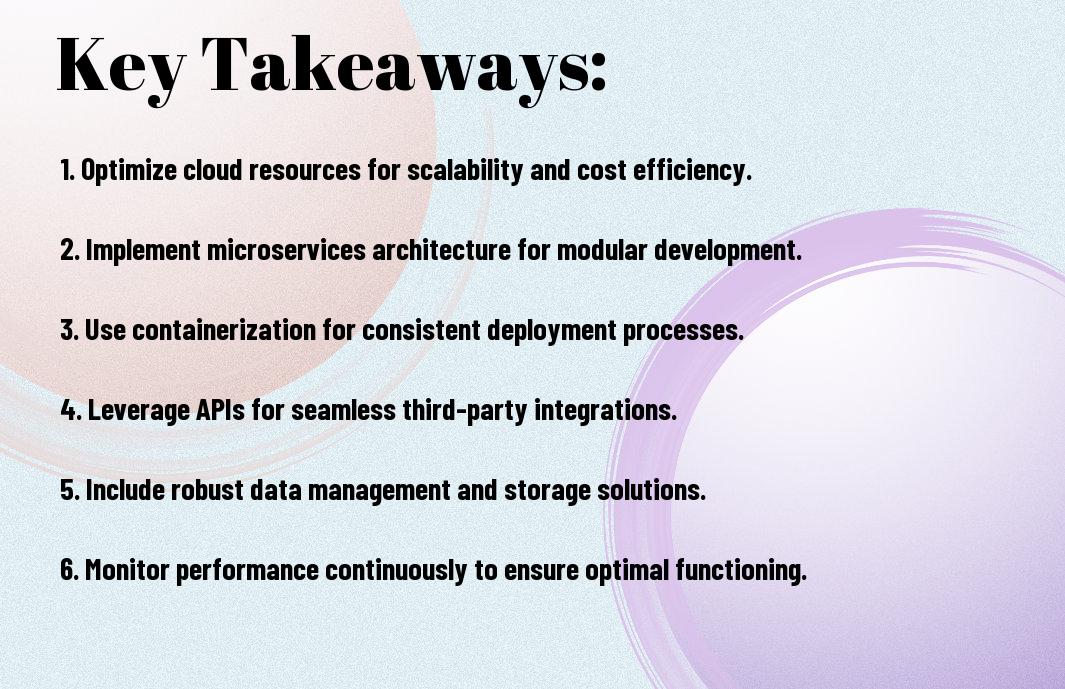
Key Takeaways:
- Designing a scalable AI-enhanced app infrastructure requires a modular architecture that can handle increased traffic and data processing demands, ensuring seamless user experience and efficient resource allocation.
- Implementing cloud-based services and containerization enables greater flexibility and scalability, allowing developers to quickly adapt to changing requirements and deploy updates without disrupting the application.
- Integrating AI and machine learning models into the app infrastructure necessitates a robust data management system, capable of handling large volumes of data and providing real-time insights to inform business decisions.
- Security is a top priority when building a scalable AI-enhanced app infrastructure, with measures such as encryption, access controls, and regular updates necessary to protecting sensitive user data and preventing potential breaches.
- Continuous monitoring and evaluation of the app’s performance, using metrics such as latency, throughput, and user engagement, helps identify areas for improvement and ensures the infrastructure remains optimized for optimal performance and scalability.
Core Infrastructure Components
For building a scalable AI-enhanced app infrastructure, you need to understand the core components involved. You can learn more about this in The Ultimate Guide to Building a Scalable Machine Learning Infrastructure, which provides valuable insights into designing a robust infrastructure.
Microservices Architecture Design
After designing your core infrastructure, you will need to focus on microservices architecture, which allows you to break down your application into smaller, independent services, enabling easier maintenance and scalability, as you build your AI-enhanced app.
Data Pipeline Integration
Behind every successful AI-enhanced app is a well-designed data pipeline, which enables seamless data flow and processing, you will need to integrate your data pipeline with your core infrastructure to ensure efficient data management.
It is vital to design your data pipeline to handle large volumes of data, as this will be the backbone of your AI-enhanced app, you should consider using cloud-based services or distributed computing frameworks to ensure scalability and reliability, allowing your app to process and analyze data efficiently.

AI Layer Implementation
The AI layer is where your app’s intelligence is built, enabling it to learn and adapt to user behavior. You will integrate machine learning models and neural networks to create a scalable infrastructure.
Machine Learning Model Selection
Beneath the surface of your app’s functionality, you need to select the right machine learning models that align with your goals, considering factors such as data type and complexity.
Neural Network Integration Points
Meanwhile, you should identify the neural network integration points in your app, where AI can enhance user experience, such as chatbots or image recognition.
But as you research deeper into integrating neural networks, you will need to consider the trade-offs between model accuracy and computational resources, ensuring your app remains responsive and efficient, which is where your expertise in balancing these factors will be necessary to create a seamless user experience.
Scalability Foundations
Unlike traditional applications, AI-enhanced apps require a robust infrastructure to handle increased traffic and data processing demands, allowing you to efficiently manage your resources and ensure seamless user experience.
Load Balancing Strategies
On the path to scalability, you’ll need to implement effective load balancing strategies to distribute workload across multiple servers, ensuring your app remains responsive and available to your users at all times.
Resource Distribution Mechanisms
Between the various components of your infrastructure, you’ll need to allocate resources efficiently, leveraging mechanisms that allow you to dynamically assign and reassign resources as needed, optimizing your app’s performance and minimizing downtime.
Hence, as you research deeper into resource distribution mechanisms, you’ll discover that they enable you to make the most of your infrastructure, allowing you to scale your app more efficiently and effectively, and ensuring that your users enjoy a consistently high-quality experience, which is imperative for building trust and loyalty in your brand, and ultimately, driving your business forward, you can then focus on further optimizing your app’s performance.
Performance Optimization
Not all applications are created equal, and as you build your AI-enhanced app infrastructure, you’ll need to prioritize performance to ensure a seamless user experience.
Caching Systems
Against the backdrop of increasing user demand, you’ll want to implement caching systems to reduce latency and improve data retrieval times, allowing your app to handle more requests without sacrificing performance.
Query Optimization
Systems like database indexing and query caching can help optimize your app’s performance, enabling you to retrieve data more efficiently and reduce the load on your infrastructure.
Hence, as you investigate deeper into query optimization, you’ll find that techniques such as lazy loading, pagination, and data compression can further enhance your app’s performance, allowing you to handle large amounts of data and scale your infrastructure with ease, ultimately providing your users with a faster and more responsive experience.
Security Framework
After designing your app’s infrastructure, you need to focus on building a robust security framework to protect your users’ data and prevent unauthorized access. This framework should include multiple layers of protection, including data encryption, firewalls, and access controls.
Data Protection Protocols
Any sensitive information that your app collects or stores must be protected with robust data protection protocols, such as encryption and secure data storage, to ensure your users’ data is safe from unauthorized access.
Authentication Systems
For your app to be secure, you need to implement robust authentication systems that verify the identity of your users and prevent unauthorized access to their accounts, using methods such as two-factor authentication and password hashing.
Even as you implement these authentication systems, you should continuously monitor your app’s security and update your systems to stay ahead of potential threats, ensuring that your users’ data and accounts are always protected, and you can maintain their trust in your app.
Monitoring and Analytics
Many factors contribute to a scalable AI-enhanced app infrastructure, and monitoring its performance is key to your success. You need to track various metrics to ensure your app is running smoothly and efficiently.
Real-time Performance Metrics
Against the backdrop of increasing user expectations, you must monitor your app’s real-time performance metrics, such as latency, throughput, and error rates, to identify areas for improvement and optimize your infrastructure accordingly.
AI Behavior Tracking
Any anomalies in your AI model’s behavior can significantly impact your app’s performance, and you should track its decision-making processes and outcomes to ensure they align with your expectations and goals.
Even as you track your AI model’s behavior, you will gain valuable insights into its strengths and weaknesses, allowing you to refine and fine-tune it to better serve your users and improve your app’s overall performance, and you can use this information to make data-driven decisions about your infrastructure and optimize it for maximum efficiency and scalability.
To wrap up
Presently, you have a solid foundation for building a scalable AI-enhanced app infrastructure. You can now design and implement a system that meets your needs, leveraging AI to drive innovation and growth. Your app’s infrastructure will be able to handle increased traffic and demands, ensuring a seamless user experience. You will be well-equipped to make informed decisions about your app’s development, positioning your business for success in a competitive market.
FAQ
Q: What are the key considerations for building a scalable AI-enhanced app infrastructure?
A: When building a scalable AI-enhanced app infrastructure, it’s crucial to consider several factors, including the type of AI technology to be used, the volume of data to be processed, and the expected user traffic. A scalable infrastructure should be able to handle increased traffic and data without compromising performance. This can be achieved by using cloud-based services, containerization, and microservices architecture. Additionally, it’s necessary to ensure that the infrastructure is secure, reliable, and compliant with relevant regulations. By carefully evaluating these factors, developers can create a robust and efficient infrastructure that supports the growth of their AI-enhanced app.
Q: How can I ensure the security and integrity of my AI-enhanced app infrastructure?
A: Ensuring the security and integrity of an AI-enhanced app infrastructure requires a multi-faceted approach. First, it’s necessary to implement robust security protocols, such as encryption, access controls, and authentication mechanisms, to protect sensitive data and prevent unauthorized access. Regular security audits and penetration testing can help identify vulnerabilities and address them before they can be exploited. Furthermore, it’s crucial to keep the infrastructure and its components up-to-date with the latest security patches and updates. Implementing a disaster recovery plan and backup system can also help minimize the impact of potential security breaches or system failures. By prioritizing security and integrity, developers can safeguard their app and maintain user trust.
Q: What are the best practices for monitoring and optimizing the performance of an AI-enhanced app infrastructure?
A: To monitor and optimize the performance of an AI-enhanced app infrastructure, it’s necessary to implement a comprehensive monitoring system that tracks key performance indicators, such as latency, throughput, and error rates. This can be achieved using tools like logging, metrics, and tracing. Regular analysis of performance data can help identify bottlenecks and areas for improvement. Additionally, implementing automation and continuous integration/continuous deployment (CI/CD) pipelines can help streamline the development and deployment process, reducing the risk of human error and improving overall efficiency. By leveraging these best practices, developers can ensure their AI-enhanced app infrastructure operates at optimal levels, providing a seamless user experience and supporting business growth.