Scalable

Developing Scalable Applications with Machine Learning

As you launch on building innovative software solutions, you need to consider the importance of scalability. Your applications will handle increasing amounts of data and user traffic, and machine learning can help. You can leverage machine learning algorithms to develop applications that adapt to growing demands, ensuring seamless performance and efficiency. By integrating machine learning into your development process, you can create scalable applications that drive business success and stay ahead of the competition.

Key Takeaways:

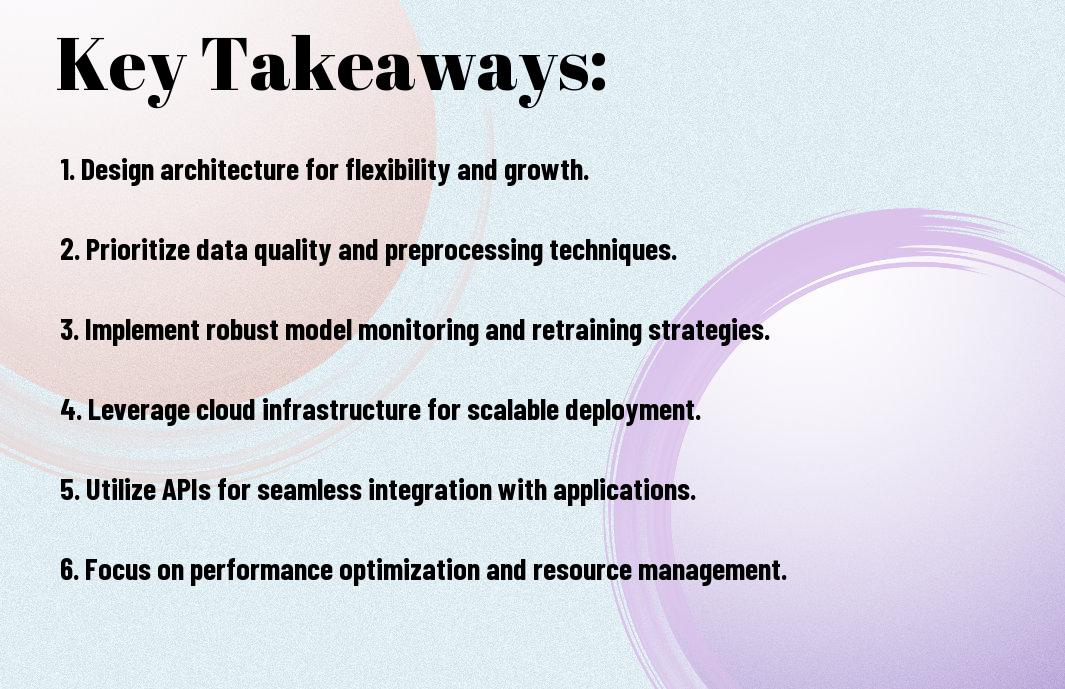
  • Designing scalable applications with machine learning requires a deep understanding of the underlying algorithms and data structures to ensure efficient processing of large datasets and high-performance computations.
  • Scalable machine learning applications rely on distributed computing architectures, such as clusters or cloud-based services, to handle massive amounts of data and complex computations in parallel.
  • Model training and deployment should be automated and integrated into the development pipeline to streamline the process and reduce manual errors, allowing for faster iteration and improvement.
  • Monitoring and evaluation of machine learning models are vital to ensure they continue to perform optimally over time, and to identify areas for improvement and potential issues before they become significant problems.
  • Continuous learning and adaptation are necessary for maintaining the accuracy and effectiveness of machine learning models, as new data becomes available and the underlying patterns and relationships evolve over time.
Machine Learning Architecture Fundamentals

Your application’s architecture is the backbone of its scalability, and machine learning is no exception. You need to design a system that can handle large amounts of data and scale with your growing needs.

Data Pipeline Design

Adeptly, you will need to consider the flow of data into your system, processing, and storage to ensure efficient data management.

Model Selection Strategy

Before selecting a model, you should evaluate your goals, data, and available resources to choose the best approach for your application.

Plus, you will want to consider factors such as model complexity, interpretability, and training time to ensure that your chosen model aligns with your project’s objectives and constraints, allowing you to make informed decisions and optimize your application’s performance.

Scalability Patterns

You will encounter various scalability patterns when developing machine learning applications, and understanding these patterns is important to building efficient systems. Your goal is to design applications that can handle increasing traffic and data without compromising performance.

Horizontal vs Vertical Scaling

Any organization can scale their applications by adding more resources, either by increasing the power of individual servers or by adding more servers to the cluster. Your choice of scaling method depends on your specific needs and the nature of your application.

Distributed Processing Systems

By designing distributed processing systems, you can take advantage of multiple machines to process large datasets and improve overall performance. Your application can be split into smaller tasks that can be executed in parallel, reducing processing time and increasing efficiency.

Plus, distributed processing systems offer several benefits, including fault tolerance and scalability, allowing you to add or remove nodes as needed. You can process large datasets in parallel, reducing the time it takes to train machine learning models and improving your overall productivity. This enables you to focus on developing and deploying your application, rather than worrying about the underlying infrastructure.

Performance Optimization

To develop scalable applications with machine learning, you need to focus on performance optimization. This involves identifying bottlenecks and improving your application’s efficiency, allowing it to handle increased traffic and data.

Resource Management

Across various stages of development, you will encounter resource management challenges. You must allocate resources effectively to ensure your application’s optimal performance, balancing computational power and memory usage to meet your needs.

Caching Mechanisms

Along with efficient resource allocation, caching mechanisms play a significant role in optimizing performance. You can implement caching to store frequently accessed data, reducing the load on your application and improving response times.

Consequently, as you implement caching mechanisms, you will notice significant improvements in your application’s performance. You can cache data at various levels, from database queries to computed results, allowing your application to retrieve information quickly and efficiently, thereby enhancing the overall user experience and supporting your application’s scalability.

Infrastructure Considerations

Many factors contribute to the development of scalable applications with machine learning, and infrastructure is one of them. You need to consider the resources required to support your application, including computing power, storage, and networking. Your infrastructure should be able to handle increased traffic and large amounts of data.

Cloud Platform Selection

Beneath the surface of your application’s infrastructure lies the cloud platform, and you should choose one that meets your needs. You will want to consider factors such as scalability, security, and cost when selecting a cloud platform for your machine learning application.

Containerization Approach

Behind the scenes of your application, containerization plays a significant role in ensuring scalability and efficiency. You can use containerization to package your application and its dependencies, making it easier to deploy and manage.

Considerations for containerization include choosing the right containerization platform, such as Docker, and ensuring that your containers are properly configured and managed. You will also want to consider how you will orchestrate your containers, using tools such as Kubernetes, to ensure that your application is scalable and highly available.

Model Deployment

After developing your machine learning model, you need to deploy it effectively. You can learn more about How to Build Scalable Machine Learning Models to ensure your application performs well.

Continuous Integration Pipeline

Along with deployment, you should set up a continuous integration pipeline to automate testing and deployment of your model, allowing you to focus on improving your application.

Monitoring Solutions

At this stage, you will need to implement monitoring solutions to track your model’s performance and identify areas for improvement, enabling you to make data-driven decisions.

A key aspect of monitoring solutions is the ability to collect and analyze data on your model’s performance, allowing you to identify trends and patterns, and make adjustments to optimize your application, ensuring your users have the best experience possible with your scalable machine learning application.

Testing and Quality Assurance

Not only is testing necessary for ensuring your application functions as expected, but it also helps identify potential issues before they become major problems. You will need to develop a comprehensive testing strategy to validate your machine learning model and ensure it performs well under various conditions.

Model Validation Methods

The primary goal of model validation is to evaluate your model’s performance on unseen data, and you can achieve this by using techniques such as cross-validation and walk-forward optimization. You will be able to assess your model’s ability to generalize well to new data.

Load Testing Protocols

Similarly, modeling your expected traffic and usage patterns will help you design effective load testing protocols. You should simulate various scenarios to ensure your application can handle a large number of users and requests without compromising performance.

In addition, as you develop your load testing protocols, you will want to consider factors such as data throughput, latency, and system resource utilization. You can use various tools and frameworks to simulate traffic and monitor your application’s performance under stress, allowing you to identify bottlenecks and optimize your system for better scalability and reliability.

Summing up

With these considerations, you can develop scalable applications with machine learning that meet your needs. You will be able to design and implement models that grow with your business, handling increasing data and traffic. By applying these principles, you can ensure your applications are efficient, reliable, and adaptable, allowing you to make the most of your machine learning investments and drive your business forward. Your applications will be able to handle complex tasks and provide valuable insights, helping you make informed decisions.

FAQ

Q: What are the key considerations for developing scalable applications with machine learning?

A: When developing scalable applications with machine learning, it’s important to consider several factors. First, the choice of algorithms and models is vital. Selecting models that can handle large datasets and scale horizontally is necessary for ensuring the application can grow with the user base. Additionally, the infrastructure should be designed to support distributed computing, allowing the system to process large amounts of data in parallel. This can be achieved through cloud services or containerization. Lastly, monitoring and logging are vital for identifying bottlenecks and optimizing the application for better performance and scalability.

Q: How do I integrate machine learning into my existing application to make it more scalable?

A: Integrating machine learning into an existing application to enhance scalability involves several steps. First, identify areas where machine learning can improve performance or user experience, such as predictive analytics or personalization. Next, choose a suitable machine learning framework that can be easily integrated with your existing tech stack. Consider using cloud-based machine learning services for scalability and ease of use. It’s also important to design a data pipeline that can efficiently collect, process, and feed data into your machine learning models. Finally, implement a feedback loop that allows your application to learn from user interactions and improve over time, ensuring continuous scalability and improvement.

Q: What are the best practices for training and deploying machine learning models in scalable applications?

A: Best practices for training and deploying machine learning models in scalable applications include using version control for model tracking, automating the training process with pipelines, and leveraging hyperparameter tuning for optimal model performance. It’s also beneficial to use techniques like model pruning and knowledge distillation to reduce model size and improve inference speed. For deployment, consider using containerization (e.g., Docker) and orchestration tools (e.g., Kubernetes) to manage and scale model deployments efficiently. Monitoring model performance in production and continuously updating models with new data is key to maintaining scalability and accuracy. Furthermore, implementing explainability techniques can help understand model decisions, improving trust and reliability in the application.

Building a Scalable AI-Enhanced App Infrastructure

As you begin on developing an app, you need to consider a scalable infrastructure that can handle growing demands. Your goal is to create a seamless user experience, and integrating AI-enhanced features can help you achieve this. You will need to design an infrastructure that can support complex AI algorithms and handle large amounts of data, ensuring your app performs optimally as your user base expands. Your infrastructure should be able to adapt to changing requirements, making it imperative to plan carefully from the outset.

Key Takeaways:

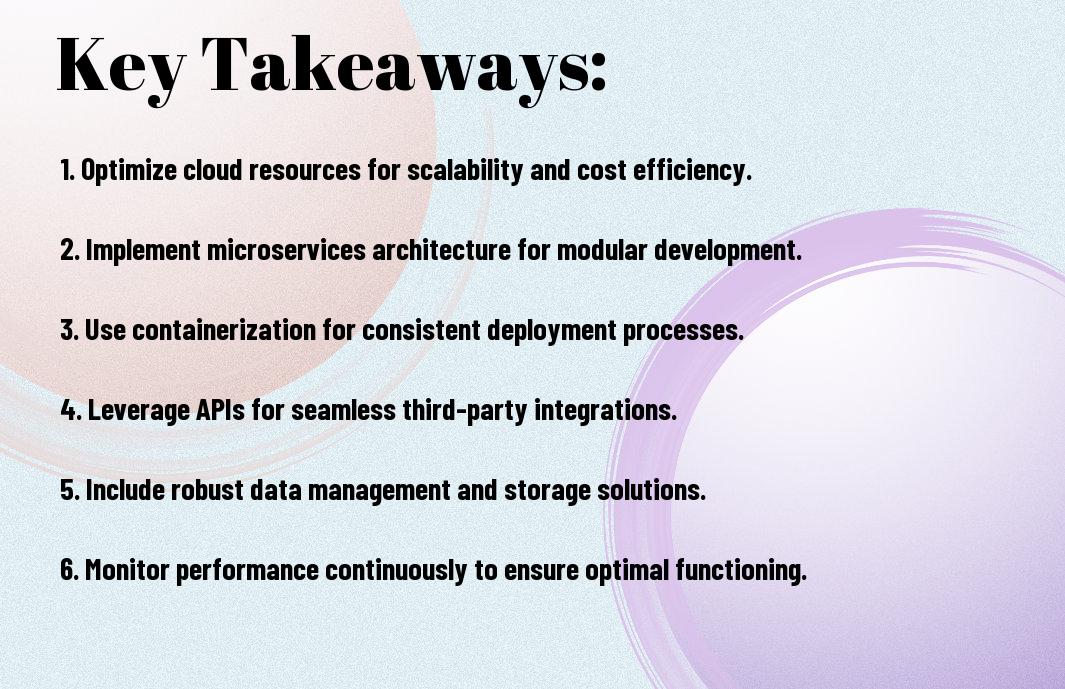
  • Designing a scalable AI-enhanced app infrastructure requires a modular architecture that can handle increased traffic and data processing demands, ensuring seamless user experience and efficient resource allocation.
  • Implementing cloud-based services and containerization enables greater flexibility and scalability, allowing developers to quickly adapt to changing requirements and deploy updates without disrupting the application.
  • Integrating AI and machine learning models into the app infrastructure necessitates a robust data management system, capable of handling large volumes of data and providing real-time insights to inform business decisions.
  • Security is a top priority when building a scalable AI-enhanced app infrastructure, with measures such as encryption, access controls, and regular updates necessary to protecting sensitive user data and preventing potential breaches.
  • Continuous monitoring and evaluation of the app’s performance, using metrics such as latency, throughput, and user engagement, helps identify areas for improvement and ensures the infrastructure remains optimized for optimal performance and scalability.

    Core Infrastructure Components

    For building a scalable AI-enhanced app infrastructure, you need to understand the core components involved. You can learn more about this in The Ultimate Guide to Building a Scalable Machine Learning Infrastructure, which provides valuable insights into designing a robust infrastructure.

    Microservices Architecture Design

    After designing your core infrastructure, you will need to focus on microservices architecture, which allows you to break down your application into smaller, independent services, enabling easier maintenance and scalability, as you build your AI-enhanced app.

    Data Pipeline Integration

    Behind every successful AI-enhanced app is a well-designed data pipeline, which enables seamless data flow and processing, you will need to integrate your data pipeline with your core infrastructure to ensure efficient data management.

    It is vital to design your data pipeline to handle large volumes of data, as this will be the backbone of your AI-enhanced app, you should consider using cloud-based services or distributed computing frameworks to ensure scalability and reliability, allowing your app to process and analyze data efficiently.

    AI Layer Implementation

    The AI layer is where your app’s intelligence is built, enabling it to learn and adapt to user behavior. You will integrate machine learning models and neural networks to create a scalable infrastructure.

    Machine Learning Model Selection

    Beneath the surface of your app’s functionality, you need to select the right machine learning models that align with your goals, considering factors such as data type and complexity.

    Neural Network Integration Points

    Meanwhile, you should identify the neural network integration points in your app, where AI can enhance user experience, such as chatbots or image recognition.

    But as you research deeper into integrating neural networks, you will need to consider the trade-offs between model accuracy and computational resources, ensuring your app remains responsive and efficient, which is where your expertise in balancing these factors will be necessary to create a seamless user experience.

    Scalability Foundations

    Unlike traditional applications, AI-enhanced apps require a robust infrastructure to handle increased traffic and data processing demands, allowing you to efficiently manage your resources and ensure seamless user experience.

    Load Balancing Strategies

    On the path to scalability, you’ll need to implement effective load balancing strategies to distribute workload across multiple servers, ensuring your app remains responsive and available to your users at all times.

    Resource Distribution Mechanisms

    Between the various components of your infrastructure, you’ll need to allocate resources efficiently, leveraging mechanisms that allow you to dynamically assign and reassign resources as needed, optimizing your app’s performance and minimizing downtime.

    Hence, as you research deeper into resource distribution mechanisms, you’ll discover that they enable you to make the most of your infrastructure, allowing you to scale your app more efficiently and effectively, and ensuring that your users enjoy a consistently high-quality experience, which is imperative for building trust and loyalty in your brand, and ultimately, driving your business forward, you can then focus on further optimizing your app’s performance.

    Performance Optimization

    Not all applications are created equal, and as you build your AI-enhanced app infrastructure, you’ll need to prioritize performance to ensure a seamless user experience.

    Caching Systems

    Against the backdrop of increasing user demand, you’ll want to implement caching systems to reduce latency and improve data retrieval times, allowing your app to handle more requests without sacrificing performance.

    Query Optimization

    Systems like database indexing and query caching can help optimize your app’s performance, enabling you to retrieve data more efficiently and reduce the load on your infrastructure.

    Hence, as you investigate deeper into query optimization, you’ll find that techniques such as lazy loading, pagination, and data compression can further enhance your app’s performance, allowing you to handle large amounts of data and scale your infrastructure with ease, ultimately providing your users with a faster and more responsive experience.

    Security Framework

    After designing your app’s infrastructure, you need to focus on building a robust security framework to protect your users’ data and prevent unauthorized access. This framework should include multiple layers of protection, including data encryption, firewalls, and access controls.

    Data Protection Protocols

    Any sensitive information that your app collects or stores must be protected with robust data protection protocols, such as encryption and secure data storage, to ensure your users’ data is safe from unauthorized access.

    Authentication Systems

    For your app to be secure, you need to implement robust authentication systems that verify the identity of your users and prevent unauthorized access to their accounts, using methods such as two-factor authentication and password hashing.

    Even as you implement these authentication systems, you should continuously monitor your app’s security and update your systems to stay ahead of potential threats, ensuring that your users’ data and accounts are always protected, and you can maintain their trust in your app.

    Monitoring and Analytics

    Many factors contribute to a scalable AI-enhanced app infrastructure, and monitoring its performance is key to your success. You need to track various metrics to ensure your app is running smoothly and efficiently.

    Real-time Performance Metrics

    Against the backdrop of increasing user expectations, you must monitor your app’s real-time performance metrics, such as latency, throughput, and error rates, to identify areas for improvement and optimize your infrastructure accordingly.

    AI Behavior Tracking

    Any anomalies in your AI model’s behavior can significantly impact your app’s performance, and you should track its decision-making processes and outcomes to ensure they align with your expectations and goals.

    Even as you track your AI model’s behavior, you will gain valuable insights into its strengths and weaknesses, allowing you to refine and fine-tune it to better serve your users and improve your app’s overall performance, and you can use this information to make data-driven decisions about your infrastructure and optimize it for maximum efficiency and scalability.

    To wrap up

    Presently, you have a solid foundation for building a scalable AI-enhanced app infrastructure. You can now design and implement a system that meets your needs, leveraging AI to drive innovation and growth. Your app’s infrastructure will be able to handle increased traffic and demands, ensuring a seamless user experience. You will be well-equipped to make informed decisions about your app’s development, positioning your business for success in a competitive market.

    FAQ

    Q: What are the key considerations for building a scalable AI-enhanced app infrastructure?

    A: When building a scalable AI-enhanced app infrastructure, it’s crucial to consider several factors, including the type of AI technology to be used, the volume of data to be processed, and the expected user traffic. A scalable infrastructure should be able to handle increased traffic and data without compromising performance. This can be achieved by using cloud-based services, containerization, and microservices architecture. Additionally, it’s necessary to ensure that the infrastructure is secure, reliable, and compliant with relevant regulations. By carefully evaluating these factors, developers can create a robust and efficient infrastructure that supports the growth of their AI-enhanced app.

    Q: How can I ensure the security and integrity of my AI-enhanced app infrastructure?

    A: Ensuring the security and integrity of an AI-enhanced app infrastructure requires a multi-faceted approach. First, it’s necessary to implement robust security protocols, such as encryption, access controls, and authentication mechanisms, to protect sensitive data and prevent unauthorized access. Regular security audits and penetration testing can help identify vulnerabilities and address them before they can be exploited. Furthermore, it’s crucial to keep the infrastructure and its components up-to-date with the latest security patches and updates. Implementing a disaster recovery plan and backup system can also help minimize the impact of potential security breaches or system failures. By prioritizing security and integrity, developers can safeguard their app and maintain user trust.

    Q: What are the best practices for monitoring and optimizing the performance of an AI-enhanced app infrastructure?

    A: To monitor and optimize the performance of an AI-enhanced app infrastructure, it’s necessary to implement a comprehensive monitoring system that tracks key performance indicators, such as latency, throughput, and error rates. This can be achieved using tools like logging, metrics, and tracing. Regular analysis of performance data can help identify bottlenecks and areas for improvement. Additionally, implementing automation and continuous integration/continuous deployment (CI/CD) pipelines can help streamline the development and deployment process, reducing the risk of human error and improving overall efficiency. By leveraging these best practices, developers can ensure their AI-enhanced app infrastructure operates at optimal levels, providing a seamless user experience and supporting business growth.

Skip to content