
As you launch on building AI-enhanced applications, you’ll need a solid foundation to ensure success. Your goal is to create intelligent, efficient, and scalable solutions that meet your users’ needs. To achieve this, you require a well-rounded toolkit that includes the right technologies, frameworks, and techniques. You will learn about the must-have tools and technologies that will help you develop innovative AI-enhanced applications, and how to leverage them to drive your project forward, in this post.
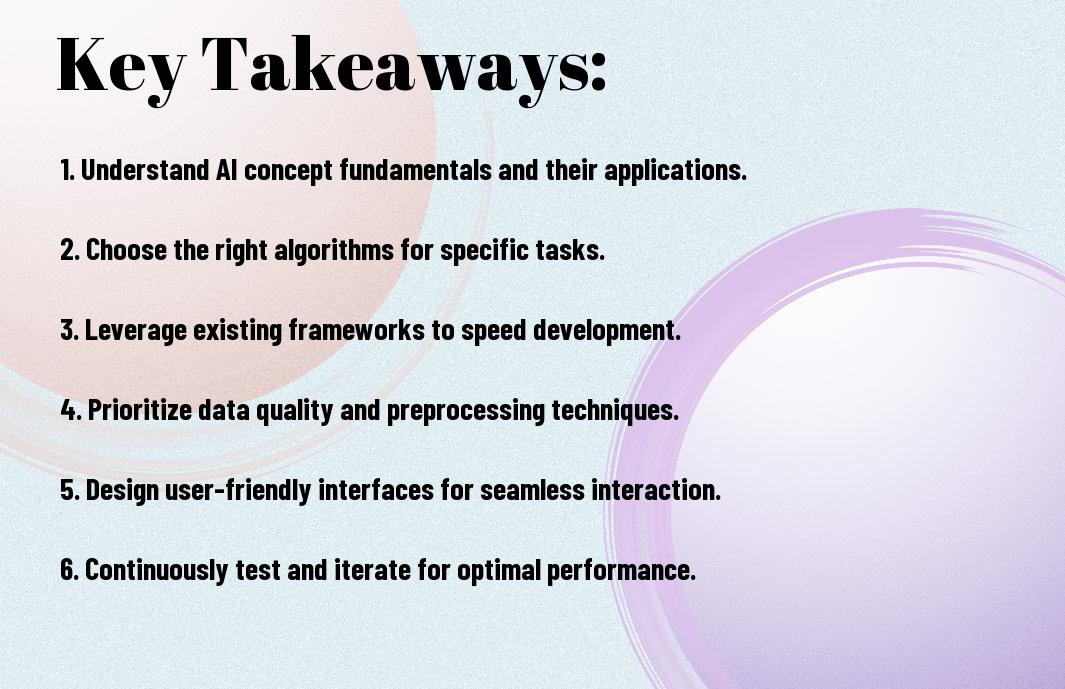
Key Takeaways:
- Building AI-enhanced applications requires a solid understanding of machine learning fundamentals, including data preparation, model training, and deployment.
- A well-designed toolkit for AI-enhanced applications should include a range of technologies, such as natural language processing, computer vision, and predictive analytics.
- Effective integration of AI capabilities into applications depends on the ability to collect, process, and analyze large datasets, as well as to deploy models in a scalable and secure manner.
- A key aspect of building successful AI-enhanced applications is the ability to balance technical complexity with user-centered design, ensuring that AI-driven features are intuitive and accessible to end-users.
- Continuous monitoring and evaluation of AI-enhanced applications is necessary to ensure they are functioning as intended, and to identify areas for improvement and further development.

Core AI Development Components
A solid foundation in AI development is important for building effective AI-enhanced applications, and you will need to familiarize yourself with the key components that drive this technology, including machine learning frameworks and neural network libraries, to create your own AI-enhanced applications.
Machine Learning Frameworks
Between the various tools and technologies available, you will find that machine learning frameworks such as TensorFlow and PyTorch are among the most popular choices for building and deploying AI models, allowing you to focus on developing your application’s logic.
Neural Network Libraries
Behind the scenes, neural network libraries like Keras and Caffe provide the necessary functionality for building and training neural networks, enabling you to create complex AI models that can be integrated into your applications, and you can leverage these libraries to simplify your development process.
Indeed, as you explore deeper into the world of neural network libraries, you will discover a wide range of tools and resources that can help you optimize your AI models, from data preprocessing to model deployment, and by utilizing these libraries effectively, you can significantly improve the performance and accuracy of your AI-enhanced applications, allowing you to create more sophisticated and intelligent systems that can drive business value and innovation.
Data Processing Infrastructure
While building AI-enhanced applications, you need a robust data processing infrastructure to handle large volumes of data. Your infrastructure should be scalable, secure, and efficient to support your application’s growth.
Data Collection Tools
Alongside other tools, you will need data collection tools to gather relevant data for your application. You can utilize web scraping, APIs, or data warehouses to collect data, depending on your specific needs.
Data Cleaning Solutions
Beneath the surface of your data processing infrastructure, you will need data cleaning solutions to ensure your data is accurate and reliable. You can use data validation, data normalization, and data transformation to clean your data.
But as you research deeper into data cleaning, you will find that it involves handling missing values, removing duplicates, and dealing with outliers. You can use machine learning algorithms or statistical methods to identify and correct errors in your data, ensuring that your AI-enhanced application makes informed decisions based on high-quality data.
Integration Essentials
Your application’s success relies on seamless integration with various tools and services, and having the right integration vitals in your toolkit is vital for building AI-enhanced applications that meet your needs.
API Development Tools
For developing robust APIs, you will need tools that support your API development lifecycle, from design to deployment, and allow you to create scalable and secure APIs that integrate with your AI-enhanced applications.
Cloud Service Connectors
Above all, cloud service connectors play a significant role in integrating your application with cloud services, enabling you to leverage the power of cloud computing and artificial intelligence to enhance your application’s capabilities.
For instance, when you use cloud service connectors, you can easily integrate your application with popular cloud services such as AWS or Google Cloud, and access a wide range of AI and machine learning services, such as natural language processing, computer vision, and predictive analytics, to build more intelligent and interactive applications that meet your specific needs.
Security and Privacy Tools
Keep your AI-enhanced applications secure with the right tools, you can protect your users’ data and prevent potential threats, ensuring the integrity of your system and maintaining your users’ trust in your application.
Data Protection Frameworks
The foundation of a secure application lies in a robust data protection framework, you will need to implement policies and procedures that ensure the confidentiality, integrity, and availability of your users’ data, and you can use established frameworks to guide your efforts.
Authentication Systems
By implementing robust authentication systems, you can ensure that only authorized users have access to your application and its data, and you can use various authentication methods to verify user identities and prevent unauthorized access.
Indeed, authentication systems are a key component of your application’s security, and you should consider using multi-factor authentication, biometric authentication, or other advanced methods to provide an additional layer of security, and you can also use machine learning algorithms to detect and prevent authentication attempts that may be malicious or unauthorized.
Performance Optimization
Now that you have developed your AI-enhanced application, it’s time to focus on performance optimization to ensure seamless user experience and efficient resource utilization.
Model Compression Tools
Condensing your AI models is necessary to reduce computational overhead, and you can achieve this using various model compression tools that help simplify your models without compromising their accuracy.
Runtime Optimization Solutions
After deploying your application, you’ll need to monitor its performance and optimize it at runtime to adapt to changing usage patterns and hardware configurations, which can be achieved using specialized runtime optimization solutions.
In fact, these solutions enable you to fine-tune your application’s performance in real-time, allowing you to identify and address bottlenecks, and make data-driven decisions to improve your application’s overall efficiency and scalability, ensuring your users have a responsive and engaging experience with your AI-enhanced application.
Testing and Monitoring
For building AI-enhanced applications, you need to ensure that your models are functioning as expected, and your system is performing optimally, which is where testing and monitoring come in, allowing you to identify and fix issues before they affect your users.
AI Model Testing Suites
One of the key components of testing is utilizing AI model testing suites, which provide you with a comprehensive set of tools to evaluate your models’ performance, accuracy, and reliability, enabling you to refine and improve them.
Performance Monitoring Tools
After deploying your application, you will need performance monitoring tools to track its performance, identify bottlenecks, and optimize its efficiency, which is important for delivering a seamless user experience and maintaining your application’s overall health.
Monitoring your application’s performance in real-time allows you to quickly respond to issues, make data-driven decisions, and continuously improve your system, ensuring that your users receive the best possible experience, and your application operates at its full potential, which is important for your business’s success, and you can achieve this by leveraging the right performance monitoring tools.
Conclusion
Hence, as you begin on building AI-enhanced applications, you will find that having the right toolkit is vital to your success. You will be able to develop innovative solutions that meet your needs, leveraging the power of AI to drive your projects forward. With your newfound knowledge, you can create applications that transform your business and stay ahead of the curve, making the most of your investment in AI technology and maximizing your returns.
FAQ
Q: What is The Essential Toolkit for Building AI-Enhanced Applications and how does it support developers?
A: The Essential Toolkit for Building AI-Enhanced Applications is a comprehensive suite of tools designed to help developers create, deploy, and manage artificial intelligence (AI) and machine learning (ML) models within their applications. This toolkit provides a wide range of functionalities, including data preparation, model training, and model deployment, along with integration capabilities that allow developers to seamlessly embed AI-enhanced features into their software products. By leveraging this toolkit, developers can accelerate the development process, improve the accuracy of AI models, and enhance the overall user experience of their applications.
Q: What kind of support and resources are available for developers using The Essential Toolkit for Building AI-Enhanced Applications?
A: Developers using The Essential Toolkit for Building AI-Enhanced Applications have access to a variety of support resources and tools. These include extensive documentation, tutorials, and guides that cover every aspect of the toolkit, from initial setup to advanced model tuning. Additionally, a community forum and dedicated support team are available to address any questions or issues that may arise during the development process. Regular updates and new feature releases ensure that developers have the latest technologies and methodologies at their disposal, allowing them to stay at the forefront of AI-enhanced application development.
Q: How does The Essential Toolkit for Building AI-Enhanced Applications ensure the security and privacy of data used in AI model training and deployment?
A: The Essential Toolkit for Building AI-Enhanced Applications prioritizes the security and privacy of data used in AI model training and deployment through several robust measures. It incorporates advanced encryption technologies to protect data both in transit and at rest. Additionally, the toolkit is designed with privacy by design principles, ensuring that data collection, storage, and processing adhere to stringent privacy standards. Developers can also leverage the toolkit’s built-in access controls and auditing capabilities to manage who has access to sensitive data and monitor all interactions with the data. This comprehensive approach to security and privacy enables developers to build trust with their users and comply with regulatory requirements.


