Applications

Top AI Frameworks to Create Next-Gen Applications

As you begin on building innovative applications, you’ll need to leverage the power of artificial intelligence. Your goal is to create cutting-edge solutions that transform industries and revolutionize user experiences. To achieve this, you require the right tools and technologies. You’ll explore the best AI frameworks that enable you to develop next-generation applications, unlocking new possibilities and driving business success. Your journey to creating intelligent and interactive applications starts with the right foundation, and this post will guide you through the top AI frameworks to get you started.

Key Takeaways:

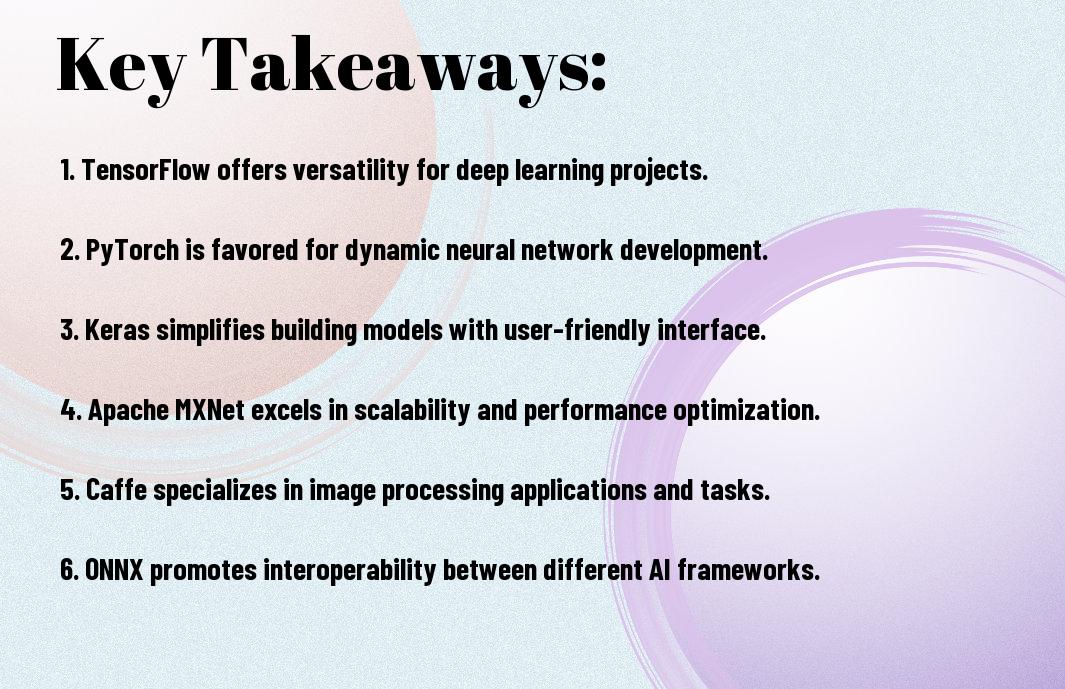
  • TensorFlow and PyTorch are two of the most popular AI frameworks used for building next-gen applications, offering a wide range of tools and libraries for tasks such as computer vision, natural language processing, and predictive analytics.
  • Microsoft Cognitive Toolkit (CNTK) is another powerful AI framework that allows developers to build and train deep learning models, with a focus on scalability and performance.
  • Keras is a high-level AI framework that provides an easy-to-use interface for building and training neural networks, making it a great choice for developers who are new to AI and machine learning.
  • OpenCV is a computer vision framework that provides a wide range of tools and libraries for tasks such as image and video processing, object detection, and facial recognition, making it a great choice for building applications that require computer vision capabilities.
  • Scikit-learn is a machine learning framework that provides a wide range of algorithms and tools for tasks such as classification, regression, and clustering, making it a great choice for building applications that require predictive analytics and data analysis capabilities.
    Evolution of AI Frameworks

    Your journey to creating next-gen applications begins with understanding the evolution of AI frameworks, which have transformed significantly over the years, and you can explore the List of Top Generative AI Frameworks and Tools for 2025 to stay updated.

    Historical Development

    Developing from simple machine learning algorithms, AI frameworks have come a long way, and as you research into their history, you’ll discover how they paved the way for modern applications.

    Current Technology Landscape

    Against the backdrop of rapid technological advancements, you’re now faced with a plethora of AI frameworks to choose from, each with its unique features and capabilities.

    Current advancements in AI frameworks have led to the development of more sophisticated and specialized tools, allowing you to create complex applications with ease, and as you explore these frameworks, you’ll find that they cater to your specific needs, whether it’s natural language processing, computer vision, or predictive analytics.

    Popular AI Development Tools

    Even with numerous AI frameworks available, you can narrow down your options by focusing on the most popular ones, which offer extensive community support and a wide range of resources to help you get started with your next-gen application development.

    TensorFlow Ecosystem

    Besides being an open-source framework, TensorFlow offers a comprehensive ecosystem that includes tools like TensorFlow Lite and TensorFlow.js, allowing you to develop and deploy AI models across various platforms, making it a versatile choice for your AI development needs.

    PyTorch Framework

    Below the surface of PyTorch’s dynamic computation graph lies a powerful framework that enables you to build and train AI models rapidly, thanks to its modular design and automatic differentiation capabilities, making it an ideal choice for your rapid prototyping and development requirements.

    Due to its simplicity and flexibility, PyTorch has become a favorite among developers, allowing you to easily integrate it with other tools and frameworks, and its strong GPU support enables you to train complex models quickly, giving you a significant edge in developing and deploying your next-gen applications.

    Deep Learning Frameworks

    Keep in mind that deep learning frameworks are vital for building next-gen applications, as they provide the necessary tools and libraries to create complex models. You can utilize these frameworks to develop applications with advanced capabilities, such as image and speech recognition, natural language processing, and more.

    Core Components

    For instance, when working with deep learning frameworks, you will typically encounter core components like tensors, automatic differentiation, and optimization algorithms, which are necessary for building and training your models. You can use these components to create custom models tailored to your specific needs.

    Neural Network Architecture

    For example, when designing a neural network architecture, you will need to consider factors like layer types, connections, and activation functions, which can significantly impact your model’s performance. You can experiment with different architectures to find the one that best suits your application.

    Due to the complexity of neural network architectures, you will need to carefully evaluate your design choices to ensure they align with your project’s goals. You can use your knowledge of deep learning frameworks to create and train models that achieve state-of-the-art performance, and your applications will benefit from the advanced capabilities they provide.

    Natural Language Processing Tools

    After exploring various AI frameworks, you’ll find that natural language processing (NLP) tools are vital for creating next-gen applications that can understand and interact with users in a more human-like way, enabling you to build more sophisticated and engaging interfaces.

    Framework Capabilities

    Prior to selecting an NLP framework, you should consider the capabilities you need, as you will want to choose one that aligns with your project’s requirements, allowing you to leverage features such as sentiment analysis, entity recognition, and language translation to enhance your application.

    Implementation Methods

    Along with choosing the right framework, you need to consider the implementation methods, as you will want to ensure that your NLP tool integrates seamlessly with your existing infrastructure, enabling you to focus on developing innovative features and improving user experience.

    Language support is a key aspect of implementation methods, as you will need to decide which languages your application will support, and ensure that your NLP framework can handle the nuances of each language, allowing you to reach a broader audience and provide a more personalized experience for your users.

    Computer Vision Frameworks

    Once again, you’ll find that computer vision frameworks are crucial for creating next-gen applications, enabling your system to interpret and understand visual data from images and videos, and make informed decisions based on that data.

    Image Processing Tools

    After selecting a suitable framework, you can utilize image processing tools to enhance, manipulate, and analyze your images, allowing your application to extract valuable insights and features from visual data.

    Video Analysis Systems

    Across various industries, you can leverage video analysis systems to detect objects, track movements, and recognize patterns, making it possible to develop innovative applications such as surveillance systems and autonomous vehicles.

    Frameworks like OpenCV and TensorFlow provide you with the necessary tools to build and deploy video analysis systems, enabling your application to process and analyze video feeds in real-time, and make data-driven decisions based on the insights extracted from the video data, allowing you to create more sophisticated and intelligent applications.

    Edge Computing AI Solutions

    Not all AI frameworks are created equal, and when it comes to edge computing, you need solutions that can process data in real-time, reducing latency and improving performance, which is imperative for your next-gen applications.

    Mobile Development Frameworks

    For instance, when developing mobile applications, you can leverage frameworks like TensorFlow Lite or Core ML to create seamless user experiences, enabling your apps to run efficiently on edge devices.

    IoT Integration Tools

    Edge computing enables you to integrate AI with IoT devices, allowing your applications to collect and process data from various sources, making your solutions more intelligent and responsive to user needs.

    In fact, as you examine deeper into IoT integration tools, you will discover a wide range of libraries and software development kits (SDKs) that simplify the process of connecting your AI models to IoT devices, enabling you to create more sophisticated and automated applications that can analyze data and make decisions in real-time.

    Final Words

    As a reminder, you now have the knowledge to create next-gen applications using top AI frameworks. You can leverage your newfound understanding to develop innovative solutions, enhancing your applications and staying ahead in the market. With your skills, you will be able to build cutting-edge products, driving your business forward and improving your customers’ experiences. Your ability to harness AI will unlock new opportunities, enabling you to achieve your goals and succeed in the rapidly evolving tech landscape.

    FAQ

    Q: What are the most popular AI frameworks used to create next-gen applications?

    A: The most popular AI frameworks used to create next-gen applications include TensorFlow, PyTorch, and Keras. TensorFlow is an open-source framework developed by Google, known for its extensive community support and wide range of tools. PyTorch, developed by Facebook, is popular for its ease of use and rapid prototyping capabilities. Keras, on the other hand, is a high-level framework that provides an easy-to-use interface for building neural networks. These frameworks are widely used in various applications, including natural language processing, computer vision, and predictive analytics.

    Q: What are the key factors to consider when selecting an AI framework for next-gen application development?

    A: When dicking out an AI framework for next-gen application development, several key factors should be considered. These include the type of application being developed, the level of complexity, and the required scalability. Additionally, the framework’s compatibility with existing infrastructure, the size and activity of its community, and the availability of documentation and support are also important considerations. Furthermore, the framework’s support for various AI and machine learning algorithms, as well as its integration with other tools and technologies, should also be evaluated. By carefully considering these factors, developers can choose the most suitable framework for their specific needs and ensure the success of their next-gen application.

    Q: How do AI frameworks contribute to the development of next-gen applications, and what benefits do they offer?

    A: AI frameworks significantly contribute to the development of next-gen applications by providing pre-built components, tools, and libraries that simplify and accelerate the development process. These frameworks offer a range of benefits, including improved efficiency, increased accuracy, and enhanced scalability. They enable developers to focus on building innovative applications, rather than starting from scratch, and provide access to advanced AI and machine learning capabilities. Additionally, AI frameworks facilitate collaboration and knowledge sharing among developers, promoting the creation of more sophisticated and powerful next-gen applications. By leveraging these frameworks, developers can create applications that are more intelligent, interactive, and user-friendly, leading to improved user experiences and increased business value.

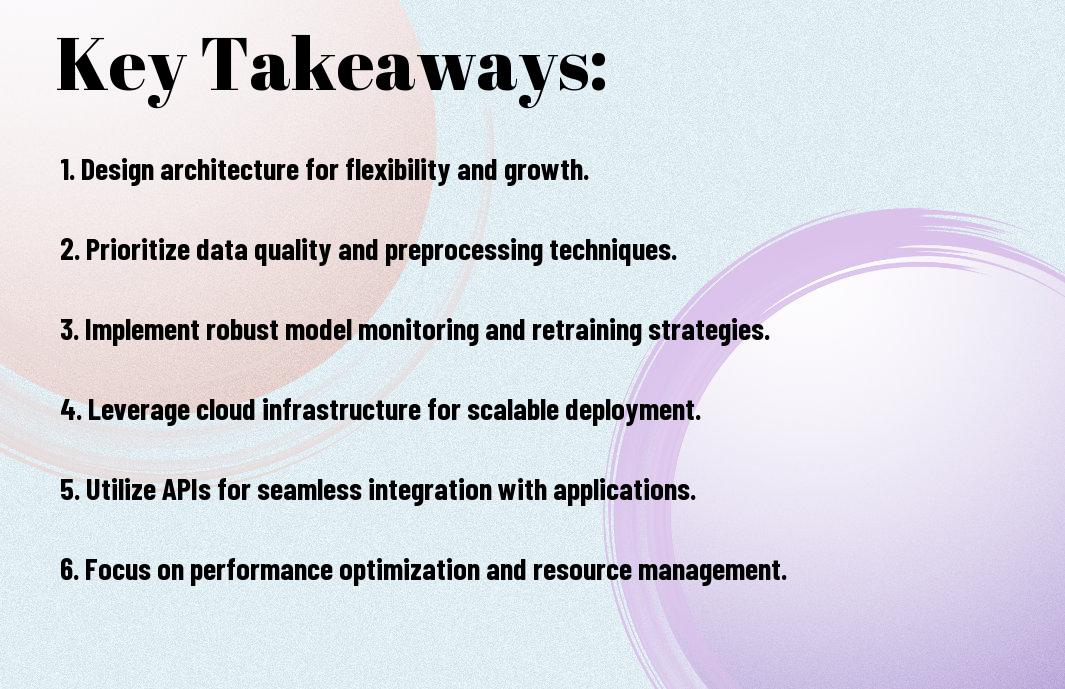
Developing Scalable Applications with Machine Learning

As you launch on building innovative software solutions, you need to consider the importance of scalability. Your applications will handle increasing amounts of data and user traffic, and machine learning can help. You can leverage machine learning algorithms to develop applications that adapt to growing demands, ensuring seamless performance and efficiency. By integrating machine learning into your development process, you can create scalable applications that drive business success and stay ahead of the competition.

Key Takeaways:

  • Designing scalable applications with machine learning requires a deep understanding of the underlying algorithms and data structures to ensure efficient processing of large datasets and high-performance computations.
  • Scalable machine learning applications rely on distributed computing architectures, such as clusters or cloud-based services, to handle massive amounts of data and complex computations in parallel.
  • Model training and deployment should be automated and integrated into the development pipeline to streamline the process and reduce manual errors, allowing for faster iteration and improvement.
  • Monitoring and evaluation of machine learning models are vital to ensure they continue to perform optimally over time, and to identify areas for improvement and potential issues before they become significant problems.
  • Continuous learning and adaptation are necessary for maintaining the accuracy and effectiveness of machine learning models, as new data becomes available and the underlying patterns and relationships evolve over time.

Machine Learning Architecture Fundamentals

Your application’s architecture is the backbone of its scalability, and machine learning is no exception. You need to design a system that can handle large amounts of data and scale with your growing needs.

Data Pipeline Design

Adeptly, you will need to consider the flow of data into your system, processing, and storage to ensure efficient data management.

Model Selection Strategy

Before selecting a model, you should evaluate your goals, data, and available resources to choose the best approach for your application.

Plus, you will want to consider factors such as model complexity, interpretability, and training time to ensure that your chosen model aligns with your project’s objectives and constraints, allowing you to make informed decisions and optimize your application’s performance.

Scalability Patterns

You will encounter various scalability patterns when developing machine learning applications, and understanding these patterns is important to building efficient systems. Your goal is to design applications that can handle increasing traffic and data without compromising performance.

Horizontal vs Vertical Scaling

Any organization can scale their applications by adding more resources, either by increasing the power of individual servers or by adding more servers to the cluster. Your choice of scaling method depends on your specific needs and the nature of your application.

Distributed Processing Systems

By designing distributed processing systems, you can take advantage of multiple machines to process large datasets and improve overall performance. Your application can be split into smaller tasks that can be executed in parallel, reducing processing time and increasing efficiency.

Plus, distributed processing systems offer several benefits, including fault tolerance and scalability, allowing you to add or remove nodes as needed. You can process large datasets in parallel, reducing the time it takes to train machine learning models and improving your overall productivity. This enables you to focus on developing and deploying your application, rather than worrying about the underlying infrastructure.

Performance Optimization

To develop scalable applications with machine learning, you need to focus on performance optimization. This involves identifying bottlenecks and improving your application’s efficiency, allowing it to handle increased traffic and data.

Resource Management

Across various stages of development, you will encounter resource management challenges. You must allocate resources effectively to ensure your application’s optimal performance, balancing computational power and memory usage to meet your needs.

Caching Mechanisms

Along with efficient resource allocation, caching mechanisms play a significant role in optimizing performance. You can implement caching to store frequently accessed data, reducing the load on your application and improving response times.

Consequently, as you implement caching mechanisms, you will notice significant improvements in your application’s performance. You can cache data at various levels, from database queries to computed results, allowing your application to retrieve information quickly and efficiently, thereby enhancing the overall user experience and supporting your application’s scalability.

Infrastructure Considerations

Many factors contribute to the development of scalable applications with machine learning, and infrastructure is one of them. You need to consider the resources required to support your application, including computing power, storage, and networking. Your infrastructure should be able to handle increased traffic and large amounts of data.

Cloud Platform Selection

Beneath the surface of your application’s infrastructure lies the cloud platform, and you should choose one that meets your needs. You will want to consider factors such as scalability, security, and cost when selecting a cloud platform for your machine learning application.

Containerization Approach

Behind the scenes of your application, containerization plays a significant role in ensuring scalability and efficiency. You can use containerization to package your application and its dependencies, making it easier to deploy and manage.

Considerations for containerization include choosing the right containerization platform, such as Docker, and ensuring that your containers are properly configured and managed. You will also want to consider how you will orchestrate your containers, using tools such as Kubernetes, to ensure that your application is scalable and highly available.

Model Deployment

After developing your machine learning model, you need to deploy it effectively. You can learn more about How to Build Scalable Machine Learning Models to ensure your application performs well.

Continuous Integration Pipeline

Along with deployment, you should set up a continuous integration pipeline to automate testing and deployment of your model, allowing you to focus on improving your application.

Monitoring Solutions

At this stage, you will need to implement monitoring solutions to track your model’s performance and identify areas for improvement, enabling you to make data-driven decisions.

A key aspect of monitoring solutions is the ability to collect and analyze data on your model’s performance, allowing you to identify trends and patterns, and make adjustments to optimize your application, ensuring your users have the best experience possible with your scalable machine learning application.

Testing and Quality Assurance

Not only is testing necessary for ensuring your application functions as expected, but it also helps identify potential issues before they become major problems. You will need to develop a comprehensive testing strategy to validate your machine learning model and ensure it performs well under various conditions.

Model Validation Methods

The primary goal of model validation is to evaluate your model’s performance on unseen data, and you can achieve this by using techniques such as cross-validation and walk-forward optimization. You will be able to assess your model’s ability to generalize well to new data.

Load Testing Protocols

Similarly, modeling your expected traffic and usage patterns will help you design effective load testing protocols. You should simulate various scenarios to ensure your application can handle a large number of users and requests without compromising performance.

In addition, as you develop your load testing protocols, you will want to consider factors such as data throughput, latency, and system resource utilization. You can use various tools and frameworks to simulate traffic and monitor your application’s performance under stress, allowing you to identify bottlenecks and optimize your system for better scalability and reliability.

Summing up

With these considerations, you can develop scalable applications with machine learning that meet your needs. You will be able to design and implement models that grow with your business, handling increasing data and traffic. By applying these principles, you can ensure your applications are efficient, reliable, and adaptable, allowing you to make the most of your machine learning investments and drive your business forward. Your applications will be able to handle complex tasks and provide valuable insights, helping you make informed decisions.

FAQ

Q: What are the key considerations for developing scalable applications with machine learning?

A: When developing scalable applications with machine learning, it’s important to consider several factors. First, the choice of algorithms and models is vital. Selecting models that can handle large datasets and scale horizontally is necessary for ensuring the application can grow with the user base. Additionally, the infrastructure should be designed to support distributed computing, allowing the system to process large amounts of data in parallel. This can be achieved through cloud services or containerization. Lastly, monitoring and logging are vital for identifying bottlenecks and optimizing the application for better performance and scalability.

Q: How do I integrate machine learning into my existing application to make it more scalable?

A: Integrating machine learning into an existing application to enhance scalability involves several steps. First, identify areas where machine learning can improve performance or user experience, such as predictive analytics or personalization. Next, choose a suitable machine learning framework that can be easily integrated with your existing tech stack. Consider using cloud-based machine learning services for scalability and ease of use. It’s also important to design a data pipeline that can efficiently collect, process, and feed data into your machine learning models. Finally, implement a feedback loop that allows your application to learn from user interactions and improve over time, ensuring continuous scalability and improvement.

Q: What are the best practices for training and deploying machine learning models in scalable applications?

A: Best practices for training and deploying machine learning models in scalable applications include using version control for model tracking, automating the training process with pipelines, and leveraging hyperparameter tuning for optimal model performance. It’s also beneficial to use techniques like model pruning and knowledge distillation to reduce model size and improve inference speed. For deployment, consider using containerization (e.g., Docker) and orchestration tools (e.g., Kubernetes) to manage and scale model deployments efficiently. Monitoring model performance in production and continuously updating models with new data is key to maintaining scalability and accuracy. Furthermore, implementing explainability techniques can help understand model decisions, improving trust and reliability in the application.

Building Data-Driven Applications – A Deep Dive into AI Models

As you launch on developing innovative solutions, you’ll need to harness the power of data to drive your applications. You’ll discover how to leverage AI models to extract insights and make informed decisions. Your journey will involve exploring the complexities of data-driven applications, and you’ll learn how to navigate the process with ease. You’ll gain a deeper understanding of AI models and their role in shaping your application’s success.

Key Takeaways:

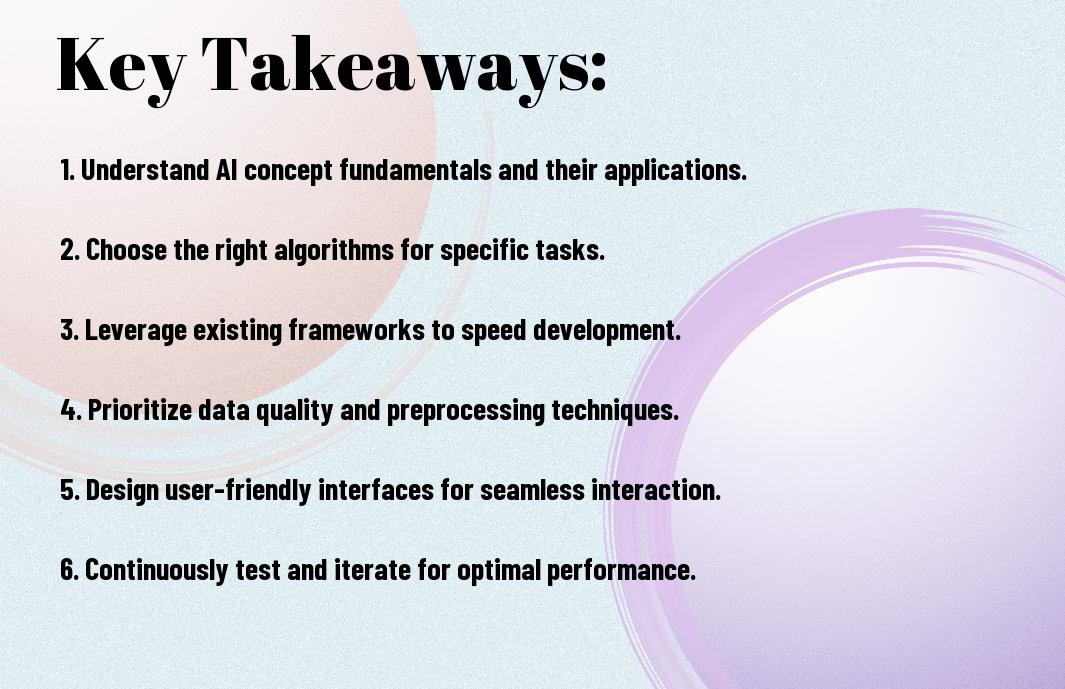
  • Developing data-driven applications requires a thorough understanding of AI models and their applications, including supervised, unsupervised, and reinforcement learning techniques to drive business decisions and improve outcomes.
  • Effective data preparation is imperative for building accurate AI models, involving data cleaning, feature engineering, and data transformation to ensure high-quality input and reliable output.
  • Choosing the right AI model for a specific problem involves considering factors such as data size, complexity, and type, as well as the desired outcome, to select the most suitable algorithm and optimize performance.
  • Model evaluation and validation are vital steps in the development process, using metrics such as accuracy, precision, and recall to assess performance and identify areas for improvement.
  • Continuous monitoring and updating of AI models is necessary to adapt to changing data distributions and maintain optimal performance, ensuring that data-driven applications remain effective and reliable over time.

Data Architecture Foundations

The foundation of a data-driven application lies in its data architecture, which you will design to support your AI models. You need to consider the flow of data, from collection to storage and processing, to ensure seamless integration with your application.

Data Collection Systems

Above all, your data collection systems should be able to handle large volumes of data from various sources, which you can then use to train your AI models. You will need to design a system that can collect, process, and transmit data efficiently.

Storage Infrastructure

Driven by data, your storage infrastructure should be scalable and secure, allowing you to store and manage large amounts of data. You will need to consider factors such as data redundancy, backup, and recovery to ensure your data is safe and accessible.

And as you design your storage infrastructure, you should also consider the type of data you will be storing, such as structured or unstructured data, and the level of accessibility you need, to ensure that your storage solution meets your specific needs and supports your AI models effectively, allowing you to make the most of your data.

AI Model Selection

While choosing the right AI model for your application, you need to consider several factors, including data type, complexity, and desired outcome, to ensure you make an informed decision that aligns with your project goals.

Supervised Learning Frameworks

Between the various options available, you will find that supervised learning frameworks are ideal for applications where your data is labeled, allowing you to train models that can make accurate predictions based on your input data.

Neural Network Architectures

Networking through the complexities of neural networks, you will discover a wide range of architectures, each designed to tackle specific tasks, such as convolutional neural networks for image processing or recurrent neural networks for sequential data.

Selection of the appropriate neural network architecture for your application depends on your specific needs, and you should consider factors such as data dimensionality, model complexity, and computational resources to ensure optimal performance and efficiency, allowing you to build a robust and reliable model that meets your requirements.

Model Training Pipeline

After defining your AI model’s architecture, you’ll need to focus on the model training pipeline, which involves a series of steps to prepare your data and train your model. This pipeline is necessary to ensure your model learns from your data effectively.

Data Preprocessing Methods

Preceding the training process, you’ll need to apply data preprocessing methods to clean and transform your data into a suitable format for your model, allowing you to extract relevant features and improve your model’s performance.

Training Optimization Techniques

Against the backdrop of complex models and large datasets, you’ll need to employ training optimization techniques to improve your model’s efficiency and accuracy, such as regularization and hyperparameter tuning, to achieve optimal results.

Also, as you investigate deeper into training optimization techniques, you’ll discover various methods to fine-tune your model, including batch normalization, dropout, and learning rate schedulers, which will help you navigate the complexities of model training and achieve state-of-the-art performance, allowing you to make the most of your data and build a robust AI model that meets your needs.

Integration Strategies

For a seamless integration of AI models into your application, you need to consider various strategies that cater to your specific requirements. You will explore different approaches to integrate AI models, enabling you to make informed decisions about your application’s architecture.

API Development

Integrating AI models through APIs allows you to leverage their capabilities in your application, enabling you to access pre-trained models and integrate them into your system. You can use APIs to simplify the integration process, making it easier to incorporate AI-driven functionality into your application.

Microservices Implementation

The microservices architecture enables you to break down your application into smaller, independent services, allowing you to integrate AI models more efficiently. You can deploy AI models as separate microservices, making it easier to manage and update them without affecting the entire application.

In addition to the benefits of microservices, you can also use containerization to ensure consistency and reliability across different environments, making it easier to deploy and manage your AI models. You can use tools like Docker to containerize your AI models, enabling you to deploy them in a scalable and efficient manner, and ensuring that your application remains performant and responsive.

Performance Optimization

All data-driven applications require optimization to ensure seamless execution. You can learn more about optimizing AI models by visiting A Deep Dive into AI Inference and Solution Patterns | Blog to improve your application’s performance.

Scalability Considerations

On the path to building a data-driven application, you will encounter scalability challenges. You need to consider these factors to ensure your application can handle increased traffic and data.

Resource Management

Against the backdrop of growing application demands, you must manage resources effectively. You should allocate resources wisely to optimize performance and minimize costs.

Performance of your application is heavily dependent on resource management. You will need to monitor and adjust resource allocation regularly to ensure your application is running smoothly and efficiently, allowing you to make the most of your resources and improve your overall application performance.

Security Measures

Keep your data-driven application secure by implementing robust security measures to protect your AI models and data from unauthorized access and breaches.

Data Protection Protocols

On the path to securing your application, you’ll need to establish data protection protocols that ensure the confidentiality, integrity, and availability of your data, allowing you to maintain control over your sensitive information.

Model Security Guidelines

One of the key aspects of securing your AI models is to follow established guidelines that outline best practices for model development, deployment, and maintenance, helping you to minimize potential risks and vulnerabilities.

Guidelines for model security are designed to help you protect your AI models from attacks and breaches, and as you implement these guidelines, you’ll be able to ensure the reliability and trustworthiness of your models, which is vital for maintaining the integrity of your data-driven application, and you can achieve this by regularly updating and monitoring your models, as well as using secure deployment and serving techniques.

Final Words

From above, you have gained a comprehensive understanding of building data-driven applications with AI models. You now know how to harness the power of AI to drive your business forward. With your newfound knowledge, you can develop innovative solutions that unlock new opportunities and drive growth. You will be able to make informed decisions about your AI strategy, and your applications will be more efficient, effective, and scalable, giving you a competitive edge in the market.

FAQ

Q: What are the key components of building data-driven applications, and how do AI models contribute to their development?

A: Building data-driven applications involves several key components, including data collection, data processing, and data analysis. AI models play a significant role in this process by enabling the analysis and interpretation of complex data sets. These models can be used for predictive analytics, pattern recognition, and decision-making, allowing developers to create applications that can learn and adapt to user behavior. By leveraging AI models, developers can create more intelligent and responsive applications that provide personalized experiences for users.

Q: What are some common challenges that developers face when integrating AI models into their applications, and how can they be addressed?

A: Developers often face challenges such as data quality issues, model training and deployment, and ensuring the explainability and transparency of AI-driven decisions. To address these challenges, developers can focus on data preprocessing and validation, use techniques such as data augmentation and transfer learning to improve model performance, and implement model interpretability techniques such as feature attribution and model explainability. Additionally, developers can use cloud-based services and frameworks that provide pre-built AI models and automated machine learning capabilities to simplify the development process.

Q: How can developers ensure that their AI-powered applications are fair, transparent, and accountable, and what are some best practices for deploying AI models in production environments?

A: To ensure that AI-powered applications are fair, transparent, and accountable, developers can implement techniques such as bias detection and mitigation, model interpretability, and transparency in decision-making processes. Best practices for deploying AI models in production environments include monitoring model performance and data drift, using continuous integration and continuous deployment (CI/CD) pipelines, and implementing robust testing and validation procedures. Developers can also use techniques such as model ensemble and stacking to improve model performance and robustness, and use cloud-based services that provide automated model monitoring and maintenance capabilities to ensure that their AI-powered applications are reliable and trustworthy.

The Synergy of AI and Cloud – Building Smarter Applications

As you explore the latest advancements in technology, you’re likely to notice the growing intersection of artificial intelligence (AI) and cloud computing. You can leverage this synergy to build smarter applications that drive innovation and efficiency in your organization. By combining AI’s analytical capabilities with the cloud’s scalability, you can create powerful tools that transform your business and stay ahead of the curve. Your applications will become more intuitive, responsive, and effective, enabling you to make data-driven decisions and achieve your goals.

Key Takeaways:

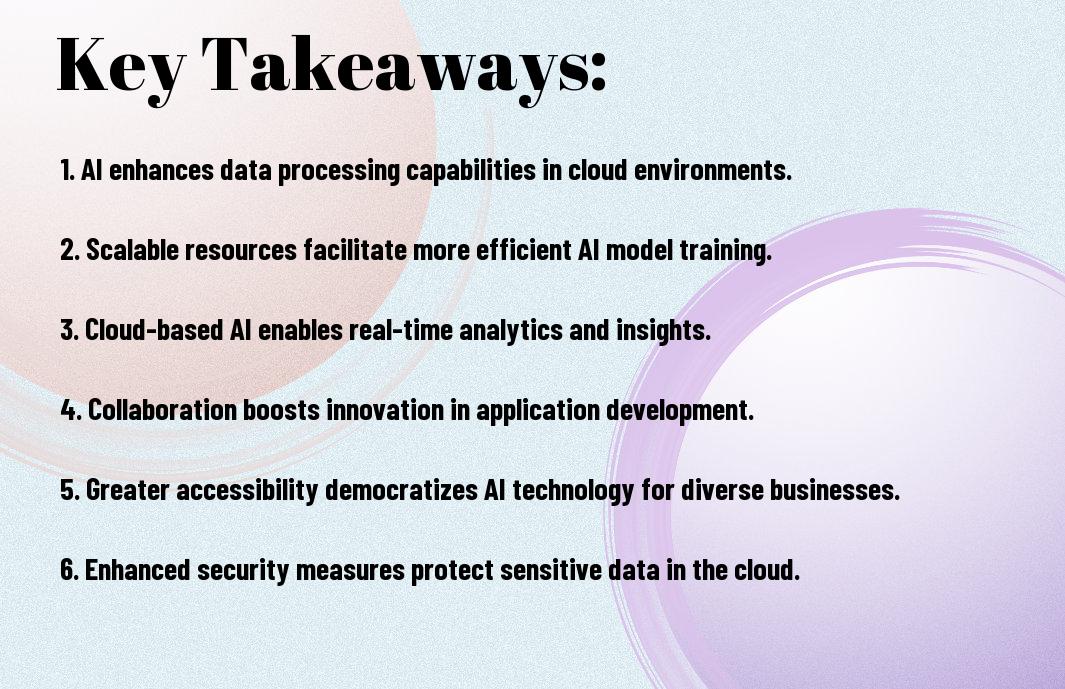
  • The integration of Artificial Intelligence (AI) and Cloud computing enables the development of smarter applications that can process and analyze large amounts of data in real-time, leading to enhanced decision-making and improved business outcomes.
  • Cloud-based AI solutions provide scalable and on-demand access to computing resources, allowing organizations to build and deploy AI models quickly and efficiently, without the need for significant upfront investments in infrastructure.
  • The combination of AI and Cloud enables the creation of more personalized and interactive user experiences, as AI-powered applications can learn from user behavior and adapt to their preferences in real-time.
  • AI-driven cloud applications can automate many routine and repetitive tasks, freeing up human resources for more strategic and creative work, and leading to increased productivity and innovation.
  • The synergy of AI and Cloud also enables organizations to leverage advanced data analytics and machine learning capabilities, uncovering new insights and patterns in their data, and driving business growth and competitiveness.

Evolution of AI in Cloud Computing

While exploring the synergy of AI and cloud, you’ll notice a significant transformation in how you approach application development, as AI-infused cloud services enable you to build smarter applications.

Traditional Cloud Architecture

The traditional cloud architecture you’ve been using has limitations, and you may have noticed that it doesn’t fully support the complex demands of modern applications, prompting you to seek more advanced solutions.

AI-Enhanced Cloud Systems

With the advent of AI-enhanced cloud systems, you can now leverage machine learning and deep learning capabilities to analyze vast amounts of data, making your applications more intelligent and responsive to your needs.

But as you examine deeper into AI-enhanced cloud systems, you’ll discover that they offer more than just data analysis – they provide a platform for you to develop applications that can learn, adapt, and evolve over time, allowing you to create innovative solutions that meet your unique requirements and stay ahead of the competition.

Core Components of AI-Cloud Integration

If you’re looking to build smarter applications, you need to understand the core components of AI-cloud integration. You’ll be working with a combination of technologies that enable your applications to learn, adapt, and innovate.

Machine Learning Frameworks

Across various industries, you’ll find machine learning frameworks that provide the foundation for your AI-cloud integration. You can leverage these frameworks to develop and deploy your models, and they will help you streamline your workflow.

Neural Network Infrastructure

About the neural network infrastructure, you should know that it provides the necessary computing power for your AI models. You can utilize this infrastructure to train and deploy your models, and it will help you achieve better performance and scalability.

In fact, when you examine deeper into neural network infrastructure, you’ll discover that it’s designed to handle complex computations and large amounts of data. You can use this infrastructure to build and train your own neural networks, and you’ll be able to integrate them with your cloud-based applications, enabling you to make more accurate predictions and decisions.

Cloud-Native AI Services

Now, as you explore cloud-native AI services, you’ll discover a world of possibilities for building smarter applications. You can leverage these services to analyze data, gain insights, and make informed decisions, all while scaling your applications with ease.

Automated Scaling Solutions

Beneath the surface of cloud-native AI services, you’ll find automated scaling solutions that adjust to your application’s needs, ensuring optimal performance and efficiency. You can focus on developing your application, while the cloud handles the scaling.

Intelligent Resource Management

Similar to other cloud services, intelligent resource management enables you to optimize your application’s resource allocation, reducing costs and improving overall performance. You can trust that your application is running smoothly, with resources allocated efficiently.

Automated resource allocation and deallocation enable you to manage your application’s resources effectively, allowing you to focus on development and innovation. You can monitor your application’s performance, identify areas for improvement, and make data-driven decisions to optimize your resource utilization, resulting in a more efficient and scalable application.

Data Processing and Analytics

Many organizations are leveraging the synergy of AI and cloud to enhance their data processing and analytics capabilities, enabling you to make informed decisions and drive business growth. You can process large amounts of data, gain valuable insights, and improve your overall operations.

Real-time Processing Capabilities

Around the clock, you can process vast amounts of data in real-time, allowing you to respond quickly to changing market conditions and make timely decisions. Your applications can handle high volumes of data, providing you with up-to-the-minute insights.

Predictive Analytics Systems

Against the backdrop of increasing data complexity, you can build predictive analytics systems that help you forecast future trends and outcomes. Your predictive models can analyze historical data, identify patterns, and provide you with actionable insights.

Another key aspect of predictive analytics systems is their ability to integrate with your existing infrastructure, allowing you to leverage your existing data assets and systems. You can use machine learning algorithms to build models that predict customer behavior, detect anomalies, and optimize business processes, enabling you to stay ahead of the competition and drive innovation in your organization.

Security and AI Governance

To ensure the secure deployment of AI-powered applications, you need to consider the governance of AI systems, which involves establishing policies and procedures for the development, deployment, and monitoring of AI models.

Intelligent Threat Detection

Toward achieving robust security, you can leverage AI-powered threat detection systems that analyze patterns and anomalies in your data to identify potential security threats, enabling you to take proactive measures to protect your applications.

Compliance Automation

After implementing AI governance, you can automate compliance processes, which helps you streamline regulatory requirements and reduce the risk of non-compliance, allowing you to focus on developing and deploying smarter applications.

Further, by automating compliance, you can ensure that your AI-powered applications adhere to relevant regulations and standards, such as data privacy and security protocols, which is important for maintaining trust with your users and protecting your reputation.

Performance Optimization

Keep your applications running smoothly by leveraging the power of AI and cloud computing, which enables you to scale and optimize performance in real-time, ensuring your users have a seamless experience.

Load Balancing Intelligence

Harmonizing your workload across multiple servers is key to efficient performance, and with AI-driven load balancing, you can automatically distribute traffic to minimize downtime and maximize throughput, ensuring your application is always available to your users.

Resource Prediction Models

Modeling your resource usage helps you anticipate and prepare for spikes in demand, allowing you to allocate resources more effectively and reduce waste, which in turn helps you optimize your costs and improve your application’s overall performance, giving you a competitive edge.

Even more advanced resource prediction models can be built using machine learning algorithms, which analyze your historical usage patterns and other factors to forecast future demand, enabling you to make informed decisions about resource allocation and ensure your application is always performing at its best, meeting your users’ expectations and driving your business forward.

Summing up

With these considerations, you can harness the power of AI and cloud computing to build smarter applications. As you explore the possibilities, visit The Synergy of AI and Cloud Computing to learn more about integrating these technologies. By doing so, you will unlock your potential to create innovative solutions, driving your business forward and enhancing your overall digital transformation journey, ultimately making your applications more efficient and effective.

FAQ

Q: What is the significance of combining Artificial Intelligence (AI) and Cloud Computing in application development?

A: The synergy of AI and Cloud Computing enables the creation of smarter applications by leveraging the scalability, flexibility, and cost-effectiveness of cloud infrastructure to support the complex computational requirements of AI models. This integration allows for more efficient processing of large datasets, enhanced data analysis, and improved model training, ultimately leading to more accurate and reliable AI-driven insights and decision-making capabilities within applications.

Q: How does the integration of AI and Cloud facilitate the development of more intelligent and adaptive applications?

A: The integration of AI and Cloud facilitates the development of more intelligent and adaptive applications by providing a robust infrastructure for machine learning (ML) model deployment, management, and continuous improvement. Cloud-based services offer auto-scaling, high-performance computing, and access to a wide range of AI frameworks and tools, making it easier to build, train, and deploy ML models. Additionally, cloud-based data lakes and warehouses can store and process vast amounts of data, which is important for training accurate AI models, thereby enabling applications to learn from data, adapt to changing conditions, and make informed decisions in real-time.

Q: What are the potential benefits and challenges of adopting a cloud-based AI strategy for building smarter applications?

A: Adopting a cloud-based AI strategy offers several benefits, including reduced infrastructure costs, increased scalability and flexibility, enhanced collaboration, and accelerated innovation. Cloud-based AI platforms provide access to pre-built AI models, automated ML workflows, and integrated development environments, which can significantly speed up the development and deployment of AI-powered applications. However, challenges may include ensuring data security and compliance, managing the complexity of integrating AI with existing systems, addressing potential biases in AI models, and requiring specialized skills for AI and cloud management. By understanding these aspects, organizations can better navigate the adoption of cloud-based AI solutions to build smarter, more competitive applications.

The Essential Toolkit for Building AI-Enhanced Applications

As you launch on building AI-enhanced applications, you’ll need a solid foundation to ensure success. Your goal is to create intelligent, efficient, and scalable solutions that meet your users’ needs. To achieve this, you require a well-rounded toolkit that includes the right technologies, frameworks, and techniques. You will learn about the must-have tools and technologies that will help you develop innovative AI-enhanced applications, and how to leverage them to drive your project forward, in this post.

Key Takeaways:

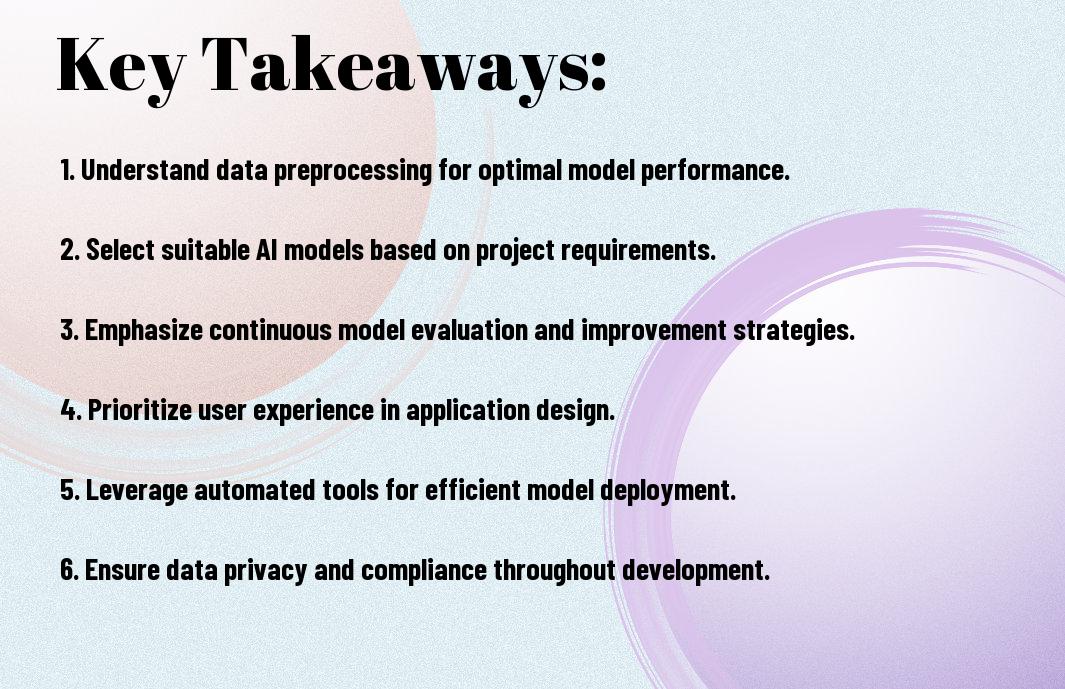
  • Building AI-enhanced applications requires a solid understanding of machine learning fundamentals, including data preparation, model training, and deployment.
  • A well-designed toolkit for AI-enhanced applications should include a range of technologies, such as natural language processing, computer vision, and predictive analytics.
  • Effective integration of AI capabilities into applications depends on the ability to collect, process, and analyze large datasets, as well as to deploy models in a scalable and secure manner.
  • A key aspect of building successful AI-enhanced applications is the ability to balance technical complexity with user-centered design, ensuring that AI-driven features are intuitive and accessible to end-users.
  • Continuous monitoring and evaluation of AI-enhanced applications is necessary to ensure they are functioning as intended, and to identify areas for improvement and further development.

Core AI Development Components

A solid foundation in AI development is important for building effective AI-enhanced applications, and you will need to familiarize yourself with the key components that drive this technology, including machine learning frameworks and neural network libraries, to create your own AI-enhanced applications.

Machine Learning Frameworks

Between the various tools and technologies available, you will find that machine learning frameworks such as TensorFlow and PyTorch are among the most popular choices for building and deploying AI models, allowing you to focus on developing your application’s logic.

Neural Network Libraries

Behind the scenes, neural network libraries like Keras and Caffe provide the necessary functionality for building and training neural networks, enabling you to create complex AI models that can be integrated into your applications, and you can leverage these libraries to simplify your development process.

Indeed, as you explore deeper into the world of neural network libraries, you will discover a wide range of tools and resources that can help you optimize your AI models, from data preprocessing to model deployment, and by utilizing these libraries effectively, you can significantly improve the performance and accuracy of your AI-enhanced applications, allowing you to create more sophisticated and intelligent systems that can drive business value and innovation.

Data Processing Infrastructure

While building AI-enhanced applications, you need a robust data processing infrastructure to handle large volumes of data. Your infrastructure should be scalable, secure, and efficient to support your application’s growth.

Data Collection Tools

Alongside other tools, you will need data collection tools to gather relevant data for your application. You can utilize web scraping, APIs, or data warehouses to collect data, depending on your specific needs.

Data Cleaning Solutions

Beneath the surface of your data processing infrastructure, you will need data cleaning solutions to ensure your data is accurate and reliable. You can use data validation, data normalization, and data transformation to clean your data.

But as you research deeper into data cleaning, you will find that it involves handling missing values, removing duplicates, and dealing with outliers. You can use machine learning algorithms or statistical methods to identify and correct errors in your data, ensuring that your AI-enhanced application makes informed decisions based on high-quality data.

Integration Essentials

Your application’s success relies on seamless integration with various tools and services, and having the right integration vitals in your toolkit is vital for building AI-enhanced applications that meet your needs.

API Development Tools

For developing robust APIs, you will need tools that support your API development lifecycle, from design to deployment, and allow you to create scalable and secure APIs that integrate with your AI-enhanced applications.

Cloud Service Connectors

Above all, cloud service connectors play a significant role in integrating your application with cloud services, enabling you to leverage the power of cloud computing and artificial intelligence to enhance your application’s capabilities.

For instance, when you use cloud service connectors, you can easily integrate your application with popular cloud services such as AWS or Google Cloud, and access a wide range of AI and machine learning services, such as natural language processing, computer vision, and predictive analytics, to build more intelligent and interactive applications that meet your specific needs.

Security and Privacy Tools

Keep your AI-enhanced applications secure with the right tools, you can protect your users’ data and prevent potential threats, ensuring the integrity of your system and maintaining your users’ trust in your application.

Data Protection Frameworks

The foundation of a secure application lies in a robust data protection framework, you will need to implement policies and procedures that ensure the confidentiality, integrity, and availability of your users’ data, and you can use established frameworks to guide your efforts.

Authentication Systems

By implementing robust authentication systems, you can ensure that only authorized users have access to your application and its data, and you can use various authentication methods to verify user identities and prevent unauthorized access.

Indeed, authentication systems are a key component of your application’s security, and you should consider using multi-factor authentication, biometric authentication, or other advanced methods to provide an additional layer of security, and you can also use machine learning algorithms to detect and prevent authentication attempts that may be malicious or unauthorized.

Performance Optimization

Now that you have developed your AI-enhanced application, it’s time to focus on performance optimization to ensure seamless user experience and efficient resource utilization.

Model Compression Tools

Condensing your AI models is necessary to reduce computational overhead, and you can achieve this using various model compression tools that help simplify your models without compromising their accuracy.

Runtime Optimization Solutions

After deploying your application, you’ll need to monitor its performance and optimize it at runtime to adapt to changing usage patterns and hardware configurations, which can be achieved using specialized runtime optimization solutions.

In fact, these solutions enable you to fine-tune your application’s performance in real-time, allowing you to identify and address bottlenecks, and make data-driven decisions to improve your application’s overall efficiency and scalability, ensuring your users have a responsive and engaging experience with your AI-enhanced application.

Testing and Monitoring

For building AI-enhanced applications, you need to ensure that your models are functioning as expected, and your system is performing optimally, which is where testing and monitoring come in, allowing you to identify and fix issues before they affect your users.

AI Model Testing Suites

One of the key components of testing is utilizing AI model testing suites, which provide you with a comprehensive set of tools to evaluate your models’ performance, accuracy, and reliability, enabling you to refine and improve them.

Performance Monitoring Tools

After deploying your application, you will need performance monitoring tools to track its performance, identify bottlenecks, and optimize its efficiency, which is important for delivering a seamless user experience and maintaining your application’s overall health.

Monitoring your application’s performance in real-time allows you to quickly respond to issues, make data-driven decisions, and continuously improve your system, ensuring that your users receive the best possible experience, and your application operates at its full potential, which is important for your business’s success, and you can achieve this by leveraging the right performance monitoring tools.

Conclusion

Hence, as you begin on building AI-enhanced applications, you will find that having the right toolkit is vital to your success. You will be able to develop innovative solutions that meet your needs, leveraging the power of AI to drive your projects forward. With your newfound knowledge, you can create applications that transform your business and stay ahead of the curve, making the most of your investment in AI technology and maximizing your returns.

FAQ

Q: What is The Essential Toolkit for Building AI-Enhanced Applications and how does it support developers?

A: The Essential Toolkit for Building AI-Enhanced Applications is a comprehensive suite of tools designed to help developers create, deploy, and manage artificial intelligence (AI) and machine learning (ML) models within their applications. This toolkit provides a wide range of functionalities, including data preparation, model training, and model deployment, along with integration capabilities that allow developers to seamlessly embed AI-enhanced features into their software products. By leveraging this toolkit, developers can accelerate the development process, improve the accuracy of AI models, and enhance the overall user experience of their applications.

Q: What kind of support and resources are available for developers using The Essential Toolkit for Building AI-Enhanced Applications?

A: Developers using The Essential Toolkit for Building AI-Enhanced Applications have access to a variety of support resources and tools. These include extensive documentation, tutorials, and guides that cover every aspect of the toolkit, from initial setup to advanced model tuning. Additionally, a community forum and dedicated support team are available to address any questions or issues that may arise during the development process. Regular updates and new feature releases ensure that developers have the latest technologies and methodologies at their disposal, allowing them to stay at the forefront of AI-enhanced application development.

Q: How does The Essential Toolkit for Building AI-Enhanced Applications ensure the security and privacy of data used in AI model training and deployment?

A: The Essential Toolkit for Building AI-Enhanced Applications prioritizes the security and privacy of data used in AI model training and deployment through several robust measures. It incorporates advanced encryption technologies to protect data both in transit and at rest. Additionally, the toolkit is designed with privacy by design principles, ensuring that data collection, storage, and processing adhere to stringent privacy standards. Developers can also leverage the toolkit’s built-in access controls and auditing capabilities to manage who has access to sensitive data and monitor all interactions with the data. This comprehensive approach to security and privacy enables developers to build trust with their users and comply with regulatory requirements.

Skip to content