As you investigate into the world of artificial intelligence, you’re likely exploring ways to transform your ideas into reality. You’re looking to develop innovative app solutions that integrate AI models, driving your business forward. Your goal is to create applications that not only meet but exceed user expectations, leveraging the power of AI to enhance functionality and user experience. You’re on the verge of discovering how to successfully transition from AI models to market, and this journey begins with understanding the development process.
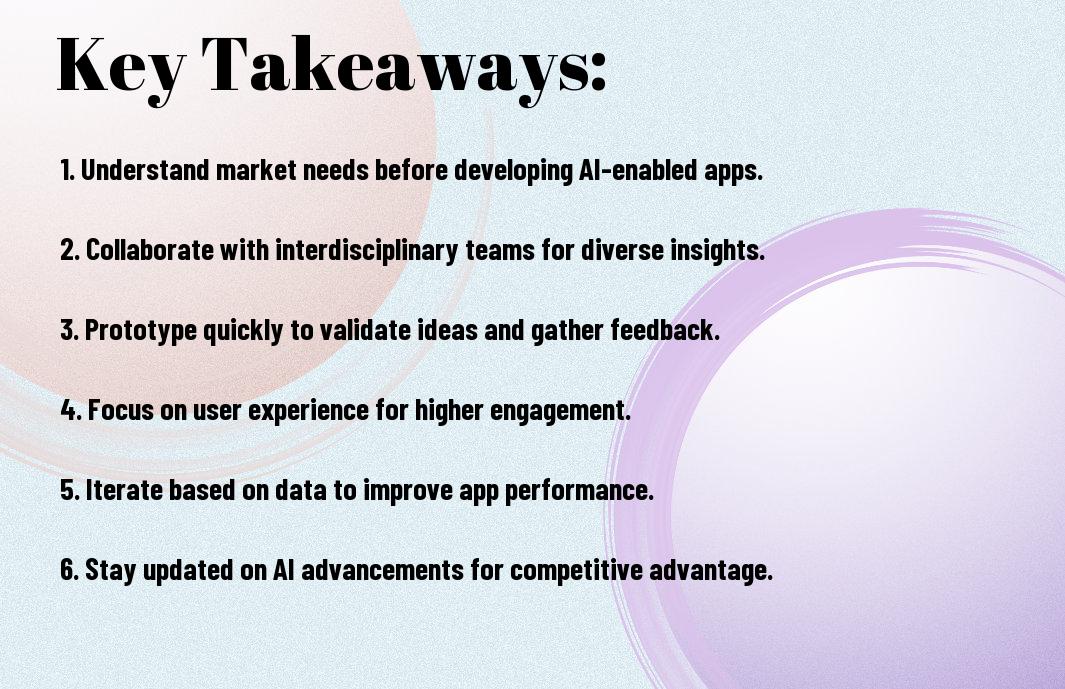
Key Takeaways:
- Developing innovative app solutions with AI models requires a deep understanding of the target market and user needs to create effective and engaging applications.
- Successful AI-powered apps rely on high-quality data and robust model training to deliver accurate and reliable results, enhancing user experience and trust.
- Effective integration of AI models into app development involves balancing complexity with simplicity, ensuring that the technology enhances the user interface without overwhelming it.
- Continuous testing and iteration are important for refining AI-driven app solutions, addressing potential biases, and adapting to evolving user expectations and technological advancements.
- Collaboration between data scientists, developers, and designers is vital for creating seamless and intuitive AI-powered apps that meet market demands and provide a competitive edge.
AI Model Foundation
To develop innovative app solutions, you need a solid AI model foundation. This foundation is the backbone of your app, enabling it to learn, adapt, and improve over time. You will build upon this foundation, integrating various technologies and frameworks to create a robust and efficient app.
Core Technologies and Frameworks
Besides the AI model itself, you will need to consider the core technologies and frameworks that support it. You will have to choose from a range of options, including machine learning libraries, deep learning frameworks, and natural language processing tools, to name a few.
Model Selection and Integration
Before selecting an AI model, you need to consider your app’s specific requirements and goals. You should evaluate different models, considering factors such as accuracy, scalability, and compatibility, to ensure you choose the best fit for your app.
Even as you select and integrate your AI model, you should consider how it will interact with other components of your app. You will need to ensure seamless integration, optimizing performance and user experience, and continually monitor and refine your model to ensure it meets your app’s evolving needs.
Market Research and Validation
You need to conduct thorough market research to validate your app idea, ensuring it meets the needs of your target audience and stands out in a competitive landscape. This involves gathering data and insights to inform your development process.
Target Audience Analysis
Among the key considerations is understanding your target audience’s demographics, preferences, and behaviors, which will help you tailor your app to their needs and create a user-centric experience that drives engagement and adoption.
Competitive Landscape Assessment
About your competitors, you should analyze their strengths, weaknesses, and market strategies to identify gaps and opportunities for differentiation, allowing you to position your app uniquely and effectively.
Further analysis of the competitive landscape will help you stay ahead of the curve, as you’ll be able to anticipate and respond to market trends, customer needs, and emerging technologies, ultimately giving your app a competitive edge and increasing its chances of success in the market.
Development Strategy
Your development strategy is key to transforming AI models into successful app solutions, and it involves several steps that you need to follow to ensure the project’s success.
Technical Architecture Planning
Strategically, you will need to plan your technical architecture to support the integration of AI models into your app, considering factors such as scalability and security.
Resource Allocation
Across various stages of development, you will need to allocate resources effectively, including personnel, infrastructure, and budget, to ensure that your project stays on track.
Due to the complexity of AI-powered app development, you will need to carefully manage your resources to avoid delays and cost overruns, and to ensure that your app meets the required standards of quality and performance, you should prioritize your resources based on the specific needs of your project.
App Design and User Experience
Despite the complexity of AI models, your app’s design and user experience play a significant role in its success. You need to create an intuitive and engaging interface that simplifies the interaction between users and your AI-powered app.
Interface Design Principles
One key aspect of app design is adhering to established interface design principles, which you can use to create a consistent and user-friendly experience, making it easier for your users to navigate and utilize your app’s features.
User Journey Mapping
Journey through your app from your users’ perspective, and you will identify areas that need improvement, allowing you to refine your design and create a seamless experience that meets their needs and expectations.
Consequently, as you examine deeper into user journey mapping, you will uncover opportunities to streamline processes, reduce friction points, and ultimately increase user satisfaction, which is crucial for the long-term success of your app, and you will be able to make data-driven decisions to inform your design and development process.
Implementation Process
Many factors contribute to a successful implementation process, and you will need to consider several key elements when developing your app solution. You must ensure that your development team is well-versed in the latest technologies and trends to bring your innovative idea to life.
Development Phases
Against the backdrop of rapid technological advancements, you will need to break down your development process into manageable phases, allowing you to focus on specific aspects of your app, such as design, functionality, and user experience.
Quality Assurance Methods
Phasing out errors and bugs is an important part of the development process, and you will need to implement robust quality assurance methods to ensure your app meets the highest standards, providing your users with a seamless and enjoyable experience.
Due to the complexity of AI-powered apps, you will need to invest time and resources into thorough testing and debugging, leveraging techniques such as alpha and beta testing to identify and fix issues before launch, ultimately ensuring that your app is stable, secure, and functions as intended, meeting your users’ expectations and solidifying your reputation as a developer of high-quality app solutions.

Market Launch Strategy
All aspects of your app’s development are complete, and now it’s time to bring it to the market. You need a solid plan to ensure a successful launch, considering factors like target audience, marketing channels, and budget.
Go-to-Market Planning
Any successful launch begins with a well-thought-out plan, and you should define your goals, identify your target audience, and outline your marketing strategy to achieve a strong market presence.
Distribution Channels
Across various platforms, you can distribute your app, and selecting the right channels is vital for your app’s visibility and accessibility, allowing you to reach a broader audience.
Strategy for distribution channels involves evaluating the most suitable options for your app, such as app stores, websites, or social media, and you should consider factors like fees, target audience, and competition to maximize your app’s reach and downloads.
To wrap up
With this in mind, you now have a comprehensive understanding of developing innovative app solutions from AI models to market. You can leverage your knowledge to create cutting-edge apps that transform your business. To stay ahead, explore the Top AI Tools Revolutionizing App Development in 2025 and discover how you can utilize them to enhance your app development process, driving your business forward with your innovative solutions.
FAQ
Q: What are the key steps involved in developing innovative app solutions from AI models?
A: The key steps involved in developing innovative app solutions from AI models include identifying a specific problem or opportunity, selecting a suitable AI model, designing a user-friendly interface, integrating the AI model with the app, testing and refining the app, and deploying it to the market. This process requires collaboration between data scientists, software developers, and business stakeholders to ensure that the app meets the needs of its target audience and provides a seamless user experience.
Q: How can businesses ensure that their AI-powered app solutions are scalable and secure?
A: To ensure that AI-powered app solutions are scalable and secure, businesses should implement robust infrastructure, use cloud-based services, and follow best practices for data protection and encryption. Additionally, they should conduct thorough testing and validation to identify potential vulnerabilities and address them before the app is deployed. It is also important to have a plan in place for monitoring and updating the app regularly to prevent security breaches and ensure that it continues to meet the evolving needs of its users.
Q: What role does user experience play in the development of successful AI-powered app solutions?
A: User experience plays a vital role in the development of successful AI-powered app solutions. A well-designed user interface can make the app more intuitive and engaging, while a poorly designed interface can lead to user frustration and abandonment. Businesses should conduct user testing and gather feedback to ensure that the app is easy to use, provides relevant and timely information, and meets the needs and expectations of its target audience. By prioritizing user experience, businesses can increase user adoption and retention, drive engagement, and ultimately achieve their business goals.