Ecosystem

The Impact of AI on Mobile and Web App Ecosystems

As you navigate the digital landscape, you’re likely aware of the significant role artificial intelligence (AI) plays in shaping your online experiences. Your interactions with mobile and web apps are being transformed by AI-powered features, from personalized recommendations to enhanced security measures. You may wonder how AI is influencing the development and functionality of these apps, and what this means for your daily digital interactions. This blog post will explore the implications of AI on mobile and web app ecosystems, and what you can expect in the future.

Key Takeaways:

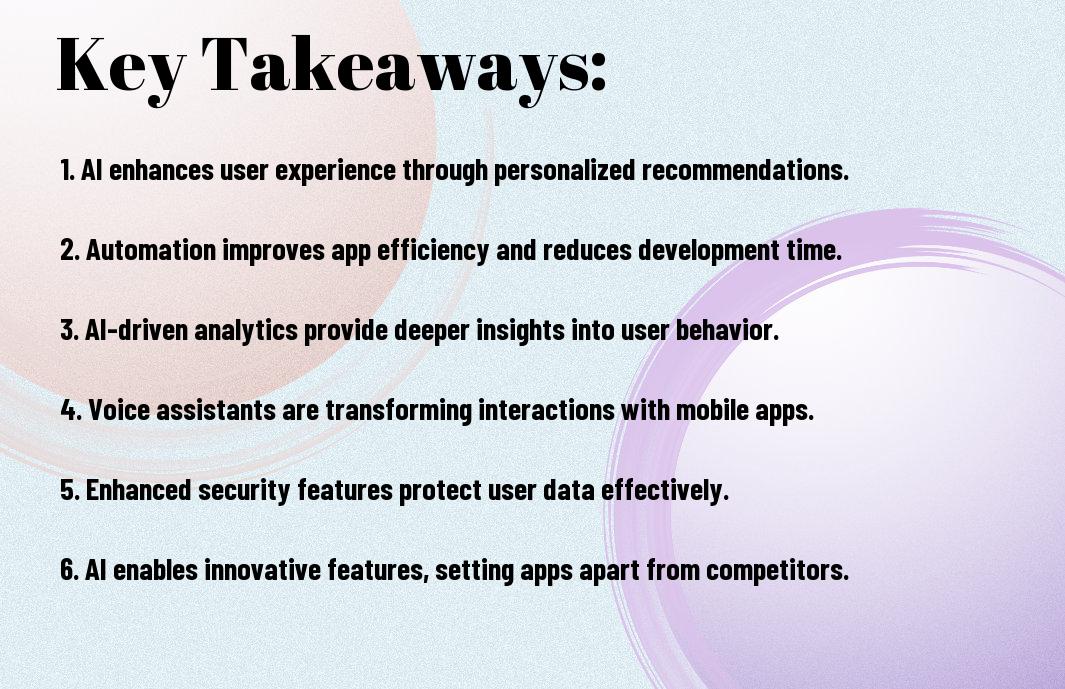
  • The integration of Artificial Intelligence (AI) in mobile and web app ecosystems is transforming the way users interact with digital platforms, enabling more personalized and intuitive experiences through predictive analytics and machine learning algorithms.
  • AI-powered chatbots and virtual assistants are becoming increasingly prevalent in apps, providing automated customer support, enhancing user engagement, and streamlining tasks such as data entry and content moderation.
  • The use of AI in app development is also improving security measures, with AI-driven systems capable of detecting and mitigating potential threats, such as malware and data breaches, more effectively than traditional security methods.
  • AI-driven analytics are helping developers gain deeper insights into user behavior, allowing them to optimize app performance, identify areas for improvement, and create more targeted marketing campaigns to reach their intended audience.
  • The incorporation of AI in mobile and web apps is expected to continue driving innovation, with potential applications in areas such as augmented reality, natural language processing, and computer vision, leading to new and exciting possibilities for app developers and users alike.
Evolution of App Development

The advent of AI has significantly transformed the app development landscape, and you are now witnessing a new era of innovation. You can see how AI is changing the way apps are designed, developed, and deployed, and this shift is likely to impact your business in various ways.

Traditional Development Paradigms

Besides the conventional methods, you have been using traditional development paradigms that involve manual coding, testing, and deployment. You are likely familiar with the time-consuming and labor-intensive process of developing apps using these methods.

AI-Driven Development Shifts

For instance, you are now seeing a significant shift towards AI-driven development, which enables faster, more efficient, and automated app development. You can leverage AI-powered tools to streamline your development process, reduce costs, and improve app quality.

In addition, as you examine deeper into AI-driven development, you will discover that it offers numerous benefits, including enhanced user experience, personalized features, and predictive analytics. You can utilize AI-driven development to create more intuitive and engaging apps that meet your users’ evolving needs and preferences, ultimately driving your business forward.

AI Integration Points

One of the key aspects of AI in mobile and web app ecosystems is identifying the right integration points. You need to consider where AI can add the most value to your app, whether it’s through enhanced user experience or improved backend efficiency.

Frontend Intelligence

Around the user interface, AI can be used to personalize your app’s layout and content, making it more intuitive and engaging for your users. You can leverage AI to analyze user behavior and adapt your app’s frontend accordingly, creating a more seamless experience.

Backend Automation

Unlike manual processes, AI can automate repetitive tasks, freeing up your resources for more strategic activities. You can use AI to streamline your app’s backend operations, such as data processing and analytics, making it more efficient and scalable.

Automation of backend processes allows you to focus on improving your app’s core functionality and user experience. You can use AI to identify areas where automation can have the most impact, and then implement solutions that simplify your workflow and reduce errors, ultimately leading to a more robust and reliable app ecosystem for your users.

User Experience Transformation

Now, as AI integrates into mobile and web app ecosystems, you can expect a significant shift in how you interact with these platforms, leading to more intuitive and personalized experiences.

Personalization Engines

One of the key benefits of AI in app development is the ability to create personalized experiences tailored to your preferences and behaviors, making your interactions more engaging and relevant.

Predictive Interfaces

Any interaction you have with an app can be anticipated and responded to by AI-driven predictive interfaces, streamlining your experience and reducing friction.

This predictive capability allows you to receive suggestions, complete tasks more efficiently, and navigate through apps with ease, as the AI learns your patterns and adapts the interface accordingly, making your overall experience more seamless and enjoyable, and enabling you to get the most out of the app’s features and functionalities.

App Security and AI

Despite the numerous benefits of AI in mobile and web app ecosystems, you must consider the potential security risks. As you integrate AI into your apps, you expose yourself to new vulnerabilities, making it necessary to prioritize security measures to protect your users’ data.

Threat Detection Systems

By leveraging AI-powered threat detection systems, you can identify and respond to potential security threats in real-time, ensuring the integrity of your app and protecting your users’ sensitive information.

Privacy Considerations

Before implementing AI in your app, you should consider the potential privacy implications, as AI can collect and process vast amounts of user data, which can be a concern for your users.

Detection of privacy breaches is a significant aspect of AI-powered app security, and as you develop your app, you should ensure that you have measures in place to detect and respond to such breaches, providing your users with a secure and trustworthy experience.

Market Dynamics

For businesses, understanding the impact of AI on mobile and web app ecosystems is imperative, as you can learn more about The Impact of Artificial Intelligence on Mobile App Development and its effects on your business.

Business Model Disruption

One significant effect of AI is the disruption of traditional business models, as you will need to adapt to new technologies and strategies to stay competitive in the market.

Competitive Landscape Changes

Behind the scenes, AI is changing the way companies compete, and you will need to be aware of these changes to make informed decisions about your business.

Disruption in the competitive landscape is driven by AI-powered innovations, and as you navigate this new landscape, you will need to consider how AI is impacting your business and the businesses of your competitors, and how you can leverage AI to gain a competitive edge.

Development Workflow Revolution

After the introduction of AI in mobile and web app development, you will notice a significant shift in your workflow, as AI-powered tools automate repetitive tasks and enhance collaboration among team members.

Code Generation and Testing

With the help of AI, you can generate high-quality code and test it efficiently, reducing the time and effort spent on these tasks and allowing you to focus on more complex aspects of your project.

Maintenance and Updates

To ensure your app remains stable and secure, you will need to perform regular maintenance and updates, and AI can assist you in identifying areas that require attention and providing personalized recommendations for improvement.

It is worth noting that AI-driven maintenance and updates enable you to proactively address potential issues, reducing downtime and improving overall user experience, which is important for the success of your mobile or web app, and you can rely on AI to help you achieve this goal.

Final Words

With these considerations, you now have a deeper understanding of the transformative power of AI on your mobile and web app ecosystems. As you navigate this evolving landscape, you can learn more about The Impact Of Artificial Intelligence On Mobile App Development and how it shapes your digital strategy, ultimately enhancing your user experience and driving your business forward. You will be better equipped to harness the potential of AI in your app development endeavors.

FAQ

Q: What is the current state of AI integration in mobile and web app ecosystems, and how is it transforming the user experience?

A: The integration of Artificial Intelligence (AI) in mobile and web app ecosystems is rapidly advancing, leading to a significant transformation in the user experience. AI-powered features such as personalized recommendations, predictive analytics, and natural language processing are being incorporated into various apps to enhance user engagement and interaction. For instance, virtual assistants like Siri, Google Assistant, and Alexa are using AI to understand voice commands and provide relevant responses, making the user experience more intuitive and seamless. Furthermore, AI-driven chatbots are being used in customer service apps to provide 24/7 support, helping to resolve queries and issues more efficiently.

Q: How is AI impacting the development and maintenance of mobile and web applications, and what are the key benefits for developers?

A: AI is revolutionizing the development and maintenance of mobile and web applications by automating various tasks, improving code quality, and enhancing overall efficiency. AI-powered tools are being used for tasks such as code review, testing, and debugging, allowing developers to focus on more complex and creative aspects of app development. Additionally, AI-driven analytics and monitoring tools are helping developers to identify and fix issues more quickly, resulting in faster time-to-market and improved app performance. The key benefits for developers include increased productivity, reduced costs, and the ability to create more sophisticated and user-friendly apps.

Q: What are the potential risks and challenges associated with the increasing use of AI in mobile and web app ecosystems, and how can they be mitigated?

A: The increasing use of AI in mobile and web app ecosystems also poses several risks and challenges, including concerns around data privacy, security, and bias. As AI systems collect and process vast amounts of user data, there is a risk of data breaches and unauthorized use, which can compromise user trust and confidentiality. Moreover, AI algorithms can perpetuate existing biases and discriminate against certain groups of users, leading to unfair outcomes. To mitigate these risks, developers and organizations must prioritize transparency, accountability, and fairness in AI development, ensuring that AI systems are designed and trained with diverse and representative data sets, and that users have control over their data and how it is used.

Integrating Recommendation Engines into Your App Ecosystem

As you strive to enhance your app’s user experience, you’re likely considering ways to personalize interactions and increase engagement. You can achieve this by integrating recommendation engines into your app ecosystem, allowing you to offer tailored suggestions and content to your users. By doing so, you can boost user satisfaction, drive conversions, and ultimately, grow your business. You will learn how to leverage recommendation engines to create a more intuitive and responsive app environment that meets your users’ evolving needs and expectations.

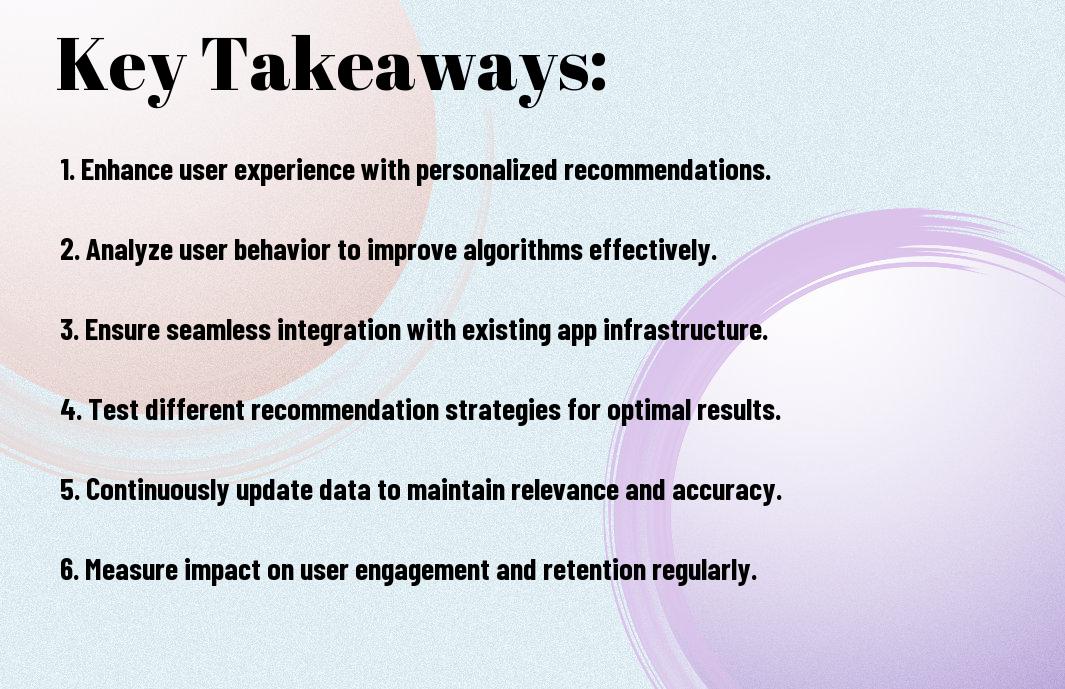
Key Takeaways:

  • Personalization is key: Integrating recommendation engines into your app ecosystem allows you to provide users with tailored content and product suggestions, enhancing their overall experience and increasing engagement.
  • Improved user retention: By offering relevant recommendations, you can encourage users to spend more time within your app, reducing the likelihood of them switching to competitors and ultimately driving long-term retention.
  • Increased conversions: Recommendation engines can help users discover new products or services they may not have found otherwise, leading to increased sales, revenue, and overall business growth.
  • Data-driven decision making: Recommendation engines rely on data and analytics to generate suggestions, providing valuable insights into user behavior and preferences that can inform future development and marketing strategies.
  • Enhanced competitiveness: Incorporating recommendation engines into your app ecosystem can be a key differentiator, setting your business apart from competitors and establishing a leadership position in your market.

    Core Components of Recommendation Systems

    While developing a recommendation engine, you’ll encounter various components that work together to provide personalized suggestions. Your system will rely on data collection, processing, and analysis to generate recommendations.

    Collaborative Filtering Methods

    Around the concept of collaborative filtering, you’ll find that it involves analyzing user behavior and preferences to identify patterns and make recommendations. Your approach will depend on the type of data you collect and the algorithms you implement.

    Content-Based Filtering Approaches

    Often, you’ll find that content-based filtering is an effective method for recommending items with similar attributes. Your system will analyze the features of items and user preferences to provide personalized suggestions.

    Components of content-based filtering approaches include attribute extraction, weighting, and scoring. You’ll need to consider the types of attributes to extract, how to weigh their importance, and how to score items based on user preferences. This will enable your system to provide accurate and relevant recommendations, enhancing your users’ experience and engagement with your app ecosystem.

    Data Pipeline Architecture

    Some of the most effective recommendation engines rely on a well-designed data pipeline architecture, which you can learn more about in a Step-by-Step Guide to Developing a Recommendation System Application. This will help you understand how to integrate your data pipeline with your app ecosystem.

    Data Collection and Processing

    With a solid data pipeline in place, you can focus on collecting and processing the data that will power your recommendation engine, allowing you to provide personalized recommendations to your users.

    Feature Engineering for Recommendations

    Beside the data collection, feature engineering is a key aspect of building a recommendation engine, as it enables you to extract relevant features from your data that will inform your recommendations.

    Considering the complexity of feature engineering, you will need to carefully evaluate your data and select the most relevant features to include in your recommendation model, ensuring that your engine provides accurate and personalized recommendations to your users.

    Integration Strategies

    Unlike other components, integrating a recommendation engine into your app ecosystem requires careful planning and execution. You need to consider factors such as data flow, scalability, and user experience to ensure seamless integration.

    API Design and Endpoints

    Around the time you start designing your API, you should consider the endpoints that will interact with your recommendation engine, allowing you to fetch and update recommendations in real-time, enabling your app to provide personalized experiences for your users.

    Service Layer Implementation

    Implementation of the service layer is where you define how your app will interact with the recommendation engine, handling requests and responses, and ensuring that your app’s functionality is not compromised.

    Plus, as you implement the service layer, you will need to consider factors such as data processing, caching, and error handling, to ensure that your recommendation engine is robust and efficient, providing your users with accurate and relevant recommendations, and enhancing their overall experience with your app.

    Performance Optimization

    Now that you have integrated a recommendation engine into your app ecosystem, you need to focus on optimizing its performance to ensure seamless user experience. You can achieve this by identifying bottlenecks and implementing strategies to mitigate them, thereby improving the overall efficiency of your app.

    Caching Mechanisms

    Optimally, you will want to implement caching mechanisms to store frequently accessed data, reducing the load on your servers and improving response times. You can use caching to store pre-computed recommendations, allowing your app to retrieve them quickly and efficiently.

    Load Balancing Considerations

    To ensure your app can handle a large volume of requests, you need to consider load balancing strategies that distribute the workload across multiple servers. You can use load balancing algorithms to route requests to the most available server, preventing any single server from becoming overwhelmed.

    Further, when implementing load balancing, you should consider factors such as server capacity, network latency, and user geography to ensure that your app provides a consistent and responsive experience for all users, regardless of their location or the volume of requests being processed. You can use techniques like geo-load balancing to direct users to the nearest server, minimizing latency and improving overall performance.

    Testing and Monitoring

    Once again, you’ll need to evaluate your recommendation engine’s performance to ensure it’s meeting your app’s goals. This involves assessing its impact on user engagement, conversion rates, and overall satisfaction.

    A/B Testing Framework

    Trialing different approaches will help you refine your recommendation engine. You can test various algorithms, user interfaces, and content types to determine what works best for your users.

    Performance Metrics

    The key to optimizing your recommendation engine lies in tracking the right metrics. You should monitor click-through rates, conversion rates, and user retention to gauge the engine’s effectiveness.

    Another aspect of performance metrics is analyzing user behavior and feedback. You can collect data on user interactions, such as likes, dislikes, and ratings, to identify areas for improvement and refine your recommendation engine to better meet your users’ needs, ultimately enhancing their overall experience with your app.

    Security and Privacy

    Despite the benefits of recommendation engines, you must prioritize security and privacy to maintain user trust in your app ecosystem.

    Data Protection Measures

    Betwixt the lines of code, you’ll need to implement robust data protection measures to safeguard user data and prevent unauthorized access.

    User Consent Management

    Around the issue of user consent, you should establish clear policies and procedures to ensure transparency and compliance with regulations.

    And as you examine deeper into user consent management, you’ll need to consider implementing features that allow users to opt-out of data collection, provide explicit consent for specific uses, and access their personal data, giving you a clear understanding of your responsibilities in handling their information, and enabling you to make informed decisions about your app’s recommendation engine.

    Conclusion

    With these considerations, you can effectively integrate recommendation engines into your app ecosystem, enhancing your users’ experience. You will be able to provide personalized content, increasing user engagement and driving business growth. By leveraging recommendation engines, you can stay ahead of the competition and establish your app as a leader in its category, ultimately benefiting your business and your users.

    FAQ

    Q: What are the benefits of integrating a recommendation engine into my app ecosystem?

    A: Integrating a recommendation engine into your app ecosystem can significantly enhance user engagement and conversion rates. By providing personalized suggestions, you can help users discover new content, products, or services that align with their interests, leading to increased satisfaction and loyalty. Additionally, recommendation engines can help you to upsell and cross-sell, resulting in increased revenue and a competitive edge in the market. With a well-implemented recommendation engine, you can also gain valuable insights into user behavior and preferences, allowing you to refine your app and improve the overall user experience.

    Q: How do I choose the right recommendation engine for my app, considering factors such as data quality, scalability, and integration complexity?

    A: Choosing the right recommendation engine for your app depends on several factors, including the type and quality of your data, the scalability requirements of your app, and the complexity of integration. You should consider the following: the algorithm used by the engine, the type of data it can handle (e.g., user behavior, ratings, metadata), and its ability to scale with your growing user base. It’s also important to evaluate the integration process, including the level of technical expertise required, the availability of APIs and SDKs, and the support provided by the engine’s developers. Furthermore, you should assess the engine’s flexibility and customizability to ensure it can be tailored to your app’s specific needs and goals.

    Q: What are some best practices for implementing and optimizing a recommendation engine in my app to ensure maximum effectiveness and user adoption?

    A: To ensure maximum effectiveness and user adoption of your recommendation engine, follow these best practices: start by collecting and preprocessing high-quality data, including user behavior, preferences, and feedback. Implement A/B testing to compare the performance of different algorithms and models, and continuously monitor and analyze user interactions with the recommendations. It’s also important to provide transparency and control to users, allowing them to understand and influence the recommendations they receive. Regularly update and refine your recommendation engine to adapt to changing user behavior and preferences, and ensure that the recommendations are contextually relevant and timely. Finally, consider using hybrid approaches that combine multiple algorithms and data sources to provide a more comprehensive and accurate recommendation experience.

Skip to content