
As you navigate the digital landscape, you’re likely aware of the significant role artificial intelligence (AI) plays in shaping your online experiences. Your interactions with mobile and web apps are being transformed by AI-powered features, from personalized recommendations to enhanced security measures. You may wonder how AI is influencing the development and functionality of these apps, and what this means for your daily digital interactions. This blog post will explore the implications of AI on mobile and web app ecosystems, and what you can expect in the future.
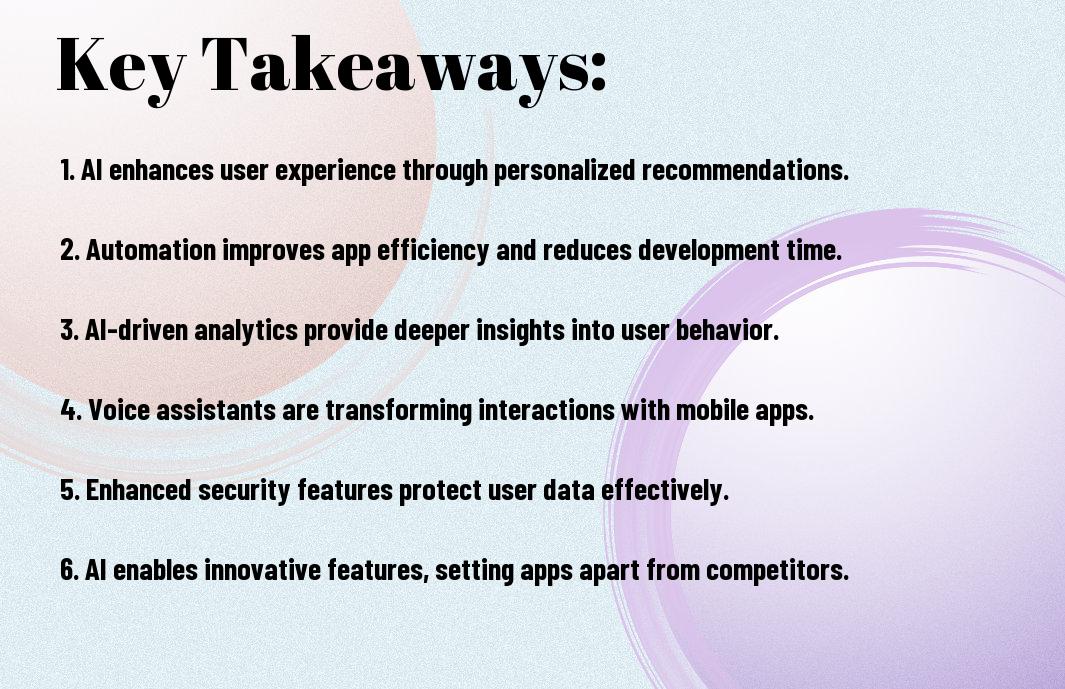
Key Takeaways:
- The integration of Artificial Intelligence (AI) in mobile and web app ecosystems is transforming the way users interact with digital platforms, enabling more personalized and intuitive experiences through predictive analytics and machine learning algorithms.
- AI-powered chatbots and virtual assistants are becoming increasingly prevalent in apps, providing automated customer support, enhancing user engagement, and streamlining tasks such as data entry and content moderation.
- The use of AI in app development is also improving security measures, with AI-driven systems capable of detecting and mitigating potential threats, such as malware and data breaches, more effectively than traditional security methods.
- AI-driven analytics are helping developers gain deeper insights into user behavior, allowing them to optimize app performance, identify areas for improvement, and create more targeted marketing campaigns to reach their intended audience.
- The incorporation of AI in mobile and web apps is expected to continue driving innovation, with potential applications in areas such as augmented reality, natural language processing, and computer vision, leading to new and exciting possibilities for app developers and users alike.
Evolution of App Development
The advent of AI has significantly transformed the app development landscape, and you are now witnessing a new era of innovation. You can see how AI is changing the way apps are designed, developed, and deployed, and this shift is likely to impact your business in various ways.
Traditional Development Paradigms
Besides the conventional methods, you have been using traditional development paradigms that involve manual coding, testing, and deployment. You are likely familiar with the time-consuming and labor-intensive process of developing apps using these methods.
AI-Driven Development Shifts
For instance, you are now seeing a significant shift towards AI-driven development, which enables faster, more efficient, and automated app development. You can leverage AI-powered tools to streamline your development process, reduce costs, and improve app quality.
In addition, as you examine deeper into AI-driven development, you will discover that it offers numerous benefits, including enhanced user experience, personalized features, and predictive analytics. You can utilize AI-driven development to create more intuitive and engaging apps that meet your users’ evolving needs and preferences, ultimately driving your business forward.
AI Integration Points
One of the key aspects of AI in mobile and web app ecosystems is identifying the right integration points. You need to consider where AI can add the most value to your app, whether it’s through enhanced user experience or improved backend efficiency.
Frontend Intelligence
Around the user interface, AI can be used to personalize your app’s layout and content, making it more intuitive and engaging for your users. You can leverage AI to analyze user behavior and adapt your app’s frontend accordingly, creating a more seamless experience.
Backend Automation
Unlike manual processes, AI can automate repetitive tasks, freeing up your resources for more strategic activities. You can use AI to streamline your app’s backend operations, such as data processing and analytics, making it more efficient and scalable.
Automation of backend processes allows you to focus on improving your app’s core functionality and user experience. You can use AI to identify areas where automation can have the most impact, and then implement solutions that simplify your workflow and reduce errors, ultimately leading to a more robust and reliable app ecosystem for your users.
User Experience Transformation
Now, as AI integrates into mobile and web app ecosystems, you can expect a significant shift in how you interact with these platforms, leading to more intuitive and personalized experiences.
Personalization Engines
One of the key benefits of AI in app development is the ability to create personalized experiences tailored to your preferences and behaviors, making your interactions more engaging and relevant.
Predictive Interfaces
Any interaction you have with an app can be anticipated and responded to by AI-driven predictive interfaces, streamlining your experience and reducing friction.
This predictive capability allows you to receive suggestions, complete tasks more efficiently, and navigate through apps with ease, as the AI learns your patterns and adapts the interface accordingly, making your overall experience more seamless and enjoyable, and enabling you to get the most out of the app’s features and functionalities.
App Security and AI
Despite the numerous benefits of AI in mobile and web app ecosystems, you must consider the potential security risks. As you integrate AI into your apps, you expose yourself to new vulnerabilities, making it necessary to prioritize security measures to protect your users’ data.
Threat Detection Systems
By leveraging AI-powered threat detection systems, you can identify and respond to potential security threats in real-time, ensuring the integrity of your app and protecting your users’ sensitive information.
Privacy Considerations
Before implementing AI in your app, you should consider the potential privacy implications, as AI can collect and process vast amounts of user data, which can be a concern for your users.
Detection of privacy breaches is a significant aspect of AI-powered app security, and as you develop your app, you should ensure that you have measures in place to detect and respond to such breaches, providing your users with a secure and trustworthy experience.

Market Dynamics
For businesses, understanding the impact of AI on mobile and web app ecosystems is imperative, as you can learn more about The Impact of Artificial Intelligence on Mobile App Development and its effects on your business.
Business Model Disruption
One significant effect of AI is the disruption of traditional business models, as you will need to adapt to new technologies and strategies to stay competitive in the market.
Competitive Landscape Changes
Behind the scenes, AI is changing the way companies compete, and you will need to be aware of these changes to make informed decisions about your business.
Disruption in the competitive landscape is driven by AI-powered innovations, and as you navigate this new landscape, you will need to consider how AI is impacting your business and the businesses of your competitors, and how you can leverage AI to gain a competitive edge.
Development Workflow Revolution
After the introduction of AI in mobile and web app development, you will notice a significant shift in your workflow, as AI-powered tools automate repetitive tasks and enhance collaboration among team members.
Code Generation and Testing
With the help of AI, you can generate high-quality code and test it efficiently, reducing the time and effort spent on these tasks and allowing you to focus on more complex aspects of your project.
Maintenance and Updates
To ensure your app remains stable and secure, you will need to perform regular maintenance and updates, and AI can assist you in identifying areas that require attention and providing personalized recommendations for improvement.
It is worth noting that AI-driven maintenance and updates enable you to proactively address potential issues, reducing downtime and improving overall user experience, which is important for the success of your mobile or web app, and you can rely on AI to help you achieve this goal.
Final Words
With these considerations, you now have a deeper understanding of the transformative power of AI on your mobile and web app ecosystems. As you navigate this evolving landscape, you can learn more about The Impact Of Artificial Intelligence On Mobile App Development and how it shapes your digital strategy, ultimately enhancing your user experience and driving your business forward. You will be better equipped to harness the potential of AI in your app development endeavors.
FAQ
Q: What is the current state of AI integration in mobile and web app ecosystems, and how is it transforming the user experience?
A: The integration of Artificial Intelligence (AI) in mobile and web app ecosystems is rapidly advancing, leading to a significant transformation in the user experience. AI-powered features such as personalized recommendations, predictive analytics, and natural language processing are being incorporated into various apps to enhance user engagement and interaction. For instance, virtual assistants like Siri, Google Assistant, and Alexa are using AI to understand voice commands and provide relevant responses, making the user experience more intuitive and seamless. Furthermore, AI-driven chatbots are being used in customer service apps to provide 24/7 support, helping to resolve queries and issues more efficiently.
Q: How is AI impacting the development and maintenance of mobile and web applications, and what are the key benefits for developers?
A: AI is revolutionizing the development and maintenance of mobile and web applications by automating various tasks, improving code quality, and enhancing overall efficiency. AI-powered tools are being used for tasks such as code review, testing, and debugging, allowing developers to focus on more complex and creative aspects of app development. Additionally, AI-driven analytics and monitoring tools are helping developers to identify and fix issues more quickly, resulting in faster time-to-market and improved app performance. The key benefits for developers include increased productivity, reduced costs, and the ability to create more sophisticated and user-friendly apps.
Q: What are the potential risks and challenges associated with the increasing use of AI in mobile and web app ecosystems, and how can they be mitigated?
A: The increasing use of AI in mobile and web app ecosystems also poses several risks and challenges, including concerns around data privacy, security, and bias. As AI systems collect and process vast amounts of user data, there is a risk of data breaches and unauthorized use, which can compromise user trust and confidentiality. Moreover, AI algorithms can perpetuate existing biases and discriminate against certain groups of users, leading to unfair outcomes. To mitigate these risks, developers and organizations must prioritize transparency, accountability, and fairness in AI development, ensuring that AI systems are designed and trained with diverse and representative data sets, and that users have control over their data and how it is used.


