Development

From Concept to Code – Best Practices for AI-Driven App Development

As you launch on developing an AI-driven app, you’ll need to navigate a complex process that requires careful planning and execution. Your goal is to create an app that not only meets but exceeds user expectations. You’ll need to consider several factors, from conceptualization to coding, to ensure your app is efficient, scalable, and user-friendly. By following best practices, you can streamline your development process and create a successful AI-driven app that sets your business apart.

Key Takeaways:

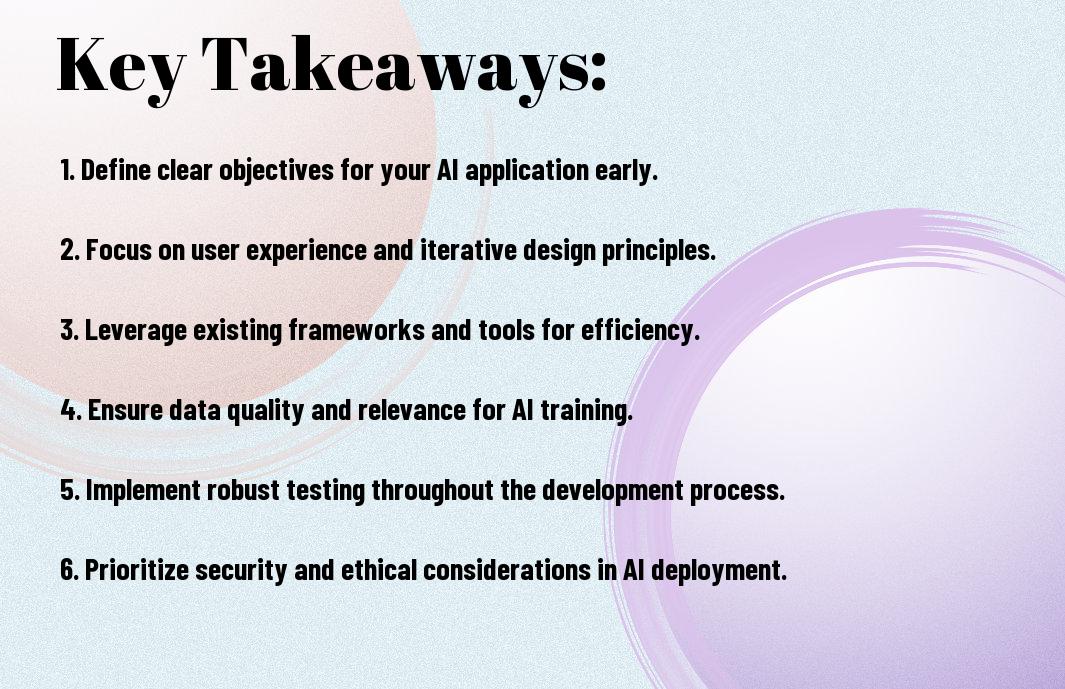
  • Define a clear project scope and objectives to ensure successful AI-driven app development, as this helps in identifying the right technologies and resources needed for the project.
  • Develop a robust data strategy to support AI model training and validation, including data collection, preprocessing, and integration with the app’s core functionality.
  • Adopt a human-centered design approach to create an intuitive user interface that effectively interacts with the AI components, providing a seamless user experience.
  • Implement a continuous testing and validation process to ensure the AI-driven app meets the required performance, security, and reliability standards, and to identify areas for improvement.
  • Stay up-to-date with the latest advancements in AI technologies and trends to leverage their potential and maintain a competitive edge in the market, and to continuously refine and improve the app’s AI capabilities.
Fundamental Principles of AI-Driven Development

The foundation of successful AI-driven app development lies in understanding the underlying principles that guide your design and implementation decisions, enabling you to create effective and efficient AI-powered applications that meet your users’ needs.

Core AI Integration Concepts

Against the backdrop of rapidly evolving AI technologies, you will need to familiarize yourself with key concepts such as machine learning, natural language processing, and computer vision to develop a comprehensive understanding of how AI can be integrated into your app.

Technical Requirements and Architecture

For your AI-driven app to be scalable and performant, you must carefully consider the technical requirements and architecture that will support your AI-powered features, including data storage, processing power, and integration with other systems.

Hence, as you explore deeper into the technical aspects of your AI-driven app, you will need to evaluate your infrastructure and ensure it can handle the demands of AI processing, which may involve significant data processing, complex algorithms, and high-performance computing, allowing you to optimize your app’s performance and deliver a seamless user experience.

Planning Phase

One of the most significant steps in AI-driven app development is the planning phase, where you lay the foundation for your project’s success. You will define your project’s objectives, identify your target audience, and determine the resources needed to bring your concept to life.

Project Scope Definition

Any ambiguity in your project’s scope can lead to delays and cost overruns, so it’s important to clearly define what you want to achieve with your AI-driven app. You should identify the specific problems you’re trying to solve and the features that will help you solve them.

AI Model Selection Criteria

Planning your AI model selection carefully is vital to your project’s success. You need to consider factors such as data quality, model complexity, and scalability to ensure that your AI model meets your app’s requirements and is aligned with your business goals.

Phase by phase, you will evaluate different AI models and select the one that best fits your needs. You will consider factors such as accuracy, interpretability, and training time, and you will choose the model that balances these factors in a way that supports your app’s functionality and user experience. As you select your AI model, you will also consider the data required to train and validate it, and you will plan for the resources needed to deploy and maintain it.

Design Patterns for AI Applications

Not all AI applications are created equal, and you need to consider various design patterns to ensure your app is efficient and effective. You will explore different patterns and principles to apply to your AI-driven app development.

System Architecture Patterns

Behind every successful AI application lies a well-designed system architecture, and you should consider patterns such as microservices and event-driven architecture to ensure scalability and flexibility in your app.

Data Flow Optimization

Patterns of data flow are imperative in AI applications, and you need to optimize data flow to ensure your app is performing at its best, considering factors such as data processing and storage.

Patterns of data flow optimization will help you streamline your app’s data processing, allowing you to focus on improving your AI model’s performance, and you can achieve this by implementing efficient data pipelines and minimizing data latency, which will ultimately enhance your app’s overall user experience.

Code Implementation Strategies

To ensure successful AI-driven app development, you need to consider several factors, including the choice of programming languages, frameworks, and tools. Your goal is to create a scalable and maintainable codebase that can handle complex AI computations.

Clean Code Practices for AI Components

Components such as neural networks and machine learning models require careful design and implementation. You should follow established principles and guidelines to ensure your AI components are modular, reusable, and easy to integrate with other parts of your application.

Testing and Validation Methods

At every stage of development, you need to test and validate your AI components to ensure they function as expected. You should use various testing techniques, such as unit testing and integration testing, to identify and fix errors early on.

Also, when testing and validating your AI-driven app, you should consider using techniques such as cross-validation and performance metrics to evaluate the accuracy and reliability of your models. You can use tools like JUnit and PyUnit to automate testing and ensure your code is robust and reliable, which will help you to identify and fix issues quickly, and ultimately, deliver a high-quality application that meets your requirements.

Performance Optimization

Despite the complexity of AI-driven app development, you can achieve optimal performance by analyzing your code and identifying bottlenecks. You can find valuable insights and discussions on AI app development on I don’t understand how they build apps with AI : r/webdev, which can help you improve your development process.

Resource Management

Beneath the surface of your app’s performance lies effective resource management, which you can achieve by allocating resources efficiently and minimizing waste, allowing your app to run smoothly and efficiently.

Scalability Considerations

Optimizing your app’s scalability is vital to its success, and you should consider factors such as user growth and data storage to ensure your app can handle increased traffic and demand.

Consequently, as you consider scalability, you will need to think about how your app will handle increased traffic, data storage, and user growth, and plan accordingly to ensure a seamless user experience, by designing a scalable architecture and leveraging cloud services or load balancing techniques to distribute the load and prevent bottlenecks.

Security and Ethics

All AI-driven app development projects require careful consideration of security and ethics to ensure the protection of user data and the responsible use of AI technology. You must prioritize these aspects to maintain user trust and avoid potential risks.

Data Protection Protocols

Against the backdrop of increasing data breaches, you should implement robust data protection protocols to safeguard your users’ sensitive information. You will need to ensure that your app complies with relevant data protection regulations and standards.

Ethical AI Implementation Guidelines

Around the development of your AI-driven app, you should establish clear guidelines for ethical AI implementation, ensuring that your AI systems are fair, transparent, and accountable. You should consider the potential impact of your AI technology on your users and society as a whole.

Considering the guidelines you establish for ethical AI implementation, you will need to continuously monitor and evaluate your AI systems to ensure they align with your values and principles. You should also be prepared to adapt and update your guidelines as your AI technology evolves and new challenges emerge, ensuring that your app remains a positive and beneficial tool for your users.

Final Words

To wrap up, you now have a comprehensive understanding of the best practices for AI-driven app development, from concept to code. You can apply these principles to your projects, streamlining your development process and creating more efficient, effective, and user-friendly applications. By following these guidelines, you will be able to harness the full potential of AI and take your app development to the next level, enhancing your skills and delivering high-quality results with your projects.

FAQ

Q: What are the key considerations when initiating an AI-driven app development project, and how can I ensure a smooth transition from concept to code?

A: When starting an AI-driven app development project, it’s crucial to define a clear project scope, identify the target audience, and determine the desired outcomes. Conducting thorough market research and analyzing competitors can help inform your concept and ensure it meets the needs of your users. Additionally, establishing a cross-functional team with expertise in AI, development, and design can facilitate effective collaboration and communication throughout the project lifecycle. By prioritizing these factors, you can set your project up for success and streamline the transition from concept to code.

Q: How can I ensure that my AI-driven app is both functional and user-friendly, and what role does design play in the development process?

A: To create an AI-driven app that is both functional and user-friendly, it’s vital to prioritize design thinking and user experience (UX) principles. This involves creating wireframes, prototypes, and testing your app with real users to gather feedback and iterate on your design. Furthermore, incorporating AI-driven features such as natural language processing, computer vision, or machine learning algorithms should be done in a way that enhances the user experience, rather than overwhelming it. By balancing functionality with intuitive design, you can create an app that is both effective and engaging, and that meets the evolving needs of your users.

Q: What are some best practices for testing and validating AI-driven apps, and how can I ensure that my app is reliable, secure, and scalable?

A: To ensure that your AI-driven app is reliable, secure, and scalable, it’s crucial to implement a robust testing and validation strategy. This includes conducting thorough unit testing, integration testing, and user acceptance testing (UAT) to identify and address any bugs or issues. Additionally, leveraging techniques such as continuous integration and continuous deployment (CI/CD) can help streamline your testing and deployment process, while also ensuring that your app is secure and compliant with relevant regulations. By prioritizing testing and validation, you can mitigate risks, ensure a high-quality user experience, and position your app for long-term success in a rapidly evolving market.

A Beginner’s Guide to AI and App Development Frameworks

As you initiate on your journey to develop innovative applications, you’ll encounter various frameworks that integrate Artificial Intelligence (AI). You’ll need to understand how these frameworks can enhance your app’s functionality and user experience. Your goal is to create a seamless and intelligent interface, and this guide will walk you through the process, covering the basics of AI and app development frameworks, helping you make informed decisions for your project.

Key Takeaways:

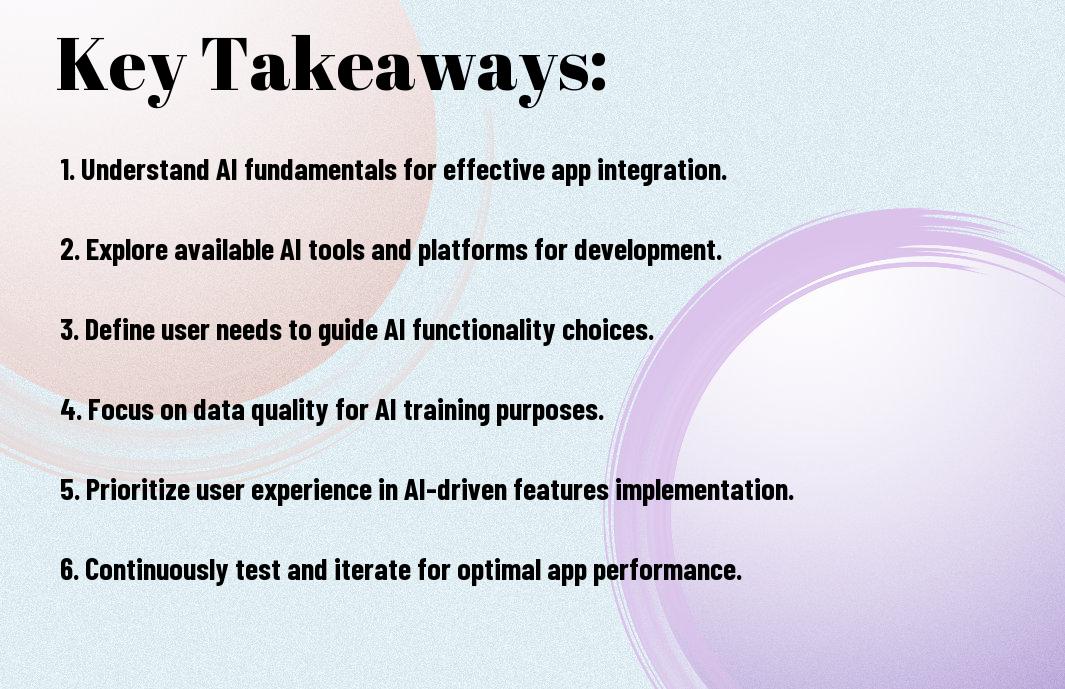
  • Understanding the basics of AI and its integration with app development frameworks is vital for building intelligent and interactive applications that can learn and adapt to user behavior.
  • Popular AI frameworks such as TensorFlow, PyTorch, and Core ML provide pre-built tools and libraries that simplify the development process and enable developers to focus on creating innovative features.
  • App development frameworks like React Native, Flutter, and Xamarin allow for cross-platform development, enabling developers to build AI-powered apps for multiple platforms using a single codebase.
  • When choosing an AI and app development framework, it’s important to consider factors such as ease of use, scalability, and compatibility with existing infrastructure to ensure a smooth development process.
  • Staying up-to-date with the latest advancements in AI and app development frameworks is vital for building competitive and cutting-edge applications that meet the evolving needs of users.

AI Fundamentals

Your journey into AI and app development frameworks begins with understanding the basics of artificial intelligence, and you can learn more about it by checking out A Beginner’s Guide to Coding AI Tools to get started.

Machine Learning Basics

For instance, you’ll need to grasp the concepts of machine learning, which involves training algorithms to make predictions based on data, and this will help you build a strong foundation in AI.

Neural Networks Overview

Any discussion of AI would be incomplete without mentioning neural networks, which are a key component of deep learning, and you’ll need to understand how they work to build effective AI models.

A key aspect of neural networks is their ability to learn from large datasets, allowing you to build complex models that can make accurate predictions, and as you investigate deeper into AI, you’ll discover how neural networks can be applied to various tasks, such as image recognition, natural language processing, and more, enabling you to create innovative AI-powered apps.

Popular AI Development Tools

One of the key aspects of AI and app development is choosing the right tools for your project. You will find a wide range of options, each with its own strengths and weaknesses, to help you build and deploy your AI models.

TensorFlow and PyTorch

On the forefront of AI development, you have frameworks like TensorFlow and PyTorch, which offer extensive libraries and community support to help you get started with building your AI models, allowing you to focus on your project’s specific needs.

OpenAI APIs and Integration

Tools like OpenAI APIs provide you with pre-trained models and seamless integration capabilities, enabling you to incorporate AI functionality into your applications with ease, and allowing you to leverage the power of AI in your development process.

It is worth noting that OpenAI APIs and integration can greatly simplify your development workflow, as you can tap into the capabilities of pre-trained models and focus on fine-tuning them to suit your specific use case, thereby streamlining your AI development process and allowing you to bring your projects to life more efficiently.

Mobile App Frameworks

Many frameworks are available for developing mobile apps, and you can choose the one that best suits your needs. You will find a range of options, from native development platforms to cross-platform solutions, each with its own set of features and benefits.

Native Development Platforms

Mobile devices have unique characteristics, and native development platforms allow you to create apps that take advantage of these features. You can use native platforms to develop apps for specific operating systems, such as iOS or Android, and create a tailored user experience.

Cross-Platform Solutions

At the heart of cross-platform development are frameworks that enable you to create apps for multiple platforms using a single codebase. You can use these solutions to develop apps for both iOS and Android, and share code between platforms, saving time and effort.

In addition to the benefits of code sharing, cross-platform solutions also provide a range of tools and features that make development easier and more efficient. You can use these frameworks to access native APIs, create custom user interfaces, and optimize app performance, allowing you to create high-quality apps that meet your users’ needs.

AI Integration in Apps

Unlike traditional app development, AI integration requires a deeper understanding of machine learning and data analysis, allowing you to create more personalized and interactive user experiences, and you will be able to enhance your app’s functionality with AI-powered features.

Data Processing Components

At this stage, you will be working with various data processing components, such as natural language processing and computer vision, to enable your app to interpret and process complex data, and you can use these components to build intelligent features into your app.

Model Implementation

Integrating AI models into your app requires careful consideration of factors such as data quality and model accuracy, and you will need to ensure that your model is properly trained and tested to deliver reliable results, so you can trust your app’s AI-powered features.

Implementation of AI models in your app involves selecting the right framework and tools, and you will need to consider factors such as scalability and performance to ensure that your app can handle the demands of AI processing, and you should also consider the user experience and ensure that your app’s AI features are intuitive and easy to use.

Development Best Practices

Not following established guidelines can lead to inefficient and ineffective app development. You should prioritize scalability, maintainability, and usability when building your application, ensuring a solid foundation for future growth and updates.

Performance Optimization

Around the time you start developing your app, you’ll want to consider performance optimization techniques, such as minimizing computational overhead and reducing latency, to ensure a seamless user experience.

Security Considerations

Behind every successful app is a robust security framework, and you should prioritize protecting your users’ data by implementing encryption, secure authentication, and access controls to prevent unauthorized access.

At the forefront of your security considerations should be the protection of sensitive user data, and you can achieve this by implementing industry-standard security protocols, regularly updating your software, and conducting thorough testing to identify vulnerabilities, allowing you to address them before they become major issues, and ensuring your app remains a trusted and reliable platform for your users.

Testing and Deployment

Despite the complexity of AI and app development, testing and deployment are vital steps to ensure your product meets user expectations. You will need to evaluate your app’s performance, identify bugs, and make necessary adjustments before launch.

Quality Assurance Methods

Any well-planned testing strategy involves a combination of manual and automated testing to ensure your app’s quality and reliability. You can use various tools and techniques to identify and fix issues, guaranteeing a smooth user experience.

Launch Strategies

On the day of launch, you will need to have a solid plan in place to ensure a successful rollout. You should consider factors such as marketing, user support, and analytics to monitor your app’s performance.

Also, as you prepare to launch your app, you should think about how you will handle user feedback, updates, and potential issues that may arise. You can use this information to improve your app and increase user satisfaction, ultimately driving the success of your product in the market.

Final Words

Considering all points, you now have a solid foundation in AI and app development frameworks. You can apply your knowledge to create innovative solutions, enhancing your skills and staying updated with the latest trends. As you progress, your understanding of AI and app development will deepen, enabling you to make informed decisions about your projects and navigate the ever-evolving tech landscape with confidence, driving your development journey forward with your newfound expertise.

FAQ

Q: What is the best programming language for a beginner to start with when it comes to AI and app development frameworks?

A: For beginners, Python is often considered one of the best programming languages to start with when exploring AI and app development frameworks. This is because Python has a simple syntax, is relatively easy to learn, and has extensive libraries and frameworks such as TensorFlow and Keras for AI, and Flask or Django for web development. Additionally, Python’s large community and wealth of resources make it an ideal choice for those new to programming and AI.

Q: How do I choose the right app development framework for my project, especially when integrating AI components?

A: Choosing the right app development framework depends on several factors including the type of application you’re building, the platforms you’re targeting, and the specific AI components you plan to integrate. For instance, if you’re building a mobile app, you might consider frameworks like React Native or Flutter, which support AI-powered features through libraries like Core ML or TensorFlow Lite. For web applications, frameworks such as Angular, Vue.js, or React, combined with backend frameworks like Node.js, can provide robust support for AI integration. It’s also important to consider the learning curve, community support, and scalability of the framework.

Q: What are some key concepts or skills that a beginner should focus on when learning about AI and app development frameworks?

A: When learning about AI and app development frameworks, beginners should initially focus on gaining a solid understanding of programming fundamentals, including data structures, algorithms, and software design patterns. For AI, understanding machine learning basics such as supervised and unsupervised learning, neural networks, and deep learning is vital. Additionally, familiarity with data preprocessing, model training, and deployment using popular AI libraries is key. For app development, understanding the framework’s architecture, user interface design principles, and how to integrate AI models into the application are vital skills. Practicing with projects and contributing to open-source projects can also help in gaining practical experience and staying updated with the latest trends and technologies in AI and app development.

Streamlining Development Workflows Through AI Integration

As you navigate the complexities of development workflows, you’re likely seeking ways to optimize efficiency and productivity. Your goal is to deliver high-quality results quickly, and AI integration can help you achieve this. By leveraging AI, you can automate repetitive tasks, enhance collaboration, and gain valuable insights to inform your decision-making. This enables you to focus on high-level strategy and creative problem-solving, ultimately driving your projects forward with greater speed and accuracy.

Key Takeaways:

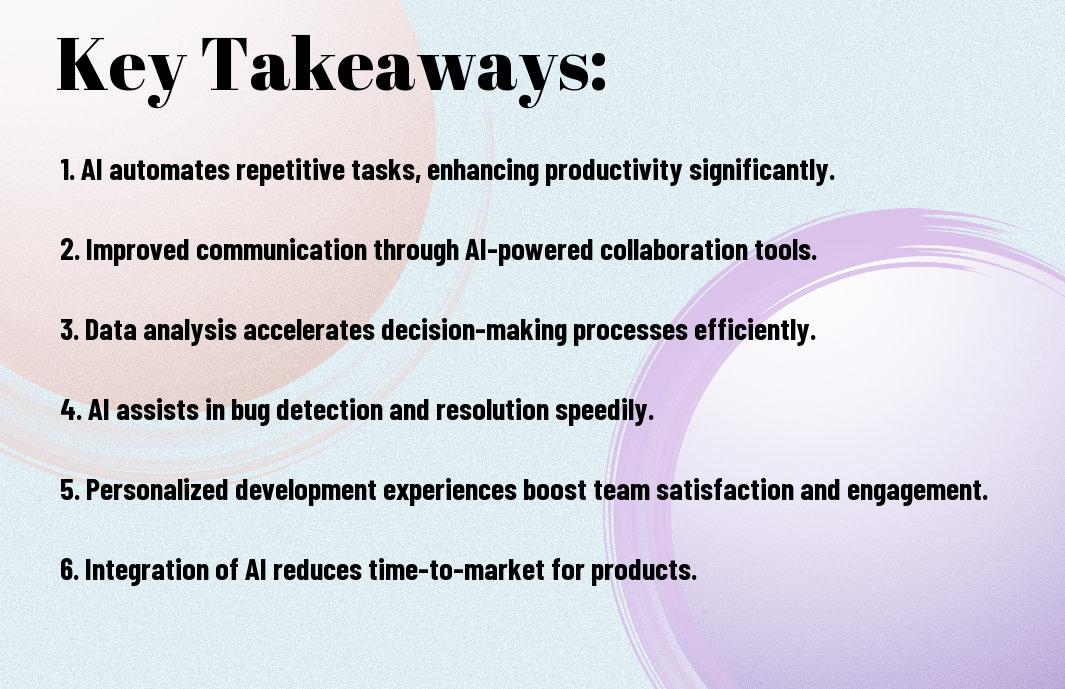
  • Automating repetitive tasks through AI integration can significantly reduce development time and increase productivity, allowing teams to focus on more complex and high-value tasks.
  • AI-powered tools can help improve code quality by detecting errors, suggesting improvements, and optimizing code performance, resulting in faster and more reliable software development.
  • AI-driven project management can enhance collaboration and communication among team members by providing real-time updates, predicting potential roadblocks, and identifying areas for improvement.
  • Integrating AI into development workflows can facilitate data-driven decision making by providing insights and analytics on development processes, enabling teams to make informed decisions and optimize their workflows.
  • AI integration can also enable developers to build more intelligent and adaptive software systems, such as chatbots, virtual assistants, and predictive maintenance systems, that can learn and improve over time.

AI Development Tools Integration

A key aspect of streamlining development workflows is integrating AI development tools, which can significantly enhance your productivity. You can explore more about AI Workflow optimization to discover how AI can transform your development process.

Code Generation Assistants

One of the most significant benefits of AI integration is the ability to automate repetitive coding tasks, allowing you to focus on more complex aspects of your project, thereby increasing your overall efficiency.

Automated Testing Frameworks

Across various development stages, you can leverage AI-powered testing frameworks to identify and fix errors, ensuring your application is stable and functions as intended, which ultimately saves you time and resources.

Assistants like automated testing frameworks can help you identify potential issues before they become major problems, enabling you to proactively address them and maintain the quality of your application, allowing you to deliver a better user experience.

Machine Learning Pipeline Optimization

If you’re looking to streamline your development workflows, integrating AI can be a game-changer, allowing you to automate repetitive tasks and focus on high-level strategy.

Data Processing Automation

Following the implementation of AI, you’ll find that data processing becomes much more efficient, allowing you to allocate your resources more effectively and make data-driven decisions to drive your business forward.

Model Training Workflows

By leveraging AI, you can optimize your model training workflows, enabling you to develop and deploy models more quickly and accurately, which in turn allows you to respond to changing market conditions and stay ahead of the competition.

Consequently, as you refine your model training workflows, you’ll be able to identify areas for improvement and make targeted adjustments, allowing you to continually refine and improve your models, and ultimately drive better outcomes for your business, enabling you to make more informed decisions and achieve your goals more effectively.

DevOps Enhancement with AI

Once again, you can leverage AI to enhance your DevOps practices, leading to more efficient and streamlined workflows. By integrating AI into your DevOps pipeline, you can automate tasks, improve code quality, and predict potential issues before they arise.

Predictive Maintenance

With advanced analytics and machine learning algorithms, you can identify potential problems in your system, allowing you to take proactive measures to prevent downtime and ensure continuous delivery of your services.

Resource Allocation Systems

Beneath the surface of your development workflow, you can optimize your resource allocation with AI-powered systems, enabling you to assign tasks and manage resources more effectively, leading to increased productivity and reduced waste.

Also, as you examine deeper into resource allocation systems, you’ll find that AI can help you analyze your workflow, identify bottlenecks, and provide recommendations for improvement, allowing you to make data-driven decisions and optimize your development process for maximum efficiency and output, ultimately benefiting your overall workflow and project delivery.

Collaborative AI Systems

Keep in mind that collaborative AI systems can significantly enhance your development workflows by facilitating seamless communication and task management among team members, allowing you to focus on high-priority tasks.

Team Coordination Tools

Among the various benefits of collaborative AI systems, you will find that team coordination tools enable you to streamline your workflow, making it easier for you to manage tasks and collaborate with your team more efficiently.

Code Review Automation

Across the board, code review automation is a key feature of collaborative AI systems, allowing you to automate tedious tasks and focus on more complex aspects of your project, thereby increasing your productivity.

Review your code review process and consider implementing AI-powered tools to automate the task, enabling you to identify errors and bugs more quickly, and ultimately, you will be able to deliver high-quality products faster and more reliably, which will enhance your overall development workflow.

Quality Assurance Through AI

To ensure the delivery of high-quality software, you can leverage AI-powered tools that automate testing and validation processes, freeing up your team to focus on more complex tasks.

Bug Detection Algorithms

Toward achieving this goal, you can utilize bug detection algorithms that use machine learning to identify and classify defects, allowing you to address issues before they reach production.

Performance Optimization

Around the clock, your application’s performance can be monitored and optimized using AI-driven tools that analyze usage patterns and provide recommendations for improvement, enabling you to deliver a seamless user experience.

This performance optimization not only enhances your application’s speed and reliability but also helps you to identify areas where resources are being underutilized, allowing you to allocate them more efficiently and reduce costs, ultimately leading to better decision-making and increased customer satisfaction, as you are able to provide your users with a high-quality experience that meets their expectations.

Security and Compliance

Many development teams face challenges in ensuring the security and compliance of their workflows, but AI integration can help alleviate these concerns by automating various security and compliance tasks, allowing you to focus on your core development work.

Automated Security Scanning

Above all, automated security scanning is a key benefit of AI integration, enabling you to identify and address potential security vulnerabilities in your codebase, thereby protecting your applications and data from potential threats.

Regulatory Compliance Checks

Compliant with regulatory requirements, AI-powered tools can help you ensure that your development workflows adhere to relevant standards and regulations, such as data protection and privacy laws, allowing you to avoid potential fines and reputational damage.

Consequently, as you implement regulatory compliance checks, you will be able to demonstrate your commitment to protecting sensitive data and maintaining the trust of your customers, which is necessary for building a strong reputation and maintaining a competitive edge in your industry.

Conclusion

As a reminder, you can significantly enhance your development workflows by integrating AI. You will experience improved efficiency and productivity, allowing your team to focus on high-priority tasks. By automating repetitive tasks, you can optimize your workflow, leading to faster project completion and increased accuracy. Your development process will become more streamlined, enabling you to deliver high-quality results and stay ahead in the competitive market.

FAQ

Q: What are the benefits of integrating AI into development workflows?

A: Integrating AI into development workflows can significantly enhance productivity, efficiency, and accuracy. AI-powered tools can automate repetitive tasks, such as code reviews and testing, allowing developers to focus on more complex and creative tasks. Additionally, AI can help identify potential bugs and errors, reducing the likelihood of downstream problems and improving overall code quality. By streamlining development workflows through AI integration, teams can deliver high-quality software faster and more reliably, ultimately driving business success.

Q: How can AI be used to improve collaboration and communication among development teams?

A: AI can be used to improve collaboration and communication among development teams in several ways. For example, AI-powered chatbots can facilitate communication between team members, provide real-time updates on project status, and even help with task assignment and prioritization. AI can also analyze team dynamics and provide insights on how to improve collaboration, such as identifying potential bottlenecks and suggesting ways to improve knowledge sharing. Furthermore, AI-powered project management tools can help teams track progress, set deadlines, and allocate resources more effectively, ensuring that everyone is on the same page and working towards common goals.

Q: What are some potential challenges and limitations of integrating AI into development workflows, and how can they be addressed?

A: While integrating AI into development workflows can bring numerous benefits, there are also potential challenges and limitations to consider. For example, AI systems may require significant training data and computational resources, which can be time-consuming and costly to implement. Additionally, AI may not always understand the nuances of human decision-making, which can lead to errors or unexpected outcomes. To address these challenges, teams should carefully evaluate their AI solutions, ensure that they are properly trained and validated, and establish clear guidelines and protocols for AI use. Moreover, teams should also prioritize transparency, accountability, and human oversight to ensure that AI is used in a way that complements and augments human capabilities, rather than replacing them.

The Role of AI in Developing Next-Generation Social Apps

As you explore the latest social media platforms, you’re likely to notice significant advancements in their functionality and user experience. Your interactions with these apps are being shaped by artificial intelligence (AI), which is revolutionizing the way you connect and share information. You can expect AI to play an increasingly significant role in developing next-generation social apps, enabling more personalized and interactive experiences that cater to your unique preferences and needs.

Key Takeaways:

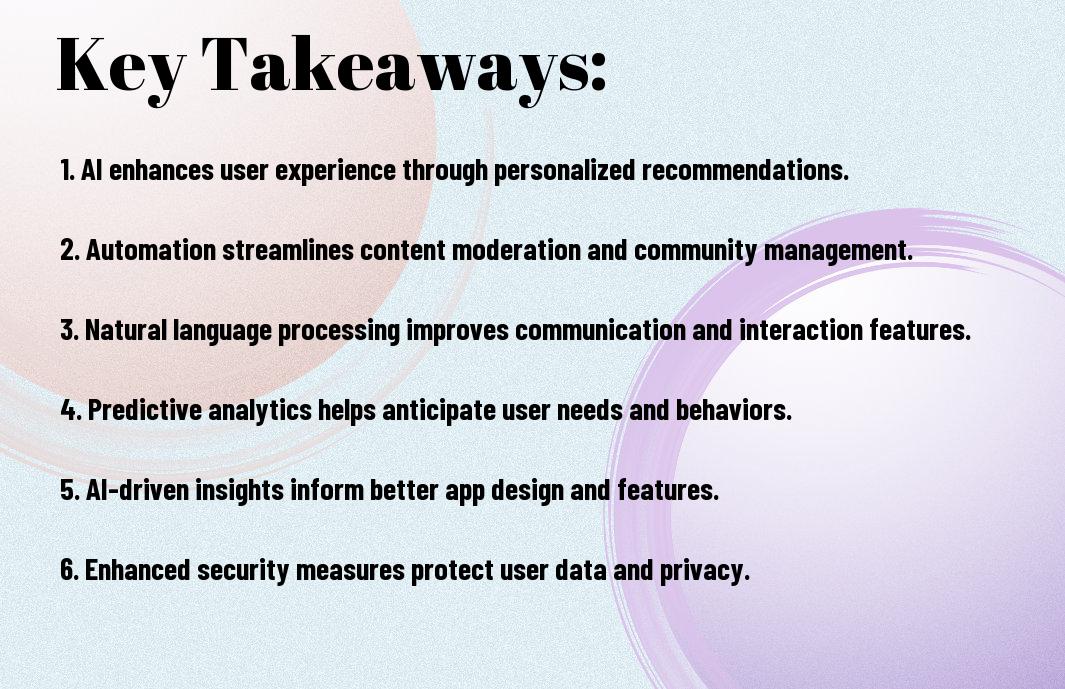
  • AI-driven social apps can analyze user behavior and preferences to provide personalized experiences, increasing user engagement and retention by offering tailored content and interactions.
  • Next-generation social apps leveraging AI can enhance user safety and security through advanced moderation tools, detecting and mitigating online harassment, hate speech, and misinformation.
  • AI-powered chatbots and virtual assistants can facilitate seamless communication and community building within social apps, enabling users to connect with each other and access information more efficiently.
  • The integration of AI in social apps can enable innovative features such as augmented reality experiences, sentiment analysis, and predictive analytics, setting new standards for social media interaction and community engagement.
  • As AI continues to evolve, social apps will need to prioritize transparency, accountability, and ethical considerations to ensure that AI-driven decision-making aligns with user values and promotes a positive online environment.

Current Social Media Landscape

While navigating the current social media landscape, you’ll notice a plethora of platforms vying for your attention. Your online presence is scattered across multiple apps, each with its unique features and user base.

Traditional Social Apps

Across various platforms, traditional social apps have dominated the market, offering features like messaging, sharing, and networking. You use these apps to connect with friends, family, and like-minded individuals, shaping your online experience.

Market Gaps and User Demands

After analyzing your behavior on social media, it becomes clear that there are unmet needs and desires. You crave more personalized, interactive, and secure experiences, which traditional social apps often fail to provide, leaving room for innovation and disruption.

And as you continue to evolve in your online interactions, your expectations from social apps are becoming more sophisticated. You want platforms that can understand your preferences, protect your data, and offer immersive experiences, driving the demand for next-generation social apps that can meet these rising standards and transform the way you interact online.

AI Integration Points

Assuming you want to develop a next-generation social app, you’ll need to consider AI integration points. You can learn more about how AI is transforming the social media landscape by visiting How AI Is Reshaping Social Media Platforms And 5 Tips For Success to stay ahead of the curve.

Natural Language Processing

Along the lines of AI integration, you’ll find that natural language processing is a key aspect of developing social apps, as it enables your app to understand and generate human-like language, making interactions more intuitive and engaging for your users.

Predictive Analytics

Processing large amounts of data is vital for predictive analytics, which helps you forecast user behavior and preferences, allowing you to create a more personalized experience for your users.

Even with the complexity of predictive analytics, you can leverage AI to analyze user data and identify patterns, enabling you to make informed decisions about your social app’s development and optimization, ultimately enhancing your users’ overall experience and driving engagement.

Social Intelligence Features

For developing next-generation social apps, you need to incorporate social intelligence features that enable more nuanced interactions. These features will help you create a more engaging and personalized experience for your users.

Emotion Recognition Systems

Intelligently, you can use emotion recognition systems to analyze user emotions and tailor your app’s response accordingly, allowing you to create a more empathetic and supportive environment for your users.

Behavioral Pattern Analysis

Against the backdrop of increasing user expectations, you can leverage behavioral pattern analysis to identify trends and preferences, enabling you to refine your app’s functionality and improve user satisfaction.

Also, as you investigate deeper into behavioral pattern analysis, you will discover that it allows you to anticipate user needs, providing you with valuable insights to inform your development decisions and create a more intuitive user experience that meets your users’ evolving expectations.

Privacy and Security

After considering the benefits of AI in social apps, you must also think about the potential risks to your personal data. As you use these apps, your information is vulnerable to cyber threats, and it’s imperative to prioritize protection.

AI-Driven Protection Mechanisms

By leveraging AI-powered tools, you can enhance your social app’s security with advanced threat detection and prevention systems, giving you peace of mind as you interact online.

User Data Management

Beside the benefits of AI-driven protection, you should also consider how your data is managed and stored, ensuring that your personal information is handled responsibly and in accordance with your preferences.

It is imperative to understand that effective user data management involves transparency, control, and accountability, allowing you to make informed decisions about your online presence and protecting your digital identity as you navigate the world of social apps.

Personalization Algorithms

All social apps aim to provide a unique experience for you, and personalization algorithms play a significant role in achieving this goal. You can expect these algorithms to analyze your behavior and tailor the content to your preferences, making your experience more engaging and relevant.

Content Curation

By leveraging AI-powered content curation, you can discover new content that aligns with your interests, and your feed will be filled with relevant information, making your experience more enjoyable and personalized to your tastes.

User Experience Adaptation

Behind the scenes, AI-driven user experience adaptation enables social apps to adjust their layout, features, and functionality to suit your needs, ensuring that you have a seamless and intuitive interaction with the app.

Also, as you continue to use the app, the AI-powered adaptation mechanism will learn your habits and preferences, allowing the app to evolve and improve, providing you with a more personalized and engaging experience over time, and enabling you to get the most out of your social app interactions.

Social Connection Enhancement

Now, as you explore the role of AI in developing next-generation social apps, you’ll notice a significant focus on enhancing social connections. AI-powered features are designed to help you build and maintain meaningful relationships, making your online interactions more engaging and personalized.

Smart Matching Systems

Mirroring your interests and preferences, smart matching systems use AI to connect you with like-minded individuals, increasing the likelihood of forming meaningful relationships and expanding your social circle.

Community Building Tools

Bridging the gap between you and others, community building tools leverage AI to facilitate group discussions, shared activities, and collaborative projects, helping you to establish a sense of belonging and connection with others who share your passions.

In addition, as you utilize community building tools, you’ll find that AI-driven features such as content moderation, sentiment analysis, and personalized recommendations help to foster a positive and inclusive environment, allowing you to engage with others in a more meaningful and enjoyable way, and ultimately enriching your overall social experience.

Future Implications

Despite the current advancements in AI-powered social apps, you will witness even more innovative developments in the future, transforming the way you interact with others and share information.

Social Evolution Impact

For instance, you will see a significant shift in how you form and maintain relationships, as AI-driven social apps become more prevalent in your daily life, influencing your social behaviors and interactions.

Technological Convergence

Any integration of AI with other emerging technologies, such as blockchain or the Internet of Things, will likely have a profound impact on your experience with social apps, enabling more secure and personalized interactions.

With the convergence of these technologies, you can expect to see more sophisticated and immersive social platforms that seamlessly integrate into your daily life, offering you new ways to connect, share, and interact with others, and you will need to adapt to these changes to stay connected and engaged in the digital world.

To wrap up

With this in mind, you can see how AI is transforming the social app landscape. As you consider developing your next-generation social app, you’ll want to explore the possibilities of AI integration. For more insights, visit Revolutionizing Mobile Apps: AI for Next-Gen App Development to discover how you can leverage AI to enhance your app’s user experience and stay ahead of the competition, ultimately shaping the future of your social app with innovative AI-powered solutions.

FAQ

Q: What is the role of AI in developing next-generation social apps, and how does it enhance user experience?

A: The role of AI in developing next-generation social apps is multifaceted. AI algorithms can analyze user behavior, preferences, and interactions to provide personalized content recommendations, improving user engagement and satisfaction. Additionally, AI-powered chatbots can offer 24/7 customer support, helping users navigate the app and resolving issues promptly. AI-driven analytics also enable developers to identify trends, patterns, and areas for improvement, allowing them to make data-driven decisions and optimize the app’s performance. By leveraging AI, social apps can deliver a more intuitive, responsive, and enjoyable experience for their users.

Q: How does AI contribute to the development of more sophisticated and secure social apps, and what are the potential risks associated with its integration?

A: AI plays a significant role in developing more sophisticated and secure social apps by enabling advanced threat detection, facial recognition, and sentiment analysis. AI-powered systems can identify and flag suspicious activity, such as fake accounts or malicious content, and alert administrators to take action. Furthermore, AI-driven encryption methods can enhance data protection, ensuring that user information remains confidential and secure. However, the integration of AI also raises concerns about data privacy, bias, and the potential for AI systems to be exploited by malicious actors. Developers must carefully consider these risks and implement robust safeguards to mitigate them, ensuring that AI is used responsibly and ethically.

Q: What are the potential future developments in AI-powered social apps, and how might they change the way we interact with each other and with technology?

A: Future developments in AI-powered social apps are likely to focus on augmented reality (AR) and virtual reality (VR) integration, enabling more immersive and interactive experiences. AI-driven avatars and virtual assistants may become more prevalent, allowing users to create personalized digital personas and interact with others in new and innovative ways. Additionally, AI-powered social apps may incorporate more advanced emotional intelligence, enabling them to better understand and respond to users’ emotional needs. As AI continues to evolve, we can expect to see significant changes in the way we interact with each other and with technology, potentially leading to more empathetic, intuitive, and human-like digital experiences that blur the lines between the physical and digital worlds.

A Beginner’s Guide to AI-Driven Mobile App Development

As you commence on your journey to create innovative mobile apps, you’ll discover the significance of artificial intelligence (AI) in enhancing user experience. You’re likely aware that AI-driven mobile apps are revolutionizing the way you interact with devices. Your goal is to develop apps that think, learn, and adapt to user behavior, and this guide will walk you through the process, helping you get started with AI-driven mobile app development and unlocking your full potential as a developer.

Key Takeaways:

  • Embracing AI in mobile app development can significantly enhance user experience by providing personalized interactions, predictive analytics, and automated decision-making processes.
  • AI-driven mobile apps can leverage machine learning algorithms to analyze user behavior, preferences, and patterns, enabling developers to create more intuitive and engaging applications.
  • Integrating AI into mobile app development requires a solid understanding of data science, machine learning, and software development, making it imperative to have a skilled team with diverse expertise.
  • AI-powered mobile apps can drive business growth by improving operational efficiency, reducing costs, and unlocking new revenue streams through innovative features and services.
  • As AI technology continues to evolve, mobile app developers must stay up-to-date with the latest advancements and trends to create cutting-edge applications that meet the evolving needs of users and stay competitive in the market.

AI Fundamentals in Mobile Development

A strong understanding of AI fundamentals is crucial for developing intelligent mobile apps. You will need to learn about various AI concepts and technologies to create innovative and engaging user experiences. Your mobile app development journey begins with understanding the basics of AI and its applications in mobile development.

Core AI Technologies for Apps

By leveraging natural language processing, computer vision, and predictive analytics, you can build mobile apps that offer personalized experiences. You will need to explore these core AI technologies to determine which ones align with your app’s goals and objectives. Your choice of AI technology will depend on the type of app you are developing and the features you want to include.

Machine Learning Integration Basics

For building intelligent mobile apps, you need to understand the basics of machine learning integration. You will need to learn how to collect and preprocess data, train models, and deploy them in your app. Your goal is to create an app that can learn from user interactions and improve over time.

In fact, machine learning integration is a key aspect of AI-driven mobile app development, and you will need to consider factors such as data quality, model accuracy, and user privacy. You should also explore various machine learning frameworks and tools to determine which ones best fit your app’s requirements and your development workflow. As you probe deeper into machine learning integration, you will discover new opportunities to enhance your app’s functionality and user experience.

Essential Tools and Frameworks

Assuming you have a basic understanding of AI-driven mobile app development, you’ll need to familiarize yourself with the important tools and frameworks that power this technology. You’ll find a range of options available, each with its own strengths and weaknesses, to help you build and deploy your app.

Popular AI Development Platforms

Against the backdrop of a rapidly evolving AI landscape, you’ll encounter popular development platforms like Google’s TensorFlow and Microsoft’s Azure Machine Learning, which provide the foundation for your AI-driven mobile app. You can leverage these platforms to streamline your development process and create more sophisticated apps.

Mobile-Specific AI Libraries

After selecting your development platform, you’ll need to choose mobile-specific AI libraries that integrate seamlessly with your app. You can explore libraries like Core ML for iOS and ML Kit for Android, which offer a range of pre-trained models and APIs to enhance your app’s functionality.

Hence, as you examine deeper into mobile-specific AI libraries, you’ll discover that they provide a wide range of features, from image and speech recognition to natural language processing and predictive analytics. You can use these libraries to create more personalized and engaging user experiences, setting your app apart from the competition and driving user loyalty.

Building Smart User Experiences

Unlike traditional mobile app development, AI-driven development focuses on creating personalized and intuitive user experiences. You can leverage AI to analyze user behavior and preferences, enabling your app to adapt and respond accordingly, making it more engaging and user-friendly.

Natural Language Processing Features

Against the backdrop of increasing demand for voice-activated interfaces, you can integrate natural language processing features into your app, allowing users to interact with it using voice commands, making it more accessible and convenient for them.

Computer Vision Applications

Any mobile app can benefit from computer vision capabilities, which enable your app to interpret and understand visual data from images and videos, allowing you to develop innovative features such as object detection, facial recognition, and augmented reality experiences.

At the heart of computer vision applications lies the ability to analyze and process visual data, enabling you to develop apps that can, for instance, detect objects, classify images, or track movements, opening up a wide range of possibilities for your app’s functionality and user experience, and you can utilize this technology to create more engaging and interactive apps that cater to your users’ needs.

AI Performance Optimization

Not all AI-driven mobile apps are created equal, and you’ll need to optimize your app’s performance to ensure a seamless user experience. You’ll want to focus on improving your app’s speed, efficiency, and overall performance to keep your users engaged.

Resource Management

Betwixt the various components of your app, you’ll need to manage resources effectively to prevent bottlenecks and optimize performance. You’ll want to allocate resources wisely, ensuring that your app’s AI components are utilizing the right amount of memory, CPU, and battery power.

Model Efficiency Techniques

Across the board, model efficiency techniques can help improve your app’s performance by reducing computational complexity and memory usage. You’ll want to explore techniques such as model pruning, quantization, and knowledge distillation to optimize your app’s AI models.

Another key aspect of model efficiency techniques is the use of transfer learning, which allows you to leverage pre-trained models and fine-tune them for your specific use case. By doing so, you can significantly reduce the amount of training data and computational resources required, resulting in a more efficient and performant AI-driven mobile app that meets your users’ expectations and provides a better overall experience.

Data Management and Privacy

For any AI-driven mobile app, managing data effectively is vital to its success, and you will need to consider how to handle user data in a way that is both secure and transparent, ensuring that your app complies with relevant regulations and maintains user trust.

Data Collection Strategies

Similarly, for your app to function effectively, you will need to develop data collection strategies that are tailored to your specific needs, allowing you to gather the information necessary to power your AI-driven features while also being mindful of user privacy and data protection.

Security Implementation

Furthermore, for the security of your app, you will need to implement robust security measures to protect user data, including encryption, secure authentication, and access controls, to prevent unauthorized access and ensure that your app is secure.

But as you research deeper into security implementation, you will realize that it’s not just about protecting user data, but also about ensuring the integrity of your app and its AI-driven features, which requires a comprehensive approach to security that includes regular updates, testing, and monitoring to stay ahead of potential threats and vulnerabilities, and you should consider consulting with security experts to ensure your app meets the highest security standards.

Testing AI-Powered Features

Once again, you’ll need to ensure your AI-driven mobile app functions as intended, and that’s where testing comes in, allowing you to identify and fix issues before launch, saving your time and resources in the long run, and ultimately enhancing your app’s overall user experience.

Quality Assurance Methods

Assuring the quality of your AI-powered features is vital, you will need to implement various testing methods, such as unit testing, integration testing, and user acceptance testing, to guarantee your app meets the required standards and functions seamlessly, giving you confidence in your product.

Performance Metrics

By monitoring performance metrics, you can evaluate your app’s efficiency, including parameters like processing time, memory usage, and battery consumption, helping you optimize your app’s performance and provide a better experience for your users, which is vital for your app’s success.

The performance metrics you track will depend on your app’s specific requirements, but you should consider factors like latency, throughput, and error rates, as these will give you valuable insights into your app’s performance, allowing you to make data-driven decisions to improve your app, and as you analyze these metrics, you will be able to identify areas for improvement, and make adjustments to enhance your app’s overall performance, and user satisfaction.

Summing up

Presently, you have gained a comprehensive understanding of AI-driven mobile app development. You can now leverage this knowledge to create innovative apps that enhance your users’ experience. As you begin on your development journey, you will find that your skills and expertise will continue to evolve, enabling you to build more sophisticated and intelligent applications that meet your users’ evolving needs and exceed their expectations, ultimately driving success for your business and enhancing your reputation as a developer.

FAQ

Q: What is AI-Driven Mobile App Development and how does it differ from traditional mobile app development?

A: AI-Driven Mobile App Development refers to the process of creating mobile applications that utilize Artificial Intelligence (AI) and Machine Learning (ML) technologies to provide personalized, intuitive, and dynamic user experiences. Unlike traditional mobile app development, AI-Driven Mobile App Development focuses on integrating AI-powered features such as predictive analytics, natural language processing, and computer vision to enhance the app’s functionality and user engagement. This approach enables developers to create more sophisticated and adaptive apps that can learn from user behavior and improve over time.

Q: What are the key benefits of using AI in mobile app development, and how can it improve the overall user experience?

A: The key benefits of using AI in mobile app development include enhanced personalization, improved user engagement, and increased efficiency. AI-powered apps can analyze user behavior, preferences, and patterns to provide tailored recommendations, content, and experiences. Additionally, AI-driven apps can automate routine tasks, simplify complex processes, and offer real-time support, resulting in a more seamless and intuitive user experience. By leveraging AI, developers can create apps that are more responsive, interactive, and user-friendly, ultimately driving higher user satisfaction and loyalty.

Q: What skills and tools do developers need to get started with AI-Driven Mobile App Development, and what are the best practices for implementing AI-powered features?

A: To get started with AI-Driven Mobile App Development, developers should have a solid foundation in programming languages such as Java, Swift, or Kotlin, as well as experience with AI and ML frameworks like TensorFlow, Core ML, or ML Kit. They should also be familiar with data analysis, computer vision, and natural language processing concepts. In terms of tools, developers can utilize popular AI-powered development platforms like Google’s ML Kit, Apple’s Core ML, or Microsoft’s Azure Machine Learning. Best practices for implementing AI-powered features include starting with a clear understanding of the app’s goals and user needs, designing intuitive AI-driven interfaces, and continuously testing and refining the app’s AI-powered features to ensure optimal performance and user experience.

Skip to content