Developing Real-Time Translation Apps Using AI Models

As you explore the world of language translation, you’re likely to encounter numerous challenges, particularly when communicating across linguistic and cultural boundaries. You need a reliable solution to bridge this gap, and that’s where real-time translation apps come in. With the help of AI models, you can develop innovative applications that facilitate seamless communication, enabling you to connect with people worldwide, regardless of the language they speak, and expanding your global reach and opportunities. You can leverage AI-powered translation to break language barriers.

Key Takeaways:

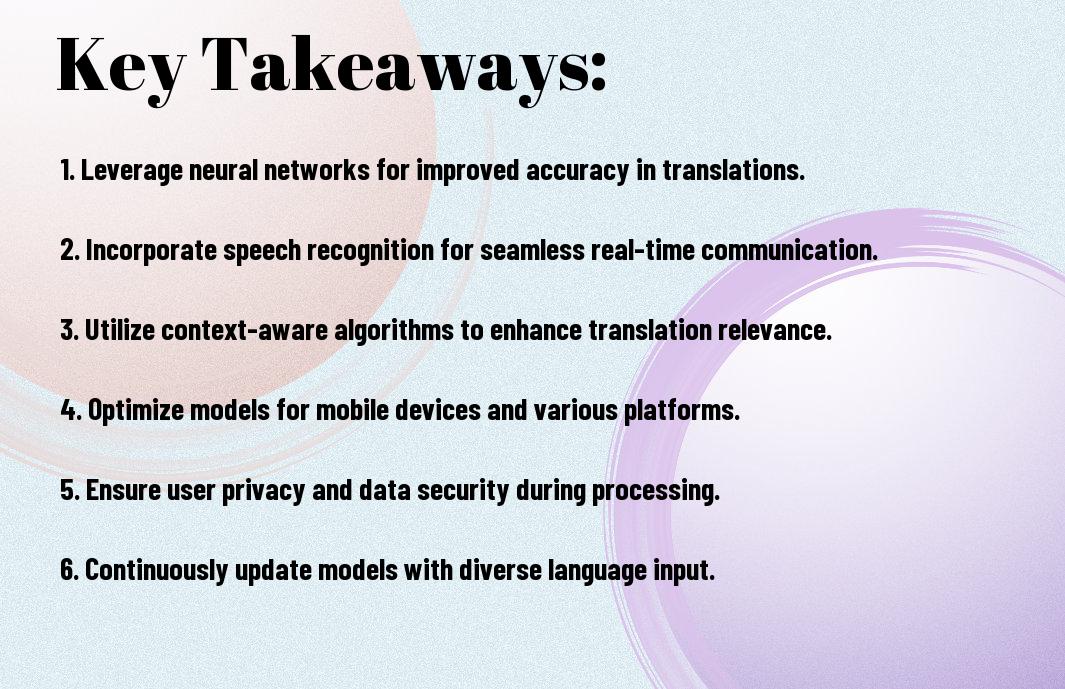
  • Developing real-time translation apps using AI models requires a deep understanding of natural language processing (NLP) and machine learning algorithms to ensure accurate and efficient translations.
  • AI-powered translation apps can be integrated with various platforms, such as speech recognition systems and text-to-speech synthesis, to provide seamless communication experiences for users.
  • Real-time translation apps can be applied in numerous industries, including healthcare, education, and tourism, to break language barriers and facilitate global communication.
  • The development of real-time translation apps involves addressing challenges such as language nuances, idioms, and cultural references to ensure that translations are contextually accurate and relevant.
  • Continuous training and updating of AI models with new data and languages is necessary to improve the accuracy and reliability of real-time translation apps and adapt to evolving language usage and trends.
Fundamentals of AI Translation

Your understanding of AI translation begins with the basics of how machines interpret and process human language, enabling you to develop effective real-time translation apps.

Neural Machine Translation Models

Translating languages in real-time requires complex algorithms, and you’ll find that neural machine translation models are the key to achieving this, allowing you to build apps that can understand and translate languages quickly.

Natural Language Processing Components

Only by breaking down language into its components can you begin to understand how AI translation works, and you’ll discover that natural language processing is the foundation upon which your translation app is built.

Hence, as you examine deeper into natural language processing components, you’ll learn about the various tools and techniques that enable your app to comprehend and generate human-like language, from syntax and semantics to pragmatics and discourse, allowing you to create a seamless translation experience for your users.

Core Architecture Design

Now that you have a clear understanding of the requirements, you can begin designing the core architecture of your real-time translation app, considering factors such as scalability, security, and usability to ensure a seamless user experience.

System Infrastructure

Against the backdrop of increasing demand for real-time translation, you will need to set up a robust system infrastructure that can handle high volumes of data and traffic, ensuring your app’s stability and performance.

API Integration Methods

Architecting your app’s API integration is vital, as you will be working with various AI models and third-party services, and you should consider the most suitable methods to integrate these APIs into your app, such as RESTful APIs or GraphQL.

Even as you research deeper into API integration, you will need to consider factors such as data encryption, authentication, and error handling to ensure secure and reliable data exchange between your app and the integrated services, allowing you to focus on developing a user-friendly interface and a seamless translation experience for your users.

AI Model Selection

Not all AI models are suitable for real-time translation apps. You can explore various models, such as those discussed in I built a live translation app using SwiftUI & OpenAI’s Whisper, to find the best fit for your needs.

Transformer-Based Models

Selective use of transformer-based models can enhance your app’s translation capabilities, allowing you to leverage their strengths in handling complex language structures and nuances, which you can utilize to improve your app’s performance.

Language Pair Optimization

For optimal results, you will need to consider the specific language pairs your app will support, taking into account the unique characteristics of each language and the potential challenges that may arise during the translation process, which you must address to ensure your app’s success.

At this stage, you should focus on optimizing your app for the most common language pairs, while also considering the availability of training data and the complexity of the languages involved, as this will directly impact your app’s overall performance and user experience, and you can use this information to make informed decisions about your app’s development and deployment.

Real-Time Processing

All real-time translation apps rely on advanced AI models to process and translate languages quickly. You need to consider the complexity of your app and the infrastructure required to support it.

Latency Management

Against the clock, you must optimize your app’s performance to minimize delays. You can achieve this by leveraging cloud services and edge computing to reduce latency.

Stream Processing Techniques

Around the concept of stream processing, you can develop techniques to handle continuous data streams. You will need to design your app to process audio or text inputs in real-time.

To implement stream processing techniques effectively, you should focus on designing a pipeline that can handle the constant flow of data. You will need to consider the trade-offs between accuracy, latency, and computational resources to ensure your app provides a seamless user experience. Your goal is to create an app that can translate languages in real-time, and with the right techniques, you can achieve this.

Language Support Implementation

Unlike other features, language support implementation requires careful consideration of various factors, including dialects and regional variations, to ensure your app is user-friendly and effective for a global audience.

Multi-Language Integration

One of the key aspects of language support is integrating multiple languages into your app, allowing you to cater to a diverse user base and expand your reach, as you develop a real-time translation app that meets the needs of your target audience.

Regional Adaptations

On the other hand, regional adaptations involve customizing your app to accommodate local languages, idioms, and expressions, enabling you to better serve your users and provide a more personalized experience, as you navigate the complexities of language support in your app.

Implementation of regional adaptations requires a thorough understanding of local cultures and languages, allowing you to tailor your app to meet the specific needs of your users, and as you do so, you will be able to provide a more accurate and reliable translation experience, ultimately enhancing the overall user experience of your real-time translation app.

Performance Optimization

Once again, optimizing your real-time translation app’s performance is vital, and you can learn more about AI translation at AI Translation: Ultimate Guide for Enterprises [2024]. You will be able to improve your app’s efficiency and user experience.

Resource Management

Managing your resources effectively is key to optimizing performance, you need to allocate your resources wisely to ensure your app runs smoothly and efficiently, allowing you to provide better services to your users.

Scaling Solutions

Along with optimizing resources, you should also consider scaling solutions to handle increased traffic and user demand, this will help you to maintain your app’s performance and provide a seamless experience for your users.

And as you scale your solutions, you will be able to handle larger volumes of data and user requests, allowing you to expand your user base and increase your app’s adoption, you should consider using cloud-based services and distributed architectures to support your scaling efforts, this will enable you to quickly adapt to changing demands and provide a high-quality experience for your users.

To wrap up

Hence, as you develop real-time translation apps using AI models, you will be able to break language barriers and expand your reach. You can leverage your expertise to create innovative solutions, enhancing your users’ experience. Your ability to integrate AI models will enable you to provide accurate and efficient translations, making your app a valuable tool for global communication. You will be able to stay ahead in the industry by utilizing the latest advancements in AI technology.

FAQ

Q: What are the key benefits of using AI models for developing real-time translation apps?

A: The key benefits of using AI models for developing real-time translation apps include improved accuracy, speed, and efficiency. AI models can process and translate large amounts of data in real-time, allowing for seamless communication across languages. Additionally, AI-powered translation apps can learn and adapt to user behavior, providing more accurate and context-specific translations over time. This enables developers to create more effective and user-friendly translation apps that can be used in a variety of settings, from travel and tourism to business and education.

Q: What are the most commonly used AI models for real-time translation, and how do they differ from one another?

A: The most commonly used AI models for real-time translation include sequence-to-sequence models, attention-based models, and transformer models. Sequence-to-sequence models use a combination of encoder and decoder networks to translate input text, while attention-based models focus on specific parts of the input text when generating translations. Transformer models, on the other hand, use self-attention mechanisms to weigh the importance of different input elements. Each model has its strengths and weaknesses, and the choice of model depends on the specific requirements of the translation app, such as language pair, domain, and desired level of accuracy.

Q: How can developers ensure the accuracy and reliability of AI-powered real-time translation apps, particularly in situations where cultural or linguistic nuances are involved?

A: To ensure the accuracy and reliability of AI-powered real-time translation apps, developers can use a combination of techniques, including data preprocessing, model fine-tuning, and human evaluation. Data preprocessing involves cleaning and normalizing the training data to reduce noise and bias, while model fine-tuning involves adjusting the model’s parameters to optimize its performance on a specific language pair or domain. Human evaluation involves testing the app with human translators and linguists to identify and correct errors, particularly in situations where cultural or linguistic nuances are involved. Additionally, developers can use techniques such as active learning and transfer learning to adapt the model to new languages and domains, and to improve its performance over time.

Enhancing Accessibility in Apps with AI Solutions

As you develop and use mobile apps, you consider the user experience, and with AI solutions, you can significantly enhance accessibility. You can leverage AI-powered tools to create more inclusive and user-friendly apps, allowing your users to interact with them effortlessly. By integrating AI-driven features, you can improve navigation, provide personalized assistance, and expand your app’s reach to a broader audience, making it more accessible and enjoyable for everyone. You can make a significant impact on your users’ experience with AI-driven accessibility solutions.

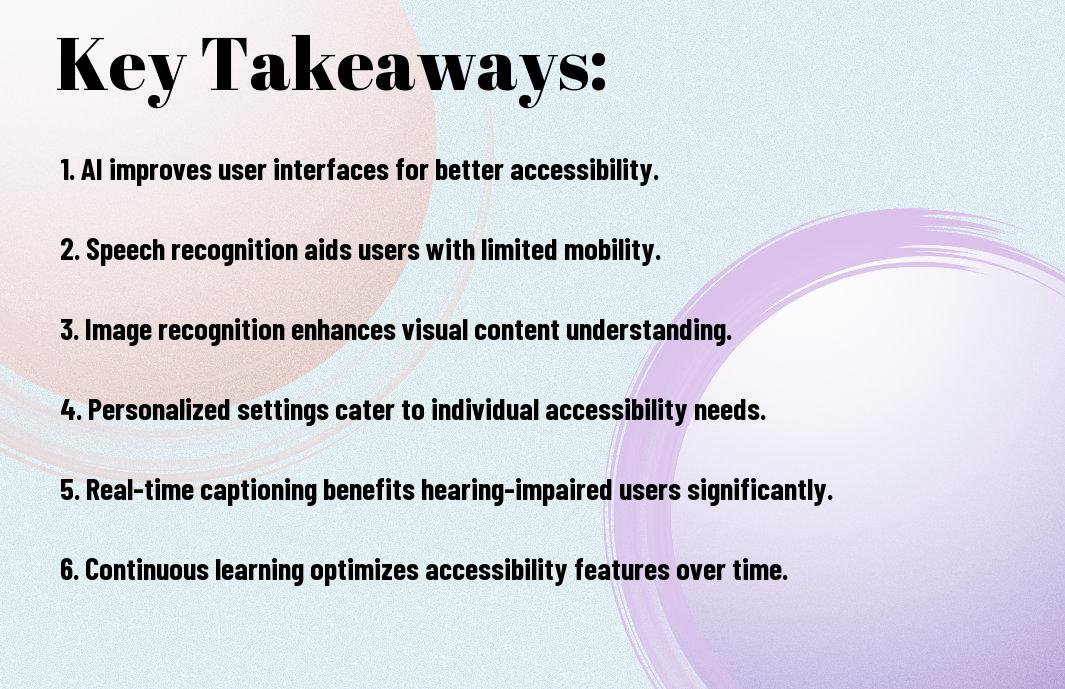
Key Takeaways:

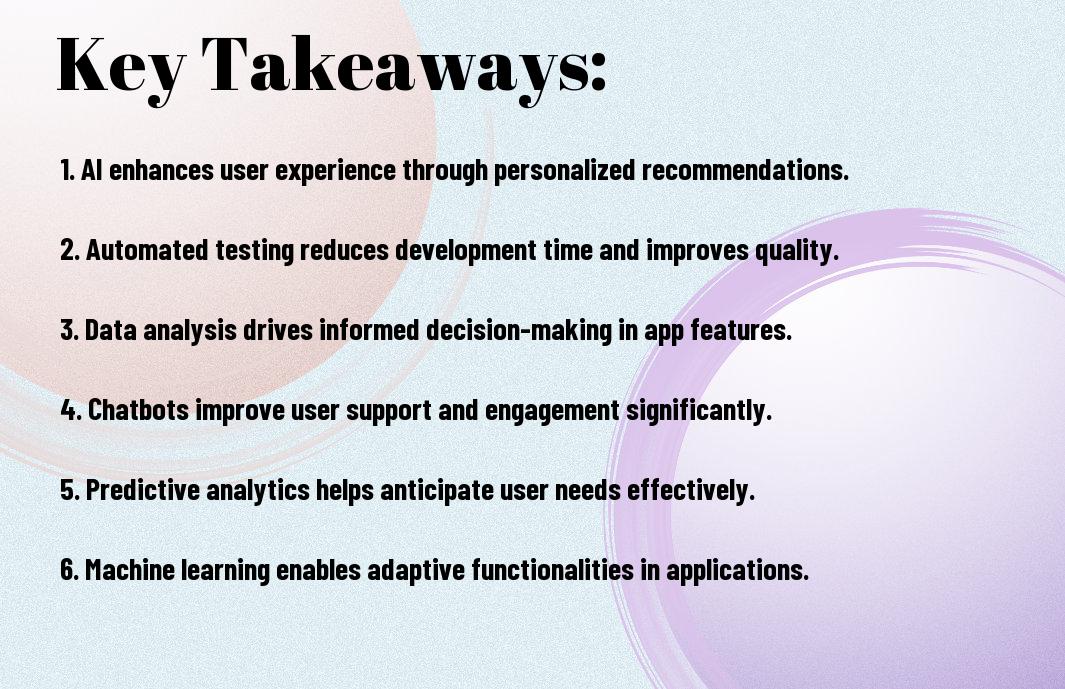
  • Implementing AI-powered solutions can significantly enhance the accessibility of apps for users with disabilities, providing them with a more inclusive and engaging experience.
  • AI-driven tools can help automate tasks such as image description, speech-to-text, and text-to-speech, making apps more usable for people with visual or hearing impairments.
  • AI-powered chatbots and virtual assistants can assist users in navigating apps, providing personalized support and guidance to ensure a seamless user experience.
  • Integrating AI solutions can also help app developers identify and address accessibility issues early on, reducing the need for costly redesigns and updates down the line.
  • By leveraging AI to enhance accessibility, app developers can expand their user base, improve user satisfaction, and contribute to a more inclusive and equitable digital landscape.

    AI-Powered Accessibility Features

    A key aspect of enhancing accessibility in apps is the integration of AI solutions, which can be explored in depth through resources such as The Impact of AI and Machine Learning on Advancing Digital Accessibility, allowing you to understand how AI enhances your app’s accessibility.

    Voice Recognition Integration

    On the forefront of accessibility features, you’ll find voice recognition integration, enabling users to interact with your app using voice commands, making it easier for you to navigate and use your app.

    Gesture Control Systems

    An innovative approach to accessibility is the implementation of gesture control systems, allowing users to control your app with gestures, providing an alternative to traditional interaction methods, making your app more accessible to you.

    Also, as you research deeper into gesture control systems, you’ll discover that these systems can be customized to meet specific user needs, allowing you to personalize your app’s accessibility features, ensuring that your app is usable by a wide range of users, including those with disabilities, making your app more inclusive and user-friendly for you.

    Machine Learning for User Adaptation

    If you’re looking to create a more inclusive app, machine learning can help. You can use it to analyze user behavior and adapt your app’s interface to meet individual needs.

    Behavioral Pattern Analysis

    Analytically, you can use machine learning algorithms to identify patterns in user behavior, enabling you to understand how users interact with your app and make data-driven decisions to improve accessibility.

    Personalized Interface Adjustments

    Accordingly, you can make adjustments to your app’s interface based on individual user preferences, such as font size or color scheme, to create a more comfortable and accessible experience for your users.

    Further, by implementing personalized interface adjustments, you can significantly enhance the overall user experience, allowing users to customize the app to suit their needs and abilities, and as a result, you can increase user engagement and satisfaction with your app.

    Visual Assistance Solutions

    Now, you can leverage AI-powered visual assistance solutions to make your app more accessible. These solutions can help users with visual impairments navigate and interact with your app more easily.

    Object Recognition Tools

    About the object recognition tools, you will find that they can identify and describe objects, text, and scenes, enabling users to better understand their surroundings and interact with your app.

    Color Enhancement Technology

    Coloring your app with a more accessible palette, you can use color enhancement technology to adjust contrast, brightness, and saturation, making it easier for users with visual impairments to navigate.

    Also, with color enhancement technology, you can provide your users with customizable color schemes, allowing them to personalize their experience and optimize it to their individual needs, thereby enhancing their overall interaction with your app.

    Audio Processing Capabilities

    Many apps can benefit from AI-powered audio processing, enabling you to create more inclusive and engaging experiences for your users. You can leverage AI to enhance audio quality, reduce background noise, and provide personalized audio feedback.

    Speech-to-Text Conversion

    Along with advancements in AI, you can now implement speech-to-text conversion in your app, allowing users to interact with your platform using voice commands, and you can provide text-based feedback in response.

    Sound Pattern Recognition

    Capabilities such as sound pattern recognition enable you to identify and respond to specific audio cues, creating a more immersive experience for your users, and you can use this feature to trigger actions or provide feedback.

    At the heart of sound pattern recognition lies the ability to analyze and interpret complex audio signals, allowing you to create customized responses to various sounds, and you can use this technology to enhance your app’s accessibility features, providing your users with a more intuitive and engaging experience.

    Cognitive Support Features

    Unlike traditional app designs, AI-powered cognitive support features can significantly enhance your user experience by providing personalized assistance and accommodations.

    Simplified Navigation Systems

    One of the key benefits of AI-driven apps is that they can offer you intuitive and easy-to-use navigation systems, making it simpler for you to find what you need.

    Memory Assistance Tools

    With the help of AI, you can utilize memory assistance tools that aid you in recalling important information, such as passwords or scheduled events, making your interaction with the app more seamless.

    Systems that incorporate memory assistance tools can learn your habits and preferences over time, allowing you to receive tailored suggestions and reminders, thereby enhancing your overall app experience and helping you to stay organized and focused on your goals.

    Real-Time Language Processing

    To enhance accessibility in your apps, you can leverage AI-powered real-time language processing, enabling users to interact more intuitively with your platform.

    Translation Services

    Behind the scenes, AI-driven translation services facilitate seamless communication across languages, allowing you to reach a broader audience and make your app more inclusive.

    Communication Aids

    Beside traditional translation, AI-powered communication aids, such as speech-to-text and text-to-speech, can significantly improve the user experience for individuals with disabilities, enabling you to cater to diverse needs.

    This technology can be particularly beneficial for users who are deaf, hard of hearing, or have speech disabilities, as it provides them with alternative means of communication, allowing you to create a more accessible and user-friendly environment in your app.

    To wrap up

    Ultimately, you can significantly enhance accessibility in your apps with AI solutions, allowing you to create a more inclusive experience for your users. By leveraging AI-powered tools, you can improve navigation, provide personalized assistance, and ensure your app is usable by everyone, regardless of their abilities. As you integrate AI solutions, you will be able to expand your reach and provide a better experience for your users.

    FAQ

    Q: What are the benefits of using AI solutions to enhance accessibility in apps?

    A: The benefits of using AI solutions to enhance accessibility in apps are numerous. AI-powered tools can help improve the user experience for people with disabilities by providing features such as image recognition, text-to-speech functionality, and predictive text. These features enable users with visual or hearing impairments to interact with apps more easily. Additionally, AI-driven accessibility solutions can help app developers identify and fix accessibility issues, ensuring that their apps are compliant with accessibility standards and guidelines. By incorporating AI solutions, app developers can expand their user base and improve overall user satisfaction.

    Q: How can AI-powered chatbots be used to improve accessibility in apps?

    A: AI-powered chatbots can be used to improve accessibility in apps by providing users with an alternative means of interacting with the app. Chatbots can be designed to understand natural language and respond to user queries, allowing users to access information and perform tasks without having to navigate complex menus or interfaces. For users with disabilities, such as those with mobility or dexterity impairments, chatbots can be a game-changer, enabling them to interact with apps more easily and independently. Furthermore, chatbots can be integrated with other accessibility features, such as speech-to-text functionality, to provide a more comprehensive accessibility solution.

    Q: Can AI solutions help app developers identify and fix accessibility issues in their apps?

    A: Yes, AI solutions can help app developers identify and fix accessibility issues in their apps. AI-powered tools can analyze app code and identify potential accessibility issues, such as inadequate color contrast, insufficient font sizes, or missing alt text for images. These tools can also provide developers with recommendations for fixing these issues and improving overall app accessibility. Additionally, AI-driven accessibility testing tools can simulate user interactions and identify issues that may not be immediately apparent to developers. By leveraging AI solutions, app developers can ensure that their apps are accessible to a wider range of users and comply with accessibility standards and guidelines, such as the Web Content Accessibility Guidelines (WCAG 2.1).

The Benefits of AI in Developing Responsive Web Applications

As you probe into the world of web development, you’ll discover how AI can enhance your responsive web applications. You can leverage AI to create more personalized user experiences, improving engagement and conversion rates. To learn more about the advantages of AI in app development, you can explore 6 benefits of AI app development | DECODE, which outlines the key benefits of integrating AI into your development process, helping you make informed decisions for your project.

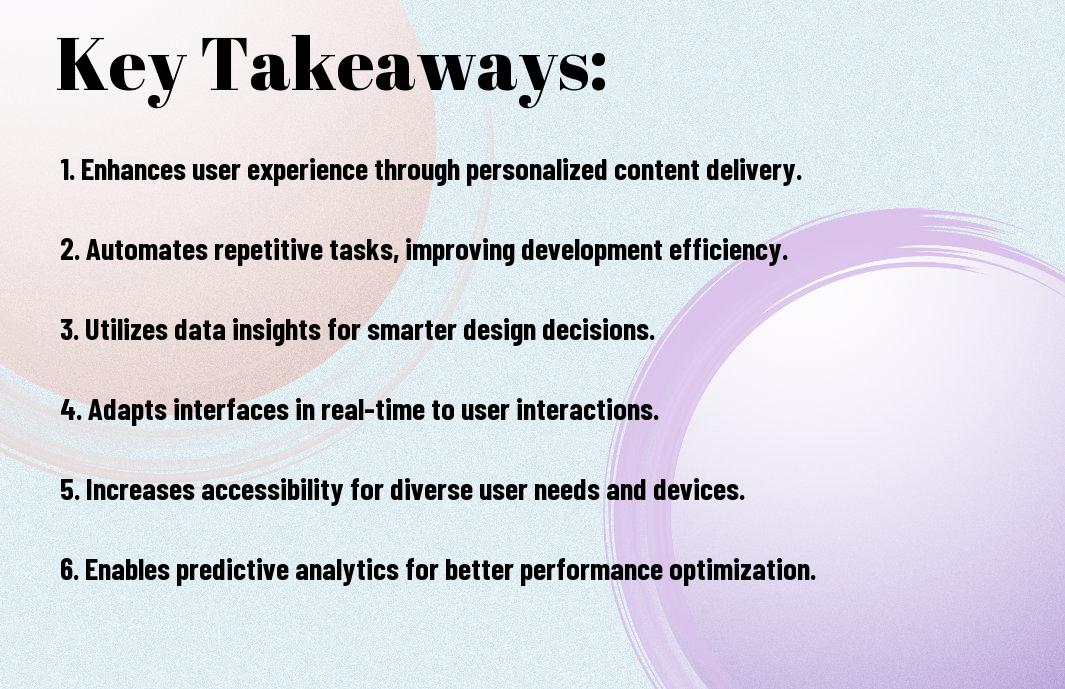
Key Takeaways:

  • Enhanced User Experience: AI-powered web applications can analyze user behavior and adapt to their preferences, providing a personalized experience that increases engagement and conversion rates.
  • Improved Performance: AI-driven responsive web applications can optimize resource allocation, reduce latency, and enhance overall performance, resulting in faster load times and seamless user interactions.
  • Automated Testing and Debugging: AI can automate the testing and debugging process, reducing the time and effort required to identify and fix issues, and enabling developers to focus on more complex tasks.
  • Intelligent Content Generation: AI can generate high-quality content, such as images, videos, and text, that is optimized for different devices and screen sizes, saving time and resources.
  • Data-Driven Decision Making: AI can analyze user data and provide valuable insights that inform design and development decisions, enabling developers to create more effective and user-friendly web applications.

AI-Driven Development Process

While developing responsive web applications, you can leverage AI to streamline your workflow. AI-driven development processes enable you to automate repetitive tasks, focus on complex problems, and improve overall efficiency. This leads to faster development, reduced costs, and enhanced user experience.

Automated Code Generation

Above all, AI-powered tools can generate high-quality code, saving you time and effort. You can use AI-driven platforms to create custom code snippets, reducing the risk of errors and improving code consistency.

Smart Testing and Debugging

Code analysis is an important part of the development process, and AI can help you with that. You can utilize AI-driven testing tools to identify bugs, detect vulnerabilities, and optimize your code for better performance.

Consequently, as you integrate AI into your testing and debugging workflow, you will notice a significant reduction in errors and a substantial improvement in your application’s reliability. You will be able to identify potential issues before they affect your users, allowing you to provide a seamless and engaging experience, which is important for building a loyal user base and driving business success.

Enhanced User Experience

You can create web applications that adapt to your users’ needs, providing a seamless and intuitive experience, with AI-powered responsive design.

Real-time Personalization

Besides offering a tailored experience, AI-driven personalization enables your web application to adjust content in real-time, based on your users’ preferences and behavior.

Predictive User Behavior Analysis

Experiencing a web application that anticipates your needs is highly engaging, and AI-powered predictive analysis helps you achieve this by identifying patterns in your users’ behavior.

At the heart of predictive user behavior analysis lies the ability to collect and process vast amounts of data, which you can then use to inform design decisions, creating a more responsive and user-friendly web application that meets your users’ evolving needs.

Performance Optimization

Keep in mind that AI can significantly enhance your web application’s performance, allowing you to deliver a seamless user experience. By leveraging AI, you can optimize your application’s performance, resulting in increased user engagement and conversion rates.

Dynamic Resource Management

Performing efficient resource allocation is key to optimizing your web application’s performance, and AI can help you achieve this by dynamically managing resources, ensuring that your application runs smoothly and efficiently, allowing you to focus on other aspects of your development process.

Load Time Improvement

Dynamically optimizing your web application’s load time is important, and AI can help you achieve this by analyzing user behavior and optimizing resource loading, resulting in faster load times and improved user experience, enabling you to stay ahead of the competition.

Indeed, improving your web application’s load time can have a significant impact on your business, as you will be able to provide your users with a faster and more efficient experience, leading to increased satisfaction and loyalty, and ultimately, driving more sales and revenue for your business, as you will be able to reach and engage with your target audience more effectively.

Cross-platform Compatibility

Not only does AI enhance user experience, but it also enables you to develop web applications that are compatible with multiple platforms, ensuring your application functions seamlessly across different devices and operating systems.

Adaptive Design Solutions

Across various devices, AI-powered tools help you create responsive designs that adapt to different screen sizes and resolutions, allowing you to deliver a consistent user experience and making your application more accessible to your audience.

Platform-specific Optimizations

Solutions like AI-driven optimization enable you to fine-tune your application for specific platforms, such as mobile or desktop, allowing you to tailor your application’s performance and functionality to meet the unique needs of each platform.

Indeed, by leveraging AI for platform-specific optimizations, you can significantly improve your application’s performance, ensuring that it loads quickly and functions smoothly on various devices, which can lead to increased user engagement and a better overall experience for your audience.

Security Enhancements

After implementing AI in your web application, you can expect a significant boost in security, which is necessary for protecting your users’ data and preventing cyber threats.

AI-powered Threat Detection

Around the clock, AI-powered systems can monitor your application for potential threats, detecting and alerting you to any suspicious activity, allowing you to take prompt action to secure your application.

Automated Security Updates

Automatically, AI can apply security patches and updates to your application, ensuring that you have the latest protection against known vulnerabilities, giving you peace of mind and reducing the risk of a security breach.

Hence, with automated security updates, you can focus on developing and improving your application, knowing that the security aspect is being taken care of, and you can trust that your application is secure and up-to-date, providing a safe experience for your users.

Cost and Time Efficiency

Your business can benefit from AI in web development, as seen in The Role of Artificial Intelligence in Web Development, by reducing costs and increasing productivity.

Reduced Development Cycles

Above all, AI helps you streamline your development process, resulting in faster time-to-market for your web applications.

Resource Optimization

Development of AI-powered tools enables you to allocate your resources more efficiently, automating routine tasks and freeing up your team for more complex tasks.

A key aspect of resource optimization is that you can leverage AI to analyze your workflow, identifying areas where resources are being wasted, and providing you with data-driven insights to make informed decisions, allowing you to optimize your resources and maximize your ROI.

Final Words

Now, as you explore the world of web development, you will find that AI plays a significant role in creating responsive applications. You can leverage AI to enhance your user experience, streamline processes, and improve overall performance. With AI, your web applications will be more efficient, scalable, and adaptable to various devices and platforms, allowing you to reach a broader audience and stay ahead in the digital landscape.

FAQ

Q: What are the primary benefits of using AI in developing responsive web applications?

A: The primary benefits of using AI in developing responsive web applications include enhanced user experience, improved performance, and increased efficiency. AI-powered tools can analyze user behavior and adapt the application’s layout and content to provide a personalized experience. Additionally, AI-driven automation can streamline development processes, reducing the time and effort required to build and maintain responsive web applications.

Q: How can AI improve the responsiveness of web applications across different devices and screen sizes?

A: AI can improve the responsiveness of web applications by using machine learning algorithms to analyze device and screen size data, allowing the application to automatically adjust its layout, images, and content to fit different devices and screen sizes. This ensures that the application provides an optimal user experience, regardless of whether it is accessed through a desktop, tablet, or mobile device. Furthermore, AI-powered image compression and optimization techniques can reduce page load times, resulting in faster and more seamless user interactions.

Q: Can AI help developers identify and fix responsiveness issues in web applications more efficiently?

A: Yes, AI can help developers identify and fix responsiveness issues in web applications more efficiently by using predictive analytics and automated testing tools. AI-powered tools can simulate user interactions on different devices and screen sizes, detecting potential responsiveness issues before they are deployed to production. This enables developers to address issues earlier in the development cycle, reducing the time and effort required to debug and fix responsiveness problems, and ensuring that the application provides a consistent and high-quality user experience across different devices and platforms.

Optimizing App Speed and Performance with AI

As you develop and launch your mobile app, you want to ensure it runs smoothly and efficiently. Your users expect a seamless experience, and slow performance can lead to negative reviews and lost revenue. You can leverage AI to optimize your app’s speed and performance, identifying bottlenecks and areas for improvement. By utilizing AI-powered tools, you can streamline your app’s functionality and provide a better experience for your users.

Key Takeaways:

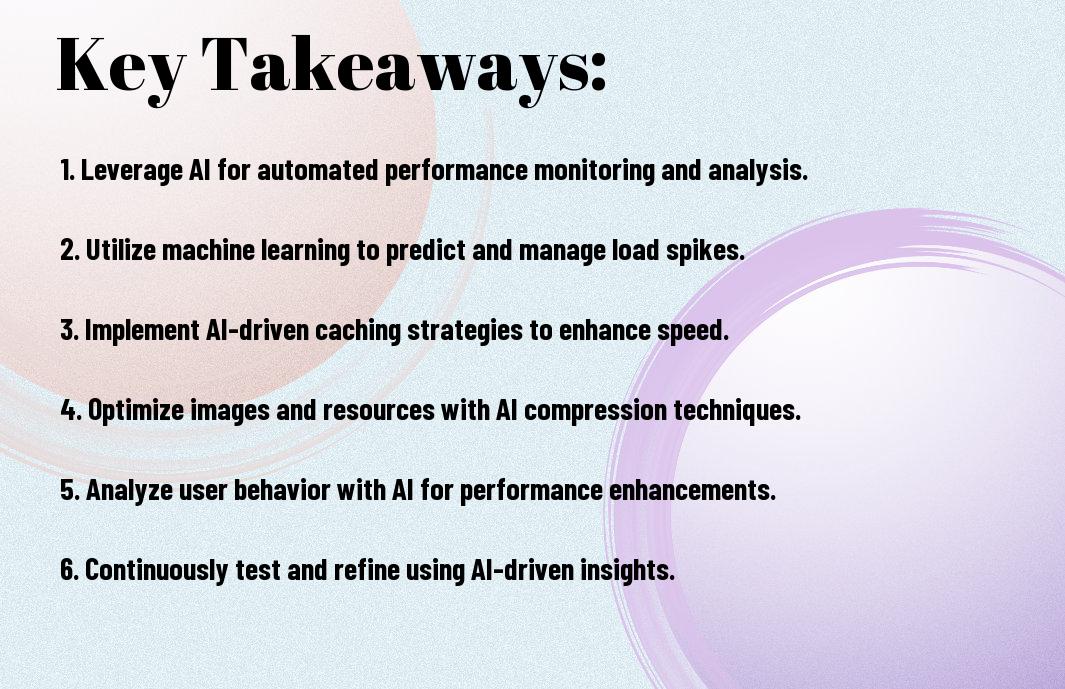
  • Utilizing AI-powered tools can significantly enhance app speed and performance by automating optimization processes and identifying bottlenecks that may not be immediately apparent to human developers.
  • AI-driven performance monitoring allows for real-time analysis of user interactions, enabling developers to pinpoint and address issues promptly, thereby improving overall user experience.
  • AI can help optimize app resource allocation, ensuring that system resources such as memory and CPU are used efficiently, which leads to faster loading times and smoother operation.
  • By leveraging machine learning algorithms, developers can predict and prevent potential performance issues before they occur, reducing the likelihood of crashes and errors that can drive users away.
  • Integrating AI into the development process can facilitate the creation of personalized user experiences, as AI can analyze user behavior and preferences to optimize app performance and content delivery for individual users.

    AI Performance Analysis Tools

    To optimize your app’s speed and performance, you need to utilize AI performance analysis tools. These tools help you identify bottlenecks and areas for improvement, enabling you to make data-driven decisions.

    Real-time Monitoring Systems

    Beneath the surface of your app’s performance lies a complex network of interactions. Below this complexity, real-time monitoring systems provide you with instant insights into your app’s performance, allowing you to respond quickly to issues.

    Predictive Performance Metrics

    Parallel to your app’s current performance, predictive performance metrics offer you a glimpse into its future. Performance forecasting helps you anticipate and prepare for potential issues, ensuring your app runs smoothly and efficiently.

    Due to the advanced algorithms used in predictive performance metrics, you can analyze your app’s historical data and identify patterns that may indicate future performance issues. This enables you to take proactive measures to optimize your app’s speed and performance, resulting in a better user experience and increased customer satisfaction. You can use this information to make informed decisions about resource allocation, bug fixes, and feature updates, ultimately driving your app’s success.

    Machine Learning Optimization Techniques

    Some of the most effective methods for optimizing app speed and performance involve machine learning. You can leverage machine learning algorithms to analyze your app’s performance data and identify areas for improvement. This enables you to make data-driven decisions to optimize your app’s performance.

    Automated Code Refactoring

    Around the concept of automated code refactoring, you’ll find that machine learning can help simplify and streamline your code. You can use machine learning tools to automatically refactor your code, reducing complexity and improving performance.

    Resource Allocation Intelligence

    By utilizing machine learning, you can optimize your app’s resource allocation. You can use machine learning algorithms to analyze your app’s resource usage and identify areas where resources can be allocated more efficiently.

    At the heart of resource allocation intelligence is the ability to analyze your app’s performance data and make predictions about future resource usage. You can use this information to optimize your app’s resource allocation, ensuring that resources are allocated efficiently and effectively, and that your app runs smoothly and performs well, meeting your users’ expectations and enhancing their overall experience with your app.

    AI-Driven Load Balancing

    All applications require efficient load balancing to ensure optimal performance. You can leverage AI to distribute workload effectively, reducing latency and improving user experience. By implementing AI-driven load balancing, you can enhance your app’s speed and responsiveness.

    Dynamic Workload Distribution

    After analyzing your application’s traffic, AI can dynamically distribute workload across servers, ensuring no single server is overwhelmed. You can trust AI to make data-driven decisions, optimizing your app’s performance and reducing downtime.

    Traffic Pattern Recognition

    The ability to recognize traffic patterns is necessary for optimizing app performance. You can use AI to analyze traffic data, identifying trends and anomalies that inform load balancing decisions, ensuring your app remains responsive under varying traffic conditions.

    Also, as you research deeper into traffic pattern recognition, you’ll discover that AI can help you anticipate and prepare for traffic spikes, allocating resources proactively to maintain optimal performance, and giving you a competitive edge in terms of user experience and satisfaction.

    Smart Caching Mechanisms

    Many applications can benefit from smart caching mechanisms that leverage AI to optimize performance. You can use AI-powered caching to reduce latency and improve your app’s overall speed.

    Predictive Data Caching

    The ability to predict user behavior enables you to cache data proactively, ensuring that your app responds quickly to user interactions. You can use machine learning algorithms to analyze user behavior and cache relevant data.

    Memory Management Systems

    Between efficient data caching and optimized memory allocation, you can significantly improve your app’s performance. You can use AI-driven memory management systems to allocate resources effectively.

    Predictive analytics plays a significant role in optimizing memory management systems, allowing you to anticipate and prepare for peak usage periods, ensuring that your app’s performance remains consistent, even under heavy loads, and you can focus on providing a seamless user experience.

    Application Response Enhancement

    Unlike traditional methods, AI-powered techniques can significantly improve your app’s response time, leading to a better user experience. By leveraging machine learning algorithms, you can optimize your app’s performance, resulting in faster load times and increased user engagement.

    AI-Powered Request Prioritization

    Above all, AI-powered request prioritization enables you to manage incoming requests efficiently, ensuring that high-priority requests are processed promptly, while minimizing delays and improving overall app responsiveness.

    Latency Reduction Algorithms

    Before implementing any optimization techniques, you should consider leveraging latency reduction algorithms to minimize delays and improve your app’s performance, allowing you to provide a seamless user experience.

    It is worth noting that latency reduction algorithms can be customized to suit your specific needs, allowing you to fine-tune your app’s performance and optimize its responsiveness, resulting in increased user satisfaction and improved overall app performance, as you continue to monitor and adjust your app’s performance to meet the evolving needs of your users.

    Performance Testing with AI

    Now that you’re exploring ways to optimize your app’s speed and performance, you’ll want to consider leveraging AI for performance testing, which enables you to identify bottlenecks and areas for improvement more efficiently.

    Automated Testing Frameworks

    Against the backdrop of manual testing limitations, you can utilize AI-powered automated testing frameworks to streamline your testing process, allowing you to test your app more thoroughly and frequently, which helps you catch performance issues early on.

    Behavioral Analysis Models

    About to take your performance testing to the next level, you can use behavioral analysis models to simulate real-user interactions with your app, providing you with valuable insights into how your app performs under various scenarios.

    With behavioral analysis models, you can analyze your app’s performance based on user behavior, such as click patterns, navigation, and other interactions, which helps you identify performance issues that may not be apparent through traditional testing methods, allowing you to optimize your app for a better user experience.

    Conclusion

    So, as you optimize your app’s speed and performance with AI, you will notice significant improvements in user engagement and retention. You can leverage AI-powered tools to streamline your app’s workflow, reducing latency and enhancing overall efficiency. By doing so, you will be able to provide your users with a seamless and responsive experience, ultimately driving your app’s success. You will see the benefits of AI optimization in your app’s performance and user satisfaction.

    FAQ

    Q: What are the benefits of using AI to optimize app speed and performance?

    A: Using AI to optimize app speed and performance can bring numerous benefits, including improved user experience, increased customer satisfaction, and enhanced competitiveness in the market. AI-powered optimization tools can analyze user behavior, identify bottlenecks, and provide personalized recommendations to improve app performance. Additionally, AI can help reduce latency, improve loading times, and enhance overall app responsiveness, leading to higher engagement and conversion rates.

    Q: How can AI be used to identify and fix performance issues in mobile apps?

    A: AI can be used to identify and fix performance issues in mobile apps through various techniques such as anomaly detection, predictive analytics, and machine learning algorithms. AI-powered tools can analyze vast amounts of data, including user interactions, system logs, and performance metrics, to identify patterns and anomalies that may indicate performance issues. Once identified, AI can provide recommendations for optimization, such as code refactoring, resource allocation, and caching strategies, to fix the issues and improve app performance.

    Q: Can AI-powered optimization tools be used to optimize app performance in real-time, and what are the advantages of doing so?

    A: Yes, AI-powered optimization tools can be used to optimize app performance in real-time, allowing for instantaneous improvements to user experience. The advantages of real-time optimization include the ability to respond quickly to changing user behavior, adapt to new trends and patterns, and stay ahead of competitors. Real-time optimization also enables developers to identify and fix issues before they become major problems, reducing the risk of negative user reviews, abandoned sessions, and lost revenue. Furthermore, real-time optimization can help improve app stability, reduce crashes, and enhance overall user satisfaction, leading to increased loyalty and retention.

Success Stories – AI Integration in Modern App Development

As you explore the world of modern app development, you’ll discover how AI integration is transforming the industry. Your search for innovative solutions will lead you to numerous success stories, where AI has enhanced user experience, improved efficiency, and driven business growth. You’ll learn from real-life examples of companies that have successfully leveraged AI to stay ahead of the curve, and how you can apply these strategies to your own development projects, revolutionizing the way you build and interact with apps.

Key Takeaways:

  • AI integration in modern app development has led to significant improvements in user experience, with personalized recommendations and enhanced customer engagement being major benefits.
  • Successful implementation of AI in apps has resulted in increased efficiency and automation, freeing up resources for more strategic and creative tasks.
  • AI-powered apps have shown to drive business growth, with companies experiencing increased revenue and market share due to the competitive advantage provided by AI-driven insights and decision-making.
  • Effective AI integration requires a combination of technical expertise, data quality, and a clear understanding of business goals, highlighting the need for a multidisciplinary approach to app development.
  • As AI technology continues to evolve, ongoing investment in research and development is necessary to stay ahead of the curve and capitalize on emerging trends and opportunities in AI-driven app development.

    The Rise of AI in App Development

    Before venturing into the world of AI-integrated app development, you should understand the significance of this emerging trend. As you explore the possibilities of AI, you’ll discover how it’s transforming the app development landscape, enabling you to create more intelligent and interactive applications.

    Evolution from Traditional to AI-Enhanced Development

    Beneath the surface of traditional app development lies a new era of innovation, where you can leverage AI to streamline processes and enhance user experiences. As you transition to AI-enhanced development, you’ll find that your apps become more responsive, intuitive, and engaging.

    Key AI Technologies Reshaping App Creation

    With the advent of AI, you can now harness the power of machine learning, natural language processing, and computer vision to create innovative apps. You’ll be able to develop applications that learn from user behavior, respond to voice commands, and recognize visual patterns.

    Development of AI-powered apps requires you to consider the potential of these technologies in your design. As you explore deeper into the world of AI-integrated app development, you’ll discover how machine learning can help you personalize user experiences, while natural language processing enables more human-like interactions, and computer vision opens up new possibilities for image and video analysis, allowing you to create more sophisticated and engaging applications that meet your users’ evolving needs.

    Strategic Implementation Benefits

    If you integrate AI into your app development process, you can expect significant improvements in your overall strategy. This leads to various benefits, including enhanced decision-making and streamlined operations.

    Speed and Efficiency Gains

    Implementing AI solutions enables you to automate repetitive tasks, allowing your team to focus on more complex and creative aspects of development, thereby increasing your productivity and efficiency.

    Cost Reduction and Resource Optimization

    Resourcing your development team with AI-powered tools helps you allocate your budget more effectively, reducing unnecessary expenses and optimizing your resource utilization to achieve better outcomes.

    In addition, as you optimize your resources, you will notice a significant reduction in costs associated with manual labor, infrastructure, and maintenance, allowing you to invest more in your core business and drive growth, making your app development process more efficient and cost-effective, which ultimately benefits your bottom line.

    Real-World Transformations

    Many companies have successfully integrated AI into their app development, transforming their businesses and improving user experiences. You can learn from their successes and apply similar strategies to your own development projects.

    Small Startups’ AI Success Stories

    With the help of AI, you can develop innovative apps that disrupt markets and attract new customers, just like many small startups have done, achieving remarkable growth and recognition in their industries.

    Enterprise-Level AI Integration Wins

    Before investing in AI, you may have wondered about its potential impact on your business, but numerous enterprises have already seen significant benefits, including increased efficiency and improved decision-making.

    A key aspect of enterprise-level AI integration is the ability to analyze large amounts of data, providing you with valuable insights to inform your development strategies and drive your business forward, enabling you to stay competitive in a rapidly changing market.

    Technical Achievement Markers

    Despite the challenges, AI integration in modern app development has led to significant technical advancements, enabling you to create more efficient and effective applications.

    Development Cycle Improvements

    On the development front, you will notice improvements in the development cycle, allowing you to build and deploy apps faster, and with greater precision, thereby enhancing your overall development experience.

    Quality Assurance and Testing Advances

    Achieving high-quality applications is now more feasible with AI-driven testing and validation, enabling you to identify and fix errors more efficiently, and ensuring your apps meet the highest standards.

    Hence, as you examine deeper into AI-integrated app development, you will find that the advancements in quality assurance and testing enable you to automate testing processes, predict potential issues, and optimize your app’s performance, ultimately leading to better user experiences and increased customer satisfaction, allowing you to stay ahead in the competitive market.

    Human-AI Collaboration

    Keep in mind that AI integration in app development is not about replacing human developers, but rather augmenting their capabilities. You will find that AI can help with repetitive tasks, freeing up your time to focus on more complex and creative aspects of development.

    Developer Role Evolution

    Across various industries, you will notice that the role of developers is changing with the introduction of AI. You will be expected to work alongside AI systems, using your skills to train, validate, and refine AI models to achieve your development goals.

    Team Dynamics in AI-Enhanced Projects

    Together, you and your team will need to adapt to new workflows and communication strategies when working with AI. You will need to consider how AI will impact your team’s dynamics and ensure that everyone is comfortable working with these new technologies.

    At the heart of successful AI-enhanced projects is a deep understanding of how AI can support and enhance your team’s abilities. As you work with AI, you will begin to see how it can help you identify areas for improvement, automate mundane tasks, and even assist with decision-making, ultimately leading to more efficient and effective development processes.

    Market Impact and ROI

    Not surprisingly, AI integration in app development has significant market impact, with many companies seeing substantial returns on investment. You can explore Real-world gen AI use cases from the world’s leading companies to learn more about successful implementations.

    Performance Metrics and Results

    Above all, you’ll want to track key performance metrics to measure the success of your AI-powered app, including engagement, conversion rates, and user retention, to understand how your investment is paying off.

    User Experience Enhancements

    Results from AI integration in app development often lead to enhanced user experience, with personalized features and streamlined interfaces that improve overall satisfaction and loyalty, allowing you to build a stronger connection with your users.

    To further enhance user experience, you can leverage AI to analyze user behavior, preferences, and feedback, enabling you to make data-driven decisions and continuously improve your app, ultimately driving your business forward and setting you apart from competitors, as you strive to deliver the best possible experience for your users.

    Summing up

    Conclusively, as you explore modern app development, you will find that your success stories are deeply intertwined with AI integration. You can leverage AI to enhance your app’s functionality, user experience, and overall performance. By embracing AI, you can unlock new possibilities, drive innovation, and stay ahead of the competition, ultimately leading to your app’s triumph in the market, and solidifying your position as a pioneer in the field of app development. Your ability to adapt will be key to your success.

    FAQ

    Q: What are some notable examples of AI integration in modern app development that have led to significant success stories?

    A: There are several notable examples of AI integration in modern app development that have led to significant success stories. For instance, virtual assistants like Siri, Google Assistant, and Alexa have revolutionized the way users interact with their devices. Additionally, apps like Facebook and Instagram have successfully integrated AI-powered facial recognition technology to enhance user experience. Furthermore, companies like Netflix and Amazon have leveraged AI-driven recommendation engines to personalize content and product suggestions, resulting in increased user engagement and sales.

    Q: How can AI integration in app development improve the overall user experience and drive business growth?

    A: AI integration in app development can significantly improve the overall user experience by providing personalized and predictive services. For example, AI-powered chatbots can offer 24/7 customer support, while machine learning algorithms can analyze user behavior and preferences to provide tailored recommendations. Moreover, AI-driven analytics can help businesses gain valuable insights into user behavior, enabling them to make data-driven decisions and drive business growth. By leveraging AI, businesses can also automate routine tasks, enhance security, and optimize app performance, ultimately leading to increased user satisfaction and loyalty.

    Q: What are some best practices for successfully integrating AI into modern app development, and how can developers ensure seamless AI adoption?

    A: To successfully integrate AI into modern app development, developers should start by identifying areas where AI can add significant value, such as chatbots, predictive analytics, or image recognition. They should also ensure that they have a robust data infrastructure in place to support AI-driven decision-making. Additionally, developers should prioritize transparency, explainability, and accountability when designing AI-powered features, and ensure that they comply with relevant regulations and standards. Moreover, they should continuously monitor and evaluate AI performance, and be prepared to adapt and refine their AI strategies as user needs and market trends evolve. By following these best practices, developers can ensure seamless AI adoption and unlock the full potential of AI in app development.

Skip to content