
As you develop and launch your mobile app, you want to ensure it runs smoothly and efficiently. Your users expect a seamless experience, and slow performance can lead to negative reviews and lost revenue. You can leverage AI to optimize your app’s speed and performance, identifying bottlenecks and areas for improvement. By utilizing AI-powered tools, you can streamline your app’s functionality and provide a better experience for your users.
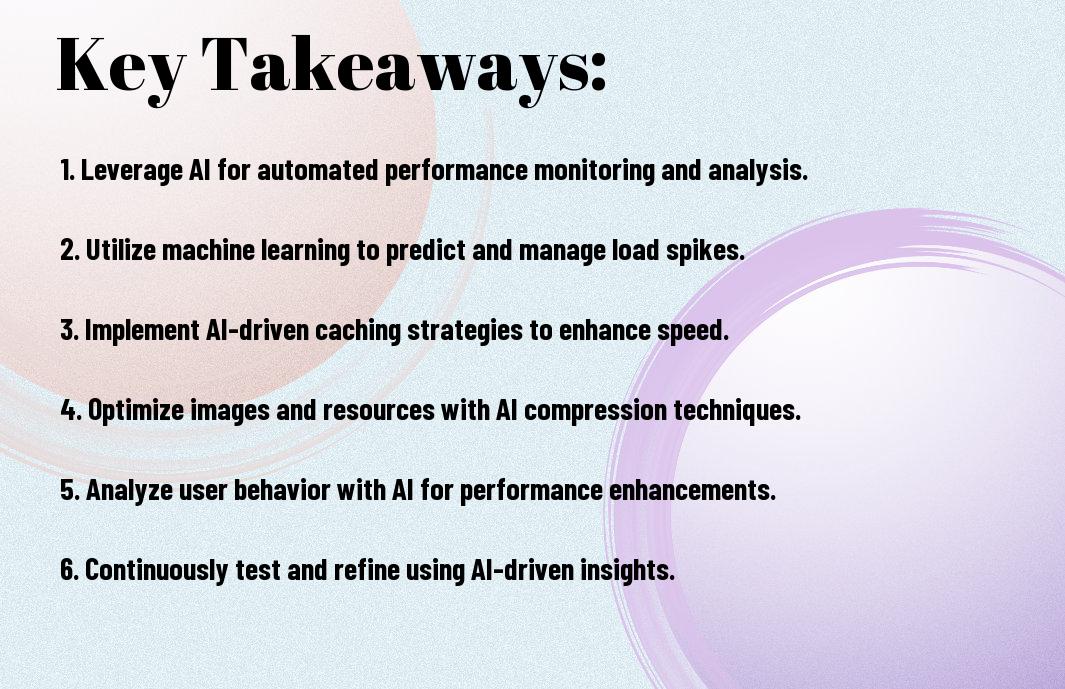
Key Takeaways:
- Utilizing AI-powered tools can significantly enhance app speed and performance by automating optimization processes and identifying bottlenecks that may not be immediately apparent to human developers.
- AI-driven performance monitoring allows for real-time analysis of user interactions, enabling developers to pinpoint and address issues promptly, thereby improving overall user experience.
- AI can help optimize app resource allocation, ensuring that system resources such as memory and CPU are used efficiently, which leads to faster loading times and smoother operation.
- By leveraging machine learning algorithms, developers can predict and prevent potential performance issues before they occur, reducing the likelihood of crashes and errors that can drive users away.
- Integrating AI into the development process can facilitate the creation of personalized user experiences, as AI can analyze user behavior and preferences to optimize app performance and content delivery for individual users.
AI Performance Analysis Tools
To optimize your app’s speed and performance, you need to utilize AI performance analysis tools. These tools help you identify bottlenecks and areas for improvement, enabling you to make data-driven decisions.
Real-time Monitoring Systems
Beneath the surface of your app’s performance lies a complex network of interactions. Below this complexity, real-time monitoring systems provide you with instant insights into your app’s performance, allowing you to respond quickly to issues.
Predictive Performance Metrics
Parallel to your app’s current performance, predictive performance metrics offer you a glimpse into its future. Performance forecasting helps you anticipate and prepare for potential issues, ensuring your app runs smoothly and efficiently.
Due to the advanced algorithms used in predictive performance metrics, you can analyze your app’s historical data and identify patterns that may indicate future performance issues. This enables you to take proactive measures to optimize your app’s speed and performance, resulting in a better user experience and increased customer satisfaction. You can use this information to make informed decisions about resource allocation, bug fixes, and feature updates, ultimately driving your app’s success.

Machine Learning Optimization Techniques
Some of the most effective methods for optimizing app speed and performance involve machine learning. You can leverage machine learning algorithms to analyze your app’s performance data and identify areas for improvement. This enables you to make data-driven decisions to optimize your app’s performance.
Automated Code Refactoring
Around the concept of automated code refactoring, you’ll find that machine learning can help simplify and streamline your code. You can use machine learning tools to automatically refactor your code, reducing complexity and improving performance.
Resource Allocation Intelligence
By utilizing machine learning, you can optimize your app’s resource allocation. You can use machine learning algorithms to analyze your app’s resource usage and identify areas where resources can be allocated more efficiently.
At the heart of resource allocation intelligence is the ability to analyze your app’s performance data and make predictions about future resource usage. You can use this information to optimize your app’s resource allocation, ensuring that resources are allocated efficiently and effectively, and that your app runs smoothly and performs well, meeting your users’ expectations and enhancing their overall experience with your app.
AI-Driven Load Balancing
All applications require efficient load balancing to ensure optimal performance. You can leverage AI to distribute workload effectively, reducing latency and improving user experience. By implementing AI-driven load balancing, you can enhance your app’s speed and responsiveness.
Dynamic Workload Distribution
After analyzing your application’s traffic, AI can dynamically distribute workload across servers, ensuring no single server is overwhelmed. You can trust AI to make data-driven decisions, optimizing your app’s performance and reducing downtime.
Traffic Pattern Recognition
The ability to recognize traffic patterns is necessary for optimizing app performance. You can use AI to analyze traffic data, identifying trends and anomalies that inform load balancing decisions, ensuring your app remains responsive under varying traffic conditions.
Also, as you research deeper into traffic pattern recognition, you’ll discover that AI can help you anticipate and prepare for traffic spikes, allocating resources proactively to maintain optimal performance, and giving you a competitive edge in terms of user experience and satisfaction.
Smart Caching Mechanisms
Many applications can benefit from smart caching mechanisms that leverage AI to optimize performance. You can use AI-powered caching to reduce latency and improve your app’s overall speed.
Predictive Data Caching
The ability to predict user behavior enables you to cache data proactively, ensuring that your app responds quickly to user interactions. You can use machine learning algorithms to analyze user behavior and cache relevant data.
Memory Management Systems
Between efficient data caching and optimized memory allocation, you can significantly improve your app’s performance. You can use AI-driven memory management systems to allocate resources effectively.
Predictive analytics plays a significant role in optimizing memory management systems, allowing you to anticipate and prepare for peak usage periods, ensuring that your app’s performance remains consistent, even under heavy loads, and you can focus on providing a seamless user experience.
Application Response Enhancement
Unlike traditional methods, AI-powered techniques can significantly improve your app’s response time, leading to a better user experience. By leveraging machine learning algorithms, you can optimize your app’s performance, resulting in faster load times and increased user engagement.
AI-Powered Request Prioritization
Above all, AI-powered request prioritization enables you to manage incoming requests efficiently, ensuring that high-priority requests are processed promptly, while minimizing delays and improving overall app responsiveness.
Latency Reduction Algorithms
Before implementing any optimization techniques, you should consider leveraging latency reduction algorithms to minimize delays and improve your app’s performance, allowing you to provide a seamless user experience.
It is worth noting that latency reduction algorithms can be customized to suit your specific needs, allowing you to fine-tune your app’s performance and optimize its responsiveness, resulting in increased user satisfaction and improved overall app performance, as you continue to monitor and adjust your app’s performance to meet the evolving needs of your users.
Performance Testing with AI
Now that you’re exploring ways to optimize your app’s speed and performance, you’ll want to consider leveraging AI for performance testing, which enables you to identify bottlenecks and areas for improvement more efficiently.
Automated Testing Frameworks
Against the backdrop of manual testing limitations, you can utilize AI-powered automated testing frameworks to streamline your testing process, allowing you to test your app more thoroughly and frequently, which helps you catch performance issues early on.
Behavioral Analysis Models
About to take your performance testing to the next level, you can use behavioral analysis models to simulate real-user interactions with your app, providing you with valuable insights into how your app performs under various scenarios.
With behavioral analysis models, you can analyze your app’s performance based on user behavior, such as click patterns, navigation, and other interactions, which helps you identify performance issues that may not be apparent through traditional testing methods, allowing you to optimize your app for a better user experience.
Conclusion
So, as you optimize your app’s speed and performance with AI, you will notice significant improvements in user engagement and retention. You can leverage AI-powered tools to streamline your app’s workflow, reducing latency and enhancing overall efficiency. By doing so, you will be able to provide your users with a seamless and responsive experience, ultimately driving your app’s success. You will see the benefits of AI optimization in your app’s performance and user satisfaction.
FAQ
Q: What are the benefits of using AI to optimize app speed and performance?
A: Using AI to optimize app speed and performance can bring numerous benefits, including improved user experience, increased customer satisfaction, and enhanced competitiveness in the market. AI-powered optimization tools can analyze user behavior, identify bottlenecks, and provide personalized recommendations to improve app performance. Additionally, AI can help reduce latency, improve loading times, and enhance overall app responsiveness, leading to higher engagement and conversion rates.
Q: How can AI be used to identify and fix performance issues in mobile apps?
A: AI can be used to identify and fix performance issues in mobile apps through various techniques such as anomaly detection, predictive analytics, and machine learning algorithms. AI-powered tools can analyze vast amounts of data, including user interactions, system logs, and performance metrics, to identify patterns and anomalies that may indicate performance issues. Once identified, AI can provide recommendations for optimization, such as code refactoring, resource allocation, and caching strategies, to fix the issues and improve app performance.
Q: Can AI-powered optimization tools be used to optimize app performance in real-time, and what are the advantages of doing so?
A: Yes, AI-powered optimization tools can be used to optimize app performance in real-time, allowing for instantaneous improvements to user experience. The advantages of real-time optimization include the ability to respond quickly to changing user behavior, adapt to new trends and patterns, and stay ahead of competitors. Real-time optimization also enables developers to identify and fix issues before they become major problems, reducing the risk of negative user reviews, abandoned sessions, and lost revenue. Furthermore, real-time optimization can help improve app stability, reduce crashes, and enhance overall user satisfaction, leading to increased loyalty and retention.


