Performance

Boosting App Performance with AI-Driven Features

As you strive to improve your app’s performance, you’re likely exploring innovative solutions to stay ahead of the competition. You can leverage AI-driven features to optimize your app’s functionality, enhancing user experience and driving engagement. By integrating AI-powered technologies, you can analyze user behavior, identify bottlenecks, and make data-driven decisions to refine your app’s performance, ultimately leading to increased satisfaction and loyalty among your users.

Key Takeaways:

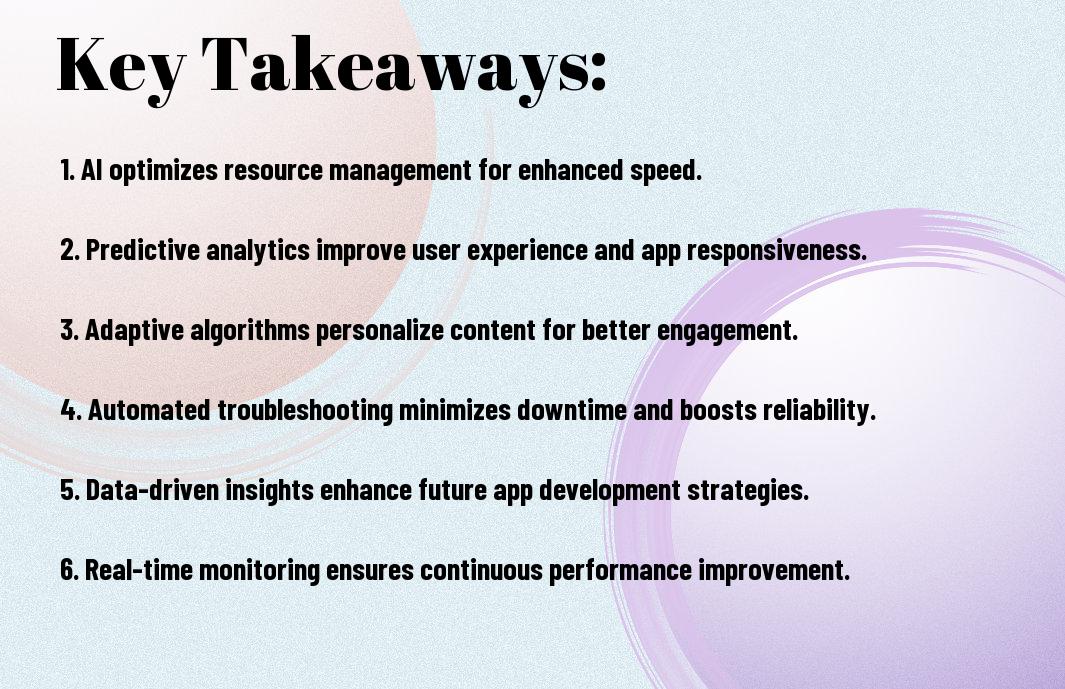
  • Integrating AI-driven features into apps can significantly enhance user experience by providing personalized recommendations, automated tasks, and predictive analytics, leading to increased engagement and retention.
  • AI-powered performance optimization can help identify and resolve issues before they affect users, resulting in faster load times, reduced crashes, and improved overall app stability.
  • Machine learning algorithms can be used to analyze user behavior and preferences, enabling apps to adapt and evolve over time, and providing a more tailored experience for each individual user.
  • AI-driven features such as natural language processing and computer vision can enable apps to better understand and respond to user input, creating a more intuitive and interactive experience.
  • By leveraging AI-driven features, developers can gain valuable insights into app performance and user behavior, allowing them to make data-driven decisions and drive continuous improvement and innovation.
    AI Integration Fundamentals

    A key aspect of boosting app performance is understanding how AI-driven features can enhance your user experience. You can leverage AI to optimize app functionality, streamline processes, and provide personalized experiences for your users.

    Core AI Technologies for Apps

    One of the primary considerations when integrating AI into your app is selecting the right technologies to support your goals. You will need to choose from a range of options, including machine learning, natural language processing, and computer vision, to create a robust and efficient app.

    Performance Metrics and Benchmarks

    After you have integrated AI into your app, you will need to establish metrics and benchmarks to measure its performance. You can track key performance indicators such as speed, accuracy, and user engagement to evaluate the effectiveness of your AI-driven features.

    In addition to tracking these metrics, you will also want to consider how your AI-driven features are impacting your app’s overall performance, including factors such as battery life, memory usage, and latency, to ensure that your app is providing the best possible experience for your users.

    Smart Resource Management

    If you want to boost your app’s performance, you need to manage resources efficiently. This involves allocating resources such as CPU, memory, and bandwidth effectively to ensure seamless user experience.

    Memory Optimization Through AI

    Through advanced AI algorithms, you can optimize your app’s memory usage, reducing the risk of crashes and slowdowns. This enables your app to handle multiple tasks simultaneously without compromising performance.

    Dynamic Load Balancing

    The ability to balance your app’s workload across multiple servers ensures that no single server is overwhelmed, leading to improved responsiveness and reduced downtime. You can achieve this by implementing AI-driven load balancing techniques.

    And as you implement dynamic load balancing, you’ll notice significant improvements in your app’s overall performance, allowing you to handle increased traffic and user engagement without compromising on speed or efficiency, thus enhancing your users’ experience and driving business growth.

    Predictive User Experience

    Unlike traditional approaches, AI-driven features enable you to create a predictive user experience, allowing your app to anticipate and respond to your users’ needs. This leads to a more seamless and engaging experience, increasing user satisfaction and loyalty.

    Behavioral Pattern Analysis

    After analyzing your users’ behavior, you can identify patterns and preferences, enabling you to tailor your app’s experience to their unique needs. This helps you to create a more personalized and intuitive interface, making it easier for your users to navigate and interact with your app.

    Anticipatory Content Loading

    About to revolutionize the way you deliver content, anticipatory content loading enables your app to preload content that your users are likely to need, reducing loading times and improving overall performance. This feature allows you to stay one step ahead of your users’ expectations, providing a faster and more efficient experience.

    Even more impressive, anticipatory content loading can be integrated with other AI-driven features, such as behavioral pattern analysis, to create a highly personalized and responsive experience. As you implement this feature, you’ll notice a significant improvement in your app’s performance, and your users will appreciate the seamless and efficient experience that your app provides, leading to increased engagement and loyalty to your brand.

    AI-Powered Performance Optimization

    After integrating AI-driven features into your app, you can expect significant improvements in performance. Your app will be able to learn from user behavior and adapt to their needs, resulting in a more seamless and efficient experience.

    Automated Code Optimization

    For instance, AI can help you identify areas of your code that need optimization, allowing you to streamline your app’s performance and reduce latency. You can then focus on developing new features, knowing that your app’s foundation is solid.

    Real-time Performance Tuning

    Optimizing your app’s performance in real-time is made possible with AI-driven features, enabling you to respond quickly to changes in user behavior and app performance. You can adjust your app’s settings to ensure optimal performance, even in high-traffic situations.

    Even with a high volume of users, your app will be able to maintain its performance, thanks to AI-driven real-time tuning. You will be able to monitor your app’s performance in real-time, making adjustments as needed to ensure that your users have a smooth and efficient experience, which will ultimately lead to increased user satisfaction and engagement with your app.

    Machine Learning Models Integration

    All applications can benefit from machine learning models integration, which enhances your app’s performance and user experience. You can leverage machine learning to analyze user behavior, personalize content, and improve overall efficiency.

    On-device ML Implementation

    Alongside traditional methods, an alternative approach is to implement machine learning models directly on your device, allowing for faster processing and reduced latency, which you can utilize to enhance your app’s overall performance.

    Cloud-based AI Services

    By leveraging cloud-based AI services, you can access powerful machine learning capabilities without having to develop them in-house, enabling you to focus on your app’s core features and user experience.

    A key advantage of cloud-based AI services is that they provide scalable and secure infrastructure, allowing you to easily integrate AI-driven features into your app, and you can take advantage of ongoing updates and improvements to these services, ensuring your app stays competitive and provides the best possible experience for your users.

    Performance Monitoring and Analytics

    Your application’s performance is directly tied to user satisfaction, and monitoring its performance is crucial to identifying areas for improvement. By leveraging AI-driven features, you can gain valuable insights into your app’s performance and make data-driven decisions to optimize it.

    AI-driven Diagnostics

    Beneath the surface of your application, AI-driven diagnostics can help identify issues before they become major problems. By analyzing user behavior and system performance, you can pinpoint bottlenecks and areas for optimization, allowing you to take proactive steps to improve your app’s performance.

    Automated Issue Resolution

    Performing at peak levels requires swift issue resolution, and AI-driven features can help you achieve this. With automated issue resolution, you can quickly identify and resolve problems, minimizing downtime and ensuring your app is always available to users.

    Even with automated issue resolution in place, you can take your app’s performance to the next level by configuring customized alerts and notifications to inform you of potential issues, allowing you to take proactive steps to prevent them from occurring in the first place, ensuring your app is always running smoothly and efficiently, and providing your users with the best possible experience.

    To wrap up

    Upon reflecting on the potential of AI-driven features, you can enhance your app’s performance significantly. By leveraging these features, you can optimize your app’s speed, efficiency, and overall user experience. As you integrate AI-driven features, your app will become more responsive, allowing you to deliver a seamless experience to your users, ultimately driving your business forward with increased engagement and loyalty.

    FAQ

    Q: What are the benefits of integrating AI-driven features into my mobile app to boost its performance?

    A: Integrating AI-driven features into your mobile app can significantly enhance its performance by providing personalized user experiences, optimizing resource allocation, and predicting user behavior. AI-driven features such as predictive analytics, machine learning algorithms, and natural language processing can help improve app responsiveness, reduce latency, and increase overall user engagement. By leveraging these features, you can gain valuable insights into user behavior, identify areas of improvement, and make data-driven decisions to optimize your app’s performance.

    Q: How can AI-driven features help improve the user experience and increase app adoption rates?

    A: AI-driven features can help improve the user experience by providing personalized recommendations, streamlining navigation, and offering proactive support. For instance, AI-powered chatbots can help users quickly find what they’re looking for, while machine learning algorithms can analyze user behavior and provide tailored content suggestions. Additionally, AI-driven features such as sentiment analysis and emotion detection can help you understand user emotions and preferences, enabling you to make targeted improvements to your app’s UI/UX. By providing a seamless and intuitive user experience, you can increase user satisfaction, drive engagement, and ultimately boost app adoption rates.

    Q: What are some common AI-driven features that can be used to boost app performance, and how can they be implemented?

    A: Some common AI-driven features that can be used to boost app performance include predictive maintenance, automated testing, and performance monitoring. These features can be implemented using various AI and machine learning frameworks such as TensorFlow, Core ML, or Azure Machine Learning. For example, you can use predictive maintenance to identify potential issues before they occur, automated testing to identify and fix bugs, and performance monitoring to track key performance indicators (KPIs) such as latency, crash rates, and user engagement. By leveraging these AI-driven features, you can proactively optimize your app’s performance, reduce downtime, and improve overall user satisfaction.

Optimizing App Speed and Performance with AI

As you develop and launch your mobile app, you want to ensure it runs smoothly and efficiently. Your users expect a seamless experience, and slow performance can lead to negative reviews and lost revenue. You can leverage AI to optimize your app’s speed and performance, identifying bottlenecks and areas for improvement. By utilizing AI-powered tools, you can streamline your app’s functionality and provide a better experience for your users.

Key Takeaways:

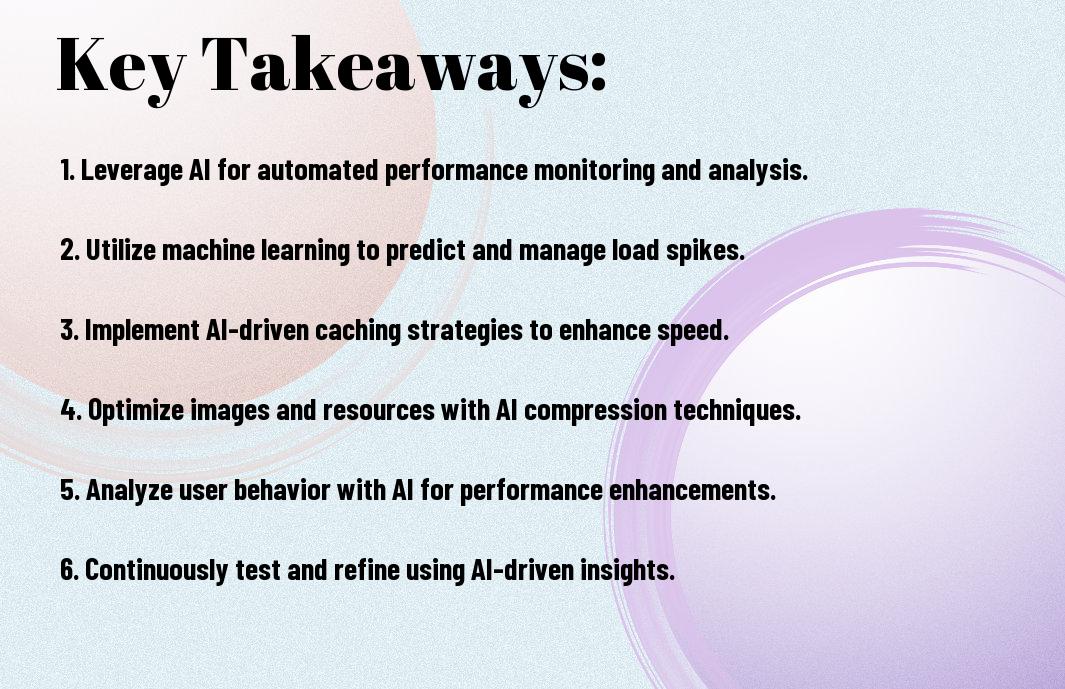
  • Utilizing AI-powered tools can significantly enhance app speed and performance by automating optimization processes and identifying bottlenecks that may not be immediately apparent to human developers.
  • AI-driven performance monitoring allows for real-time analysis of user interactions, enabling developers to pinpoint and address issues promptly, thereby improving overall user experience.
  • AI can help optimize app resource allocation, ensuring that system resources such as memory and CPU are used efficiently, which leads to faster loading times and smoother operation.
  • By leveraging machine learning algorithms, developers can predict and prevent potential performance issues before they occur, reducing the likelihood of crashes and errors that can drive users away.
  • Integrating AI into the development process can facilitate the creation of personalized user experiences, as AI can analyze user behavior and preferences to optimize app performance and content delivery for individual users.

    AI Performance Analysis Tools

    To optimize your app’s speed and performance, you need to utilize AI performance analysis tools. These tools help you identify bottlenecks and areas for improvement, enabling you to make data-driven decisions.

    Real-time Monitoring Systems

    Beneath the surface of your app’s performance lies a complex network of interactions. Below this complexity, real-time monitoring systems provide you with instant insights into your app’s performance, allowing you to respond quickly to issues.

    Predictive Performance Metrics

    Parallel to your app’s current performance, predictive performance metrics offer you a glimpse into its future. Performance forecasting helps you anticipate and prepare for potential issues, ensuring your app runs smoothly and efficiently.

    Due to the advanced algorithms used in predictive performance metrics, you can analyze your app’s historical data and identify patterns that may indicate future performance issues. This enables you to take proactive measures to optimize your app’s speed and performance, resulting in a better user experience and increased customer satisfaction. You can use this information to make informed decisions about resource allocation, bug fixes, and feature updates, ultimately driving your app’s success.

    Machine Learning Optimization Techniques

    Some of the most effective methods for optimizing app speed and performance involve machine learning. You can leverage machine learning algorithms to analyze your app’s performance data and identify areas for improvement. This enables you to make data-driven decisions to optimize your app’s performance.

    Automated Code Refactoring

    Around the concept of automated code refactoring, you’ll find that machine learning can help simplify and streamline your code. You can use machine learning tools to automatically refactor your code, reducing complexity and improving performance.

    Resource Allocation Intelligence

    By utilizing machine learning, you can optimize your app’s resource allocation. You can use machine learning algorithms to analyze your app’s resource usage and identify areas where resources can be allocated more efficiently.

    At the heart of resource allocation intelligence is the ability to analyze your app’s performance data and make predictions about future resource usage. You can use this information to optimize your app’s resource allocation, ensuring that resources are allocated efficiently and effectively, and that your app runs smoothly and performs well, meeting your users’ expectations and enhancing their overall experience with your app.

    AI-Driven Load Balancing

    All applications require efficient load balancing to ensure optimal performance. You can leverage AI to distribute workload effectively, reducing latency and improving user experience. By implementing AI-driven load balancing, you can enhance your app’s speed and responsiveness.

    Dynamic Workload Distribution

    After analyzing your application’s traffic, AI can dynamically distribute workload across servers, ensuring no single server is overwhelmed. You can trust AI to make data-driven decisions, optimizing your app’s performance and reducing downtime.

    Traffic Pattern Recognition

    The ability to recognize traffic patterns is necessary for optimizing app performance. You can use AI to analyze traffic data, identifying trends and anomalies that inform load balancing decisions, ensuring your app remains responsive under varying traffic conditions.

    Also, as you research deeper into traffic pattern recognition, you’ll discover that AI can help you anticipate and prepare for traffic spikes, allocating resources proactively to maintain optimal performance, and giving you a competitive edge in terms of user experience and satisfaction.

    Smart Caching Mechanisms

    Many applications can benefit from smart caching mechanisms that leverage AI to optimize performance. You can use AI-powered caching to reduce latency and improve your app’s overall speed.

    Predictive Data Caching

    The ability to predict user behavior enables you to cache data proactively, ensuring that your app responds quickly to user interactions. You can use machine learning algorithms to analyze user behavior and cache relevant data.

    Memory Management Systems

    Between efficient data caching and optimized memory allocation, you can significantly improve your app’s performance. You can use AI-driven memory management systems to allocate resources effectively.

    Predictive analytics plays a significant role in optimizing memory management systems, allowing you to anticipate and prepare for peak usage periods, ensuring that your app’s performance remains consistent, even under heavy loads, and you can focus on providing a seamless user experience.

    Application Response Enhancement

    Unlike traditional methods, AI-powered techniques can significantly improve your app’s response time, leading to a better user experience. By leveraging machine learning algorithms, you can optimize your app’s performance, resulting in faster load times and increased user engagement.

    AI-Powered Request Prioritization

    Above all, AI-powered request prioritization enables you to manage incoming requests efficiently, ensuring that high-priority requests are processed promptly, while minimizing delays and improving overall app responsiveness.

    Latency Reduction Algorithms

    Before implementing any optimization techniques, you should consider leveraging latency reduction algorithms to minimize delays and improve your app’s performance, allowing you to provide a seamless user experience.

    It is worth noting that latency reduction algorithms can be customized to suit your specific needs, allowing you to fine-tune your app’s performance and optimize its responsiveness, resulting in increased user satisfaction and improved overall app performance, as you continue to monitor and adjust your app’s performance to meet the evolving needs of your users.

    Performance Testing with AI

    Now that you’re exploring ways to optimize your app’s speed and performance, you’ll want to consider leveraging AI for performance testing, which enables you to identify bottlenecks and areas for improvement more efficiently.

    Automated Testing Frameworks

    Against the backdrop of manual testing limitations, you can utilize AI-powered automated testing frameworks to streamline your testing process, allowing you to test your app more thoroughly and frequently, which helps you catch performance issues early on.

    Behavioral Analysis Models

    About to take your performance testing to the next level, you can use behavioral analysis models to simulate real-user interactions with your app, providing you with valuable insights into how your app performs under various scenarios.

    With behavioral analysis models, you can analyze your app’s performance based on user behavior, such as click patterns, navigation, and other interactions, which helps you identify performance issues that may not be apparent through traditional testing methods, allowing you to optimize your app for a better user experience.

    Conclusion

    So, as you optimize your app’s speed and performance with AI, you will notice significant improvements in user engagement and retention. You can leverage AI-powered tools to streamline your app’s workflow, reducing latency and enhancing overall efficiency. By doing so, you will be able to provide your users with a seamless and responsive experience, ultimately driving your app’s success. You will see the benefits of AI optimization in your app’s performance and user satisfaction.

    FAQ

    Q: What are the benefits of using AI to optimize app speed and performance?

    A: Using AI to optimize app speed and performance can bring numerous benefits, including improved user experience, increased customer satisfaction, and enhanced competitiveness in the market. AI-powered optimization tools can analyze user behavior, identify bottlenecks, and provide personalized recommendations to improve app performance. Additionally, AI can help reduce latency, improve loading times, and enhance overall app responsiveness, leading to higher engagement and conversion rates.

    Q: How can AI be used to identify and fix performance issues in mobile apps?

    A: AI can be used to identify and fix performance issues in mobile apps through various techniques such as anomaly detection, predictive analytics, and machine learning algorithms. AI-powered tools can analyze vast amounts of data, including user interactions, system logs, and performance metrics, to identify patterns and anomalies that may indicate performance issues. Once identified, AI can provide recommendations for optimization, such as code refactoring, resource allocation, and caching strategies, to fix the issues and improve app performance.

    Q: Can AI-powered optimization tools be used to optimize app performance in real-time, and what are the advantages of doing so?

    A: Yes, AI-powered optimization tools can be used to optimize app performance in real-time, allowing for instantaneous improvements to user experience. The advantages of real-time optimization include the ability to respond quickly to changing user behavior, adapt to new trends and patterns, and stay ahead of competitors. Real-time optimization also enables developers to identify and fix issues before they become major problems, reducing the risk of negative user reviews, abandoned sessions, and lost revenue. Furthermore, real-time optimization can help improve app stability, reduce crashes, and enhance overall user satisfaction, leading to increased loyalty and retention.

Skip to content