Integrating Recommendation Engines into Your App Ecosystem

As you strive to enhance your app’s user experience, you’re likely considering ways to personalize interactions and increase engagement. You can achieve this by integrating recommendation engines into your app ecosystem, allowing you to offer tailored suggestions and content to your users. By doing so, you can boost user satisfaction, drive conversions, and ultimately, grow your business. You will learn how to leverage recommendation engines to create a more intuitive and responsive app environment that meets your users’ evolving needs and expectations.

Key Takeaways:

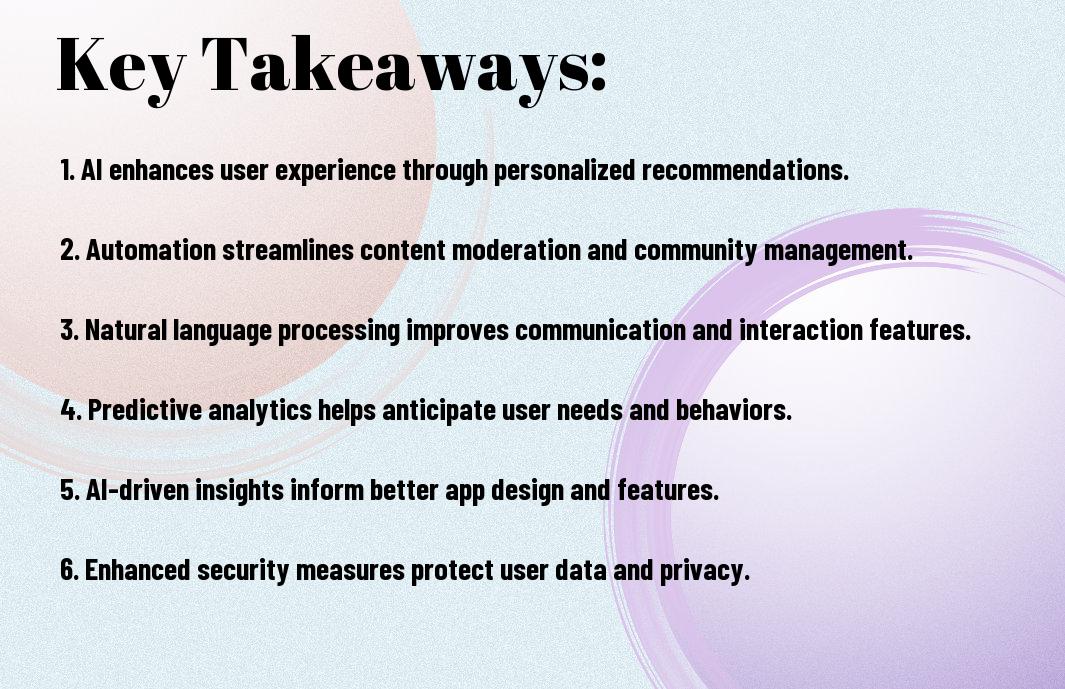
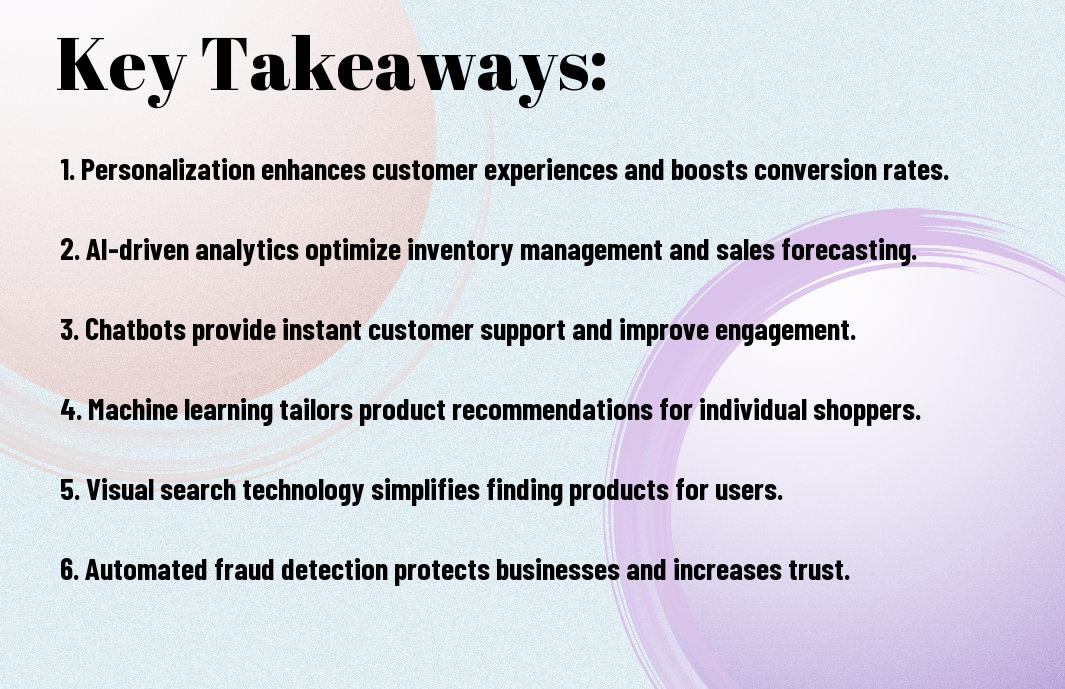
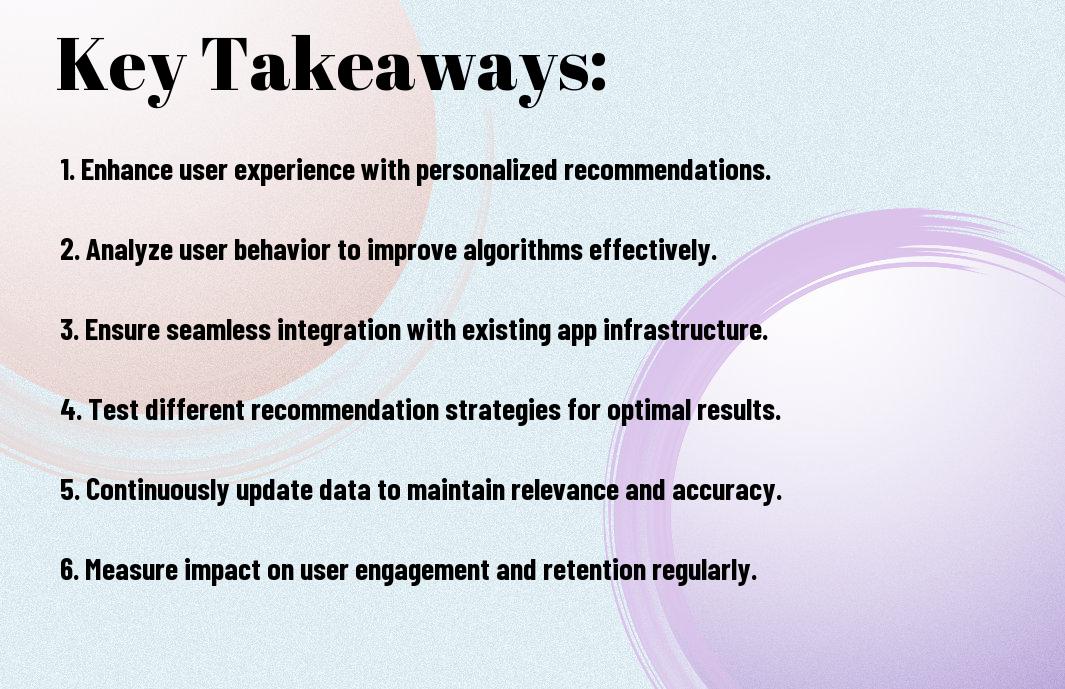
  • Personalization is key: Integrating recommendation engines into your app ecosystem allows you to provide users with tailored content and product suggestions, enhancing their overall experience and increasing engagement.
  • Improved user retention: By offering relevant recommendations, you can encourage users to spend more time within your app, reducing the likelihood of them switching to competitors and ultimately driving long-term retention.
  • Increased conversions: Recommendation engines can help users discover new products or services they may not have found otherwise, leading to increased sales, revenue, and overall business growth.
  • Data-driven decision making: Recommendation engines rely on data and analytics to generate suggestions, providing valuable insights into user behavior and preferences that can inform future development and marketing strategies.
  • Enhanced competitiveness: Incorporating recommendation engines into your app ecosystem can be a key differentiator, setting your business apart from competitors and establishing a leadership position in your market.
    Core Components of Recommendation Systems

    While developing a recommendation engine, you’ll encounter various components that work together to provide personalized suggestions. Your system will rely on data collection, processing, and analysis to generate recommendations.

    Collaborative Filtering Methods

    Around the concept of collaborative filtering, you’ll find that it involves analyzing user behavior and preferences to identify patterns and make recommendations. Your approach will depend on the type of data you collect and the algorithms you implement.

    Content-Based Filtering Approaches

    Often, you’ll find that content-based filtering is an effective method for recommending items with similar attributes. Your system will analyze the features of items and user preferences to provide personalized suggestions.

    Components of content-based filtering approaches include attribute extraction, weighting, and scoring. You’ll need to consider the types of attributes to extract, how to weigh their importance, and how to score items based on user preferences. This will enable your system to provide accurate and relevant recommendations, enhancing your users’ experience and engagement with your app ecosystem.

    Data Pipeline Architecture

    Some of the most effective recommendation engines rely on a well-designed data pipeline architecture, which you can learn more about in a Step-by-Step Guide to Developing a Recommendation System Application. This will help you understand how to integrate your data pipeline with your app ecosystem.

    Data Collection and Processing

    With a solid data pipeline in place, you can focus on collecting and processing the data that will power your recommendation engine, allowing you to provide personalized recommendations to your users.

    Feature Engineering for Recommendations

    Beside the data collection, feature engineering is a key aspect of building a recommendation engine, as it enables you to extract relevant features from your data that will inform your recommendations.

    Considering the complexity of feature engineering, you will need to carefully evaluate your data and select the most relevant features to include in your recommendation model, ensuring that your engine provides accurate and personalized recommendations to your users.

    Integration Strategies

    Unlike other components, integrating a recommendation engine into your app ecosystem requires careful planning and execution. You need to consider factors such as data flow, scalability, and user experience to ensure seamless integration.

    API Design and Endpoints

    Around the time you start designing your API, you should consider the endpoints that will interact with your recommendation engine, allowing you to fetch and update recommendations in real-time, enabling your app to provide personalized experiences for your users.

    Service Layer Implementation

    Implementation of the service layer is where you define how your app will interact with the recommendation engine, handling requests and responses, and ensuring that your app’s functionality is not compromised.

    Plus, as you implement the service layer, you will need to consider factors such as data processing, caching, and error handling, to ensure that your recommendation engine is robust and efficient, providing your users with accurate and relevant recommendations, and enhancing their overall experience with your app.

    Performance Optimization

    Now that you have integrated a recommendation engine into your app ecosystem, you need to focus on optimizing its performance to ensure seamless user experience. You can achieve this by identifying bottlenecks and implementing strategies to mitigate them, thereby improving the overall efficiency of your app.

    Caching Mechanisms

    Optimally, you will want to implement caching mechanisms to store frequently accessed data, reducing the load on your servers and improving response times. You can use caching to store pre-computed recommendations, allowing your app to retrieve them quickly and efficiently.

    Load Balancing Considerations

    To ensure your app can handle a large volume of requests, you need to consider load balancing strategies that distribute the workload across multiple servers. You can use load balancing algorithms to route requests to the most available server, preventing any single server from becoming overwhelmed.

    Further, when implementing load balancing, you should consider factors such as server capacity, network latency, and user geography to ensure that your app provides a consistent and responsive experience for all users, regardless of their location or the volume of requests being processed. You can use techniques like geo-load balancing to direct users to the nearest server, minimizing latency and improving overall performance.

    Testing and Monitoring

    Once again, you’ll need to evaluate your recommendation engine’s performance to ensure it’s meeting your app’s goals. This involves assessing its impact on user engagement, conversion rates, and overall satisfaction.

    A/B Testing Framework

    Trialing different approaches will help you refine your recommendation engine. You can test various algorithms, user interfaces, and content types to determine what works best for your users.

    Performance Metrics

    The key to optimizing your recommendation engine lies in tracking the right metrics. You should monitor click-through rates, conversion rates, and user retention to gauge the engine’s effectiveness.

    Another aspect of performance metrics is analyzing user behavior and feedback. You can collect data on user interactions, such as likes, dislikes, and ratings, to identify areas for improvement and refine your recommendation engine to better meet your users’ needs, ultimately enhancing their overall experience with your app.

    Security and Privacy

    Despite the benefits of recommendation engines, you must prioritize security and privacy to maintain user trust in your app ecosystem.

    Data Protection Measures

    Betwixt the lines of code, you’ll need to implement robust data protection measures to safeguard user data and prevent unauthorized access.

    User Consent Management

    Around the issue of user consent, you should establish clear policies and procedures to ensure transparency and compliance with regulations.

    And as you examine deeper into user consent management, you’ll need to consider implementing features that allow users to opt-out of data collection, provide explicit consent for specific uses, and access their personal data, giving you a clear understanding of your responsibilities in handling their information, and enabling you to make informed decisions about your app’s recommendation engine.

    Conclusion

    With these considerations, you can effectively integrate recommendation engines into your app ecosystem, enhancing your users’ experience. You will be able to provide personalized content, increasing user engagement and driving business growth. By leveraging recommendation engines, you can stay ahead of the competition and establish your app as a leader in its category, ultimately benefiting your business and your users.

    FAQ

    Q: What are the benefits of integrating a recommendation engine into my app ecosystem?

    A: Integrating a recommendation engine into your app ecosystem can significantly enhance user engagement and conversion rates. By providing personalized suggestions, you can help users discover new content, products, or services that align with their interests, leading to increased satisfaction and loyalty. Additionally, recommendation engines can help you to upsell and cross-sell, resulting in increased revenue and a competitive edge in the market. With a well-implemented recommendation engine, you can also gain valuable insights into user behavior and preferences, allowing you to refine your app and improve the overall user experience.

    Q: How do I choose the right recommendation engine for my app, considering factors such as data quality, scalability, and integration complexity?

    A: Choosing the right recommendation engine for your app depends on several factors, including the type and quality of your data, the scalability requirements of your app, and the complexity of integration. You should consider the following: the algorithm used by the engine, the type of data it can handle (e.g., user behavior, ratings, metadata), and its ability to scale with your growing user base. It’s also important to evaluate the integration process, including the level of technical expertise required, the availability of APIs and SDKs, and the support provided by the engine’s developers. Furthermore, you should assess the engine’s flexibility and customizability to ensure it can be tailored to your app’s specific needs and goals.

    Q: What are some best practices for implementing and optimizing a recommendation engine in my app to ensure maximum effectiveness and user adoption?

    A: To ensure maximum effectiveness and user adoption of your recommendation engine, follow these best practices: start by collecting and preprocessing high-quality data, including user behavior, preferences, and feedback. Implement A/B testing to compare the performance of different algorithms and models, and continuously monitor and analyze user interactions with the recommendations. It’s also important to provide transparency and control to users, allowing them to understand and influence the recommendations they receive. Regularly update and refine your recommendation engine to adapt to changing user behavior and preferences, and ensure that the recommendations are contextually relevant and timely. Finally, consider using hybrid approaches that combine multiple algorithms and data sources to provide a more comprehensive and accurate recommendation experience.

Automating Customer Support in Apps with AI

As you develop and maintain your mobile application, you’re likely aware of the importance of providing excellent customer support to your users. You understand that timely and effective support is key to building trust and loyalty. With the increasing demand for instant responses, you can leverage AI-powered automation to enhance your customer support experience, allowing you to focus on more complex issues while providing your users with swift and accurate solutions, thereby improving your overall app user experience.

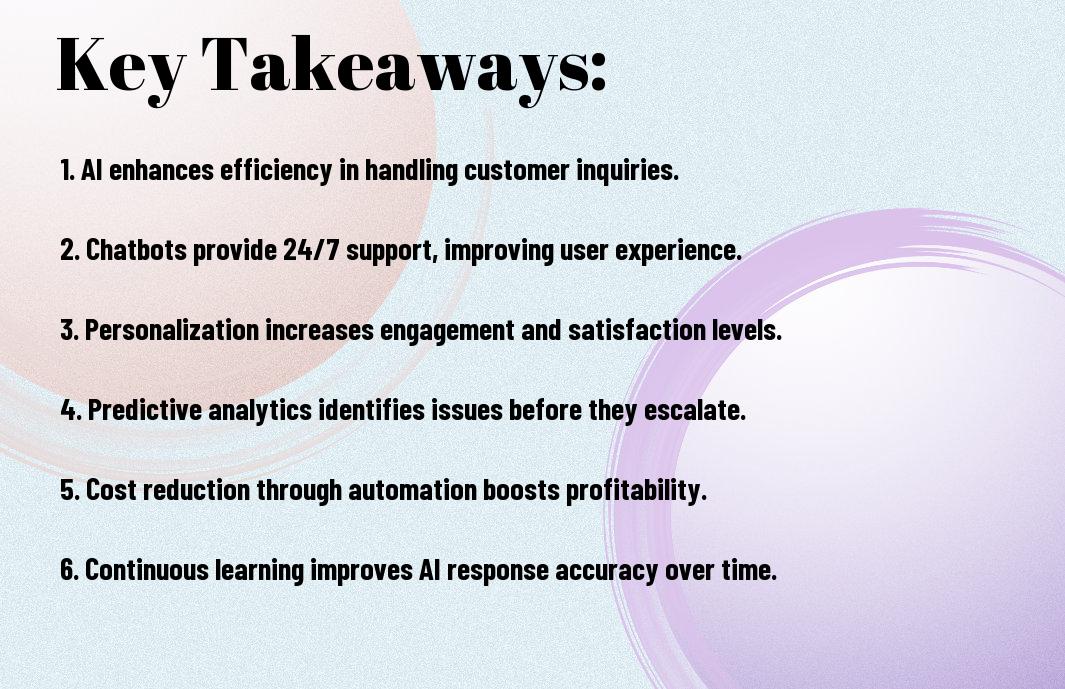
Key Takeaways:

  • Implementing AI-powered chatbots in apps can significantly enhance customer support by providing instant responses to frequent inquiries, freeing human support agents to focus on more complex issues.
  • AI-driven support systems can analyze customer interactions and behavior, enabling personalized support experiences that improve user satisfaction and loyalty.
  • Automating customer support with AI can lead to substantial cost savings, as chatbots can handle a high volume of inquiries without the need for human intervention, reducing the workload and operational expenses.
  • AI-powered support tools can help apps to offer 24/7 support, ensuring that customers receive assistance whenever they need it, regardless of their location or time zone.
  • Integrating AI into customer support can also provide valuable insights into customer feedback and sentiment, allowing app developers to identify areas for improvement and make data-driven decisions to enhance the overall user experience.

The Evolution of Customer Support

A significant shift has occurred in customer support, and you are now at the forefront of this change, with technology playing a key role in shaping your customer experience.

Traditional Support Models

Along the lines of traditional methods, you will notice that phone and email support were the primary means of resolving customer issues, which often led to long wait times and frustrated customers.

Digital Transformation Needs

About the time you started to notice the need for change, digital transformation began to take hold, and you realized that your customers’ expectations had evolved, demanding faster and more efficient support channels.

It is vital to consider that your customers now expect personalized and instant support, and you must adapt to these changing needs by leveraging AI-powered chatbots and other digital tools to provide seamless and efficient customer support, allowing you to stay ahead of the competition and build strong relationships with your customers.

Core AI Technologies in Support

Assuming you want to automate customer support in your app, you’ll need to understand the core AI technologies involved. These technologies enable your app to understand and respond to customer inquiries effectively.

Natural Language Processing

With the help of Natural Language Processing (NLP), your app can comprehend the nuances of human language, allowing it to accurately interpret customer requests and provide relevant responses.

Machine Learning Algorithms

Machine learning capabilities enable your app to learn from customer interactions, improving its response accuracy over time and providing personalized support to your users.

Algorithms such as decision trees and neural networks are used to analyze customer data and develop predictive models that inform your app’s support responses, helping you to provide efficient and effective support to your customers.

Implementation Strategies

Unlike traditional support systems, automating customer support in apps with AI requires a strategic approach. You need to consider your app’s specific needs and choose the right tools to integrate AI-powered support features, ensuring a seamless user experience.

Chatbot Integration

Besides leveraging AI for automated responses, you can integrate chatbots to handle basic customer inquiries, freeing up your support team to focus on complex issues, and you can customize chatbots to fit your brand’s voice and tone.

Automated Ticket Routing

Beside chatbot integration, automated ticket routing is another key aspect of implementing AI in customer support, where you can use machine learning algorithms to categorize and assign tickets to the right agents, ensuring efficient issue resolution and you can set up automated routing rules based on ticket keywords, categories, or priorities.

Another benefit of automated ticket routing is that it enables you to analyze ticket data and identify patterns, allowing you to refine your support processes and improve your overall customer experience, and you can use this data to train your AI models, making them more accurate and effective in resolving customer issues, ultimately leading to increased customer satisfaction and loyalty to your app.

Data Management and Learning

To effectively automate customer support in your app, you need to manage data and enable learning capabilities, which involves collecting, processing, and analyzing customer interactions to improve your AI-powered support system.

Customer Interaction Analytics

One key aspect of data management is analyzing customer interactions to identify patterns and trends, allowing you to refine your support system and provide more personalized experiences for your users, enabling you to address their needs more effectively.

Continuous Improvement Systems

About developing a system that continually updates and refines your AI model, you should focus on integrating feedback mechanisms and monitoring performance metrics to ensure your support system improves over time, providing better support to your customers.

Learning from customer interactions and adapting to their needs is necessary for creating an effective automated support system, as you can identify areas for improvement and update your AI model to provide more accurate and helpful responses, ultimately enhancing the overall user experience in your app.

Human-AI Collaboration

After implementing AI in your customer support, you’ll notice a significant shift in how your team operates. You’ll be able to allocate tasks more efficiently, allowing your human agents to focus on complex issues that require empathy and problem-solving skills.

Agent Augmentation

To take full advantage of AI capabilities, you can use it to augment your agents’ abilities, providing them with relevant data and suggestions to enhance their decision-making process, thus improving overall customer experience.

Workflow Optimization

Agent productivity increases when AI handles routine tasks, freeing up time for more complex issues, and you can optimize your workflow by automating tasks such as data entry, allowing your agents to focus on high-value tasks.

A key aspect of workflow optimization is analyzing your support processes to identify areas where AI can have the most impact, and you can use this analysis to create a more efficient and streamlined workflow, enabling your agents to provide better support to your customers.

Performance Metrics

For evaluating the effectiveness of your AI-powered customer support, you need to track key performance metrics. This helps you identify areas of improvement and optimize your support system for better results.

Response Time Analytics

With the help of response time analytics, you can measure how quickly your AI support system responds to customer inquiries, allowing you to fine-tune your system for faster response times and improved customer experience.

Customer Satisfaction Indicators

Around the clock, you can monitor customer satisfaction indicators, such as ratings and feedback, to gauge the effectiveness of your AI support system in resolving customer issues and providing a positive experience.

Customer satisfaction is a key aspect of your AI-powered customer support, and you can gain valuable insights by analyzing customer feedback and ratings. By doing so, you can identify patterns and trends, and make data-driven decisions to improve your support system and increase customer satisfaction, ultimately leading to loyalty and retention of your customers.

To wrap up

From above, you can see how automating customer support in apps with AI enhances your user experience. You can learn more about implementing AI in your customer service strategy by visiting Everything You Need to Know about AI in Customer Service. By doing so, you will be able to provide your customers with efficient and personalized support, setting your business up for success.

FAQ

Q: What are the benefits of automating customer support in apps with AI?

A: Automating customer support in apps with AI offers several benefits, including 24/7 support availability, reduced response times, and increased efficiency. AI-powered chatbots can handle a large volume of customer inquiries simultaneously, freeing up human support agents to focus on more complex issues. Additionally, AI-driven support systems can provide personalized support experiences, improving customer satisfaction and loyalty. By automating routine support tasks, businesses can also reduce support costs and improve their overall customer support operations.

Q: How does AI-powered chatbots improve the customer support experience in apps?

A: AI-powered chatbots can significantly improve the customer support experience in apps by providing instant responses to common queries, helping customers navigate the app, and offering personalized recommendations. These chatbots can be integrated with the app’s knowledge base, allowing them to provide accurate and up-to-date information to customers. Moreover, AI-driven chatbots can analyze customer interactions and adapt their responses to better meet customer needs, leading to a more engaging and supportive experience. As a result, customers can quickly find the help they need, reducing frustration and increasing their overall satisfaction with the app.

Q: Can AI-powered customer support systems in apps handle complex customer issues?

A: While AI-powered customer support systems in apps are highly effective in handling routine and simple customer inquiries, they may not always be able to handle complex issues on their own. In such cases, AI-driven systems can escalate the issue to a human support agent, ensuring that the customer receives the help they need. Additionally, AI can assist human support agents by providing them with relevant customer information, conversation history, and suggested solutions, enabling them to quickly understand the issue and provide a more effective resolution. By combining the strengths of AI and human support, businesses can provide a comprehensive and effective customer support experience that meets the diverse needs of their customers.

Building Secure Apps with AI-Driven Threat Detection

As you develop your applications, you need to prioritize security to protect your users’ sensitive data. You can leverage AI-driven threat detection to identify and mitigate potential threats in real-time, ensuring your apps are secure. Your goal is to stay one step ahead of cyber threats, and AI-driven solutions can help you achieve this by analyzing patterns and anomalies to detect potential security breaches, allowing you to take proactive measures to safeguard your applications and maintain user trust.

Key Takeaways:

  • Implementing AI-driven threat detection in app development enhances security by identifying and mitigating potential threats in real-time, reducing the risk of data breaches and cyber attacks.
  • AI-powered systems can analyze vast amounts of data, including user behavior and system logs, to detect anomalies and predict potential security threats, allowing for proactive measures to be taken.
  • Integrating AI-driven threat detection into the development process enables developers to identify and address security vulnerabilities early on, reducing the likelihood of exploits and minimizing the impact of potential attacks.
  • AI-driven threat detection can help improve incident response times by quickly identifying and isolating affected areas, allowing for swift remediation and minimizing downtime.
  • Continuous monitoring and analysis of app performance and user behavior through AI-driven threat detection enables developers to refine and improve their security measures, staying ahead of emerging threats and protecting sensitive data.

Fundamental Security Principles

While developing secure apps, you need to consider several key factors to protect your users’ data. Your approach should include a combination of security measures to prevent threats and ensure the integrity of your application.

Core Security Requirements

Foundational to your app’s security are the core requirements that you must implement to safeguard against common threats, including authentication, authorization, and data encryption, which will help you establish a robust security posture.

AI Integration Points

By incorporating AI-driven threat detection into your app, you can significantly enhance your security capabilities, allowing you to identify and respond to potential threats more effectively, and you will be able to leverage machine learning algorithms to analyze user behavior and detect anomalies.

Further, as you integrate AI into your app’s security framework, you will be able to automate many security-related tasks, freeing up your resources to focus on higher-level security strategy and development, and you can use AI to analyze vast amounts of data, identifying patterns and potential vulnerabilities that may have gone undetected by human analysts, ultimately strengthening your app’s overall security.

AI-Based Threat Detection Architecture

You need to understand the components that make up an AI-based threat detection system to build secure apps, and this understanding will help you design a robust architecture for your application.

Detection Engine Components

By analyzing various components, you can identify the most effective ones for your threat detection system, including machine learning models and rules-based systems that work together to identify potential threats.

Data Processing Pipeline

Along with the detection engine, a data processing pipeline is necessary to handle the vast amounts of data that your application generates, and you must ensure that this pipeline is efficient and scalable.

This data processing pipeline is where your application’s data is collected, processed, and analyzed, and you will need to consider factors such as data ingestion, storage, and analysis when designing this pipeline, to ensure that your threat detection system can handle large volumes of data and provide accurate results in real-time.

Real-Time Monitoring Systems

Once again, you can leverage AI-driven threat detection to enhance your app’s security with real-time monitoring systems, allowing you to stay ahead of potential threats. You can learn more about how AI is transforming mobile app security by visiting Enhancing Mobile App Security Through AI: A Paradigm Shift to discover the latest trends and best practices.

Behavioral Analysis

Betwixt the various techniques used in AI-driven threat detection, you will find behavioral analysis, which enables you to identify and flag suspicious activity in your app, helping you to take proactive measures to prevent attacks.

Pattern Recognition

Around the concept of pattern recognition, you can develop a system that identifies and learns from patterns in your app’s data, allowing you to detect and respond to potential threats more effectively.

And as you examine deeper into pattern recognition, you will find that it enables your app to learn from experience, adapting to new threats and improving its detection capabilities over time, giving you greater confidence in your app’s security and allowing you to focus on delivering a seamless user experience.

Implementation Strategies

Many organizations are turning to AI-driven threat detection to build secure apps, and you can too by leveraging the right implementation strategies. You will need to consider various factors, including data quality, algorithm selection, and system integration, to ensure effective threat detection.

Integration Framework

Against the backdrop of increasingly complex threat landscapes, you must design an integration framework that seamlessly incorporates AI-driven threat detection into your existing security infrastructure, allowing you to respond quickly to emerging threats.

Security Controls

Beside the integration framework, you will need to establish robust security controls to prevent unauthorized access to your app and data, and you can achieve this by implementing measures such as encryption, authentication, and access management.

But as you implement these security controls, you should also consider the potential impact on your app’s performance and user experience, and you will need to strike a balance between security and usability to ensure that your app remains effective and appealing to your users. You can achieve this by conducting thorough testing and validation of your security controls, and by continuously monitoring your app’s performance and security posture.

Response Mechanisms

All effective threat detection systems require robust response mechanisms to mitigate potential threats. You need to consider how your app will respond to detected threats, ensuring your users’ safety and security.

Automated Responses

With automated response capabilities, you can quickly contain and neutralize threats, minimizing damage to your app and its users. You can configure your system to automatically block malicious activity, alerting you to potential threats.

Manual Intervention Protocols

Across your organization, you should establish clear protocols for manual intervention, ensuring that your team can quickly respond to complex threats. You will need to define roles, responsibilities, and procedures for your team to follow in the event of a security incident.

Protocols for manual intervention should be well-documented and regularly updated, allowing you to refine your response strategy as new threats emerge. You should also provide your team with the necessary training and resources to effectively respond to security incidents, ensuring that your app and its users are protected.

Performance Optimization

Keep your application’s performance in mind when integrating AI-driven threat detection, as it can impact your user experience and overall security posture. You need to ensure that your app’s performance is not compromised while maintaining robust security measures.

System Scalability

Optimizing your system’s scalability is crucial to handle increased traffic and data processing demands. You can achieve this by leveraging cloud services, load balancing, and autoscaling to ensure your application remains responsive and secure.

Resource Management

Among the key factors affecting your application’s performance is efficient resource management. You should monitor your resource utilization and allocate them effectively to prevent bottlenecks and ensure seamless threat detection.

Management of resources is vital to maintaining your application’s performance and security. You can achieve this by implementing monitoring tools, setting up alerts, and automating resource allocation to ensure your application runs smoothly and efficiently, allowing you to focus on delivering a secure user experience.

Summing up

On the whole, you now have a better understanding of building secure apps with AI-driven threat detection. As you move forward, you can leverage AI to enhance your app’s security by utilizing AI Threat Detection: Leverage AI to Detect Security Threats to identify potential threats and protect your users’ data, ultimately ensuring your app’s integrity and your users’ trust in your brand.

FAQ

Q: What are the benefits of using AI-driven threat detection in building secure apps?

A: The benefits of using AI-driven threat detection in building secure apps include enhanced security, improved incident response, and reduced risk of data breaches. AI-powered systems can analyze vast amounts of data in real-time, identifying potential threats and anomalies that may evade traditional security measures. This enables developers to respond quickly to emerging threats, protecting user data and preventing financial losses. Additionally, AI-driven threat detection can help identify vulnerabilities in the app’s code, allowing for proactive measures to be taken to prevent exploitation.

Q: How does AI-driven threat detection integrate with existing security measures to build secure apps?

A: AI-driven threat detection can be seamlessly integrated with existing security measures, such as firewalls, intrusion detection systems, and encryption technologies. By leveraging machine learning algorithms and data analytics, AI-powered systems can analyze data from various sources, including network traffic, user behavior, and system logs. This integrated approach enables developers to gain a comprehensive understanding of potential threats, allowing for more effective threat mitigation and incident response strategies. Furthermore, AI-driven threat detection can be used to automate security tasks, freeing up resources for more strategic and high-value security activities.

Q: What are the key considerations for implementing AI-driven threat detection in building secure apps, and how can developers ensure its effectiveness?

A: When implementing AI-driven threat detection in building secure apps, key considerations include data quality, algorithmic transparency, and continuous monitoring. Developers should ensure that the AI system is trained on high-quality, diverse data sets to minimize bias and optimize accuracy. Additionally, the AI system should be designed to provide transparent and explainable results, enabling developers to understand the reasoning behind threat detections. Continuous monitoring and evaluation of the AI system’s performance are also crucial to ensure its effectiveness in detecting emerging threats and adapting to evolving attack vectors. By carefully considering these factors, developers can harness the power of AI-driven threat detection to build secure, reliable, and trustworthy apps that protect user data and maintain user trust.

The Role of AI in Developing Next-Generation Social Apps

As you explore the latest social media platforms, you’re likely to notice significant advancements in their functionality and user experience. Your interactions with these apps are being shaped by artificial intelligence (AI), which is revolutionizing the way you connect and share information. You can expect AI to play an increasingly significant role in developing next-generation social apps, enabling more personalized and interactive experiences that cater to your unique preferences and needs.

Key Takeaways:

  • AI-driven social apps can analyze user behavior and preferences to provide personalized experiences, increasing user engagement and retention by offering tailored content and interactions.
  • Next-generation social apps leveraging AI can enhance user safety and security through advanced moderation tools, detecting and mitigating online harassment, hate speech, and misinformation.
  • AI-powered chatbots and virtual assistants can facilitate seamless communication and community building within social apps, enabling users to connect with each other and access information more efficiently.
  • The integration of AI in social apps can enable innovative features such as augmented reality experiences, sentiment analysis, and predictive analytics, setting new standards for social media interaction and community engagement.
  • As AI continues to evolve, social apps will need to prioritize transparency, accountability, and ethical considerations to ensure that AI-driven decision-making aligns with user values and promotes a positive online environment.

Current Social Media Landscape

While navigating the current social media landscape, you’ll notice a plethora of platforms vying for your attention. Your online presence is scattered across multiple apps, each with its unique features and user base.

Traditional Social Apps

Across various platforms, traditional social apps have dominated the market, offering features like messaging, sharing, and networking. You use these apps to connect with friends, family, and like-minded individuals, shaping your online experience.

Market Gaps and User Demands

After analyzing your behavior on social media, it becomes clear that there are unmet needs and desires. You crave more personalized, interactive, and secure experiences, which traditional social apps often fail to provide, leaving room for innovation and disruption.

And as you continue to evolve in your online interactions, your expectations from social apps are becoming more sophisticated. You want platforms that can understand your preferences, protect your data, and offer immersive experiences, driving the demand for next-generation social apps that can meet these rising standards and transform the way you interact online.

AI Integration Points

Assuming you want to develop a next-generation social app, you’ll need to consider AI integration points. You can learn more about how AI is transforming the social media landscape by visiting How AI Is Reshaping Social Media Platforms And 5 Tips For Success to stay ahead of the curve.

Natural Language Processing

Along the lines of AI integration, you’ll find that natural language processing is a key aspect of developing social apps, as it enables your app to understand and generate human-like language, making interactions more intuitive and engaging for your users.

Predictive Analytics

Processing large amounts of data is vital for predictive analytics, which helps you forecast user behavior and preferences, allowing you to create a more personalized experience for your users.

Even with the complexity of predictive analytics, you can leverage AI to analyze user data and identify patterns, enabling you to make informed decisions about your social app’s development and optimization, ultimately enhancing your users’ overall experience and driving engagement.

Social Intelligence Features

For developing next-generation social apps, you need to incorporate social intelligence features that enable more nuanced interactions. These features will help you create a more engaging and personalized experience for your users.

Emotion Recognition Systems

Intelligently, you can use emotion recognition systems to analyze user emotions and tailor your app’s response accordingly, allowing you to create a more empathetic and supportive environment for your users.

Behavioral Pattern Analysis

Against the backdrop of increasing user expectations, you can leverage behavioral pattern analysis to identify trends and preferences, enabling you to refine your app’s functionality and improve user satisfaction.

Also, as you investigate deeper into behavioral pattern analysis, you will discover that it allows you to anticipate user needs, providing you with valuable insights to inform your development decisions and create a more intuitive user experience that meets your users’ evolving expectations.

Privacy and Security

After considering the benefits of AI in social apps, you must also think about the potential risks to your personal data. As you use these apps, your information is vulnerable to cyber threats, and it’s imperative to prioritize protection.

AI-Driven Protection Mechanisms

By leveraging AI-powered tools, you can enhance your social app’s security with advanced threat detection and prevention systems, giving you peace of mind as you interact online.

User Data Management

Beside the benefits of AI-driven protection, you should also consider how your data is managed and stored, ensuring that your personal information is handled responsibly and in accordance with your preferences.

It is imperative to understand that effective user data management involves transparency, control, and accountability, allowing you to make informed decisions about your online presence and protecting your digital identity as you navigate the world of social apps.

Personalization Algorithms

All social apps aim to provide a unique experience for you, and personalization algorithms play a significant role in achieving this goal. You can expect these algorithms to analyze your behavior and tailor the content to your preferences, making your experience more engaging and relevant.

Content Curation

By leveraging AI-powered content curation, you can discover new content that aligns with your interests, and your feed will be filled with relevant information, making your experience more enjoyable and personalized to your tastes.

User Experience Adaptation

Behind the scenes, AI-driven user experience adaptation enables social apps to adjust their layout, features, and functionality to suit your needs, ensuring that you have a seamless and intuitive interaction with the app.

Also, as you continue to use the app, the AI-powered adaptation mechanism will learn your habits and preferences, allowing the app to evolve and improve, providing you with a more personalized and engaging experience over time, and enabling you to get the most out of your social app interactions.

Social Connection Enhancement

Now, as you explore the role of AI in developing next-generation social apps, you’ll notice a significant focus on enhancing social connections. AI-powered features are designed to help you build and maintain meaningful relationships, making your online interactions more engaging and personalized.

Smart Matching Systems

Mirroring your interests and preferences, smart matching systems use AI to connect you with like-minded individuals, increasing the likelihood of forming meaningful relationships and expanding your social circle.

Community Building Tools

Bridging the gap between you and others, community building tools leverage AI to facilitate group discussions, shared activities, and collaborative projects, helping you to establish a sense of belonging and connection with others who share your passions.

In addition, as you utilize community building tools, you’ll find that AI-driven features such as content moderation, sentiment analysis, and personalized recommendations help to foster a positive and inclusive environment, allowing you to engage with others in a more meaningful and enjoyable way, and ultimately enriching your overall social experience.

Future Implications

Despite the current advancements in AI-powered social apps, you will witness even more innovative developments in the future, transforming the way you interact with others and share information.

Social Evolution Impact

For instance, you will see a significant shift in how you form and maintain relationships, as AI-driven social apps become more prevalent in your daily life, influencing your social behaviors and interactions.

Technological Convergence

Any integration of AI with other emerging technologies, such as blockchain or the Internet of Things, will likely have a profound impact on your experience with social apps, enabling more secure and personalized interactions.

With the convergence of these technologies, you can expect to see more sophisticated and immersive social platforms that seamlessly integrate into your daily life, offering you new ways to connect, share, and interact with others, and you will need to adapt to these changes to stay connected and engaged in the digital world.

To wrap up

With this in mind, you can see how AI is transforming the social app landscape. As you consider developing your next-generation social app, you’ll want to explore the possibilities of AI integration. For more insights, visit Revolutionizing Mobile Apps: AI for Next-Gen App Development to discover how you can leverage AI to enhance your app’s user experience and stay ahead of the competition, ultimately shaping the future of your social app with innovative AI-powered solutions.

FAQ

Q: What is the role of AI in developing next-generation social apps, and how does it enhance user experience?

A: The role of AI in developing next-generation social apps is multifaceted. AI algorithms can analyze user behavior, preferences, and interactions to provide personalized content recommendations, improving user engagement and satisfaction. Additionally, AI-powered chatbots can offer 24/7 customer support, helping users navigate the app and resolving issues promptly. AI-driven analytics also enable developers to identify trends, patterns, and areas for improvement, allowing them to make data-driven decisions and optimize the app’s performance. By leveraging AI, social apps can deliver a more intuitive, responsive, and enjoyable experience for their users.

Q: How does AI contribute to the development of more sophisticated and secure social apps, and what are the potential risks associated with its integration?

A: AI plays a significant role in developing more sophisticated and secure social apps by enabling advanced threat detection, facial recognition, and sentiment analysis. AI-powered systems can identify and flag suspicious activity, such as fake accounts or malicious content, and alert administrators to take action. Furthermore, AI-driven encryption methods can enhance data protection, ensuring that user information remains confidential and secure. However, the integration of AI also raises concerns about data privacy, bias, and the potential for AI systems to be exploited by malicious actors. Developers must carefully consider these risks and implement robust safeguards to mitigate them, ensuring that AI is used responsibly and ethically.

Q: What are the potential future developments in AI-powered social apps, and how might they change the way we interact with each other and with technology?

A: Future developments in AI-powered social apps are likely to focus on augmented reality (AR) and virtual reality (VR) integration, enabling more immersive and interactive experiences. AI-driven avatars and virtual assistants may become more prevalent, allowing users to create personalized digital personas and interact with others in new and innovative ways. Additionally, AI-powered social apps may incorporate more advanced emotional intelligence, enabling them to better understand and respond to users’ emotional needs. As AI continues to evolve, we can expect to see significant changes in the way we interact with each other and with technology, potentially leading to more empathetic, intuitive, and human-like digital experiences that blur the lines between the physical and digital worlds.

Transforming E-Commerce Apps with Artificial Intelligence

As you explore the world of e-commerce, you’re likely to notice a significant shift towards personalized experiences. Your customers expect tailored product recommendations, seamless navigation, and efficient checkout processes. You can achieve this by leveraging artificial intelligence (AI) to enhance your e-commerce app, enabling you to analyze user behavior, optimize operations, and drive sales. By integrating AI, you can revolutionize your online store and stay ahead of the competition, providing your customers with a unique and engaging shopping experience that sets your brand apart.

Key Takeaways:

  • Integrating Artificial Intelligence (AI) into e-commerce apps can significantly enhance the user experience by offering personalized product recommendations, streamlining navigation, and improving search functionality.
  • AI-powered chatbots can provide 24/7 customer support, helping to increase customer satisfaction and reduce support queries, thus making the overall shopping experience more efficient.
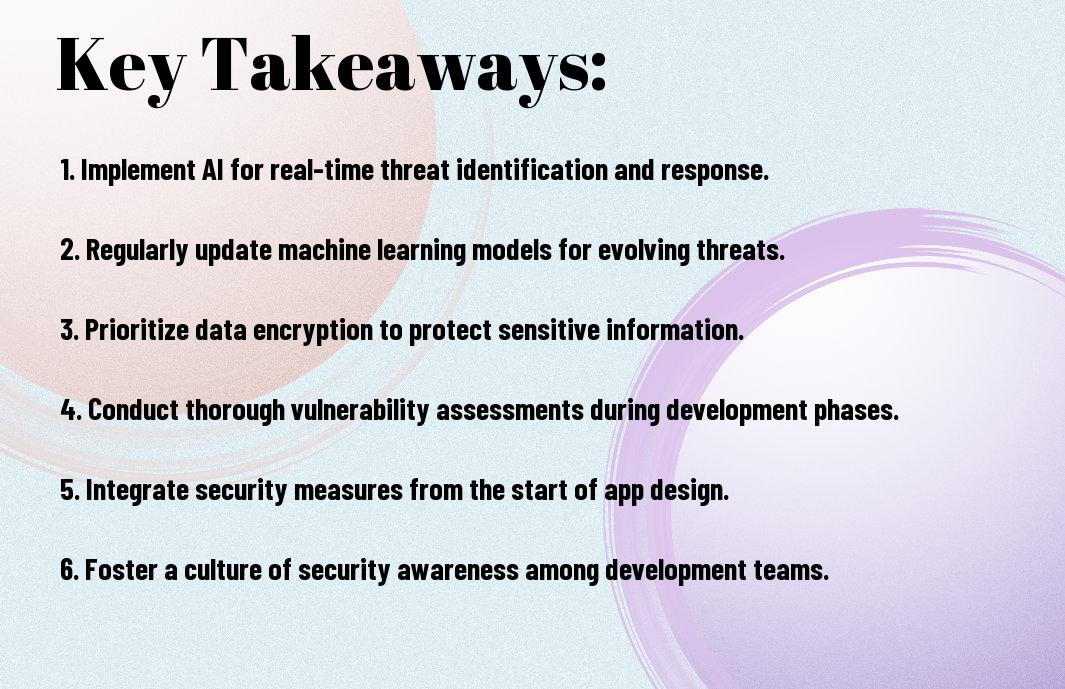
  • AI-driven analytics can help e-commerce businesses gain valuable insights into customer behavior, preferences, and shopping patterns, enabling data-driven decisions to optimize marketing strategies and improve sales.
  • Implementing AI in e-commerce apps can also help to detect and prevent fraudulent activities, such as fake accounts and suspicious transactions, ensuring a safer and more secure online shopping environment.
  • By leveraging AI, e-commerce businesses can automate various tasks, such as inventory management and order processing, allowing them to focus on core activities and improve overall operational efficiency.

AI Revolution in Digital Commerce

While the rise of artificial intelligence is transforming various industries, you are likely to witness significant changes in e-commerce. AI is revolutionizing the way you interact with digital commerce platforms, making them more personalized and efficient.

Evolution of E-Commerce Platforms

With the advancement of technology, your online shopping experience has become more streamlined. E-commerce platforms have evolved to incorporate innovative features, enhancing your overall experience and encouraging you to make more informed purchasing decisions.

Modern AI Integration Points

Commercially, you can leverage AI to optimize your e-commerce app’s performance. Modern AI integration points enable you to analyze customer behavior, providing valuable insights to improve your business strategies and increase customer satisfaction.

To further integrate AI into your e-commerce app, you can focus on implementing chatbots, product recommendations, and personalized content. By doing so, you can create a more engaging and tailored experience for your customers, driving sales and boosting your revenue. As you explore the possibilities of AI in e-commerce, you will discover new opportunities to enhance your business and stay ahead of the competition.

Smart Product Recommendations

You can enhance your e-commerce app with AI-powered recommendations, increasing user engagement and sales. By analyzing user behavior and preferences, your app can suggest relevant products, improving the overall shopping experience.

Personalization Algorithms

Recommendations based on personalization algorithms help you tailor the shopping experience to individual users. Your app can learn from user interactions, adapting to their unique preferences and interests.

Customer Behavior Analysis

About the behavior of your customers, understanding their shopping habits and patterns is key to creating effective recommendations. Your app can analyze user data, identifying trends and preferences to inform product suggestions.

For instance, by analyzing customer behavior, you can identify high-value customers, track purchase history, and offer personalized promotions, leading to increased loyalty and retention, and ultimately, driving business growth and revenue for your e-commerce app.

AI-Powered Search Optimization

To enhance your e-commerce app’s search functionality, AI-powered search optimization is necessary. You can leverage machine learning algorithms to improve search results, making it easier for your customers to find what they’re looking for.

Natural Language Processing

Similarly, to improve your search functionality, natural language processing enables your app to understand your customers’ search queries more effectively, allowing for more accurate results and a better user experience.

Visual Search Capabilities

On the other hand, visual search capabilities allow your customers to search for products using images, making it easier for them to find what they want. You can integrate visual search into your app to enhance the user experience.

Further, with visual search capabilities, you can enable your customers to upload images or take photos of products they like, and your app will suggest similar products, making it a powerful tool for driving sales and increasing customer engagement.

Chatbots and Customer Service

After integrating chatbots into your e-commerce app, you can expect a significant improvement in customer service. Chatbots can help answer frequent questions, provide order updates, and offer personalized recommendations, making your customers’ experience more enjoyable and efficient.

Conversational AI Systems

Systems like these enable your e-commerce app to understand and respond to customer inquiries in a more human-like way, allowing you to provide better support and build trust with your customers.

24/7 Customer Support Solutions

Any time of day or night, your customers can receive assistance from your chatbot, which can help resolve issues and answer questions, ensuring that your customers are always satisfied with your service.

Service is at the forefront of your e-commerce app when you implement 24/7 customer support solutions. You can ensure that your customers’ needs are met promptly, and their issues are resolved quickly, which can lead to increased customer loyalty and retention, ultimately benefiting your business and helping you stay competitive in the market.

Predictive Analytics

Despite the complexity of e-commerce, predictive analytics can help you make informed decisions. You can analyze customer behavior, preferences, and purchase history to anticipate future trends and optimize your app accordingly.

Inventory Management

The key to efficient inventory management is understanding your customers’ needs. You can use predictive analytics to determine which products to stock up on, reducing waste and overstocking, and ensuring that your customers find what they’re looking for.

Sales Forecasting

Across various industries, sales forecasting is a powerful tool for driving business growth. You can leverage predictive analytics to forecast sales, identifying opportunities to increase revenue and optimize your marketing strategies.

In fact, by analyzing historical sales data, seasonal trends, and external factors, you can create accurate sales forecasts that inform your business decisions, helping you to stay ahead of the competition and drive your e-commerce app’s success. You can use this insight to adjust your pricing, inventory, and marketing campaigns, ultimately enhancing your customers’ experience and boosting your bottom line.

Security and Fraud Detection

Not only does AI enhance your e-commerce app’s user experience, but it also plays a significant role in securing your platform. You can leverage AI to detect and prevent fraudulent activities, protecting your business and customers from potential threats.

AI-Based Threat Detection

Alongside traditional security measures, AI-based threat detection helps you identify and mitigate potential risks. You can use machine learning algorithms to analyze patterns and anomalies in user behavior, enabling you to take proactive measures to secure your app.

Transaction Safety Measures

Following the implementation of AI-based threat detection, you can focus on transaction safety measures. You will be able to monitor and analyze transactions in real-time, detecting and preventing fraudulent activities, and ensuring a safe and secure experience for your customers.

Further, by implementing robust transaction safety measures, you can reduce the risk of chargebacks and financial losses. You will be able to analyze customer behavior, identify suspicious patterns, and take proactive measures to prevent fraudulent transactions, ultimately protecting your business and maintaining customer trust.

Conclusion

Upon reflecting on the potential of artificial intelligence in e-commerce, you can see how it transforms your online shopping experience. You will notice enhanced personalization, streamlined processes, and improved customer service. As you integrate AI into your e-commerce apps, your business will likely experience increased efficiency and competitiveness. You can expect to drive growth and innovation, staying ahead in the market with AI-driven solutions.

FAQ

Q: How can Artificial Intelligence enhance the user experience in E-Commerce Apps?

A: Artificial Intelligence (AI) can significantly enhance the user experience in E-Commerce Apps by providing personalized product recommendations, streamlining the search process, and offering chatbot-based customer support. AI-powered algorithms can analyze user behavior, purchase history, and browsing patterns to suggest relevant products, increasing the likelihood of sales and customer satisfaction. Additionally, AI-driven chatbots can help resolve customer queries and issues in real-time, reducing the need for human intervention and improving response times.

Q: What role does Machine Learning play in transforming E-Commerce Apps with Artificial Intelligence?

A: Machine Learning (ML) plays a vital role in transforming E-Commerce Apps with Artificial Intelligence by enabling the development of predictive models that can analyze large datasets and make accurate predictions about user behavior. ML algorithms can be trained on historical data to identify patterns and trends, allowing E-Commerce Apps to anticipate and respond to user needs in real-time. For instance, ML-powered predictive analytics can help E-Commerce Apps to forecast demand, optimize pricing, and improve inventory management, leading to increased efficiency and profitability.

Q: How can E-Commerce businesses measure the effectiveness of Artificial Intelligence-powered transformations in their Apps?

A: E-Commerce businesses can measure the effectiveness of Artificial Intelligence-powered transformations in their Apps by tracking key performance indicators (KPIs) such as conversion rates, customer engagement, and sales revenue. AI-powered analytics tools can provide insights into user behavior, helping businesses to identify areas of improvement and optimize their AI-driven strategies. Additionally, businesses can conduct A/B testing and experiments to evaluate the impact of AI-powered features on user experience and business outcomes, making data-driven decisions to refine and improve their AI-powered transformations over time.

Skip to content