AI

The Ethics Of AI In Business – Balancing Innovation With Responsibility

As you navigate the rapidly evolving landscape of artificial intelligence in your business, you must consider the ethical implications of your decisions. You can learn more about The Ethics of AI: Balancing Innovation with Responsibility to ensure your organization is prioritizing responsible AI practices. By doing so, you will be able to harness the power of AI while maintaining your company’s values and integrity, ultimately driving innovation and growth in a responsible manner.

Key Takeaways:

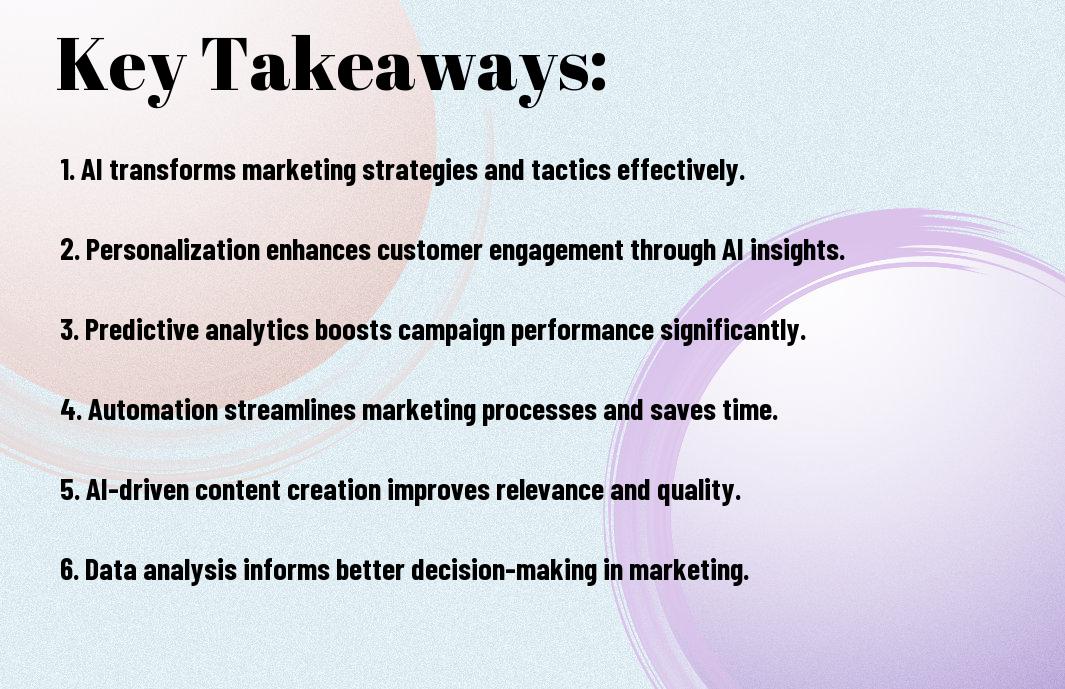
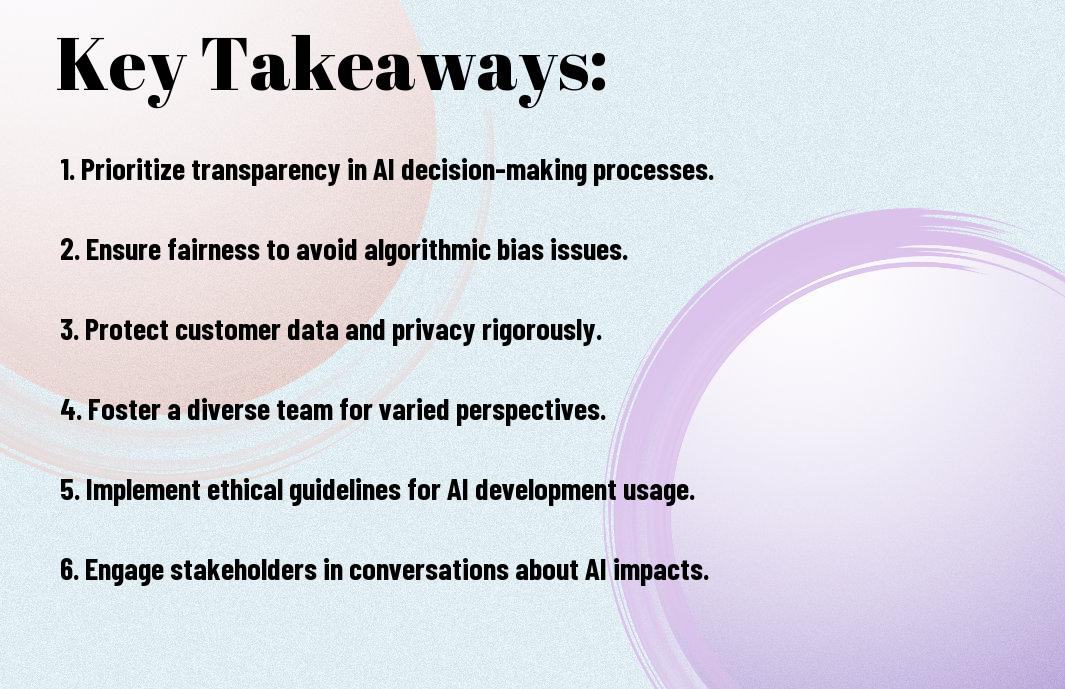
  • The integration of AI in business operations requires a careful balance between driving innovation and ensuring ethical responsibility, as AI systems can have significant impacts on stakeholders, including employees, customers, and society as a whole.
  • Businesses must prioritize transparency and accountability in their AI development and deployment, including being open about data sources, algorithms used, and potential biases, to maintain trust and credibility with their stakeholders.
  • Establishing clear guidelines and regulations for AI use in business is imperative to prevent potential misuse and ensure that the benefits of AI are realized while minimizing its risks, and this involves ongoing collaboration between businesses, governments, and civil society organizations.
The Current AI Landscape in Business

While navigating the current AI landscape in business, you will notice a significant shift towards automation and data-driven decision making, as you consider how AI is transforming your industry and your business operations.

Transformative Technologies

The rapid advancement of AI technologies is enabling your business to streamline processes, enhance customer experiences, and gain a competitive edge, as you explore the various applications of AI in your organization.

Market Impact and Adoption Rates

About the current state of AI adoption, you are likely to find that many businesses are investing heavily in AI solutions, and you may be wondering how to leverage AI to drive growth and innovation in your own business.

Rates of AI adoption are increasing rapidly, and as you consider implementing AI in your business, you should think about the potential impact on your operations, customers, and revenue, and how you can harness the power of AI to drive success and stay ahead of the competition.

Core Ethical Principles

Now that you’re considering the ethics of AI in business, it’s imperative to establish a foundation of principles that guide your decision-making. You’ll need to weigh the benefits of innovation against the potential risks and consequences, ensuring that your use of AI aligns with your values and priorities.

Transparency and Accountability

Above all, you should prioritize transparency in your AI systems, providing clear explanations of how they work and making yourself accountable for their actions. You can achieve this by implementing mechanisms for tracking and evaluating AI-driven decisions, allowing you to identify and address any biases or errors.

Data Privacy and Protection

Behind every successful AI implementation is a robust data management strategy, and you must ensure that your handling of sensitive information is secure and respectful of individuals’ rights. You should implement measures to safeguard personal data, such as encryption and access controls, to prevent unauthorized use or disclosure.

Understanding the importance of data privacy and protection is vital to maintaining trust with your customers and stakeholders. You should be aware of the potential risks associated with collecting, storing, and processing large amounts of data, and take steps to mitigate them, such as conducting regular security audits and providing transparent data subject access policies, allowing you to demonstrate your commitment to responsible AI practices.

Human-AI Collaboration

Not only does AI bring about unprecedented efficiency, but it also raises questions about your role in the workforce. As you navigate this new landscape, you must consider the implications of AI on your business and your employees.

Workforce Integration

Along with the benefits of AI, you will face challenges in integrating it into your workforce, and you must be prepared to address these challenges head-on, ensuring a smooth transition for your employees.

Skills Adaptation

Inline with the changing job market, you will need to adapt your skills to work effectively with AI, and this requires a willingness to learn and evolve, as you will be working alongside AI systems.

Consequently, as you develop your skills to adapt to an AI-driven work environment, you will find that your ability to work with AI systems will become a valuable asset, enabling you to make the most of the benefits that AI has to offer, and driving your business forward in a competitive market, where you will be able to leverage AI to enhance your decision-making, productivity, and innovation, ultimately leading to increased success.

Risk Assessment Framework

Many businesses are now leveraging AI to drive innovation, but you must consider the potential risks involved. As you develop your AI strategy, it’s crucial to establish a comprehensive risk assessment framework to identify and mitigate potential threats.

Potential Biases and Discrimination

By examining your AI systems, you can identify potential biases and discrimination that may affect your business decisions, and you should take steps to address these issues to ensure fairness and transparency in your operations.

Security Vulnerabilities

Among the most significant risks associated with AI is the potential for security vulnerabilities, and you should prioritize protecting your systems and data from cyber threats to maintain the trust of your customers and stakeholders.

Even as you implement robust security measures, you should continuously monitor your AI systems for potential vulnerabilities and stay up-to-date with the latest security patches and updates to prevent data breaches and other security incidents that could compromise your business.

Corporate Responsibility

After considering the impact of AI on your business, you must prioritize ethical considerations to maintain a positive reputation and build trust with your customers and stakeholders.

Ethical Guidelines Development

For instance, you will need to establish clear guidelines and principles that outline the responsible development and deployment of AI in your organization, ensuring that your AI systems are fair, transparent, and accountable.

Stakeholder Engagement

Beneath the surface of AI implementation, you will find that engaging with your stakeholders is vital to understanding their concerns and expectations, and you should be prepared to address these through open communication and transparency.

Ethical stakeholder engagement involves considering the potential consequences of AI on your employees, customers, and the broader community, and you should strive to create a dialogue that fosters trust and collaboration, allowing you to identify and mitigate any potential risks associated with AI adoption, and ultimately ensuring that your AI systems align with your organization’s values and principles.

Implementation Strategies

All businesses must consider the ethical implications of AI implementation, ensuring that innovation is balanced with responsibility, and that your organization’s values are upheld throughout the process.

Balanced Innovation Approach

Above all, you should strive for a balanced approach, weighing the benefits of AI against potential risks and challenges, and considering the impact on your customers, employees, and the environment.

Monitoring and Evaluation Systems

By establishing robust monitoring and evaluation systems, you can ensure that your AI systems are operating as intended, and that any issues or biases are quickly identified and addressed, allowing you to make adjustments to your strategy as needed.

This process involves regularly reviewing your AI systems, assessing their performance, and evaluating their impact on your business and stakeholders, enabling you to refine your approach and make data-driven decisions to drive your organization forward, while maintaining the trust and confidence of your customers and the public.

To wrap up

To wrap up, as you research into the world of AI in business, you must balance innovation with responsibility. You can find more information on Ethics in AI: Balancing Innovation and Responsibility. You will learn how to navigate the complexities of AI ethics, ensuring your business thrives while maintaining integrity and transparency in your practices, ultimately benefiting your organization and society as a whole.

FAQ

Q: What are the key ethical considerations for businesses when implementing AI solutions?

A: When implementing AI solutions, businesses must consider several key ethical factors, including data privacy, bias, and transparency. They must ensure that AI systems are designed and trained on diverse, unbiased data sets to avoid perpetuating existing social inequalities. Additionally, businesses should prioritize transparency in AI decision-making processes, providing clear explanations for AI-driven outcomes and ensuring that stakeholders understand how AI systems arrive at their conclusions. By addressing these ethical concerns, businesses can promote trust and accountability in their AI-powered operations.

Q: How can businesses balance the need for innovation with the need for responsible AI development?

A: To balance innovation with responsibility, businesses should adopt a human-centered approach to AI development, prioritizing the well-being and safety of customers, employees, and society as a whole. This involves establishing clear guidelines and regulations for AI development, investing in ongoing education and training for AI developers, and fostering a culture of ethical awareness and accountability within the organization. By taking a proactive and principled approach to AI development, businesses can drive innovation while minimizing the risks and negative consequences associated with AI.

Q: What role do human values play in the development and deployment of AI systems in business?

A: Human values, such as fairness, respect, and empathy, play a vital role in the development and deployment of AI systems in business. AI systems should be designed to align with these values, promoting positive outcomes and minimizing harm to individuals and society. Businesses should prioritize human values in AI development by incorporating diverse perspectives and stakeholders into the design process, testing AI systems for bias and fairness, and continuously monitoring AI performance to ensure that it remains aligned with human values. By doing so, businesses can create AI systems that not only drive business success but also contribute to the greater good.

Q: How can businesses ensure that AI systems are transparent and explainable in their decision-making processes?

A: To ensure transparency and explainability in AI decision-making, businesses can implement techniques such as model interpretability, feature attribution, and model-agnostic explanations. These techniques provide insights into how AI systems arrive at their conclusions, enabling businesses to identify potential biases and errors. Additionally, businesses should prioritize human oversight and review of AI-driven decisions, providing a safeguard against unintended consequences. By promoting transparency and explainability in AI decision-making, businesses can build trust with stakeholders and ensure that AI systems are used in a responsible and accountable manner.

Q: What are the potential consequences for businesses that fail to prioritize ethics in their AI development and deployment strategies?

A: Businesses that fail to prioritize ethics in their AI development and deployment strategies risk facing significant consequences, including reputational damage, regulatory penalties, and financial losses. AI systems that perpetuate bias, compromise data privacy, or prioritize profits over people can lead to public backlash, decreased customer trust, and ultimately, financial losses. Furthermore, governments and regulatory bodies are increasingly holding businesses accountable for the ethical implications of their AI systems, with non-compliance resulting in fines and legal action. By prioritizing ethics in AI development, businesses can mitigate these risks and ensure long-term success and sustainability.

These Headlines Aim To Attract Readers Interested In The Role Of AI In Business And Are Structured To Remain Relevant Over Time.

As you explore the intersection of artificial intelligence and business, you’ll find that understanding the role of AI is necessary for your success. You can stay ahead of the curve by learning about the latest developments, such as those discussed in AI and News: What’s next?. David Caswell …, which sheds light on the evolving landscape of AI in the industry, helping you make informed decisions for your business.

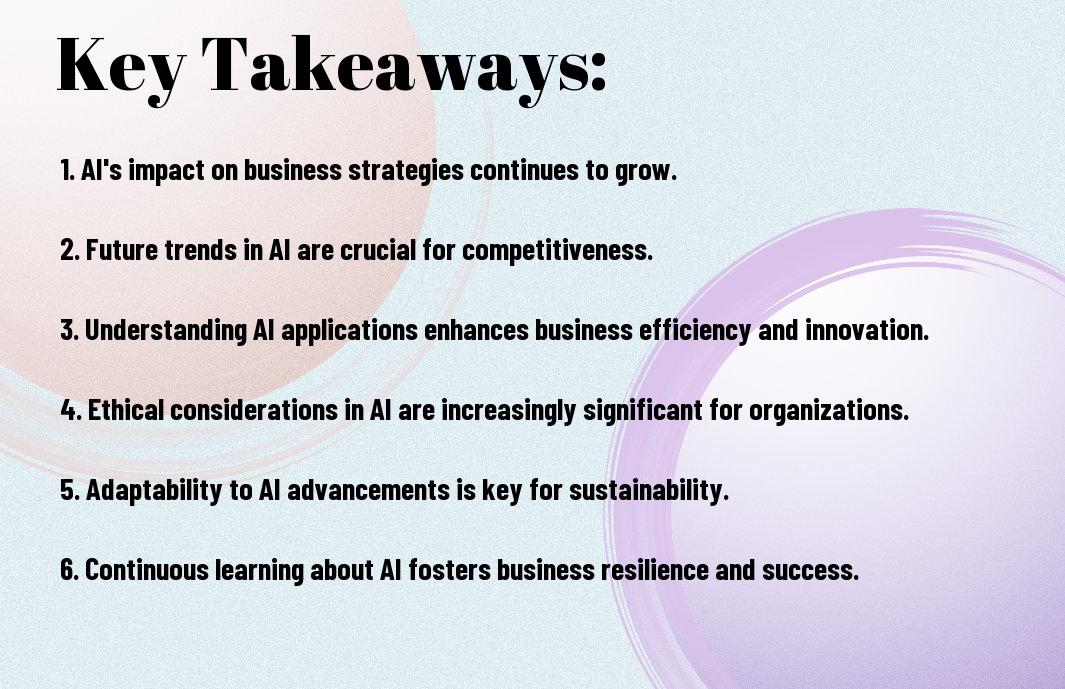
Key Takeaways:

  • These headlines are designed to appeal to individuals interested in the intersection of artificial intelligence and business, making them a valuable resource for those looking to stay informed about the latest developments in this field.
  • The structure of these headlines allows them to maintain their relevance over time, providing long-term value to readers who are interested in the evolving role of AI in business and its potential applications.
  • By focusing on the role of AI in business, these headlines offer insights into the ways in which artificial intelligence is transforming industries and operations, making them a useful tool for professionals and entrepreneurs looking to leverage AI for success.

The Evolution of AI in Modern Business

Your business is likely already using AI in some capacity, and its role will only continue to grow as technology advances, enabling you to streamline processes and make more informed decisions.

From Data Processing to Decision Making

Meanwhile, advancements in AI have transformed the way you approach data, taking it from simple processing to complex decision making, allowing you to tap into new insights and opportunities.

The Shift in Business Intelligence

Around the time you started using AI, you may have noticed a significant shift in business intelligence, with AI-powered tools providing you with more accurate and timely information to drive your business forward.

And as you research deeper into the world of AI, you will find that the shift in business intelligence is not just about adopting new technology, but also about changing your mindset and approach to decision making, allowing you to stay ahead of the competition and drive innovation in your industry.

Headlines as Strategic Business Tools

The use of headlines in business is a deliberate strategy to capture your audience’s attention and convey your message effectively. You can leverage headlines to promote your brand, products, or services, and establish your authority in the industry.

Crafting AI-Focused Business Headlines

Creating compelling headlines that incorporate AI-related topics requires a deep understanding of your target audience and the latest trends in the field. You should focus on crafting headlines that highlight the benefits and applications of AI in business, making them relevant and engaging to your readers.

Psychological Impact on Reader Engagement

Affecting your readers’ emotions and perceptions, effective headlines can significantly influence their decision to engage with your content. You will find that well-crafted headlines can increase your click-through rates, boost your website traffic, and ultimately drive more conversions.

To maximize the psychological impact of your headlines on reader engagement, you should consider the emotional resonance of your words and the level of curiosity they spark. You can use action-oriented verbs, questions, or statistics to make your headlines more compelling and thought-provoking, encouraging your readers to click and learn more about the role of AI in business and its potential applications.

Time-Resistant Content Strategy

Not all content is created equal, and when it comes to the role of AI in business, you want your headlines to stand the test of time. A well-crafted strategy can help your content stay relevant, even as the landscape evolves.

Evergreen Principles in AI Headlines

Across various industries, you’ll find that timeless headlines often focus on the fundamentals of AI’s impact on business, allowing you to create content that remains valuable to your audience over time.

Future-Proofing Business Content

Between the latest trends and emerging technologies, you need to consider how your content will hold up in the long run, and that’s where a thoughtful approach to future-proofing comes in.

But as you probe deeper into future-proofing your business content, you’ll find that it’s not just about anticipating the next big thing, but also about understanding your audience’s ongoing needs and concerns, and creating content that addresses those needs in a way that’s both informative and engaging, allowing you to build trust and establish your authority in the field of AI and business.

AI Integration Points

Keep in mind that AI integration is a multifaceted process that involves various aspects of your business, from operational transformation to customer experience enhancement. As you consider implementing AI, you’ll need to identify the most effective integration points to maximize its benefits.

Operational Transformation

Among the key areas where AI can have a significant impact is in streamlining your operations, making them more efficient and cost-effective. You can leverage AI to automate routine tasks, optimize resource allocation, and improve overall productivity.

Customer Experience Enhancement

Between the various ways AI can enhance customer experience, personalization and predictive analytics stand out as particularly effective. You can use AI to analyze customer data, preferences, and behavior, and tailor your services to meet their unique needs.

To take your customer experience enhancement to the next level, you can use AI-powered chatbots, virtual assistants, and sentiment analysis tools to provide personalized support, resolve issues promptly, and gain valuable insights into customer satisfaction. By doing so, you can build stronger relationships with your customers, increase loyalty, and drive business growth.

Measuring AI Content Impact

To effectively assess the influence of AI on your business, you can explore research like The role of artificial intelligence in business transformation to gain insights.

Analytics and Performance Metrics

Behind every successful AI integration lies a thorough analysis of its performance, which you can achieve by tracking key metrics that reflect your business goals.

Reader Response Patterns

Among the various aspects to consider when evaluating AI content impact, you will find that understanding your audience’s response patterns is vital to adjusting your strategy.

Impact of your AI-driven content on your audience can be further understood by analyzing their engagement patterns, which will help you refine your approach to better suit their needs, allowing you to make informed decisions about your AI content strategy, and ultimately, enhance your business’s overall performance, as you strive to leverage AI in the most effective way possible.

Ethical Considerations

All businesses leveraging AI must consider the ethical implications of their actions, as you navigate the complex landscape of artificial intelligence in your organization, you can learn more about the future of AI at AI and journalism: What’s next? – Reuters Institute.

Transparency in AI Communication

Alongside this, an imperative aspect of ethical AI use is being open with your audience about how you’re using AI, ensuring that you’re not misleading your customers or stakeholders about the role of AI in your business.

Responsible Content Creation

Across various industries, you’ll find that responsible content creation is key to maintaining trust with your audience, as you use AI to generate or curate content, you must consider the potential impact on your readers.

Even as you explore the benefits of AI-generated content, you should prioritize fact-checking and verifying the accuracy of the information you’re presenting to your audience, to maintain the integrity of your brand and build trust with your readers, you must be diligent in your content creation processes, ensuring that AI is used in a way that supports, rather than undermines, your values and mission.

Conclusion

The headlines are designed to capture your attention, as you explore the impact of AI on business. You will find them structured to remain relevant, providing valuable insights into the role of AI in your industry, allowing you to make informed decisions about your business’s future, and stay ahead of the curve as you navigate the evolving landscape of AI in business.

FAQ

Q: What is the primary goal of headlines about AI in business?

A: The primary goal of these headlines is to attract readers who are interested in understanding the role of Artificial Intelligence (AI) in the business world. By crafting headlines that highlight the impact, applications, and future of AI in various industries, the aim is to engage readers and encourage them to explore how AI can transform their businesses and stay ahead in the competitive market.

Q: How are these headlines structured to maintain relevance over time?

A: These headlines are structured to focus on the long-term implications and applications of AI in business, rather than short-term trends or fleeting news. By emphasizing the strategic, operational, and innovative aspects of AI adoption, the headlines aim to provide readers with valuable insights that will be relevant for months and years to come, rather than just for a brief moment.

Q: What kind of readers are these headlines intended to attract?

A: These headlines are designed to attract readers who are interested in the intersection of technology and business, particularly those who are looking to leverage AI to drive growth, improve efficiency, and gain a competitive edge. This may include business leaders, entrepreneurs, innovators, and professionals working in industries where AI is having a significant impact, such as finance, healthcare, and manufacturing.

Q: How do these headlines address the evolving nature of AI in business?

A: These headlines take into account the rapidly evolving nature of AI and its applications in business. By highlighting emerging trends, new technologies, and innovative use cases, the headlines aim to keep readers informed about the latest developments and advancements in the field. This helps readers stay up-to-date with the changing landscape and make informed decisions about how to harness the power of AI in their own organizations.

Q: What benefits can readers expect to gain from engaging with these headlines and related content?

A: Readers can expect to gain a deeper understanding of the role of AI in business and its potential to drive transformation and growth. By exploring these headlines and related content, readers can develop insights into how AI can be applied to solve real-world problems, improve operations, and create new opportunities. This knowledge can help readers make more informed decisions, stay ahead of the competition, and unlock the full potential of AI in their own businesses.

Sure! Here Are 10 Evergreen Blog Headlines Related To The Impact Of AI On Marketing –

As you navigate the evolving landscape of marketing, you’re likely wondering how artificial intelligence (AI) will affect your strategies. You’re looking for ways to stay ahead of the curve and leverage AI to enhance your marketing efforts. Your search ends here, as this post will investigate into the impact of AI on marketing, providing you with valuable insights and 10 evergreen blog headlines to inform your approach and help you make data-driven decisions.

Key Takeaways:

  • The impact of AI on marketing is a significant topic, with many evergreen blog headlines focusing on its effects on business, consumer behavior, and marketing strategies, making it a relevant and timely subject for discussion and exploration.
  • AI-related blog headlines can be categorized into various themes, including the automation of marketing tasks, the use of AI in personalization and customer experience, and the potential job displacement of marketers due to AI advancements.
  • By exploring these evergreen blog headlines, marketers and business leaders can gain valuable insights into the current and future state of AI in marketing, helping them to stay informed, adapt to changes, and make data-driven decisions to drive their marketing efforts forward.

The Evolution of AI in Marketing

While exploring the impact of AI on marketing, you’ll notice significant advancements in recent years, transforming the way you approach your marketing strategies, and enabling you to make data-driven decisions.

Traditional Marketing vs AI-Enhanced Marketing

Beneath the surface of traditional marketing methods, you’ll find that AI-enhanced marketing offers more personalized and efficient approaches, allowing you to better understand your target audience and tailor your campaigns accordingly.

Key AI Technologies Reshaping Marketing

Across various industries, you’ll discover that AI technologies such as machine learning and natural language processing are being leveraged to optimize marketing efforts, enabling you to automate tasks and gain valuable insights into consumer behavior.

Marketing teams are now utilizing these key AI technologies to analyze large datasets, identify patterns, and predict customer preferences, allowing you to create more effective marketing campaigns and stay ahead of the competition, as you continue to navigate the ever-changing landscape of AI in marketing, you’ll find that your ability to adapt and innovate will be important in driving success.

Content Creation Revolution

You are likely aware that AI is transforming the marketing landscape, and content creation is no exception. AI-powered tools are changing the way you create, distribute, and consume content.

AI-Powered Copywriting

Automated systems are being used to generate high-quality copy, allowing you to focus on strategy and creativity, while AI handles the writing tasks.

Personalized Content Generation

With advanced algorithms, you can now create tailored content that resonates with your target audience, increasing engagement and conversion rates.

Understanding how personalized content generation works can help you leverage its potential. You can use AI to analyze your audience’s preferences, behaviors, and interests, and then create content that speaks directly to them, making your marketing efforts more effective and efficient, allowing you to build stronger relationships with your customers.

Customer Experience Transformation

Many marketers are leveraging AI to transform the customer experience, creating more personalized and engaging interactions. You can use AI to analyze customer data, preferences, and behaviors, enabling you to tailor your marketing strategies to meet their needs.

Predictive Analytics

Beneath the surface of AI-powered marketing lies predictive analytics, which allows you to forecast customer behavior and make data-driven decisions. You can use predictive analytics to identify trends, anticipate customer needs, and optimize your marketing campaigns for better results.

Real-Time Personalization

Below the level of traditional marketing, real-time personalization enables you to deliver tailored experiences to your customers. You can use AI to analyze customer interactions and provide personalized recommendations, offers, and content in real-time, enhancing their overall experience.

But as you investigate deeper into real-time personalization, you’ll find that it’s not just about delivering personalized content, but also about creating a seamless and consistent experience across all touchpoints. You can use AI to analyze customer interactions, preferences, and behaviors, and adjust your marketing strategies accordingly, ensuring that your customers receive a cohesive and personalized experience that meets their evolving needs and expectations.

Data-Driven Decision Making

To make informed decisions in your marketing strategy, you need to rely on data-driven insights, and this is where AI comes in, helping you analyze vast amounts of data and make predictions about future trends.

AI Analytics Tools

AFTER implementing AI analytics tools, you will be able to track your marketing performance in real-time, identifying areas that need improvement and optimizing your campaigns for better results.

Marketing Performance Metrics

With the help of AI, you can measure your marketing performance metrics, such as engagement rates, conversion rates, and customer acquisition costs, to refine your strategy and achieve your goals.

In addition, as you investigate deeper into marketing performance metrics, you will discover that AI can help you set benchmarks, track progress, and make data-driven decisions to enhance your overall marketing performance, allowing you to stay ahead of the competition and drive business growth.

Marketing Automation Advancement

Now, as you explore the impact of AI on marketing, you’ll discover significant advancements in automation, transforming your marketing strategies and enhancing overall efficiency.

Chatbots and Virtual Assistants

Chatbot-like technologies are revolutionizing customer interactions, enabling you to provide 24/7 support and personalized experiences, thereby improving your brand’s engagement and loyalty.

Campaign Optimization

Automatically, you can analyze vast amounts of data, identify trends, and adjust your marketing campaigns for better performance, allowing you to make data-driven decisions and maximize your ROI.

Further, as you examine into campaign optimization, you’ll find that AI-powered tools help you predict customer behavior, preferences, and needs, enabling you to create highly targeted and effective marketing campaigns that drive real results for your business.

Future Marketing Roles

Once again, you’ll need to adapt to the changing landscape of marketing as AI continues to evolve, and staying informed is key, you can check out 10 AI Blogs for Staying Informed on Artificial Intelligence Trends to learn more.

Human-AI Collaboration

At this point, you’re likely considering how your role will intersect with AI, and it’s important to understand the potential for human-AI collaboration in marketing, which will enable you to work more efficiently.

Required Skill Adaptations

Against the backdrop of AI-driven change, you’ll need to assess your skills and consider how they align with the future of marketing, and you may need to acquire new skills to remain relevant.

HumanAI collaboration will require you to develop skills that complement AI capabilities, such as creativity, empathy, and strategic thinking, allowing you to focus on high-level tasks that drive business growth, and as you navigate this shift, you’ll need to stay focused on developing skills that are uniquely human, enabling you to work effectively alongside AI systems and drive innovation in your marketing efforts.

Ethical Considerations

Despite the benefits of AI in marketing, you need to consider the ethical implications. As you explore What Is & How to Build an AI Marketing Strategy (10 Case Studies), you’ll find that ethics play a significant role in your decisions.

Privacy Concerns

With the use of AI, you’ll be handling large amounts of customer data, which raises concerns about privacy and security, and you must ensure that your practices are compliant with regulations.

Transparency in AI Marketing

Between the lines of code and algorithms, you need to be transparent about how you’re using AI in your marketing efforts, which will help build trust with your audience.

Marketing with AI requires a delicate balance between personalization and transparency, and as you navigate this landscape, you’ll need to consider how to clearly communicate your AI-driven practices to your customers, ensuring that you’re being open and honest about the data you collect and how it’s used, which will ultimately help you build a stronger relationship with your audience and establish your brand as a trusted authority in your industry.

To wrap up

To wrap up, you now have 10 evergreen blog headlines related to the impact of AI on marketing at your disposal. You can use these headlines to create engaging content that explores the role of AI in shaping your marketing strategies. With these headlines, you will be able to attract your target audience and establish your authority on the subject, ultimately enhancing your marketing efforts and staying ahead of the curve in the industry.

FAQ

Q: What is the significance of AI in marketing, and how is it changing the industry?

A: AI is revolutionizing the marketing landscape by enabling businesses to personalize customer experiences, automate tasks, and gain valuable insights from data analysis. With AI, marketers can now create targeted campaigns, predict consumer behavior, and measure the effectiveness of their strategies more accurately. As a result, AI is becoming an necessary tool for companies to stay competitive and achieve their marketing goals.

Q: How can AI-powered chatbots enhance customer engagement and support in marketing?

A: AI-powered chatbots can significantly enhance customer engagement and support by providing 24/7 assistance, answering frequent queries, and helping customers navigate through websites or products. Chatbots can also analyze customer interactions and provide personalized recommendations, improving the overall customer experience. Moreover, chatbots can help marketers collect valuable feedback and data, which can be used to refine their strategies and improve customer satisfaction.

Q: What role does machine learning play in predicting consumer behavior and preferences in marketing?

A: Machine learning plays a vital role in predicting consumer behavior and preferences by analyzing large datasets and identifying patterns. By using machine learning algorithms, marketers can forecast consumer purchasing decisions, identify trends, and develop targeted campaigns that resonate with their target audience. Additionally, machine learning enables marketers to segment their audience more effectively, creating personalized experiences that drive engagement and conversion.

Q: How can AI-driven content creation tools help marketers produce high-quality, engaging content?

A: AI-driven content creation tools can assist marketers in producing high-quality, engaging content by analyzing audience preferences, trending topics, and successful content formats. These tools can generate ideas, suggest headlines, and even create entire pieces of content, such as blog posts or social media posts. Furthermore, AI-driven tools can help marketers optimize their content for search engines, improving visibility and reach, and enabling them to track the performance of their content more effectively.

Q: What are the potential risks and challenges associated with implementing AI in marketing, and how can they be mitigated?

A: The potential risks and challenges associated with implementing AI in marketing include data privacy concerns, algorithmic bias, and job displacement. To mitigate these risks, marketers must ensure that they are transparent about data collection and usage, regularly audit their AI systems for bias, and invest in employee training and upskilling. Additionally, marketers should establish clear guidelines and regulations for AI development and deployment, and continuously monitor the performance and impact of their AI-powered marketing strategies to address any issues that may arise.

Harnessing The Power Of AI – Transforming Marketing Strategies For The Modern Era

As you navigate the ever-evolving marketing landscape, you’re likely aware of the significant impact artificial intelligence (AI) is having on your strategies. You can stay ahead of the curve by learning how to leverage AI to enhance your marketing efforts. To discover more about harnessing the power of AI for marketing excellence, you can visit Harnessing the Power of AI for Marketing Excellence – LeadG2, where you’ll find valuable insights to transform your approach and drive success in the modern era.

Key Takeaways:

  • Effective integration of AI in marketing strategies enables businesses to analyze vast amounts of data, identify patterns, and make informed decisions to enhance customer engagement and personalize their experiences.
  • AI-driven marketing tools can automate routine tasks, such as data analysis and content generation, allowing marketers to focus on high-level creative strategies and campaign development, leading to increased efficiency and productivity.
  • By leveraging AI-powered technologies, such as machine learning and natural language processing, businesses can gain a competitive edge in the market, improve their brand reputation, and drive revenue growth through targeted and optimized marketing efforts.

AI Revolution in Marketing

Your marketing strategies are about to undergo a significant overhaul with the integration of Artificial Intelligence (AI). AI is transforming the way you approach marketing, enabling you to make data-driven decisions and personalize customer experiences like never before.

Digital Transformation Landscape

Across the marketing landscape, you’re witnessing a seismic shift towards digitalization. You’re seeing a surge in the use of digital channels, and your customers are expecting seamless, personalized experiences across all touchpoints.

Machine Learning Integration

Transforming your marketing efforts with Machine Learning (ML) is no longer a choice, but a necessity. You’re able to analyze vast amounts of data, identify patterns, and make predictions that inform your marketing strategies.

A key aspect of Machine Learning Integration is its ability to help you automate routine tasks, freeing up your time to focus on high-level creative decisions. As you probe deeper into ML, you’ll discover its potential to enhance customer segmentation, predict buyer behavior, and optimize your marketing campaigns for maximum ROI. You’ll be able to leverage ML algorithms to analyze customer interactions, preferences, and pain points, enabling you to create highly targeted and effective marketing strategies that drive real results.

Data-Driven Decision Making

While leveraging AI in marketing, you can make informed decisions by analyzing large datasets. This enables you to optimize your strategies and improve your overall marketing performance. By utilizing data-driven insights, you can gain a competitive edge in the market.

Consumer Behavior Analytics

Anyway, analyzing consumer behavior is necessary to understanding your target audience. You can use AI-powered tools to collect and analyze data on consumer interactions, helping you to identify patterns and trends that inform your marketing strategies.

Predictive Marketing Models

Anyway, predictive marketing models use AI algorithms to forecast customer behavior and preferences. You can use these models to anticipate your customers’ needs and deliver personalized experiences that drive engagement and conversion.

Consequently, as you probe deeper into predictive marketing models, you’ll discover that they can be used to identify high-value customer segments, optimize marketing channels, and measure the effectiveness of your campaigns. By using predictive analytics, you can refine your marketing strategies to maximize ROI and achieve your business goals, allowing you to stay ahead of the competition and drive long-term growth.

Personalization at Scale

Unlike traditional marketing methods, AI-powered personalization allows you to tailor your approach to individual customers, increasing engagement and conversion rates. You can leverage AI to analyze customer data and create targeted campaigns that resonate with your audience.

Dynamic Content Generation

Around the concept of personalization, you’ll find that AI-driven content generation enables you to create customized content at scale, allowing you to address your customers’ specific needs and preferences, making your marketing efforts more effective.

Customer Journey Optimization

Alongside personalization, you’ll discover that optimizing your customer’s journey is key to driving sales and loyalty, as you can use AI to identify pain points and areas of improvement, enabling you to refine your strategy and enhance your customers’ overall experience.

Indeed, as you explore deeper into customer journey optimization, you’ll find that AI helps you analyze customer behavior, identify patterns, and predict future interactions, allowing you to proactively address potential issues and create a seamless, personalized experience that fosters loyalty and drives long-term growth, ultimately transforming your marketing strategy and helping you stay ahead of the competition.

AI-Powered Marketing Tools

Keep up with the latest advancements in AI-powered marketing tools to elevate your marketing strategies. These tools enable you to analyze vast amounts of data, personalize customer experiences, and optimize your campaigns for better results.

Automation Platforms

Automating repetitive tasks allows you to focus on high-level creative decisions, freeing up your time and increasing efficiency. You can utilize automation platforms to streamline your workflow and enhance your overall marketing performance.

Smart Campaign Management

Platform-based solutions provide you with the ability to manage and track your campaigns effectively. You can leverage these platforms to gain valuable insights and make data-driven decisions to improve your marketing efforts.

Achieving success with smart campaign management requires a deep understanding of your target audience and their preferences. As you investigate into the world of AI-powered marketing, you will be able to create highly targeted and personalized campaigns that resonate with your audience, driving engagement and conversion rates to new heights, and ultimately boosting your return on investment.

Real-Time Marketing Intelligence

Despite the abundance of data available, you need to make sense of it to inform your marketing strategies. Real-time marketing intelligence enables you to analyze customer interactions, preferences, and behaviors, allowing you to make data-driven decisions.

Market Trend Analysis

Anyway, analyzing market trends helps you understand your target audience’s needs and preferences. You can use AI-powered tools to identify patterns and trends, enabling you to adjust your marketing strategies accordingly.

Competitive Intelligence

Above all, monitoring your competitors’ activities is necessary to stay ahead in the market. You can use AI to track your competitors’ marketing strategies, identifying gaps and opportunities to improve your own approach.

And as you examine deeper into competitive intelligence, you’ll discover that AI can help you analyze your competitors’ strengths and weaknesses, enabling you to develop targeted marketing campaigns that outperform theirs. You can use this insight to optimize your marketing mix, from pricing and product development to promotion and distribution, ultimately driving your business forward.

Future of Marketing

Many marketers are exploring the potential of AI to transform their strategies, and you can learn more about this trend by reading articles like Harnessing the Power of AI in Digital Marketing to stay ahead of the curve.

Emerging Technologies

Among the latest advancements, you’ll find AI-powered tools that can help you automate and optimize your marketing efforts, making it easier to reach your target audience.

Industry Evolution

Between the rise of AI and other digital technologies, you’re likely to see significant changes in the marketing landscape, and it’s imperative to adapt your strategies to stay competitive.

A key aspect of this evolution is the increasing use of data analytics and machine learning to personalize customer experiences, allowing you to tailor your marketing efforts to individual preferences and behaviors, and as you explore these new technologies, you’ll discover new opportunities to enhance your marketing strategies and drive business growth.

Conclusion

Hence, as you begin on transforming your marketing strategies, you will find that harnessing the power of AI is crucial for success in the modern era. You can leverage AI to analyze data, personalize customer experiences, and optimize your campaigns. By embracing AI, you will be able to make informed decisions and stay ahead of the competition, ultimately driving growth and revenue for your business. You will be able to streamline your marketing efforts and achieve your goals more efficiently.

FAQ

Q: What is the role of AI in transforming marketing strategies for the modern era?

A: AI plays a significant role in transforming marketing strategies by enabling businesses to analyze vast amounts of data, gain insights into customer behavior, and make data-driven decisions. With AI, marketers can automate routine tasks, personalize customer experiences, and optimize marketing campaigns for better ROI. By leveraging AI, businesses can stay ahead of the competition and achieve their marketing goals more efficiently.

Q: How can AI be used to personalize customer experiences in marketing?

A: AI can be used to personalize customer experiences by analyzing customer data, such as purchase history, browsing behavior, and social media activity. This data can be used to create targeted marketing campaigns, offer personalized product recommendations, and provide tailored content to individual customers. Additionally, AI-powered chatbots can be used to provide 24/7 customer support, helping to improve customer satisfaction and loyalty.

Q: What are the benefits of using AI in marketing analytics and reporting?

A: The benefits of using AI in marketing analytics and reporting include improved accuracy, speed, and scalability. AI can quickly analyze large datasets, identify trends and patterns, and provide actionable insights that can inform marketing decisions. AI-powered analytics tools can also automate reporting, freeing up marketers to focus on higher-level strategy and creative work. Furthermore, AI can help to identify areas of improvement and optimize marketing campaigns for better performance.

Q: How can AI be used to optimize marketing campaigns for better ROI?

A: AI can be used to optimize marketing campaigns by analyzing data on customer behavior, campaign performance, and market trends. AI algorithms can identify the most effective channels, messaging, and targeting strategies, and automatically adjust campaigns to maximize ROI. Additionally, AI can help to predict customer churn, identify new business opportunities, and optimize marketing budgets for better returns. By using AI to optimize marketing campaigns, businesses can achieve a higher return on investment and improve their overall marketing effectiveness.

Q: What are the future implications of AI on marketing strategies, and how can businesses prepare?

A: The future implications of AI on marketing strategies are significant, with AI expected to continue to play a major role in shaping the marketing landscape. Businesses can prepare by investing in AI technologies, such as machine learning and natural language processing, and developing strategies that leverage these technologies. Additionally, businesses should focus on building a strong data foundation, developing AI-ready teams, and fostering a culture of innovation and experimentation. By preparing for the future of AI in marketing, businesses can stay ahead of the curve and achieve long-term success in a rapidly changing market.

The Future Of Marketing – How Artificial Intelligence Is Revolutionizing Brand Engagement

As you navigate the ever-changing landscape of marketing, you’re likely aware that traditional methods are no longer enough to capture your audience’s attention. Your brand needs to stay ahead of the curve, and that’s where artificial intelligence comes in. You’re on the cusp of a revolution that will transform the way you engage with your customers, and understanding the role of AI in marketing is vital to your success. You will learn how AI is redefining brand engagement and shaping the future of marketing.

Key Takeaways:

  • Artificial intelligence (AI) is transforming the marketing landscape by enabling brands to personalize customer experiences, predict consumer behavior, and optimize marketing campaigns in real-time, leading to increased engagement and conversion rates.
  • The integration of AI-powered chatbots and virtual assistants is revolutionizing brand engagement by providing 24/7 customer support, helping to build trust and loyalty with customers, and freeing up human resources for more strategic and creative tasks.
  • The use of AI-driven analytics and machine learning algorithms is allowing marketers to gain deeper insights into customer preferences and behaviors, making it possible to create highly targeted and effective marketing strategies that drive business growth and revenue.

    The AI Marketing Revolution

    Your marketing strategy is about to undergo a significant transformation, as artificial intelligence (AI) is changing the way you engage with your audience, making it more personalized and effective.

    Evolution of Traditional Marketing

    Across the marketing landscape, you’ve seen traditional methods become less effective, and now AI is stepping in to fill the gap, enabling you to target your audience with unprecedented precision.

    The Rise of AI-Driven Solutions

    After years of development, AI-driven solutions are now being implemented in marketing, allowing you to automate tasks, analyze data, and create personalized content that resonates with your target audience.

    With the rise of AI-driven solutions, you can expect to see significant improvements in your marketing efforts, as AI algorithms analyze vast amounts of data to provide you with actionable insights, enabling you to make data-driven decisions and optimize your marketing strategy for maximum impact, ultimately leading to increased brand engagement and customer loyalty.

    Data Intelligence and Consumer Behavior

    Even with the vast amount of data available, you need to understand how to leverage it to drive your marketing efforts. As you research into the world of data intelligence, you’ll discover how it can help you better comprehend your target audience and create more effective marketing strategies.

    Predictive Analytics

    On the forefront of data intelligence, you’ll find predictive analytics, which enables you to forecast consumer behavior and make informed decisions about your marketing approach. You can use this technology to identify trends and patterns, allowing you to stay ahead of the competition.

    Real-Time Consumer Insights

    Before making any marketing decisions, you need to have a deep understanding of your consumers’ preferences and behaviors. You can gain valuable insights into their needs and desires, enabling you to create targeted marketing campaigns that resonate with your audience.

    Consumer behavior is constantly evolving, and you need to stay up-to-date with the latest trends and patterns. By leveraging real-time consumer insights, you can adjust your marketing strategy to meet the changing needs of your target audience, ensuring that your brand remains relevant and engaging. You can use this information to create personalized experiences, improving customer satisfaction and loyalty, and ultimately driving business growth.

    Personalization at Scale

    Once again, you can leverage AI to deliver tailored experiences, as discussed in Revolutionizing Brand Engagement: How AI is Shaping the Future, to drive engagement and loyalty. This enables you to connect with your audience on a deeper level, fostering meaningful relationships.

    Dynamic Content Generation

    Beneath the surface of personalization lies dynamic content generation, where you can create customized content that resonates with your target audience, using AI-powered tools to analyze their preferences and behaviors, allowing you to tailor your message and increase engagement.

    Individual Customer Journeys

    Besides the benefits of dynamic content, you can also create individual customer journeys, mapping out unique paths for each customer, using AI to analyze their interactions and tailor your approach, enabling you to provide a more personalized experience that meets their specific needs.

    Individual customer journeys allow you to understand your customers’ behaviors, preferences, and pain points, enabling you to deliver targeted messaging, offers, and experiences that speak directly to them, increasing the likelihood of conversion and loyalty, as you can use AI to analyze vast amounts of data and identify patterns, providing you with valuable insights to inform your marketing strategy.

    Automated Marketing Operations

    Unlike traditional marketing methods, automated marketing operations enable you to streamline your workflow, making it more efficient. You can learn more about this topic by visiting The Future of AI in Marketing: How Artificial Intelligence is Revolutionizing the Industry, to discover the latest trends and advancements.

    Campaign Optimization

    To maximize your marketing efforts, you can utilize AI-powered tools to analyze and optimize your campaigns in real-time, allowing you to make data-driven decisions and improve your overall brand engagement.

    Resource Allocation

    Among the many benefits of automated marketing operations, you will find that allocating resources becomes more straightforward, as AI helps you identify areas where you can cut costs and invest in high-performing channels.

    Due to the ability of AI to process vast amounts of data, you can now make more informed decisions about your resource allocation, ensuring that your marketing budget is being utilized effectively and efficiently, ultimately leading to better returns on investment and enhanced brand engagement.

    Voice and Visual Search Integration

    For marketers, the integration of voice and visual search is becoming increasingly important, as you look to enhance your brand engagement strategies and stay ahead of the competition.

    Voice-Activated Brand Interactions

    By leveraging voice-activated technologies, you can create more personalized and interactive experiences for your customers, allowing them to engage with your brand in a more natural and intuitive way.

    Image Recognition Marketing

    Recognizing the power of visual search, you can use image recognition technologies to create more targeted and effective marketing campaigns, allowing your customers to search for products and information using images rather than text.

    Also, as you explore the potential of image recognition marketing, you’ll discover that it can help you to better understand your customers’ preferences and behaviors, enabling you to create more tailored and engaging brand experiences that drive loyalty and conversion.

    Privacy and Ethical Considerations

    Not all AI marketing strategies are created equal, and you must consider the potential risks to your customers’ privacy when implementing AI-driven campaigns.

    Data Protection Measures

    Any organization using AI for marketing purposes should prioritize data protection, ensuring that your customers’ personal information is secure and handled in accordance with regulations, giving you peace of mind.

    Transparent AI Practices

    With the increasing use of AI in marketing, you can expect a higher level of transparency from companies, allowing you to understand how your data is being used and making informed decisions about your engagement with their brand.

    Hence, as you probe deeper into transparent AI practices, you will find that companies are now being held to a higher standard, where they must clearly disclose their use of AI and machine learning algorithms, enabling you to make choices about the type of interactions you have with their brand, and ultimately, building trust in your relationship with them.

    Conclusion

    Ultimately, as you navigate the evolving landscape of brand engagement, you will find that artificial intelligence is transforming your approach to marketing. You can learn more about the latest developments by reading How AI Is Revolutionizing Marketing In 2024: Top 5 Trends, which highlights the key shifts in your marketing strategy. Your ability to adapt will be important in staying ahead of the competition.

    FAQ

    Q: What role is Artificial Intelligence (AI) playing in the future of marketing, and how is it changing brand engagement strategies?

    A: Artificial Intelligence is revolutionizing the future of marketing by enabling brands to personalize customer experiences, predict consumer behavior, and automate routine tasks. With AI, marketers can analyze vast amounts of data to gain insights into customer preferences, creating targeted and effective marketing campaigns that drive engagement and conversions. AI-powered chatbots and virtual assistants are also being used to provide 24/7 customer support, improving customer satisfaction and loyalty.

    Q: How is AI-powered data analysis changing the way marketers understand and interact with their target audiences?

    A: AI-powered data analysis is allowing marketers to gain a deeper understanding of their target audiences by analyzing large datasets, including social media, customer feedback, and purchase history. This analysis helps marketers identify patterns and trends, enabling them to create highly targeted and personalized marketing campaigns that resonate with their audience. Additionally, AI-driven analytics tools can predict customer behavior, such as likelihood to churn or purchase, enabling marketers to proactively engage with customers and improve overall customer experience.

    Q: What are some of the most significant benefits of using AI in marketing, and how can brands measure the effectiveness of their AI-powered marketing strategies?

    A: The benefits of using AI in marketing include increased efficiency, enhanced customer experience, and improved ROI. AI can automate routine tasks, such as data analysis and lead qualification, freeing up marketers to focus on high-level strategy and creative work. Brands can measure the effectiveness of their AI-powered marketing strategies by tracking key performance indicators (KPIs) such as engagement rates, conversion rates, and customer satisfaction. AI-driven analytics tools can also provide real-time insights into campaign performance, enabling marketers to make data-driven decisions and optimize their strategies for better results.

    Q: How are AI-powered chatbots and virtual assistants changing the way brands interact with customers, and what are the implications for customer service and support?

    A: AI-powered chatbots and virtual assistants are revolutionizing customer service and support by providing 24/7 assistance, answering frequent questions, and helping customers with simple queries. These AI-powered tools can also route complex issues to human customer support agents, ensuring that customers receive timely and effective support. The implications of AI-powered chatbots and virtual assistants are significant, as they enable brands to provide personalized and efficient customer support, improving customer satisfaction and loyalty. Additionally, AI-powered chatbots can help brands to reduce customer support costs and improve response times, leading to increased efficiency and productivity.

    Q: What are the potential risks and challenges associated with using AI in marketing, and how can brands mitigate these risks to ensure successful AI adoption?

    A: The potential risks and challenges associated with using AI in marketing include data privacy concerns, algorithmic bias, and job displacement. To mitigate these risks, brands must ensure that they are transparent about their data collection and usage practices, and that they are using AI in a way that is fair and unbiased. Brands must also invest in employee training and upskilling to ensure that their teams have the skills needed to work effectively with AI. Additionally, brands must establish clear guidelines and protocols for AI adoption, ensuring that AI is used in a way that aligns with their values and goals, and that prioritizes customer well-being and safety.

Skip to content