
As you navigate the ever-changing landscape of marketing, you’re likely aware that traditional methods are no longer enough to capture your audience’s attention. Your brand needs to stay ahead of the curve, and that’s where artificial intelligence comes in. You’re on the cusp of a revolution that will transform the way you engage with your customers, and understanding the role of AI in marketing is vital to your success. You will learn how AI is redefining brand engagement and shaping the future of marketing.
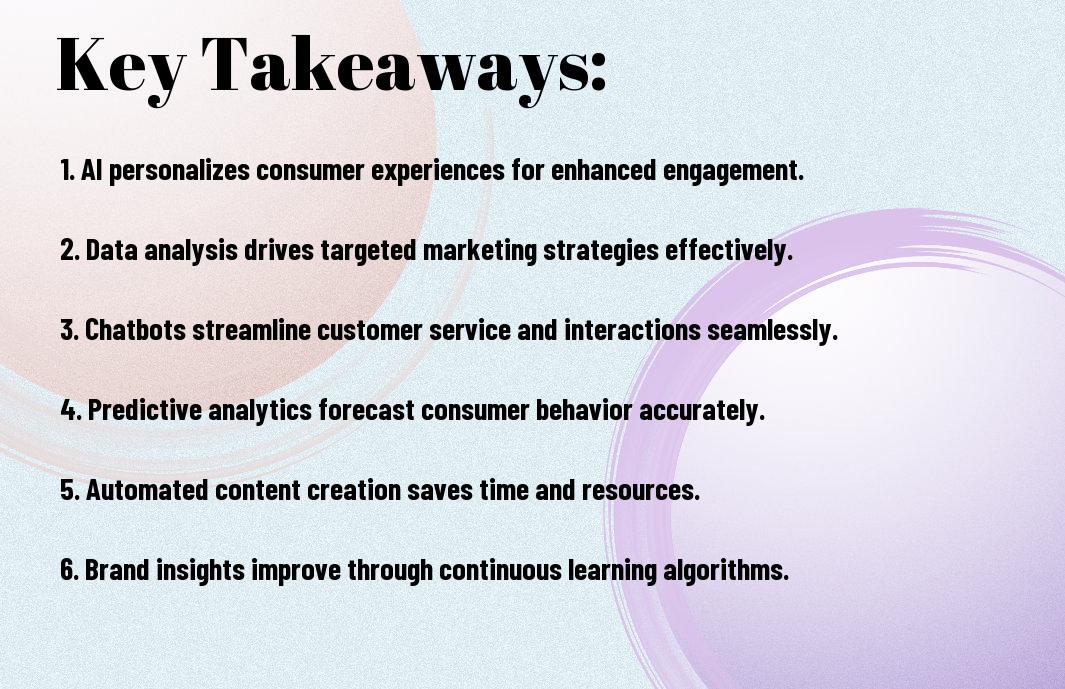
Key Takeaways:
- Artificial intelligence (AI) is transforming the marketing landscape by enabling brands to personalize customer experiences, predict consumer behavior, and optimize marketing campaigns in real-time, leading to increased engagement and conversion rates.
- The integration of AI-powered chatbots and virtual assistants is revolutionizing brand engagement by providing 24/7 customer support, helping to build trust and loyalty with customers, and freeing up human resources for more strategic and creative tasks.
- The use of AI-driven analytics and machine learning algorithms is allowing marketers to gain deeper insights into customer preferences and behaviors, making it possible to create highly targeted and effective marketing strategies that drive business growth and revenue.
The AI Marketing Revolution
Your marketing strategy is about to undergo a significant transformation, as artificial intelligence (AI) is changing the way you engage with your audience, making it more personalized and effective.
Evolution of Traditional Marketing
Across the marketing landscape, you’ve seen traditional methods become less effective, and now AI is stepping in to fill the gap, enabling you to target your audience with unprecedented precision.
The Rise of AI-Driven Solutions
After years of development, AI-driven solutions are now being implemented in marketing, allowing you to automate tasks, analyze data, and create personalized content that resonates with your target audience.
With the rise of AI-driven solutions, you can expect to see significant improvements in your marketing efforts, as AI algorithms analyze vast amounts of data to provide you with actionable insights, enabling you to make data-driven decisions and optimize your marketing strategy for maximum impact, ultimately leading to increased brand engagement and customer loyalty.
Data Intelligence and Consumer Behavior
Even with the vast amount of data available, you need to understand how to leverage it to drive your marketing efforts. As you research into the world of data intelligence, you’ll discover how it can help you better comprehend your target audience and create more effective marketing strategies.
Predictive Analytics
On the forefront of data intelligence, you’ll find predictive analytics, which enables you to forecast consumer behavior and make informed decisions about your marketing approach. You can use this technology to identify trends and patterns, allowing you to stay ahead of the competition.
Real-Time Consumer Insights
Before making any marketing decisions, you need to have a deep understanding of your consumers’ preferences and behaviors. You can gain valuable insights into their needs and desires, enabling you to create targeted marketing campaigns that resonate with your audience.
Consumer behavior is constantly evolving, and you need to stay up-to-date with the latest trends and patterns. By leveraging real-time consumer insights, you can adjust your marketing strategy to meet the changing needs of your target audience, ensuring that your brand remains relevant and engaging. You can use this information to create personalized experiences, improving customer satisfaction and loyalty, and ultimately driving business growth.
Personalization at Scale
Once again, you can leverage AI to deliver tailored experiences, as discussed in Revolutionizing Brand Engagement: How AI is Shaping the Future, to drive engagement and loyalty. This enables you to connect with your audience on a deeper level, fostering meaningful relationships.
Dynamic Content Generation
Beneath the surface of personalization lies dynamic content generation, where you can create customized content that resonates with your target audience, using AI-powered tools to analyze their preferences and behaviors, allowing you to tailor your message and increase engagement.
Individual Customer Journeys
Besides the benefits of dynamic content, you can also create individual customer journeys, mapping out unique paths for each customer, using AI to analyze their interactions and tailor your approach, enabling you to provide a more personalized experience that meets their specific needs.
Individual customer journeys allow you to understand your customers’ behaviors, preferences, and pain points, enabling you to deliver targeted messaging, offers, and experiences that speak directly to them, increasing the likelihood of conversion and loyalty, as you can use AI to analyze vast amounts of data and identify patterns, providing you with valuable insights to inform your marketing strategy.

Automated Marketing Operations
Unlike traditional marketing methods, automated marketing operations enable you to streamline your workflow, making it more efficient. You can learn more about this topic by visiting The Future of AI in Marketing: How Artificial Intelligence is Revolutionizing the Industry, to discover the latest trends and advancements.
Campaign Optimization
To maximize your marketing efforts, you can utilize AI-powered tools to analyze and optimize your campaigns in real-time, allowing you to make data-driven decisions and improve your overall brand engagement.
Resource Allocation
Among the many benefits of automated marketing operations, you will find that allocating resources becomes more straightforward, as AI helps you identify areas where you can cut costs and invest in high-performing channels.
Due to the ability of AI to process vast amounts of data, you can now make more informed decisions about your resource allocation, ensuring that your marketing budget is being utilized effectively and efficiently, ultimately leading to better returns on investment and enhanced brand engagement.
Voice and Visual Search Integration
For marketers, the integration of voice and visual search is becoming increasingly important, as you look to enhance your brand engagement strategies and stay ahead of the competition.
Voice-Activated Brand Interactions
By leveraging voice-activated technologies, you can create more personalized and interactive experiences for your customers, allowing them to engage with your brand in a more natural and intuitive way.
Image Recognition Marketing
Recognizing the power of visual search, you can use image recognition technologies to create more targeted and effective marketing campaigns, allowing your customers to search for products and information using images rather than text.
Also, as you explore the potential of image recognition marketing, you’ll discover that it can help you to better understand your customers’ preferences and behaviors, enabling you to create more tailored and engaging brand experiences that drive loyalty and conversion.
Privacy and Ethical Considerations
Not all AI marketing strategies are created equal, and you must consider the potential risks to your customers’ privacy when implementing AI-driven campaigns.
Data Protection Measures
Any organization using AI for marketing purposes should prioritize data protection, ensuring that your customers’ personal information is secure and handled in accordance with regulations, giving you peace of mind.
Transparent AI Practices
With the increasing use of AI in marketing, you can expect a higher level of transparency from companies, allowing you to understand how your data is being used and making informed decisions about your engagement with their brand.
Hence, as you probe deeper into transparent AI practices, you will find that companies are now being held to a higher standard, where they must clearly disclose their use of AI and machine learning algorithms, enabling you to make choices about the type of interactions you have with their brand, and ultimately, building trust in your relationship with them.
Conclusion
Ultimately, as you navigate the evolving landscape of brand engagement, you will find that artificial intelligence is transforming your approach to marketing. You can learn more about the latest developments by reading How AI Is Revolutionizing Marketing In 2024: Top 5 Trends, which highlights the key shifts in your marketing strategy. Your ability to adapt will be important in staying ahead of the competition.
FAQ
Q: What role is Artificial Intelligence (AI) playing in the future of marketing, and how is it changing brand engagement strategies?
A: Artificial Intelligence is revolutionizing the future of marketing by enabling brands to personalize customer experiences, predict consumer behavior, and automate routine tasks. With AI, marketers can analyze vast amounts of data to gain insights into customer preferences, creating targeted and effective marketing campaigns that drive engagement and conversions. AI-powered chatbots and virtual assistants are also being used to provide 24/7 customer support, improving customer satisfaction and loyalty.
Q: How is AI-powered data analysis changing the way marketers understand and interact with their target audiences?
A: AI-powered data analysis is allowing marketers to gain a deeper understanding of their target audiences by analyzing large datasets, including social media, customer feedback, and purchase history. This analysis helps marketers identify patterns and trends, enabling them to create highly targeted and personalized marketing campaigns that resonate with their audience. Additionally, AI-driven analytics tools can predict customer behavior, such as likelihood to churn or purchase, enabling marketers to proactively engage with customers and improve overall customer experience.
Q: What are some of the most significant benefits of using AI in marketing, and how can brands measure the effectiveness of their AI-powered marketing strategies?
A: The benefits of using AI in marketing include increased efficiency, enhanced customer experience, and improved ROI. AI can automate routine tasks, such as data analysis and lead qualification, freeing up marketers to focus on high-level strategy and creative work. Brands can measure the effectiveness of their AI-powered marketing strategies by tracking key performance indicators (KPIs) such as engagement rates, conversion rates, and customer satisfaction. AI-driven analytics tools can also provide real-time insights into campaign performance, enabling marketers to make data-driven decisions and optimize their strategies for better results.
Q: How are AI-powered chatbots and virtual assistants changing the way brands interact with customers, and what are the implications for customer service and support?
A: AI-powered chatbots and virtual assistants are revolutionizing customer service and support by providing 24/7 assistance, answering frequent questions, and helping customers with simple queries. These AI-powered tools can also route complex issues to human customer support agents, ensuring that customers receive timely and effective support. The implications of AI-powered chatbots and virtual assistants are significant, as they enable brands to provide personalized and efficient customer support, improving customer satisfaction and loyalty. Additionally, AI-powered chatbots can help brands to reduce customer support costs and improve response times, leading to increased efficiency and productivity.
Q: What are the potential risks and challenges associated with using AI in marketing, and how can brands mitigate these risks to ensure successful AI adoption?
A: The potential risks and challenges associated with using AI in marketing include data privacy concerns, algorithmic bias, and job displacement. To mitigate these risks, brands must ensure that they are transparent about their data collection and usage practices, and that they are using AI in a way that is fair and unbiased. Brands must also invest in employee training and upskilling to ensure that their teams have the skills needed to work effectively with AI. Additionally, brands must establish clear guidelines and protocols for AI adoption, ensuring that AI is used in a way that aligns with their values and goals, and that prioritizes customer well-being and safety.


