
As you navigate the evolving business landscape, you’re likely noticing the significant impact of AI agents on management. Your organization can benefit from understanding how AI is transforming industries. To learn more about the next wave of enterprise automation, you can explore resources like Beyond Bots: How AI Agents Are Driving the Next Wave of Enterprise Automation, which sheds light on the role of AI agents in revolutionizing business operations.
Key Takeaways:
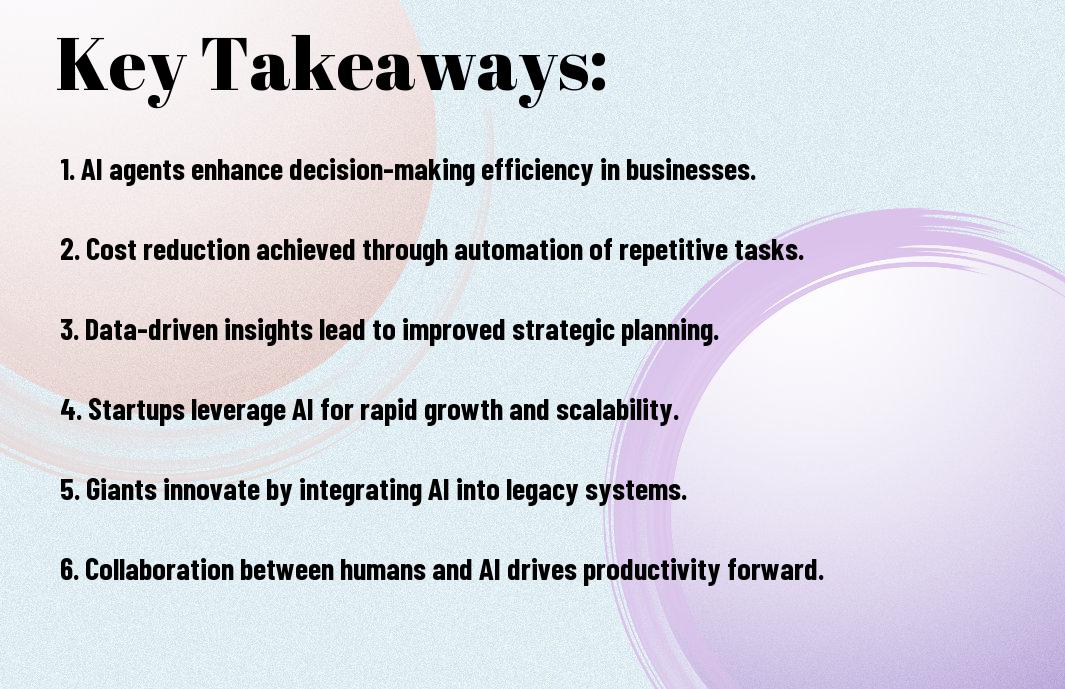
- AI agents are transforming business management by automating routine tasks, enhancing decision-making, and improving operational efficiency, allowing companies to focus on strategic growth and innovation.
- The integration of AI agents enables startups to scale quickly and compete with established giants, while also allowing large corporations to become more agile and responsive to changing market conditions.
- The effective adoption of AI agents requires a fundamental shift in organizational culture, with a focus on developing new skills, fostering collaboration between humans and machines, and establishing clear governance and ethics frameworks to ensure responsible AI deployment.
The Evolution of AI in Management
For years, you’ve seen AI agents transform the business landscape, and as you explore their potential, you may come across articles like AI Agents: Not Ready for Business | The Reality Check, but the truth is, AI is here to stay. You’re likely wondering how AI will impact your management style and what the future holds.
Traditional Management vs AI-Enhanced Leadership
Managing your business with traditional methods may not be enough; you need to adapt to the changing landscape, and AI-enhanced leadership can help you make data-driven decisions, increasing your chances of success.
Key Technological Breakthroughs
Behind the scenes, advancements in machine learning and natural language processing have enabled AI agents to analyze vast amounts of data, providing you with valuable insights to inform your business strategy.
Considering the rapid pace of technological advancements, you can expect even more sophisticated AI-powered tools to emerge, further revolutionizing the way you manage your business, from automating routine tasks to predicting market trends, and you’ll need to stay ahead of the curve to remain competitive.
AI Agents in Startup Environments
The integration of AI agents in startup environments is transforming the way you manage your business. As you explore the potential of AI, you can learn more about How AI Agents are changing Customer Journey: Marketing in the Digital Age and how it can impact your operations.
Cost-Effective Decision Making
Among the key benefits of AI agents is their ability to provide you with data-driven insights, enabling you to make informed decisions that drive your business forward, and ultimately, reduce costs.
Scaling Operations with Limited Resources
Limited resources are often a challenge for startups, but AI agents can help you scale your operations efficiently, streamlining processes and maximizing productivity.
Consequently, as you leverage AI agents to scale your operations, you’ll be able to allocate your resources more effectively, focusing on high-priority tasks and driving growth, which will ultimately give you a competitive edge in the market, allowing you to achieve your business goals with greater ease and precision, and helping your startup thrive in a rapidly changing landscape.
Enterprise-Level AI Implementation
Not all businesses are equipped to handle the complexities of AI integration, but you can learn from those that have successfully implemented AI agents into their operations, streamlining management and improving efficiency.
Corporate Integration Strategies
Following the initial adoption, you will need to develop a plan for integrating AI into your existing infrastructure, which can be a daunting task, but you can start by assessing your current systems and identifying areas where AI can have the most impact.
Risk Management and Compliance
Above all, you must consider the potential risks associated with AI implementation, including data security and regulatory compliance, to ensure that your business is protected and adhering to relevant laws and guidelines.
A key aspect of risk management and compliance is understanding the potential vulnerabilities of your AI system and taking steps to mitigate them, such as implementing robust security protocols and conducting regular audits to ensure that your AI agents are operating within established parameters, allowing you to minimize risks and maximize the benefits of AI in your business.

Human-AI Collaboration
After implementing AI agents in your business, you’ll notice a significant shift in operations, as these agents can automate tasks, analyze data, and provide insights, allowing you to focus on strategic decision-making, and with this collaboration, your management style will evolve.
Redefining Management Roles
Cooperation between humans and AI will lead to a change in your management approach, as you will need to oversee AI agents, ensuring they are aligned with your business goals, and you will have to develop new skills to effectively manage these agents and get the most out of this collaboration.
Skills Adaptation and Training
Management of AI agents requires you to acquire new skills, such as understanding data analysis and interpretation, as well as developing strategic thinking to make informed decisions based on the insights provided by these agents, and you will need to invest time in training to get the most out of this technology.
HumanAI collaboration is key to successful implementation, and as you investigate deeper into skills adaptation and training, you will find that your ability to work with AI agents will significantly improve, allowing you to make better decisions, and you will need to stay up-to-date with the latest developments in AI to ensure your business remains competitive, and by doing so, you will be able to unlock the full potential of AI agents in your business management.
Performance Metrics and Analytics
To effectively manage your business, you need to track key performance indicators (KPIs) and analyze data to make informed decisions. This involves leveraging AI agents to monitor and evaluate your company’s performance, providing valuable insights to drive growth.
Data-Driven Decision Making
With access to real-time data, you can make informed decisions that impact your business’s bottom line. Your AI agents will provide you with actionable insights, enabling you to adjust your strategies and optimize operations for better outcomes.
Predictive Management Models
One of the significant advantages of AI agents is their ability to forecast future trends and patterns. Your predictive models will help you anticipate potential challenges and opportunities, allowing you to proactively adjust your business strategies.
Analytics plays a significant role in developing predictive management models, as you will be able to analyze historical data, identify patterns, and forecast future trends. By leveraging your AI agents’ analytical capabilities, you can create robust predictive models that inform your decision-making, enabling you to stay ahead of the competition and drive your business forward. You will be able to identify areas of improvement, optimize resources, and make data-driven decisions that propel your business towards success.
Future Implications
Your business is on the cusp of a revolution, as AI agents transform the landscape of management, bringing unprecedented efficiency and innovation to your operations.
Emerging Management Paradigms
Prior to this shift, traditional management models dominated, but now you’re witnessing a seismic change, with AI-driven approaches taking center stage, offering you new ways to streamline your business.
Industry-Specific Transformations
Towards a more automated future, you’re seeing AI agents disrupt various sectors, from healthcare to finance, bringing about significant changes in how you manage your organization and make informed decisions.
In addition, as you research deeper into the potential of AI agents, you’ll discover that industry-specific transformations will require you to adapt and evolve your management strategies, leveraging the unique capabilities of AI to drive growth, improve customer experiences, and stay ahead of the competition, ultimately revolutionizing the way you do business.
Summing up
Ultimately, as you navigate the evolving business landscape, you will find that AI agents are revolutionizing management practices. You can leverage these agents to streamline operations, enhance decision-making, and drive growth. By embracing AI, you will be able to stay ahead of the competition and achieve your business goals more efficiently. Your ability to adapt to this technology will be key to unlocking your company’s full potential and succeeding in an increasingly complex market.
FAQ
Q: What role do AI agents play in the transformation of startups into giant businesses?
A: AI agents are revolutionizing the landscape of business management by automating tasks, providing data-driven insights, and enhancing decision-making processes. They help startups streamline their operations, improve efficiency, and scale up their businesses, ultimately transforming them into giant corporations. By leveraging AI agents, companies can focus on strategic growth, innovation, and customer satisfaction, driving their journey from startup to giant.
Q: How do AI agents improve business management in terms of data analysis and interpretation?
A: AI agents are equipped with advanced algorithms and machine learning capabilities, enabling them to analyze vast amounts of data, identify patterns, and provide actionable insights. They help businesses make informed decisions by interpreting complex data, predicting market trends, and detecting potential risks. By leveraging AI-driven data analysis, companies can optimize their operations, reduce costs, and drive growth, ultimately gaining a competitive edge in the market.
Q: Can AI agents enhance customer experience and engagement in business management?
A: Yes, AI agents can significantly enhance customer experience and engagement by providing personalized support, responding to queries, and offering tailored recommendations. They can analyze customer behavior, preferences, and feedback, enabling businesses to develop targeted marketing strategies and improve customer satisfaction. AI-powered chatbots and virtual assistants can also help companies provide 24/7 customer support, resolving issues promptly and efficiently, and fostering loyalty and retention.
Q: How do AI agents impact the operational efficiency and productivity of businesses?
A: AI agents can substantially improve operational efficiency and productivity by automating repetitive and mundane tasks, freeing up human resources for more strategic and creative work. They can optimize workflows, manage inventory, and predict maintenance needs, reducing downtime and increasing overall productivity. By leveraging AI agents, businesses can streamline their operations, reduce costs, and enhance their competitiveness, ultimately driving growth and profitability.
Q: What are the potential challenges and limitations of implementing AI agents in business management?
A: While AI agents offer numerous benefits, their implementation can also pose challenges, such as data quality issues, algorithmic bias, and job displacement. Businesses must ensure that they have high-quality data, robust infrastructure, and skilled personnel to effectively integrate AI agents into their operations. Additionally, companies must address concerns around transparency, accountability, and ethics, ensuring that AI agents are aligned with their values and goals. By understanding these challenges and limitations, businesses can mitigate risks and maximize the benefits of AI agents in their management practices.