SocialMedia

How To Create A Winning Social Media Strategy For Your Products And Services

You’re likely aware of the significance of social media in promoting your products and services. As you navigate the digital landscape, you need a well-planned strategy to stand out from the competition. Your social media presence can make or break your brand’s reputation, and a winning strategy will help you reach your target audience, increase engagement, and drive sales. You will learn how to develop a tailored approach that showcases your brand and resonates with your customers.

Key Takeaways:

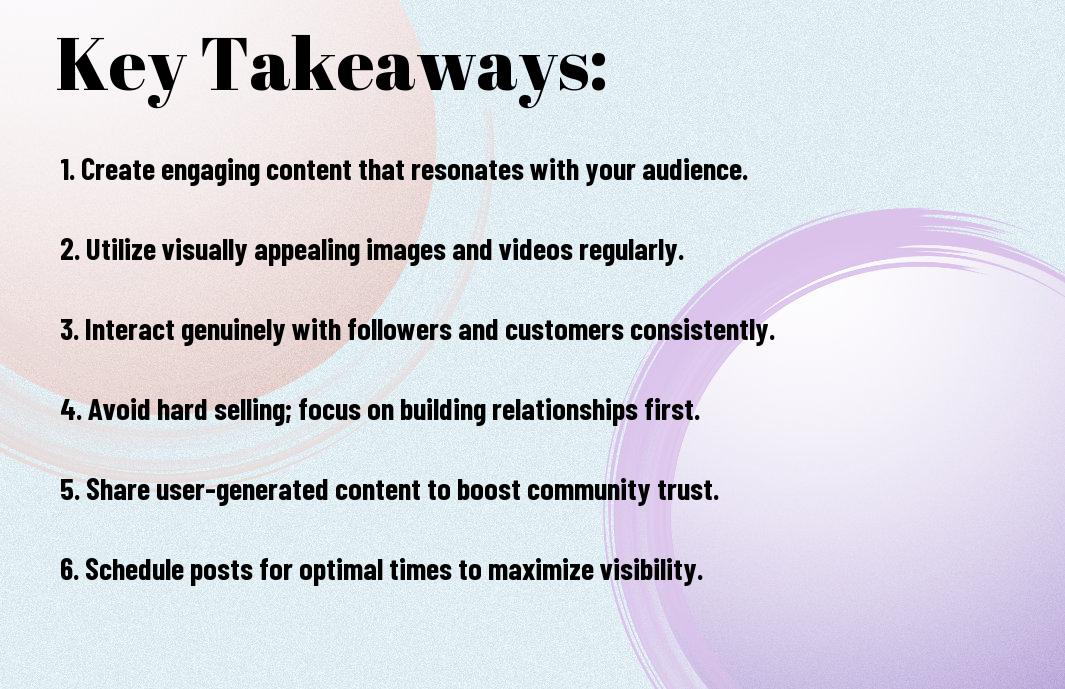
  • Define your target audience and understand their needs to create content that resonates with them and effectively promotes your products and services on social media platforms.
  • Develop a content calendar that outlines the type of content to be posted, the frequency of posts, and the social media channels to be used, ensuring consistency and efficiency in your social media strategy.
  • Monitor and measure the performance of your social media strategy using analytics tools, allowing you to track engagement, identify areas for improvement, and make data-driven decisions to optimize your strategy and increase the visibility of your products and services.

Defining Your Social Media Goals

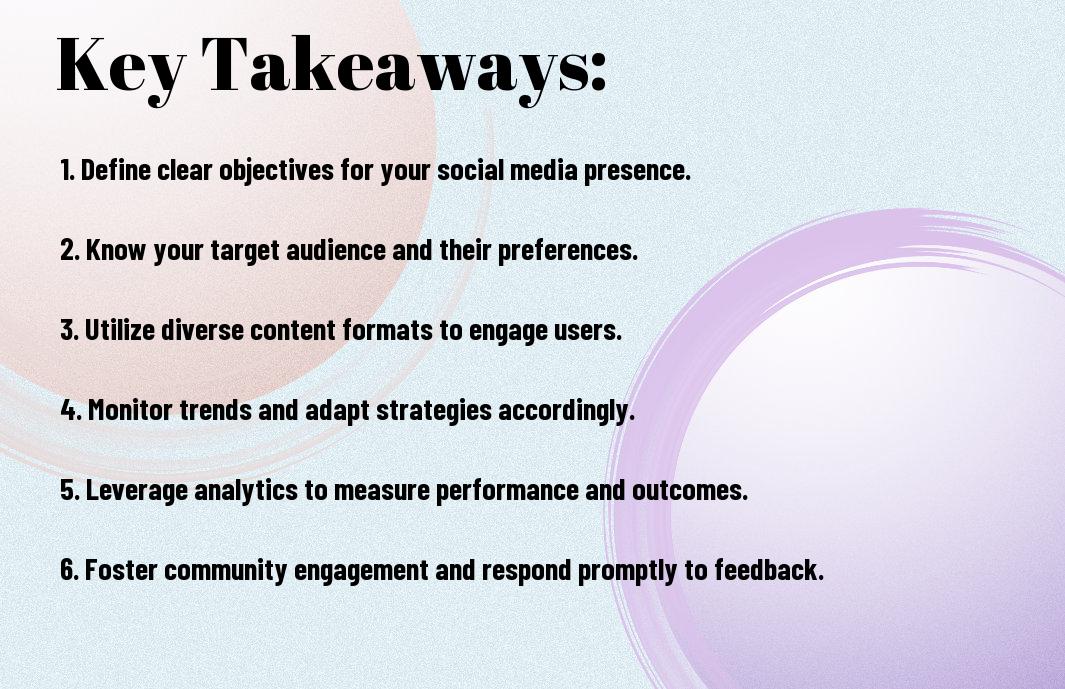
A well-defined social media strategy starts with clear goals. You need to determine what you want to achieve through your social media presence, whether it’s increasing brand awareness, driving website traffic, or generating sales. Your goals will serve as a guide for your social media efforts, helping you focus on what’s important and measure your success.

Setting Measurable Objectives

Methodically, you will need to set specific, achievable objectives that align with your overall social media goals. You should establish targets that are quantifiable, allowing you to track your progress and adjust your strategy as needed. This will help you stay on track and ensure your social media efforts are yielding the desired results.

Aligning Goals with Business Values

The key to a successful social media strategy is ensuring your goals align with your business values and mission. You should consider what matters most to your organization and how your social media presence can support those values. This will help you create a cohesive and authentic online presence that resonates with your target audience.

Aligning your social media goals with your business values is necessary to creating a strategy that truly reflects your brand. You will want to consider how your social media presence can help you achieve your business objectives, while also staying true to your organization’s mission and values. By doing so, you will be able to create a social media strategy that is not only effective but also authentic and meaningful to your target audience.

Knowing Your Target Audience

It is vital to understand who your target audience is, as this will help you create a social media strategy that resonates with them. You need to identify their interests, preferences, and behaviors to create content that appeals to them.

Creating Audience Personas

The key to creating effective audience personas is to gather as much information as possible about your target audience. You can do this by conducting surveys, analyzing customer data, and researching industry trends to create a detailed profile of your ideal customer.

Platform Selection Based on Demographics

Between different social media platforms, you will find varying demographics, and selecting the right one for your business depends on your target audience’s age, location, and interests. You should choose the platforms where your audience is most active.

Based on your target audience’s demographics, you can select the most suitable social media platforms for your business. For example, if your target audience is younger, you may want to focus on TikTok or Snapchat, while an older audience may be more active on Facebook or LinkedIn. You can analyze your audience’s demographics and adjust your social media strategy accordingly to maximize your reach and engagement.

Content Strategy Development

For a successful social media strategy, you need to develop a content strategy that aligns with your business goals. This involves creating content that resonates with your target audience and sets your brand apart from the competition.

Content Pillars and Themes

Strategically, you will need to identify the core topics and themes that will guide your content creation. This will help you create a consistent tone and message across all your social media platforms, making it easier for your audience to understand your brand’s value proposition.

Content Calendar Creation

Around the time you start planning your content, you should consider creating a content calendar to organize and schedule your posts in advance. This will help you ensure consistency and efficiency in your content publishing process.

Calendar management is key to maintaining a consistent flow of content on your social media channels. You can use a physical calendar or a digital tool to plan and schedule your posts, taking into account peak engagement times, special events, and product launches to maximize your content’s impact and reach a wider audience.

Platform-Specific Tactics

Once again, you’ll need to consider the unique characteristics of each social media platform when developing your strategy. This involves understanding the strengths and weaknesses of each platform and tailoring your approach accordingly.

Choosing Primary Platforms

Between the various social media options, you’ll need to select the ones that best align with your target audience and business goals. You’ll want to focus on the platforms where your audience is most active and engaged.

Adapting Content for Each Channel

Beside the platform’s unique features, you’ll also need to consider the type of content that performs well on each channel. You’ll want to create content that resonates with your audience and is optimized for each platform’s specific format.

Due to the diversity of social media platforms, adapting your content for each channel is vital. You’ll need to consider factors such as image size, video length, and tone of voice to ensure your content is effective and engaging on each platform. By doing so, you’ll be able to maximize your reach and impact, and ultimately drive more sales and conversions for your products and services.

Engagement and Community Building

All successful social media strategies involve building a community around your products and services, and this is achieved through engagement with your audience. You need to interact with your followers, respond to their comments, and create content that sparks conversations. By doing so, you will be able to build trust and loyalty with your customers, which is imperative for the growth of your business.

Response Strategy

Above all, your response to customer inquiries and comments should be timely and personalized. You should have a plan in place for responding to both positive and negative feedback, and ensure that your tone is consistent across all social media platforms. This will help you to build a strong reputation and show your customers that you value their feedback.

Community Management Guidelines

Any community management strategy should include guidelines for posting content, responding to comments, and engaging with your audience. You should establish a set of rules for your social media accounts, including what type of content is acceptable and how you will handle spam or abusive comments. This will help you to maintain a positive and respectful community.

Indeed, developing community management guidelines is an ongoing process that requires continuous monitoring and evaluation. You should regularly assess your social media analytics to see what is working and what areas need improvement, and make adjustments to your strategy accordingly. By doing so, you will be able to create a thriving community that supports your business goals and helps you to achieve success in the competitive market. You will be able to build strong relationships with your customers, increase brand awareness, and drive sales, which is imperative for the growth and success of your business.

Analytics and Performance Tracking

After setting up your social media strategy, you need to monitor its performance to see what works and what doesn’t. You can learn more about creating a social media strategy by checking out 9 Steps to Create a Social Media Strategy (with Template) to improve your approach.

Key Metrics to Monitor

By tracking your social media metrics, you can identify areas for improvement and optimize your strategy to achieve better results, helping you understand your audience and their engagement with your content.

Reporting and Adjustments

Around the same time, you’ll need to analyze your performance data to make informed decisions about your social media strategy, which will help you refine your approach and achieve your goals.

At this stage, you’ll be able to see what’s working and what’s not, and make adjustments to your strategy accordingly, allowing you to refine your approach and achieve your goals, and as you continue to monitor and adjust your strategy, you’ll be able to optimize your social media presence and maximize your return on investment.

Final Words

The key to a successful social media strategy is understanding your audience and creating content that resonates with them. You can develop a winning strategy by setting clear goals, analyzing your competition, and tracking your performance. For more information, you can visit Social media marketing: Strategy template and tips for 2025 to learn how to optimize your approach and boost your brand’s online presence, helping you achieve your business objectives and grow your customer base effectively.

FAQ

Q: What is the first step in creating a winning social media strategy for my products and services?

A: The first step in creating a winning social media strategy is to define your target audience and understand their needs, preferences, and behaviors. This involves conducting market research, analyzing your competitors, and identifying your unique selling proposition (USP). By understanding your audience, you can create content that resonates with them and addresses their pain points, ultimately driving engagement and conversions. Additionally, you should also determine your social media goals, such as increasing brand awareness, generating leads, or driving sales, to help guide your strategy.

Q: How do I choose the right social media platforms for my products and services?

A: Choosing the right social media platforms for your products and services depends on your target audience and their preferred platforms. For example, if your target audience is primarily visual, Instagram and Pinterest may be good choices. If your target audience is more professional, LinkedIn may be a better fit. You should also consider the type of content you want to create and share, as well as the resources you have available to manage and maintain your social media presence. It’s also important to note that you don’t need to be on every social media platform, focus on the ones that align with your goals and audience.

Q: What type of content should I create to engage my target audience on social media?

A: The type of content you create should be informative, entertaining, and relevant to your target audience. This can include blog posts, videos, infographics, podcasts, and social media posts that showcase your products and services. You should also consider creating content that tells a story, showcases customer testimonials, and highlights the benefits of your products and services. Additionally, you can use user-generated content, behind-the-scenes content, and live streaming to add variety and authenticity to your content mix. The key is to create content that resonates with your audience and encourages engagement and sharing.

Q: How often should I post on social media to maximize engagement and reach?

A: The frequency of your social media posts depends on your audience, the platform, and your goals. As a general rule, you should post content that is consistent in terms of quality and frequency, but not so frequent that it becomes spammy or overwhelming. For example, you may post on Facebook and Twitter several times a week, while Instagram and LinkedIn may require less frequent posting. You should also consider using a content calendar to plan and schedule your posts in advance, as well as monitor your analytics to see what works best for your audience. Additionally, you can use social media management tools to help you schedule and automate your posts.

Q: How do I measure the success of my social media strategy and make adjustments as needed?

A: Measuring the success of your social media strategy involves tracking your key performance indicators (KPIs) such as engagement rates, website traffic, lead generation, and conversions. You can use social media analytics tools to monitor your performance and adjust your strategy accordingly. For example, if you find that your engagement rates are low, you may need to adjust your content mix or posting frequency. If you find that your website traffic is high, but conversions are low, you may need to adjust your landing page or call-to-action. By regularly monitoring your analytics and making adjustments as needed, you can optimize your social media strategy and achieve your goals.

Utilizing Influencer Marketing On Social Media – A Guide For Small Businesses

As a small business owner, you’re likely looking for effective ways to reach your target audience and increase brand awareness. You understand the importance of social media in your marketing strategy, and now you’re considering influencer marketing as a way to expand your reach. Your goal is to partner with influencers who can authentically promote your products or services to their followers, driving sales and growth for your business. This guide will show you how to leverage influencer marketing on social media to achieve your goals.

Key Takeaways:

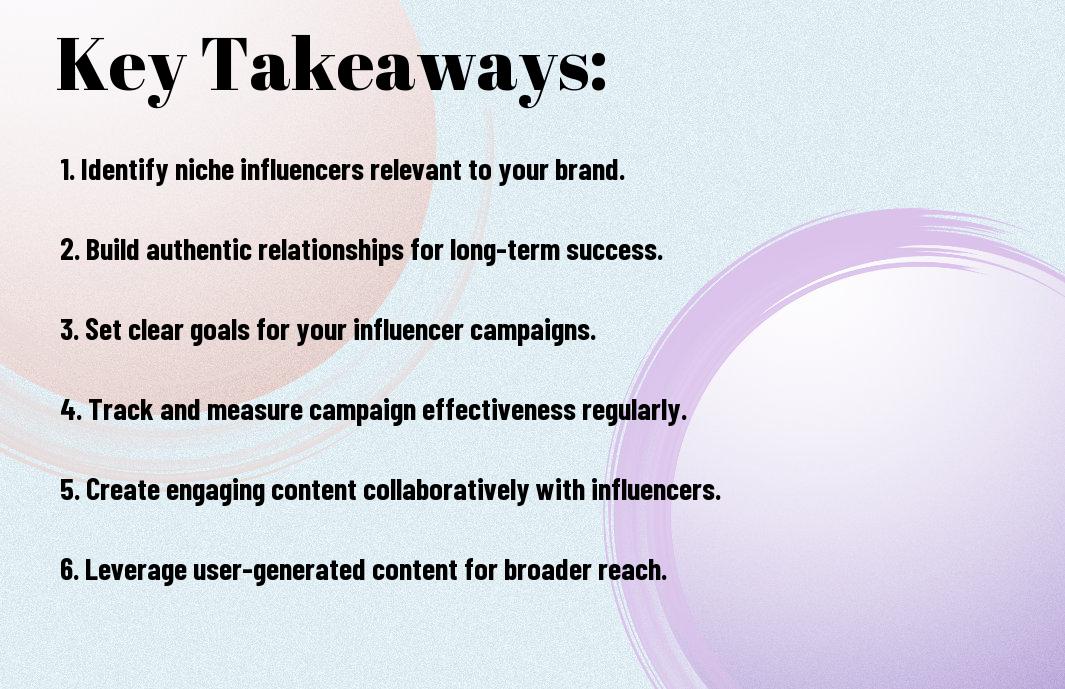
  • Influencer marketing on social media can be a highly effective way for small businesses to reach their target audience, build brand awareness, and drive sales, as influencers have already-established relationships with their followers, making their endorsements more trustworthy and authentic.
  • Small businesses should carefully select influencers whose niche and values align with their brand, and develop a clear strategy for collaborating with them, including setting specific goals, choosing the right social media platforms, and measuring the success of the campaign.
  • Authenticity and transparency are key to a successful influencer marketing campaign, so small businesses should encourage influencers to share their genuine experiences with their products or services, and disclose their partnership to their followers, in order to maintain trust and credibility with their audience.

Social Media Landscape

According to a guide, A Comprehensive Guide to Influencer Marketing for Small Businesses, you can leverage social media to reach your target audience. As you navigate the social media landscape, you’ll find various platforms to choose from, each with its unique features and user demographics.

Platform Selection

For your influencer marketing campaign to be successful, you need to select the right social media platforms that align with your business goals and target audience. You should consider factors such as user engagement, content type, and platform-specific features when making your selection.

Target Audience Analysis

Audience understanding is key to creating an effective influencer marketing strategy. You should analyze your target audience’s demographics, interests, and behaviors to determine which social media platforms they are most active on and what type of content they engage with.

Even as you research deeper into target audience analysis, you’ll discover that understanding their preferences and pain points is important in creating content that resonates with them. You can use social media analytics tools to gather data on your target audience and identify the most effective ways to reach and engage with them, ultimately helping you to create a successful influencer marketing campaign.

Identifying Right Influencers

Clearly, finding the right influencers is vital for the success of your influencer marketing campaign. You need to consider factors such as their audience, reach, and relevance to your brand.

Micro vs Macro Influencers

Across various social media platforms, you’ll find different types of influencers, each with their own strengths and weaknesses. You can choose between micro-influencers with highly engaged audiences and macro-influencers with massive followings.

Niche Market Alignment

Minimally, your influencer should have an audience that aligns with your niche market. You want to ensure that the influencer’s content and audience match your brand’s values and target audience.

Considering your niche market, you should look for influencers who have a genuine interest in your industry or product. You can analyze their past content, engagement, and audience demographics to determine if they are a good fit for your brand. By partnering with influencers who have an authentic connection to your niche, you can increase the effectiveness of your influencer marketing campaign and reach your target audience more efficiently.

Budget Planning

To effectively utilize influencer marketing, you need to plan your budget carefully. You should consider the costs of partnering with influencers, content creation, and campaign management. Your budget will determine the scope and reach of your influencer marketing efforts.

Cost Structures

Beneath the surface of influencer marketing lies a complex cost structure. Below this, you’ll find costs such as influencer fees, content production, and campaign management, which can vary greatly depending on the scope of your campaign and the influencers you partner with.

ROI Measurements

Around the time you launch your influencer marketing campaign, you’ll want to establish a system to measure its effectiveness. Around this time, you can start tracking engagement metrics, such as likes, comments, and shares, to gauge the campaign’s success.

Indeed, measuring the return on investment (ROI) of your influencer marketing campaign is crucial to understanding its impact on your business. You can do this by tracking the sales generated from the campaign, as well as the increase in brand awareness and customer engagement. By monitoring these metrics, you can adjust your campaign strategy to optimize your ROI and ensure that your influencer marketing efforts are driving real results for your business.

Partnership Development

Not all influencer marketing efforts are successful, but you can increase your chances by learning from others, such as by reading How can small businesses leverage influencer marketing effectively on social media platforms, to develop a strong partnership with influencers.

Outreach Strategies

Above all, your outreach strategy should be personalized and tailored to each influencer, as you want to show them how they can benefit from working with your small business, and how you can help them achieve their goals.

Negotiation Guidelines

About the terms of the partnership, you should clearly outline what you expect from the influencer and what they can expect from you, including the content, timeline, and compensation.

Due to the varying nature of influencer marketing partnerships, you will need to be flexible and open to negotiation, considering factors such as the influencer’s audience, content quality, and engagement rates, to ensure a mutually beneficial agreement that meets your business goals and budget.

Content Strategy

For a successful influencer marketing campaign, you need to develop a content strategy that aligns with your brand’s goals and target audience. This involves creating engaging content that resonates with your audience and sets your brand apart from the competition.

Brand Message Integration

Above all, your influencer marketing content should seamlessly integrate your brand message, ensuring consistency across all platforms. You should work closely with influencers to ensure they understand your brand’s tone, voice, and values.

Authenticity Balance

Content that feels forced or fake can be detrimental to your brand’s reputation. You need to strike a balance between promoting your brand and maintaining the influencer’s authentic voice.

Achieving this balance is key to a successful influencer marketing campaign. As you work with influencers, you should prioritize open communication and provide them with the creative freedom to produce content that feels genuine and authentic to their audience, while still showcasing your brand’s unique value proposition. You can do this by setting clear guidelines and expectations, while also trusting the influencer’s expertise and judgment. By doing so, you can create a winning content strategy that drives engagement and conversions.

Campaign Execution

Now that you have planned your influencer marketing campaign, it’s time to execute it. You will need to coordinate with the influencers, manage the content creation process, and track the campaign’s performance. Your goal is to ensure that the campaign runs smoothly and achieves the desired results.

Timeline Management

Besides planning the campaign, you also need to manage the timeline effectively. You should create a schedule that outlines the key milestones and deadlines, and share it with the influencers and your team. This will help you stay on track and ensure that the campaign is completed on time.

Legal Considerations

Beneath the surface of a successful campaign, you need to consider the legal aspects. You should ensure that you comply with the Federal Trade Commission (FTC) guidelines on sponsored content and disclose the relationship between your brand and the influencers.

This includes clearly labeling sponsored posts, using hashtags such as #ad or #sponsored, and avoiding any deceptive or misleading practices. You should also have a contract in place that outlines the terms of the partnership, including the scope of work, payment terms, and confidentiality agreements. By taking these steps, you can protect your brand and ensure that your campaign is compliant with the relevant laws and regulations.

Final Words

As a reminder, you now have the tools to leverage influencer marketing on social media for your small business. You can boost your brand’s online presence and reach your target audience effectively. By following the guide, you will be able to create a successful influencer marketing campaign that drives sales and grows your business. You will see significant improvements in your online engagement and overall marketing strategy, helping you stay ahead of the competition and achieve your business goals.

FAQ

Q: What is influencer marketing and how can it benefit my small business on social media?

A: Influencer marketing is a form of marketing where businesses partner with social media influencers to promote their products or services to the influencer’s followers. This can be highly beneficial for small businesses as it allows them to reach a larger audience, build brand awareness, and drive sales. By partnering with influencers who have a genuine interest in your product or service, you can increase credibility and trust with potential customers, ultimately leading to increased conversions and revenue.

Q: How do I find the right influencer for my small business’s social media marketing campaign?

A: Finding the right influencer for your small business involves researching and identifying influencers who have a genuine interest in your product or service, and whose audience aligns with your target market. You can use social media listening tools to find influencers who are already talking about your brand or industry, or use influencer marketing platforms to discover new influencers. It’s also important to evaluate an influencer’s engagement rates, content quality, and audience demographics to ensure they are a good fit for your brand.

Q: What types of content should I ask an influencer to create for my small business’s social media campaign?

A: The type of content you ask an influencer to create will depend on your campaign goals and target audience. Some popular types of content include sponsored posts, product reviews, tutorials, and giveaways. You can also ask influencers to create content that showcases your product or service in a real-life setting, such as a tutorial or a “day in the life” style post. It’s also important to provide influencers with creative freedom to ensure the content feels authentic and engaging to their audience.

Q: How do I measure the success of an influencer marketing campaign on social media for my small business?

A: Measuring the success of an influencer marketing campaign involves tracking key performance indicators (KPIs) such as engagement rates, website traffic, and sales. You can use social media analytics tools to track the performance of sponsored content, and influencer marketing platforms to monitor the campaign’s reach and engagement. It’s also important to set clear goals and objectives for the campaign, such as increasing brand awareness or driving sales, to ensure you are measuring the right metrics.

Q: What are some common mistakes small businesses make when utilizing influencer marketing on social media, and how can I avoid them?

A: Common mistakes small businesses make when utilizing influencer marketing on social media include not clearly defining campaign goals, not researching influencers thoroughly, and not providing enough creative freedom. To avoid these mistakes, it’s important to develop a clear campaign strategy, research influencers carefully, and provide them with the freedom to create content that feels authentic to their audience. Additionally, it’s important to disclose sponsored content clearly, and to comply with Federal Trade Commission (FTC) guidelines on influencer marketing to avoid any legal issues.

The Dos And Don'ts Of Promoting Your Products On Social Media Platforms

As you navigate the world of social media marketing, you’re likely looking for ways to effectively promote your products to your target audience. You want to increase your online presence and drive sales, but you need to do it in a way that resonates with your followers. Your social media strategy can make or break your brand’s success, and understanding what works and what doesn’t is imperative to achieving your goals. You will learn how to promote your products successfully on social media platforms.

Key Takeaways:

  • Be authentic and transparent when promoting your products on social media platforms, as users can easily spot insincerity and may be turned off by overly promotional content.
  • Use high-quality visuals and engaging captions to showcase your products in a compelling way, and make sure to include a clear call-to-action to drive sales or website traffic.
  • Monitor and respond to comments and messages from customers in a timely and personalized manner, as this can help build trust and loyalty with your audience and increase the effectiveness of your social media marketing efforts.

Social Media Landscape

While navigating the social media landscape, you’ll find numerous platforms to promote your products, each with its unique features and user demographics, allowing you to tailor your marketing strategy to your target audience.

Platform Selection

Against the backdrop of a crowded online market, you need to choose the platforms that best align with your brand and products, considering factors such as user engagement and content sharing.

Audience Demographics

By understanding the demographics of your target audience, you can create content that resonates with them, increasing the effectiveness of your promotional efforts on social media platforms.

Consequently, as you probe deeper into audience demographics, you’ll discover that your target audience’s age, location, and interests play a significant role in determining the type of content and platforms you should use to promote your products, enabling you to make informed decisions about your social media marketing strategy and maximize your online presence.

Content Strategy

Any effective social media promotion starts with a well-planned content strategy, allowing you to showcase your products in a way that resonates with your audience, helping you to achieve your marketing goals.

Brand Voice Alignment

For instance, you should ensure that your social media content aligns with your brand’s voice and tone, creating a consistent message that your audience can trust and engage with, which will help you build a strong brand identity.

Visual Guidelines

Above all, your visual content should be high-quality and consistent, making it instantly recognizable as your brand, which will help you stand out from the competition and capture your audience’s attention.

Understanding the importance of visual guidelines, you can develop a style that reflects your brand’s personality and aesthetic, using colors, fonts, and imagery that resonate with your target audience, and applying this style consistently across all your social media platforms, will help you create a strong visual identity that supports your overall content strategy and promotes your products effectively.

Engagement Rules

After establishing your online presence, you need to engage with your audience effectively. You can learn more about social media etiquette by visiting 20 Do’s and Don’ts of Social Media in 2025 to improve your online strategy.

Timing and Frequency

With the right timing, you can increase your post’s visibility and reach a larger audience, so you should consider the best times to post on social media to maximize your engagement.

Community Management

For effective community management, you need to be proactive and responsive to your followers’ comments and messages, as this will help you build trust and loyalty with your audience.

For instance, you can assign a team to monitor your social media accounts and respond promptly to any inquiries or concerns, ensuring that your audience feels valued and heard, which will ultimately lead to a positive experience with your brand.

Common Pitfalls

Unlike other marketing strategies, promoting your products on social media requires a delicate balance to avoid turning off your audience. You need to be aware of the common mistakes that can harm your brand’s reputation and affect your sales.

Overselling Mistakes

Against the temptation to constantly promote your products, you should focus on providing value to your followers, as overselling can lead to a decrease in engagement and a loss of trust in your brand.

Platform Misuse

Beside the content itself, the way you use each platform is also important, as using a platform in a way that is not consistent with its intended use can be seen as spammy and harm your reputation.

In fact, you should take the time to understand the unique characteristics and best practices of each platform, and adapt your strategy accordingly, to get the most out of your social media marketing efforts and avoid common pitfalls. You can use this knowledge to create a strong online presence and effectively promote your products to your target audience.

Measurement Metrics

All your social media efforts need to be measured to understand their impact, and you can learn more about Social Media Dos And Don’ts to improve your strategy.

Performance Indicators

By tracking your performance indicators, you can identify areas that need improvement and adjust your strategy accordingly, allowing you to optimize your social media presence.

Analytics Tools

For effective measurement, you will need to utilize analytics tools that provide insights into your social media performance, helping you make data-driven decisions.

Further, analytics tools offer a wide range of features, such as tracking engagement metrics, monitoring follower growth, and analyzing content performance, which enables you to refine your social media strategy and increase your online presence, allowing you to reach your target audience more effectively and achieve your marketing goals.

Compliance Guidelines

Your social media promotional activities must adhere to the rules and regulations set by each platform, as well as federal and state laws, to avoid any potential issues or penalties.

Platform Policies

Along with understanding the laws, you need to familiarize yourself with the specific policies of each social media platform you use, as they can vary significantly and impact your promotional strategies.

Disclosure Requirements

Requirements for disclosing sponsored content or affiliations with your products are in place to protect consumers, and you must follow them to maintain transparency and trust with your audience.

Disclosure is crucial when promoting products on social media, as you are obligated to clearly indicate when a post is sponsored or if you have a financial interest in the product, helping you build credibility and avoid legal issues.

Final Words

With these considerations, you can effectively promote your products on social media platforms. You will increase your online presence and reach a wider audience by following the dos and avoiding the don’ts. Your social media strategy will be successful, and you will achieve your marketing goals. You will be able to build a strong brand and engage with your customers, driving sales and growth for your business.

FAQ

Q: What are the most effective social media platforms for promoting my products?

A: The most effective social media platforms for promoting your products depend on your target audience and the type of products you are selling. For example, if your products are visually appealing, Instagram and Pinterest may be the best options. On the other hand, if your products are more service-based, LinkedIn and Twitter may be more suitable. It’s also important to consider the demographics of each platform and ensure they align with your target audience. By choosing the right platforms, you can increase your reach and engagement, ultimately driving more sales and revenue.

Q: How often should I post about my products on social media?

A: The frequency of posting about your products on social media depends on your audience and the platform you are using. As a general rule, it’s best to post at least once a day, but no more than 3-4 times per day. Overposting can lead to audience fatigue, while underposting can make your brand seem inactive. It’s also important to mix up the type of content you post, including a combination of promotional, educational, and engaging content to keep your audience interested. Additionally, consider using social media scheduling tools to help you plan and schedule your posts in advance.

Q: What type of content should I post to effectively promote my products on social media?

A: To effectively promote your products on social media, you should post a variety of content types, including high-quality product images and videos, customer testimonials, user-generated content, and educational content that highlights the benefits and features of your products. You should also consider using social media ads, such as Facebook and Instagram ads, to reach a wider audience and drive traffic to your website. Additionally, utilizing influencer marketing and running social media contests can help increase engagement and drive sales.

Q: How can I engage with my audience and build a community around my products on social media?

A: Engaging with your audience and building a community around your products on social media is key to driving sales and loyalty. You can do this by responding to comments and messages in a timely and personalized manner, asking for feedback and suggestions, and running social media contests and giveaways. You should also consider using social media analytics tools to track your engagement and adjust your content strategy accordingly. Additionally, collaborating with other brands and influencers in your industry can help expand your reach and build credibility.

Q: What are some common mistakes to avoid when promoting my products on social media?

A: Some common mistakes to avoid when promoting your products on social media include overposting, being too promotional, and not engaging with your audience. You should also avoid buying followers or using fake accounts to inflate your numbers, as this can damage your credibility and lead to account suspension. Additionally, not tracking your analytics and adjusting your strategy accordingly can lead to wasted time and resources. By avoiding these common mistakes, you can create an effective social media marketing strategy that drives sales and grows your brand.

How can social media platforms be used to promote an ebook

Social media has the power to be a game-changer when it comes to promoting your ebook and reaching a wider audience. By leveraging platforms like Facebook, Instagram, Twitter, and LinkedIn, you can create buzz around your book, engage with your followers, and ultimately drive sales. In this guide, you will discover the key strategies and tactics to effectively use social media to boost your ebook’s visibility and maximize its impact. So, let’s explore how you can harness the potential of social media to elevate your ebook to new heights.

Key Takeaways:

  • Engage with your audience: Interact with followers, join relevant groups, and respond to comments to build a community around your ebook.
  • Create compelling content: Share excerpts, behind-the-scenes looks at the writing process, and visuals that entice users to learn more about your ebook.
  • Collaborate with influencers: Partner with influencers in your niche to reach a larger audience and gain credibility for your ebook.

Identifying Your Target Audience

Who are your ideal readers?

Readers, before you can effectively promote your ebook on social media platforms, you need to understand who your ideal audience is. Consider the demographics of your target readers such as age, gender, location, profession, and interests. By identifying these key characteristics, you can tailor your social media marketing strategies to reach the right audience.

What are their interests and pain points?

Points, understanding the interests and pain points of your target audience is crucial for promoting your ebook successfully. Take the time to research what topics resonate with them, what challenges they face, and how your ebook can provide solutions or valuable insights. By aligning your messaging with their interests and addressing their pain points, you can create compelling social media content that resonates with your audience.

For instance, if you have written an ebook on personal finance targeted towards young professionals, you may discover that your audience is interested in budgeting tips, investment strategies, and overcoming debt. Their pain points could include feeling overwhelmed by financial decisions or lacking the knowledge to secure their financial future. By showcasing how your ebook offers practical advice and actionable steps to improve their financial well-being, you can capture the attention of your target audience on social media platforms.

Choosing the Right Social Media Platforms

Some social media platforms are more effective than others when it comes to promoting an ebook. It’s necessary to select the right platforms based on where your target audience spends their time online. Here are a few key platforms to consider:

Facebook: The largest social media platform

Social media is all about connecting with your audience, and Facebook provides an excellent platform to do just that. With over 2 billion active users, Facebook allows you to reach a vast audience and engage with them through posts, groups, and paid advertising. You can create a dedicated page for your ebook and share content, host events, and run targeted ads to promote it effectively.

Twitter: The micro-blogging giant

Twitter is known for its fast-paced, real-time nature, making it perfect for promoting your ebook with quick updates, links, and hashtags. You can engage with your audience, participate in relevant conversations, and reach a large number of users by leveraging trending topics and Twitter chats. For instance, you can create a tweet thread highlighting key points from your ebook or participate in book-related hashtags to increase visibility.

For instance, you can create a tweet thread highlighting key points from your ebook or participate in book-related hashtags to increase visibility.

Instagram: Visual storytelling for ebook promotion

Right now, Instagram is one of the most popular social media platforms for visual content, making it an excellent choice for promoting your ebook through engaging images and videos. You can create visually appealing posts, stories, and IGTV videos to showcase your ebook cover, quotes, and behind-the-scenes glimpses of your writing process. Utilizing relevant hashtags and collaborating with influencers or bookstagrammers can also help you expand your reach and attract new readers.

Media: Utilizing relevant hashtags and collaborating with influencers or bookstagrammers can also help you expand your reach and attract new readers.

LinkedIn: Professional networking for authors

Choosing LinkedIn for promoting your ebook can be beneficial if your target audience includes professionals, educators, or individuals interested in industry-specific content. You can share updates about your ebook, publish articles on related topics, and engage with a professional community through comments and networking. LinkedIn’s robust analytics and advertising options also allow you to track your ebook promotion efforts and reach a niche audience effectively.

Visual: LinkedIn’s robust analytics and advertising options also allow you to track your ebook promotion efforts and reach a niche audience effectively.

Creating Engaging Content

Crafting compelling headlines and captions

On social media, the first thing that catches a reader’s attention is the headline or caption. Your headline should be snappy, intriguing, and make the reader want to click through to learn more. Keep it concise but compelling, and make sure it accurately represents the content of your ebook. Similarly, captions for your posts should be engaging and provide a sneak peek into what your ebook is all about.

Using eye-catching visuals and graphics

One of the most effective ways to grab your audience’s attention on social media is by using eye-catching visuals and graphics. Visual content is more likely to be shared, liked, and engaged with than text-only posts. Make sure your graphics are on-brand, visually appealing, and relevant to the content of your ebook. High-quality images, infographics, or videos can help to make your posts stand out in a crowded social media feed.

The use of eye-catching visuals and graphics is crucial to pique the interest of your audience and encourage them to engage with your content. Visual elements not only break up the text but also add depth and interest to your posts, making them more shareable and memorable.

Writing concise and informative summaries

Using concise and informative summaries in your social media posts is key to capturing your audience’s attention. Summarize the main points or benefits of your ebook in a clear and concise way, making sure to highlight what sets it apart from others in the market. Use bullet points or short paragraphs to make your content easy to read and digest.

With attention spans getting shorter, it’s important to communicate your message effectively and efficiently. By providing concise and informative summaries, you are more likely to hook your audience and entice them to learn more about your ebook.

Sharing behind-the-scenes content

Captions

Sharing behind-the-scenes content on social media gives your audience a glimpse into the process of creating your ebook. This could include sneak peeks of the writing process, interviews with the author, or insights into the research that went into the book. By sharing this type of content, you humanize your brand and build a connection with your audience, making them more likely to be interested in your ebook.

Graphics

Building a Community

Creating a Facebook group or LinkedIn community

After you have established your presence on social media platforms, it’s time to build a community around your ebook. One effective way to do this is by creating a Facebook group or LinkedIn community dedicated to discussions related to your ebook’s topic. By providing a space for like-minded individuals to connect and engage with each other, you can cultivate a loyal following of readers who are eager to share and promote your ebook.

Hosting Twitter chats and Q&A sessions

Building a sense of community around your ebook can also involve hosting Twitter chats and Q&A sessions. This interactive approach allows you to engage directly with your audience, answering their questions, and providing valuable insights related to your ebook. By creating a dialogue with your readers in real-time, you can strengthen relationships and generate buzz around your ebook.

A Twitter chat is a scheduled conversation around a specific topic using a designated hashtag. During the chat, participants can join in by using the hashtag to ask questions, share opinions, and connect with others interested in the same subject matter. Hosting regular Twitter chats related to your ebook can help you foster a community of engaged readers who are excited to participate and spread the word about your content.

Collaborating with influencers and fellow authors

For a wider reach and increased credibility, consider collaborating with influencers and fellow authors in your ebook’s niche. By partnering with individuals who have a strong following or expertise in your field, you can tap into their audience and leverage their influence to promote your ebook. Whether it’s through guest blog posts, joint social media campaigns, or collaborative events, working with influencers and fellow authors can help you expand your reach and connect with new readers.

Collaborating with influencers and fellow authors not only exposes your ebook to a broader audience but also adds credibility to your work. By associating your brand with respected and influential figures in your industry, you can enhance your reputation and attract more readers who trust the recommendations of those they follow.

Encouraging user-generated content and reviews

The success of your ebook promotion efforts can also be amplified by encouraging user-generated content and reviews. By incentivizing readers to share their thoughts, experiences, and feedback about your ebook on social media, you can create a buzz around your work and generate authentic word-of-mouth recommendations. Positive reviews and user-generated content not only help increase visibility but also build trust with potential readers who value peer recommendations.

The key to encouraging user-generated content and reviews is to create engaging and shareable experiences that resonate with your audience. Whether through contests, storytelling prompts, or interactive polls, finding creative ways to inspire your readers to share their thoughts about your ebook can help you drive organic promotion and cultivate a community of loyal supporters.

Running Effective Social Media Campaigns

Despite the vast number of users on social media platforms, running an effective social media campaign requires strategic planning and execution. To promote your ebook successfully, you need to leverage the advertising features available on different platforms to reach your target audience effectively.

Launching a Facebook ad campaign

Launching a Facebook ad campaign can be a powerful tool to promote your ebook to a specific audience. With Facebook’s robust targeting options, you can narrow down your audience based on interests, demographics, and behavior. By crafting compelling ad copy and creative visuals, you can capture the attention of potential readers scrolling through their feeds.

Utilizing Twitter Ads and promoted tweets

On Twitter, you can utilize Twitter Ads to target users based on their interests and demographics. Promoted tweets can help your ebook reach a larger audience and increase visibility. By using engaging visuals and concise messaging, you can drive traffic to your ebook landing page and generate interest among Twitter users.

Media

Twitter Ads can also help you target users who are already interested in similar books or topics related to your ebook. By promoting tweets that highlight the unique selling points of your ebook, you can pique the curiosity of potential readers and encourage them to learn more.

Leveraging Instagram’s shopping feature

Instagram’s shopping feature allows you to tag products, including your ebook, in your posts. By creating visually appealing posts that showcase your ebook and including a direct link to purchase, you can drive conversions directly from the platform. Leveraging Instagram’s shopping feature can help you tap into the platform’s highly engaged user base and increase ebook sales.

campaign

Additionally, you can use Instagram Stories to provide sneak peeks of your ebook content and create a sense of exclusivity among your followers. By adding interactive elements such as polls or quizzes, you can boost engagement and generate buzz around your ebook launch.

Running a social media contest or giveaway

Utilizing social media contests or giveaways is an excellent way to generate excitement and increase visibility for your ebook. By asking participants to like, share, or comment on your posts to enter the contest, you can expand your reach and attract new followers. Offering a free copy of your ebook as a prize can incentivize participation and create buzz around your book launch.

Leveraging

Running a social media contest or giveaway not only helps increase brand awareness but also allows you to grow your email list and build a community of engaged readers. By incorporating relevant hashtags and encouraging user-generated content, you can spark conversations around your ebook and foster a sense of community among your audience.

Measuring Success and Tracking Progress

Setting up analytics and tracking tools

Analytics play a crucial role in measuring the success of your social media efforts in promoting your ebook. By setting up tools like Google Analytics or social media platform insights, you can track key metrics such as website traffic, engagement rates, and conversions. These tools provide valuable data that can help you understand which social media channels are driving the most traffic and which strategies are yielding the best results.

Monitoring engagement rates and conversions

One of the important aspects of tracking progress is monitoring engagement rates and conversions. Engagement rates can give you insights into how well your audience is responding to your content, while conversion tracking allows you to see how many users are taking the desired action, such as downloading your ebook or signing up for your email list.

The ability to measure engagement and conversion rates gives you a clear picture of the effectiveness of your social media promotion efforts. You can identify which posts are resonating with your audience and which ones are falling flat, allowing you to adjust your strategy accordingly.

Adjusting your strategy based on data insights

The tracking of analytics and conversion data provides you with invaluable insights that can help you optimize your social media promotion strategy. By analyzing this data, you can identify trends, patterns, and areas for improvement. For example, if you notice that a particular type of content is generating a high engagement rate, you can focus more on creating similar content in the future.

Another benefit of tracking data is the ability to make real-time adjustments to your strategy. If you see that a certain campaign is not performing as expected, you can quickly pivot and allocate resources to more successful tactics. This agile approach can help you optimize your ebook promotion efforts and maximize your results.

Using A/B testing to optimize content

Monitoring the performance of different content variations through A/B testing can provide valuable insights into what resonates best with your audience. By testing different elements such as headlines, images, or call-to-action buttons, you can determine which components drive the highest engagement and conversion rates.

Tracking the results of A/B tests allows you to refine your content strategy and continuously improve the effectiveness of your social media promotion efforts. By iteratively testing and optimizing your content, you can ensure that your ebook receives maximum exposure and drives the highest possible conversions.

Summing up

As a reminder, using social media platforms to promote your ebook can significantly increase its visibility and reach. By strategically utilizing platforms like Facebook, Twitter, and Instagram, you can engage with your target audience, build credibility, and drive traffic to your ebook. Remember the tips and strategies outlined in Part Two: Promoting Your Ebook on Social Media to make the most of these opportunities.

With a coherent social media plan tailored to your target audience’s preferences, you can effectively market your ebook and see a boost in sales and downloads. By consistently engaging with your followers, sharing valuable content, and utilizing various multimedia formats, you can create a strong online presence for your ebook, leading to increased visibility and success in the digital marketplace.

FAQ

Q: How can social media platforms be used to promote an ebook?

A: Social media platforms can be used to promote an ebook in various ways. You can create engaging posts about the ebook, share excerpts or quotes, and run targeted ads to reach your audience. Creating a dedicated hashtag for the ebook and collaborating with influencers can also help increase visibility.

Q: Which social media platforms are best for promoting an ebook?

A: The choice of social media platforms for promoting an ebook depends on your target audience. Facebook is great for reaching a wider audience, while Instagram is ideal for visual content. Twitter can be used for short and engaging updates, and LinkedIn is suitable for professional and business-related ebooks.

Q: How can I engage with my audience through social media to promote my ebook?

A: Engaging with your audience is key to promoting your ebook effectively. You can host Q&A sessions, share behind-the-scenes content, run contests or giveaways, and interact with comments and messages. Encouraging user-generated content related to the ebook can also help create a buzz around it.

Skip to content