Metrics

What are some ways to use analytics and metrics to measure the success of ebook promotion campaigns

Success in ebook promotion campaigns hinges on your ability to effectively measure their impact using analytics and metrics. By delving into data such as conversion rates, click-through rates, and download numbers, you can gain profound insights into the performance of your campaigns. Understanding these metrics will allow you to tweak your strategies, optimize your promotions, and ultimately enhance the success of your ebook promotions. In this blog post, we will explore some key ways you can use analytics to measure the effectiveness of your ebook promotion efforts.

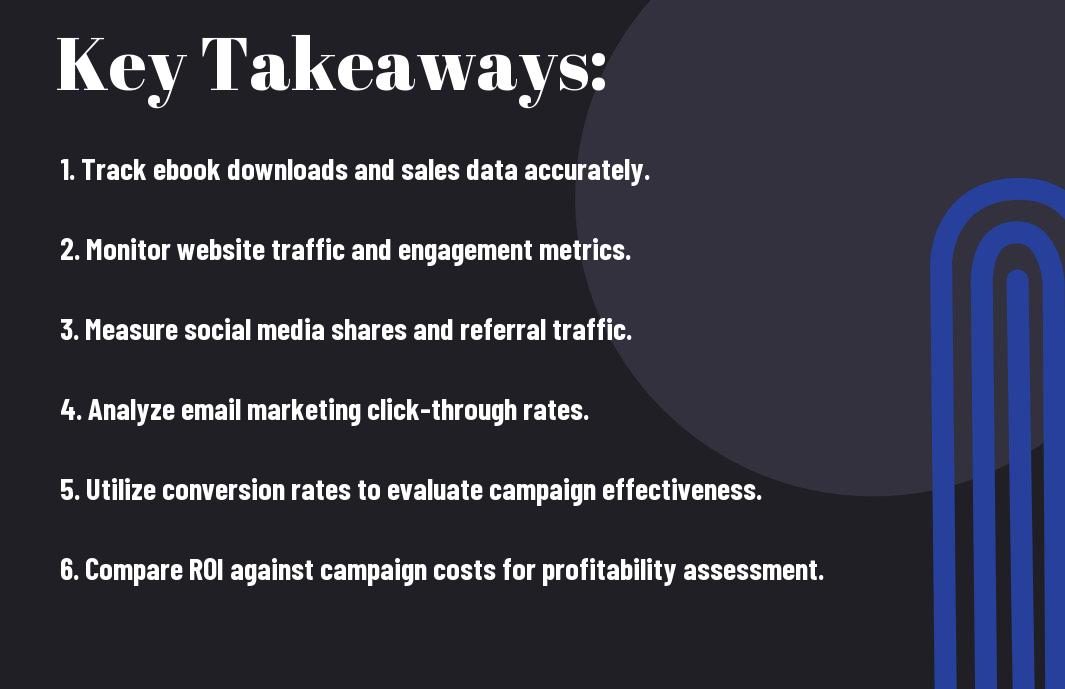
Key Takeaways:

  • Track Conversion Rates: Use analytics to monitor the number of e-book downloads or purchases resulting from the promotion campaign.
  • Utilize Click-through Rates: Measure the effectiveness of the campaign by tracking the number of clicks on the promotional content or links to the e-book.
  • Analyze Engagement Metrics: Look at metrics such as time spent on the e-book landing page, bounce rates, and social media interactions to gauge the level of engagement generated by the promotion.

Setting Goals and Objectives

While initiateing on an ebook promotion campaign, it is crucial to start by setting clear goals and objectives. These goals will guide your efforts and help you measure the success of your campaign. Consider what you aim to achieve with the promotion of your ebook, whether it’s increasing downloads, generating leads, driving website traffic, or boosting sales.

Defining Success Metrics for Ebook Promotion

Goals like increasing brand awareness, expanding your customer base, or gaining authority in your industry can be translated into specific metrics for your ebook promotion campaign. These metrics could include the number of downloads, the conversion rate from downloads to purchases, the increase in website traffic, or the growth in email subscribers.

Identifying Key Performance Indicators (KPIs)

One of the crucial steps in measuring the success of your ebook promotion campaign is identifying the key performance indicators (KPIs) that will help you track progress towards your goals. KPIs are quantifiable metrics that reflect the critical success factors of your campaign. Depending on your goals, KPIs could include click-through rates, conversion rates, social media engagement, or return on investment (ROI).

It is important to choose KPIs that directly align with your objectives and provide valuable insights into the effectiveness of your ebook promotion efforts. By regularly monitoring these KPIs throughout your campaign, you can make informed decisions, optimize your strategies, and drive better results.

Tracking Website Analytics

Google Analytics for Ebook Promotion Campaigns

For your ebook promotion campaigns, Google Analytics is a powerful tool that allows you to track the performance of your website and measure the success of your marketing efforts. By setting up goals and tracking conversions, you can see which promotional tactics are driving the most engagement and ultimately leading to conversions. This data can help you identify what is working well and make informed decisions on where to focus your resources for maximum impact.

Monitoring Website Traffic and Engagement

Monitoring your website traffic and engagement metrics is crucial for evaluating the effectiveness of your ebook promotion campaigns. By analyzing metrics such as page views, bounce rate, and time on page, you can gain valuable insights into how visitors are interacting with your site. This information can help you optimize your website content and user experience to better engage your audience and drive conversions.

Website traffic and engagement are key indicators of the success of your ebook promotion efforts. By regularly monitoring these metrics and making data-driven decisions, you can improve the performance of your campaigns and achieve your marketing goals more effectively.

Measuring Social Media Impact

Once again, social media plays a crucial role in the success of your ebook promotion campaigns. To accurately measure its impact, you need to leverage analytics and metrics effectively.

Social Media Metrics for Ebook Promotion

One of the key metrics to track when it comes to social media promotion for your ebook is the number of clicks and shares your posts receive. This data provides insight into how engaging your content is and how well it resonates with your audience. Additionally, monitoring the number of new followers or likes your social media accounts gain during the promotion period can help you gauge the growth of your online presence.

Analyzing Engagement and Reach

To explore deeper into the effectiveness of your social media promotion efforts, analyze the level of engagement and reach your posts achieve. Engagement metrics such as likes, comments, and shares indicate how actively involved your audience is with your content. Moreover, tracking the reach of your posts reveals how many unique users have seen your content, giving you a sense of your campaign’s visibility and impact.

Ebook promotion campaigns can benefit significantly from a strategic approach to social media measurement. By monitoring the right metrics and analyzing the engagement and reach of your posts, you can gain valuable insights into the effectiveness of your promotional efforts and make data-driven decisions to optimize your strategy.
Email Marketing Metrics

Open Rates, Click-Through Rates, and Conversion Rates

Now, you can measure the success of your ebook promotion campaigns through various email marketing metrics. Open rates tell you how many recipients opened your email, click-through rates indicate how many people clicked on a link within your email, and conversion rates show how many of those clicks led to a desired action, such as downloading your ebook.

Measuring Email Campaign Effectiveness

With email marketing metrics, you can track the effectiveness of your email campaigns over time. By analyzing trends in open rates, click-through rates, and conversion rates, you can see which strategies are working well and which ones may need adjustment. This allows you to optimize your campaigns for better engagement and results.

Campaign monitoring not only provides valuable insights into the performance of your ebook promotion efforts but also helps you make data-driven decisions for future campaigns. By paying attention to these metrics, you can refine your email marketing strategies to reach a wider audience and drive more conversions.

Paid Advertising and ROI Analysis

Measuring Return on Ad Spend (ROAS)

Return on ad spend (ROAS) is a crucial metric that helps you evaluate the effectiveness of your paid advertising campaigns. By calculating ROAS, you can determine how much revenue you are generating for every dollar spent on advertising. To calculate ROAS, divide the revenue generated from the campaign by the total ad spend. A ROAS greater than 1 indicates that the campaign is profitable, while a ROAS less than 1 means you are not generating enough revenue to cover the advertising costs.

Calculating Cost Per Acquisition (CPA)

Cost per acquisition (CPA) is another important metric to consider when analyzing the performance of your paid advertising campaigns. CPA helps you understand how much it costs to acquire a new customer through your advertising efforts. To calculate CPA, divide the total cost of the campaign by the number of new customers acquired. A lower CPA indicates that you are acquiring customers at a lower cost, which is favorable for your business.

Cost per acquisition (CPA) is a key metric in digital marketing that can provide valuable insights into the efficiency and effectiveness of your advertising campaigns. By tracking and analyzing CPA, you can optimize your ad spend, target the right audience, and improve the overall performance of your ebook promotion campaigns.

Customer Behavior and Retention

Analyzing Customer Journey and Behavior

To truly understand the success of your ebook promotion campaigns, you need to explore into the intricacies of customer behavior and journey. Analytics can help you track how customers interact with your promotion – from the moment they first discover it to the point of conversion. By analyzing metrics such as click-through rates, time spent on the promotion page, and conversion rates, you can gain valuable insights into what resonates with your audience and what may need improvement in your campaigns.

Measuring Customer Retention and Loyalty

With the help of analytics and metrics, you can also measure customer retention and loyalty. It’s not just about acquiring new customers through your ebook promotions; it’s equally important to retain existing customers and build loyalty. By tracking metrics like repeat purchases, customer lifetime value, and customer satisfaction scores, you can gauge how well your promotion campaigns are engaging and retaining your audience over time.

Analyzing customer retention and loyalty allows you to see the long-term impact of your ebook promotion campaigns. Are customers coming back for more? Are they turning into loyal advocates for your brand? By keeping a close eye on these metrics, you can fine-tune your campaigns to not only attract new customers but also keep them coming back for more.
Conclusion

As a reminder, using analytics and metrics is crucial to measure the success of your ebook promotion campaigns. By tracking key performance indicators such as click-through rates, conversion rates, and engagement metrics, you can gain valuable insights into the effectiveness of your promotional efforts.

Recall, analyzing the data gathered from these metrics will help you make data-driven decisions to optimize your ebook promotion strategies. By continuously monitoring and adjusting your campaigns based on the insights gained from analytics, you can improve your ROI and achieve greater success in promoting your ebooks to a wider audience.

FAQ

Q: How can analytics and metrics be used to measure the success of ebook promotion campaigns?

A: Analytics and metrics can be used in various ways to measure the success of ebook promotion campaigns. Key performance indicators (KPIs) such as conversion rates, click-through rates, downloads, and sales can provide valuable insights into the effectiveness of the campaign. By tracking these metrics, marketers can gauge the campaign’s impact on driving engagement, generating leads, and ultimately increasing revenue.

Q: What are some specific metrics that can be used to evaluate the performance of ebook promotion campaigns?

A: Some specific metrics that can be used to evaluate the performance of ebook promotion campaigns include:

  • Conversion Rate: The percentage of users who take a desired action, such as downloading the ebook or making a purchase, after engaging with the campaign.
  • Click-Through Rate (CTR): The percentage of individuals who click on a link or call-to-action within the campaign.
  • Downloads: The number of times the ebook is downloaded by users.
  • Sales: The number of ebook sales directly attributed to the campaign.

These metrics can help marketers assess the campaign’s performance and make data-driven decisions to optimize future promotional efforts.

Q: How can A/B testing be utilized to improve the effectiveness of ebook promotion campaigns?

A: A/B testing, also known as split testing, can be a valuable tool for optimizing ebook promotion campaigns. By creating variations of the campaign (e.g., different ad copy, images, or call-to-action buttons) and testing them against each other, marketers can identify which elements resonate most with their target audience. By analyzing the results of A/B tests, marketers can fine-tune their campaigns to improve conversion rates, click-through rates, and overall performance.

What metrics should be tracked to measure the effectiveness of traffic and conversion strategies

You are stepping into the intricate world of digital marketing, constantly tweaking your strategies to drive traffic and boost conversions. But how do you know if your efforts are paying off? Tracking the right metrics is crucial to understand the effectiveness of your traffic and conversion strategies. In this blog post, we will explore the key metrics you should be monitoring to gauge the success of your digital marketing efforts. Let’s research into the world of data-driven decision-making and unlock the secrets to optimizing your online performance. Trust us, by the end of this post, you’ll be measuring success like a pro!

Key Takeaways:

  • Conversion Rate: This metric measures the percentage of website visitors who complete a specific goal, such as making a purchase or signing up for a newsletter. Tracking the conversion rate helps in determining the effectiveness of the conversion strategies.
  • Cost Per Acquisition (CPA): CPA calculates the average cost of acquiring a new customer. By analyzing this metric, businesses can understand how efficient their traffic and conversion strategies are in terms of acquiring new customers.
  • Customer Lifetime Value (CLV): CLV measures the total revenue a business can expect from a single customer over the course of their relationship. Tracking CLV helps in evaluating the long-term success of traffic and conversion strategies in retaining valuable customers.

Setting the Stage

Defining Traffic and Conversion Strategies

Stage one in the journey to effective traffic and conversion strategies involves understanding the fundamental concepts. Traffic strategies refer to the various methods you use to attract visitors to your website or online platforms. This can include tactics such as search engine optimization (SEO), social media marketing, content marketing, and paid advertising. On the other hand, conversion strategies pertain to the techniques employed to convert these visitors into customers or leads, such as compelling call-to-actions, well-designed landing pages, and optimized user experiences.

The Importance of Measuring Effectiveness

Effectiveness measurements are crucial as they provide insight into how well your traffic and conversion strategies are performing. By tracking the right metrics, you can determine what is working well and what needs improvement. This data-driven approach allows you to optimize your strategies, allocate resources effectively, and ultimately drive better results for your business.

Understanding the impact of measuring effectiveness cannot be overstated. It not only helps you identify opportunities for growth but also enables you to make informed decisions based on evidence rather than assumptions. By continuously monitoring and analyzing key metrics, you can stay agile, adapt to changes in the digital landscape, and stay ahead of the competition.

Web Analytics Metrics

Even with the most impactful traffic and conversion strategies in place, it is necessary to track specific metrics to accurately measure their effectiveness. Web analytics provides valuable insights into user behavior, helping you understand what is working well and what needs improvement.

Page Views and Unique Visitors

On your website, two fundamental metrics to track are page views and unique visitors. Page views indicate the total number of pages viewed by all visitors, giving you an idea of the overall engagement with your content. Unique visitors, on the other hand, represent the number of distinct individuals visiting your site within a specific timeframe. Monitoring these metrics can help you assess the popularity of your website and determine the effectiveness of your SEO and content strategies.

Bounce Rate and Average Session Duration

Session duration and bounce rate are crucial metrics to evaluate user engagement on your website. The bounce rate measures the percentage of visitors who navigate away from your site after viewing only one page, while average session duration indicates the average amount of time users spend on your site. A high bounce rate and low session duration may suggest that your content is not engaging enough or that your website has usability issues that need attention.

Session duration is an necessary metric as it reflects the level of interest and engagement of visitors with your content. A longer session duration generally indicates that users find your website valuable and are exploring multiple pages, potentially leading to conversions or further interactions.

Top Landing Pages and Exit Pages

One key aspect of analyzing user behavior is tracking your top landing pages and exit pages. Top landing pages are the pages where visitors first enter your website, providing insights into which content or campaigns are driving traffic to your site. Exit pages, on the other hand, show the last pages users view before leaving your site. By identifying your top landing and exit pages, you can optimize the user experience and content on these pages to encourage further exploration and reduce bounce rates.

Exit pages are critical in understanding where visitors are dropping off from your site. By analyzing the content and user experience on these pages, you can identify potential barriers to conversion and make necessary improvements to keep users engaged and guide them towards your desired actions.

Conversion Metrics

Once again, tracking conversion metrics is crucial to understanding the effectiveness of your digital marketing efforts. By measuring various aspects of your visitors’ behavior on your website, you can gain valuable insights into how well your traffic is converting into desired actions.

Conversion Rate and Goal Completions

One of the key metrics to monitor is your conversion rate, which tells you the percentage of visitors who take the desired action on your site, such as making a purchase or signing up for a newsletter. Additionally, tracking goal completions allows you to see how many visitors are meeting specific objectives, such as filling out a contact form or downloading a resource.

Lead Generation and Qualification

One of the most important aspects of conversion metrics is lead generation and qualification. This involves not only capturing leads through forms or downloads but also assessing the quality of those leads. By tracking lead generation metrics, you can determine which sources are driving the most valuable leads for your business.

It is crucial to ensure that the leads you are generating are relevant and likely to convert into customers. This can be done by implementing lead qualification criteria and tracking metrics such as lead score or engagement levels to identify the most promising leads for further nurturing and conversion.

Sales and Revenue Tracking

Lead tracking is necessary for understanding how effectively your marketing efforts are translating into actual sales and revenue. By connecting your leads to the sales they generate, you can calculate your conversion rates and ROI more accurately, allowing you to optimize your strategies for maximum impact.

This detailed level of tracking can help you identify which marketing channels and campaigns are generating the most revenue for your business. By understanding the complete customer journey from lead to sale, you can make data-driven decisions to enhance your conversion strategies and drive growth effectively.

User Experience Metrics

Time on Site and Scroll Depth

Not all website visitors are the same, and understanding how long users spend on your site and how far they scroll can give you valuable insights into their engagement levels. An optimal time on site indicates that users are finding your content intriguing and relevant, while scroll depth can show if they are engaging with the entire page or just skimming through.

Click-Through Rate and Hover Time

Hover over time and click-through rate are crucial metrics to measure user interaction with your site. Hover time indicates the amount of time users spend considering a particular element, offering insights into what captures their attention. Similarly, the click-through rate measures the percentage of users who click on a specific link, button, or image, showing how effective your call-to-action strategies are.

Hover time provides valuable information on user behavior, indicating their level of interest in specific elements on the page. Understanding what elements users hover over longer can help you optimize your layout and design to highlight important content and improve overall user engagement.

User Satisfaction and Net Promoter Score

With user satisfaction and Net Promoter Score (NPS), you can gauge how happy and loyal users are to your brand. These metrics reflect the overall user experience and their willingness to recommend your site to others. By collecting feedback through surveys or direct feedback forms, you can gain valuable insights into user sentiment and areas for improvement.

Site visitors’ satisfaction and NPS are crucial indicators of how well your traffic and conversion strategies are resonating with your audience. By focusing on enhancing user satisfaction and increasing your NPS score, you can create a more loyal customer base and drive long-term success for your business.

Social Media Metrics

Engagement Rate and Follower Growth

Keep a close eye on your social media engagement rate and follower growth to understand how well your content resonates with your audience. These metrics can provide valuable insights into the effectiveness of your social media strategies and help you identify areas for improvement. An increasing engagement rate and steady follower growth indicate that you are creating content that is relevant and engaging to your target audience.

Share of Voice and Sentiment Analysis

For a comprehensive understanding of your brand’s presence on social media, it’s imperative to track metrics such as share of voice and sentiment analysis. Share of voice measures your brand’s presence compared to competitors, giving you valuable insights into your market position. Sentiment analysis helps you understand how people feel about your brand online, whether it’s positive, negative, or neutral.

Analysis of share of voice and sentiment can help you tailor your content and engagement strategies to better meet the needs and expectations of your audience. By monitoring these metrics regularly, you can adjust your approach to ensure that your brand is perceived positively and stands out in the competitive social media landscape.

Social Media Referral Traffic

The amount of traffic your website receives from social media platforms is a crucial metric to track. Social media referral traffic reflects the effectiveness of your social media content in driving visitors to your website. By analyzing which social media channels are generating the most traffic and which content formats are performing well, you can optimize your social media strategy to drive even more visitors to your website.

Metric such as ‘bounce rate’ for social media referral traffic can offer additional insights into how engaged visitors are with your website content and if they are finding value in what you have to offer. By focusing on increasing social media referral traffic and improving engagement metrics, you can enhance the overall effectiveness of your traffic and conversion strategies.

SEO Metrics

Search Engine Rankings and Visibility

Metrics such as search engine rankings and visibility are crucial in measuring the effectiveness of your SEO efforts. Tracking your website’s position in search engine results pages (SERPs) for targeted keywords can give you valuable insights into how well your SEO strategies are performing. The higher your website ranks for relevant keywords, the more visibility it receives, leading to increased organic traffic and potential conversions.

Organic Traffic and Keyword Performance

Any successful SEO strategy focuses on driving organic traffic to your website by optimizing for relevant keywords. Monitoring organic traffic metrics like the number of visitors, page views, bounce rate, and average session duration can help you understand how well your website is attracting and engaging visitors. Additionally, analyzing keyword performance, such as click-through rates and conversion rates, can provide valuable data on which keywords are driving the most traffic and conversions.

It’s necessary to continually analyze and refine your keyword strategy based on performance data to ensure that you are targeting the right keywords and maximizing your organic traffic potential.

Backlink Quality and Quantity

Metrics related to backlinks, such as the quality and quantity of links pointing to your site, play a significant role in your SEO performance. Backlinks from high-authority, relevant websites can boost your website’s credibility and improve its rankings in search engine results. Monitoring the number of backlinks, their source domains, and anchor text can help you assess the quality of your link profile and identify areas for improvement.

Keyword research tools can also provide valuable insights into your competitors’ backlink profiles, allowing you to identify new link building opportunities and improve your website’s SEO performance.

Summing up

Taking this into account, it is necessary to track various metrics to measure the effectiveness of your traffic and conversion strategies. Key indicators to monitor include website traffic volume, bounce rate, conversion rate, average order value, and customer lifetime value. By analyzing these metrics, you can gain valuable insights into how well your strategies are performing and make data-driven decisions to enhance and optimize your online presence.

Remember that measuring success is not a one-size-fits-all approach, so it’s crucial to tailor your tracking to suit your specific goals and objectives. By consistently monitoring and analyzing the right metrics, you can continuously refine your strategies to drive more traffic, improve conversion rates, and ultimately achieve your business targets.

FAQ

Q: What metrics should be tracked to measure the effectiveness of traffic and conversion strategies?

A: The following key metrics should be tracked to measure the effectiveness of traffic and conversion strategies:

  • 1. Website Traffic: Monitor the total number of visitors to your website. This can be segmented by new visitors and returning visitors.
  • 2. Conversion Rate: Track the percentage of website visitors who complete a desired goal, such as making a purchase or signing up for a newsletter.
  • 3. Click-Through Rate (CTR): Measure the effectiveness of your ads and call-to-action buttons by analyzing the percentage of users who click on them.
  • 4. Bounce Rate: Monitor the percentage of visitors who leave your website without interacting with any other pages.
  • 5. Average Session Duration: Track the average amount of time visitors spend on your website. This can indicate the level of engagement with your content.
  • 6. Cost Per Acquisition (CPA): Calculate the cost of acquiring a new customer through your marketing efforts.

Q: How can these metrics help improve traffic and conversion strategies?

A: By analyzing these metrics, businesses can gain valuable insights into the effectiveness of their traffic and conversion strategies. For example:

  • – Identifying which channels are driving the most traffic and conversions, allowing for better allocation of resources.
  • – Understanding user behavior and preferences to make informed decisions about website optimization and content strategy.
  • – Evaluating the return on investment (ROI) of marketing campaigns and making data-driven decisions to improve performance.

Q: What tools can be used to track and analyze these metrics?

A: There are several tools available to help businesses track and analyze the metrics mentioned above, including:

  • – Google Analytics: A powerful tool for tracking website traffic, user behavior, and conversion rates.
  • – HubSpot: An inbound marketing and sales platform that offers tools for tracking leads, conversions, and customer interactions.
  • – SEMrush: A comprehensive marketing toolkit that provides insights into website traffic, keyword performance, and advertising strategies.
  • – Kissmetrics: A customer engagement automation platform that helps businesses track and analyze user behavior to improve conversions.
  • – Hotjar: A tool for visualizing user behavior on your website through heatmaps, session recordings, and surveys.
Skip to content