As you explore into the world of app design, you’ll discover the potential of advanced AI technologies to enhance user experience. You can create interactive apps that learn and adapt to your users’ behavior, providing personalized interactions. With your skills and knowledge, you can harness the power of AI to develop innovative and engaging apps that set you apart from the rest. Your ability to leverage AI will enable you to craft unique experiences that captivate and retain users.
Key Takeaways:
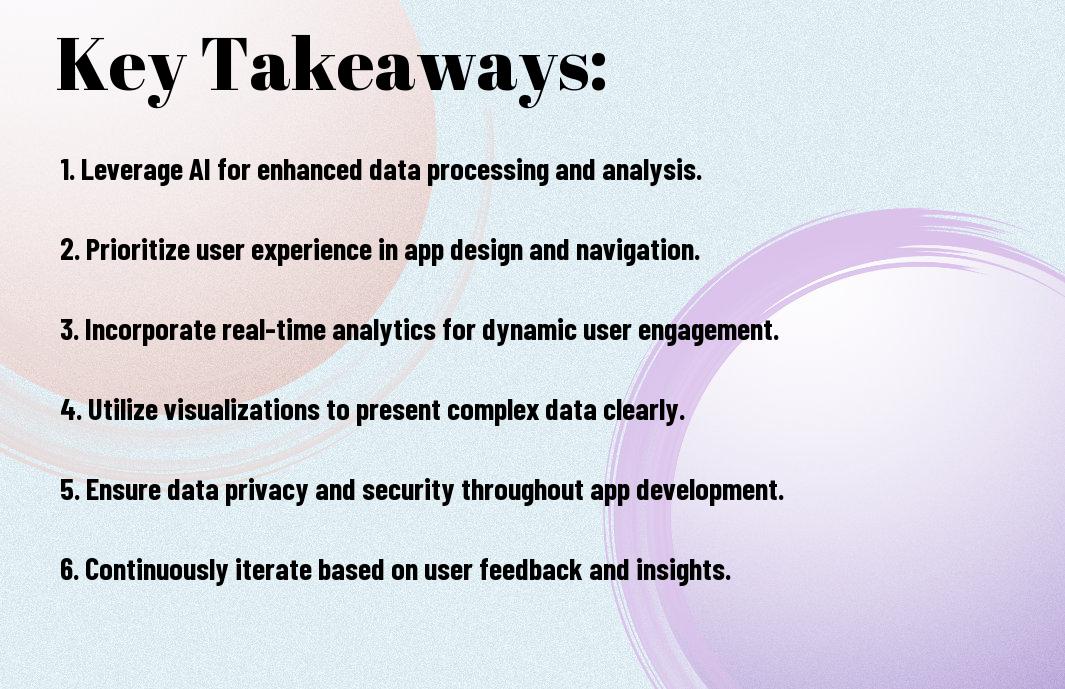
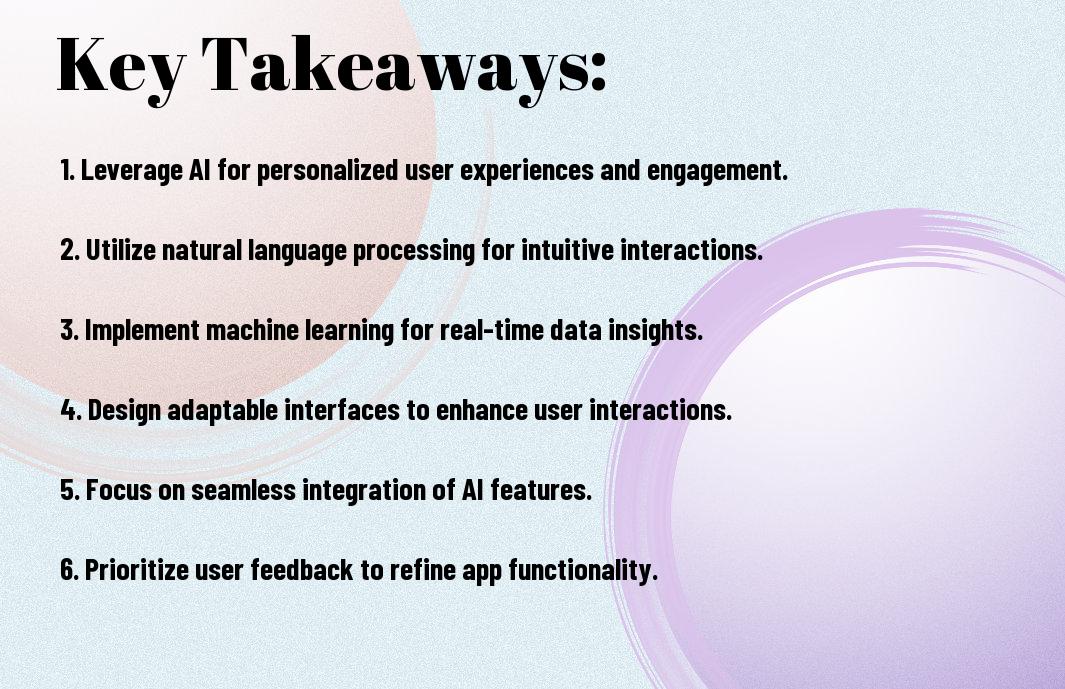
- Integrating advanced AI technologies into interactive apps can significantly enhance user experience by providing personalized and dynamic interactions, such as voice assistants, facial recognition, and predictive analytics.
- AI-powered apps can leverage machine learning algorithms to analyze user behavior and adapt to their preferences, leading to increased engagement and loyalty.
- Designing interactive apps with AI requires a deep understanding of human-computer interaction principles, including intuitive interfaces, natural language processing, and emotional intelligence.
- Advanced AI technologies, such as computer vision and augmented reality, can enable innovative features like object detection, image recognition, and immersive experiences, expanding the possibilities of interactive app design.
- Effective design of AI-powered interactive apps involves balancing technological capabilities with ethical considerations, such as data privacy, bias, and transparency, to ensure a trustworthy and responsible user experience.
Core AI Technologies in App Design
While designing interactive apps, you will encounter various AI technologies that can enhance your app’s functionality. You will need to understand these technologies to create an engaging user experience. Your app’s success depends on the effective integration of these technologies.
Machine Learning Integration
Besides other AI technologies, machine learning enables your app to learn from user behavior and adapt to their needs. You can use machine learning to personalize your app’s content and improve user engagement. Your app will become more intuitive and user-friendly with machine learning integration.
Natural Language Processing Components
Alongside other technologies, natural language processing (NLP) components allow your app to understand and process human language. You can use NLP to create chatbots, voice assistants, and other interactive features that enhance user experience. Your app will be able to communicate with users more effectively with NLP components.
In addition to the basic functions of NLP, you can also use it to analyze user feedback and sentiment. You can then use this information to improve your app’s performance and user experience. Your app will become more responsive to user needs, and you will be able to make data-driven decisions to drive your app’s success.
User Experience and AI Interaction
Assuming you want to create an engaging and intuitive app, you’ll need to consider how users interact with AI technologies, and design an experience that feels seamless and natural, allowing you to build trust with your users.
Predictive Interface Design
Around the concept of predictive interface design, you’ll find that AI can help you anticipate user needs, providing a more personalized experience, and enabling you to make data-driven design decisions that enhance your app’s overall usability.
Adaptive Learning Systems
Against the backdrop of evolving user behaviors, you’ll need to incorporate adaptive learning systems that adjust to individual preferences, allowing you to deliver targeted content and improve user engagement, and as you investigate deeper, you’ll discover the full potential of these systems.
Adaptive learning systems enable you to create a unique experience for each user, as they learn and adapt to individual behaviors, you can refine your app’s performance, and make adjustments to better meet the needs of your users, ultimately leading to increased satisfaction and loyalty.
Data Management and Processing
Keep in mind that effective data management is vital for designing interactive apps with advanced AI technologies. You will need to consider how your app will collect, store, and process user data to ensure seamless functionality and personalized experiences.
Real-time Analytics
Driven by the need for instant insights, you can leverage real-time analytics to monitor user behavior and make data-driven decisions to improve your app’s performance and user engagement.
Privacy and Security Protocols
Before implementing any data management strategy, you should consider the privacy and security implications of collecting and storing user data, ensuring that your app complies with relevant regulations and protects your users’ sensitive information.
Privacy is a top concern for your users, and you must prioritize it when designing your app’s data management system. You should implement robust security measures, such as encryption and access controls, to safeguard user data and prevent unauthorized access or breaches, maintaining trust and credibility with your users.

AI-Driven Personalization
To create a truly immersive experience, you can leverage AI-driven personalization in your interactive app, allowing you to tailor the user experience to individual preferences and behaviors.
User Behavior Analysis
On the basis of user interactions, you can analyze behavior patterns, identifying trends and preferences that inform your personalization strategy, enabling you to create a more engaging experience for your users.
Dynamic Content Adaptation
To further enhance the user experience, you can implement dynamic content adaptation, adjusting the content and layout in real-time to match your users’ evolving needs and interests.
Considering the complexities of dynamic content adaptation, you will need to develop a system that can process user data, preferences, and behavior in real-time, adjusting the content seamlessly to create a unique experience for each user, making your app more engaging and increasing user retention.
Performance Optimization
Unlike other aspects of app design, performance optimization requires careful consideration of various factors to ensure a seamless user experience. You need to balance functionality with efficiency to create an app that is both feature-rich and fast.
Resource Management
Beneath the surface of your app’s interface, you’ll find a complex system of resources that need to be managed effectively. You can optimize your app’s performance by allocating resources wisely, ensuring that your app runs smoothly and efficiently on various devices.
Response Time Enhancement
Performing regular checks on your app’s response time is imperative to identify areas for improvement. You can enhance your app’s response time by optimizing code, reducing latency, and leveraging advanced AI technologies to streamline processes.
Time is of the essence when it comes to response time enhancement, and you should focus on creating an app that responds quickly to user input. You can achieve this by using advanced AI-powered tools to analyze user behavior, predict interactions, and optimize your app’s performance accordingly, resulting in a more engaging and interactive user experience for your users.
Testing and Quality Assurance
Not only is testing crucial, but you also need to ensure your app’s AI integration is seamless. You can explore 15 AI Tools for Designers in 2025 to improve your design process.
AI Model Validation
By validating your AI models, you ensure they function as intended, and you can identify potential errors early on, saving you time and resources in the long run.
User Interaction Testing
Assurance of a smooth user experience is vital, and you achieve this by testing how users interact with your app, identifying areas that need improvement.
Validation of user interaction is an ongoing process, and as you test your app, you will uncover new ways to enhance the user experience, making your app more engaging and effective, allowing you to make data-driven decisions to refine your design and improve your app’s overall performance.
Conclusion
Hence, as you examine into designing interactive apps with advanced AI technologies, you will uncover new possibilities for enhancing your user experience. You will be able to create personalized and dynamic interfaces that adapt to your users’ needs. By leveraging AI, you can streamline your development process and focus on crafting innovative solutions that set your apps apart. Your ability to integrate AI will ultimately determine the success of your interactive apps in today’s competitive market.
FAQ
Q: What are the key considerations when designing interactive apps with advanced AI technologies?
A: When designing interactive apps with advanced AI technologies, it’s crucial to consider the user experience, ensuring that the AI-driven features are intuitive and seamless. This involves understanding the target audience, their needs, and preferences to create a user-friendly interface. Additionally, developers should prioritize data privacy and security, as AI technologies often rely on vast amounts of user data. By balancing innovation with user-centric design, developers can create engaging and effective interactive apps that leverage the power of AI.
Q: How can developers integrate AI technologies into their app design to enhance user engagement?
A: Developers can integrate AI technologies into their app design by incorporating features such as natural language processing (NLP), machine learning algorithms, and computer vision. These technologies can enable personalized recommendations, predictive analytics, and interactive interfaces that adapt to user behavior. For instance, chatbots powered by NLP can provide users with tailored support and guidance, while machine learning algorithms can help apps learn from user interactions and improve over time. By leveraging these AI-driven features, developers can create immersive and dynamic experiences that captivate and retain users.
Q: What are the potential challenges and limitations of designing interactive apps with advanced AI technologies?
A: One of the primary challenges of designing interactive apps with advanced AI technologies is ensuring that the AI systems are transparent, explainable, and fair. Developers must also address concerns around data bias, as AI algorithms can perpetuate existing biases if trained on biased data. Furthermore, the complexity of AI technologies can lead to increased development time and costs, requiring significant expertise and resources. To overcome these challenges, developers should prioritize testing, validation, and iteration, as well as collaborate with AI ethicists and experts to ensure that their apps are both innovative and responsible.