As you explore the latest advancements in technology, you’re likely to notice a significant shift in app functionality. Your favorite apps are becoming smarter, more intuitive, and incredibly efficient, thanks to the integration of AI algorithms. You can now enjoy personalized experiences, automated tasks, and enhanced performance, all of which are made possible by the power of artificial intelligence. By leveraging AI, your apps can learn your habits and preferences, adapting to your needs in real-time.

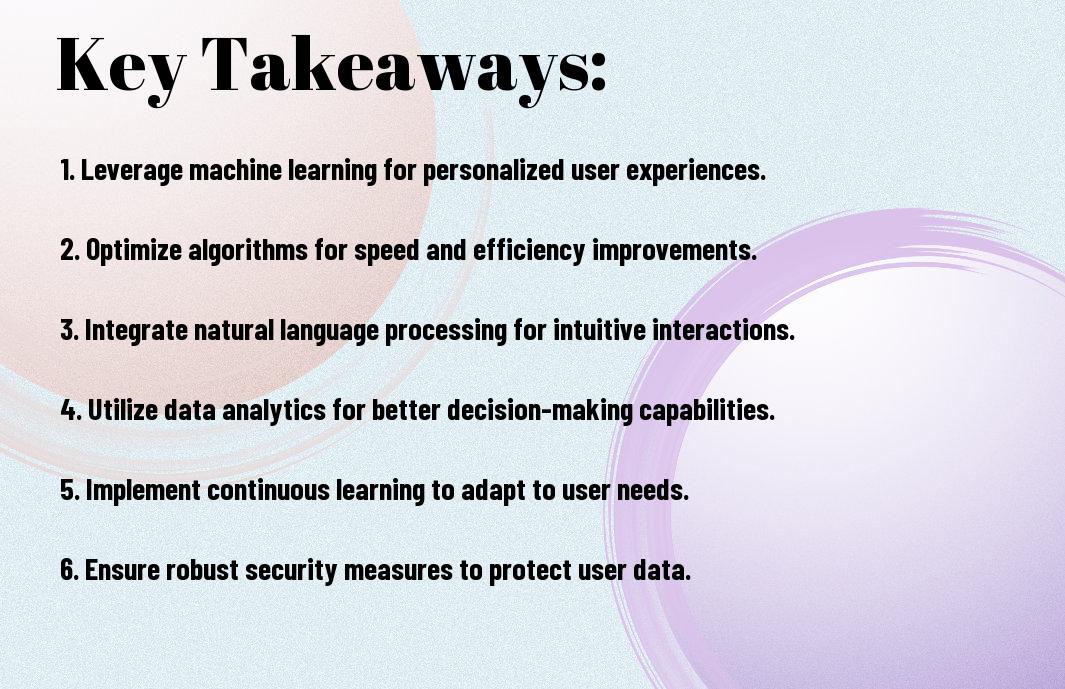
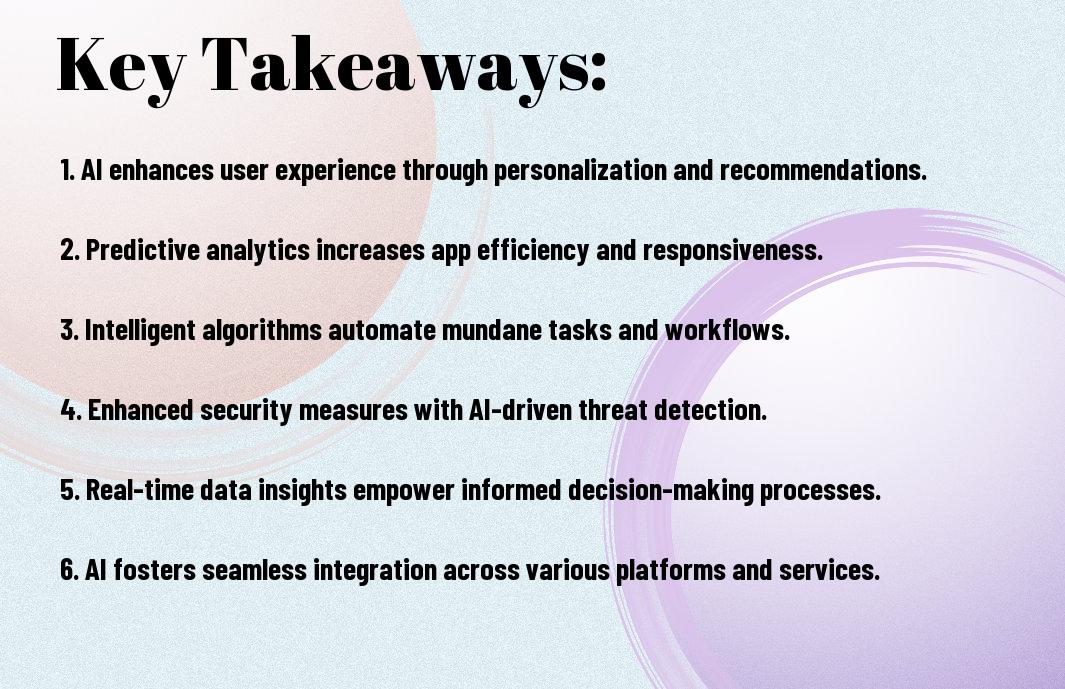
Key Takeaways:
- Integrating AI algorithms into app development can significantly enhance user experience by providing personalized recommendations, automating tasks, and improving overall performance.
- AI-powered apps can analyze vast amounts of data, enabling them to make informed decisions, predict user behavior, and offer tailored solutions to individual users.
- Machine learning, a subset of AI, allows apps to learn from user interactions and adapt to their preferences over time, leading to increased user engagement and loyalty.
- AI-driven apps can also improve security by detecting and preventing potential threats, such as fraud and data breaches, through advanced anomaly detection and pattern recognition techniques.
- By leveraging AI algorithms, developers can create innovative app features, such as voice assistants, image recognition, and natural language processing, that transform the way users interact with their devices and access information.
AI Integration Fundamentals
A key aspect of revolutionizing app functionality with AI algorithms is understanding the basics of AI integration, which enables you to enhance your app’s capabilities and provide a better user experience, allowing you to stay ahead in the competitive market.
Core Algorithm Components
Aligning your development strategy with the right algorithm components is crucial, as you will be able to create a solid foundation for your AI-powered app, enabling you to build upon it and expand your app’s functionality to meet your users’ evolving needs.
Machine Learning Frameworks
Against the backdrop of rapidly evolving technology, you will find that leveraging machine learning frameworks is vital, as they provide you with the tools and resources necessary to develop and implement AI algorithms that can learn and adapt to your users’ behavior.
Another significant advantage of machine learning frameworks is that they offer you a wide range of pre-built functions and APIs, allowing you to streamline your development process and focus on fine-tuning your AI algorithms to achieve optimal performance and accuracy, thereby enhancing your app’s overall functionality and user experience.
Neural Networks in App Development
Any app developer looking to revolutionize their app’s functionality should consider incorporating neural networks. You can learn more about the impact of AI on mobile app development by visiting The Rise of AI: Transforming Mobile App Development to discover new ways to enhance your app.
Deep Learning Implementation
Along with neural networks, you can implement deep learning techniques to improve your app’s performance. You will find that deep learning enables your app to learn from data and make informed decisions, allowing for a more personalized user experience.
Pattern Recognition Systems
Before submerging into the world of AI, you should understand the basics of pattern recognition systems. You will see that these systems enable your app to identify and classify data, making it easier to provide users with relevant information.
Another key aspect of pattern recognition systems is their ability to learn from data and improve over time. As you integrate these systems into your app, you will notice a significant improvement in your app’s ability to provide personalized recommendations and predictions, ultimately enhancing the user experience and setting your app apart from the competition.
Predictive Analytics Features
Unlike traditional analytics, AI-powered predictive analytics enables you to forecast your app’s performance and user behavior, allowing you to make data-driven decisions to drive growth.
User Behavior Analysis
The ability to analyze user behavior is a key aspect of predictive analytics, enabling you to understand your users’ needs and preferences, and tailor your app’s functionality to meet their expectations, enhancing your overall user experience.
Real-time Data Processing
By leveraging real-time data processing, you can analyze and respond to user interactions instantly, enabling you to provide a more personalized and responsive experience, which can significantly impact your app’s overall performance and user engagement.
Further, real-time data processing allows you to identify trends and patterns as they emerge, enabling you to adjust your app’s functionality and respond to changes in user behavior, ensuring that your app remains relevant and competitive in a rapidly evolving market, and you can stay ahead of the curve by leveraging the latest advancements in AI algorithms and predictive analytics to drive your app’s success.
Natural Language Processing
All applications can benefit from natural language processing, enabling you to interact with your app in a more human-like way, making it more user-friendly and accessible.
Voice Command Integration
One of the key features of natural language processing is voice command integration, allowing you to control your app with voice commands, making it easier to use and more convenient for you.
Contextual Response Systems
Similarly, contextual response systems enable your app to understand the context of your requests, providing you with more accurate and relevant responses, enhancing your overall user experience.
Voice assistants, like Siri or Google Assistant, are great examples of contextual response systems, as you can ask follow-up questions and they will understand the context of your conversation, providing you with more personalized and accurate responses, making your interaction with your app more efficient and effective for you.
Performance Optimization
Keep in mind that AI algorithms can significantly enhance your app’s performance, allowing you to provide a seamless user experience. By leveraging these algorithms, you can streamline your app’s functionality and improve its overall efficiency.
Resource Management
Among the key benefits of AI algorithms is their ability to optimize your app’s resource allocation, enabling you to make the most of your available resources and minimize waste, which helps you to improve your app’s performance and reduce costs.
Processing Efficiency
Resourcing your app with AI algorithms can greatly enhance its processing efficiency, allowing you to handle complex tasks with ease and speed, which enables you to provide a better user experience and stay ahead of the competition.
At the heart of processing efficiency is the ability to analyze and optimize your app’s workflow, identifying areas where AI algorithms can be leveraged to improve performance and reduce latency, and by doing so, you can create a more responsive and engaging user experience that drives user satisfaction and loyalty.
Security and Privacy
After integrating AI algorithms into your app, you can ensure a secure user experience by implementing robust security measures. You can learn more about enhancing your app’s functionality with AI by visiting Revolutionizing Mobile Apps: AI for Next-Gen App Development to discover the latest trends and best practices.
Data Protection Protocols
Afterwards, you will need to establish data protection protocols to safeguard user information, ensuring that your app complies with data protection regulations and maintains user trust.
Ethical AI Implementation
Any concerns about AI implementation can be addressed by prioritizing transparency and accountability in your app’s AI-driven decision-making processes, allowing you to build trust with your users.
For instance, you can achieve ethical AI implementation by regularly auditing your AI algorithms for biases, providing clear explanations for AI-driven decisions, and ensuring that users have control over their data, thereby fostering a trustworthy and secure app environment that protects your users’ interests.
Conclusion
Following this exploration of AI algorithms in app development, you now understand how to revolutionize your app’s functionality. You can leverage AI to enhance user experience, streamline processes, and drive innovation. By integrating AI algorithms, you will unlock new possibilities for your app, enabling it to learn, adapt, and improve over time, ultimately benefiting your users and setting your app apart from the competition, allowing you to stay ahead in the market.
FAQ
Q: What role do AI algorithms play in revolutionizing app functionality, and how do they enhance user experience?
A: AI algorithms play a significant role in revolutionizing app functionality by enabling apps to learn from user behavior, adapt to their preferences, and provide personalized experiences. These algorithms can analyze vast amounts of data, identify patterns, and make predictions, allowing apps to offer tailored recommendations, improve navigation, and streamline processes. As a result, users enjoy a more intuitive, efficient, and engaging experience, driving increased satisfaction and loyalty.
Q: How do AI-powered apps leverage machine learning to improve their functionality and stay competitive in the market?
A: AI-powered apps leverage machine learning by integrating algorithms that enable them to learn from user interactions, update their knowledge base, and refine their performance over time. This allows apps to automatically improve their functionality, fix bugs, and adapt to changing user needs, ensuring they stay competitive in the market. Additionally, machine learning enables apps to develop new features, such as predictive analytics, natural language processing, and computer vision, which further enhance their capabilities and user engagement.
Q: What are the potential benefits and challenges of implementing AI algorithms in app development, and how can developers overcome these challenges?
A: The potential benefits of implementing AI algorithms in app development include enhanced user experience, improved efficiency, and increased competitiveness. However, challenges such as data quality, algorithmic bias, and integration complexity can arise. To overcome these challenges, developers can focus on collecting high-quality, diverse data, implementing robust testing and validation protocols, and collaborating with AI experts to ensure seamless integration. Moreover, developers should prioritize transparency, explainability, and accountability in their AI-powered apps to build trust with users and address potential concerns.