Fraud

Using AI for Enhanced App Security and Fraud Detection

As you develop and deploy your mobile applications, you face numerous security threats that can compromise your users’ sensitive data. You need to stay ahead of potential breaches and fraud attempts. By leveraging Artificial Intelligence (AI), you can significantly enhance your app’s security and detect fraudulent activities in real-time, protecting your users and your business from financial losses and reputational damage. You can utilize AI-powered tools to identify and mitigate risks, ensuring a secure experience for your users.

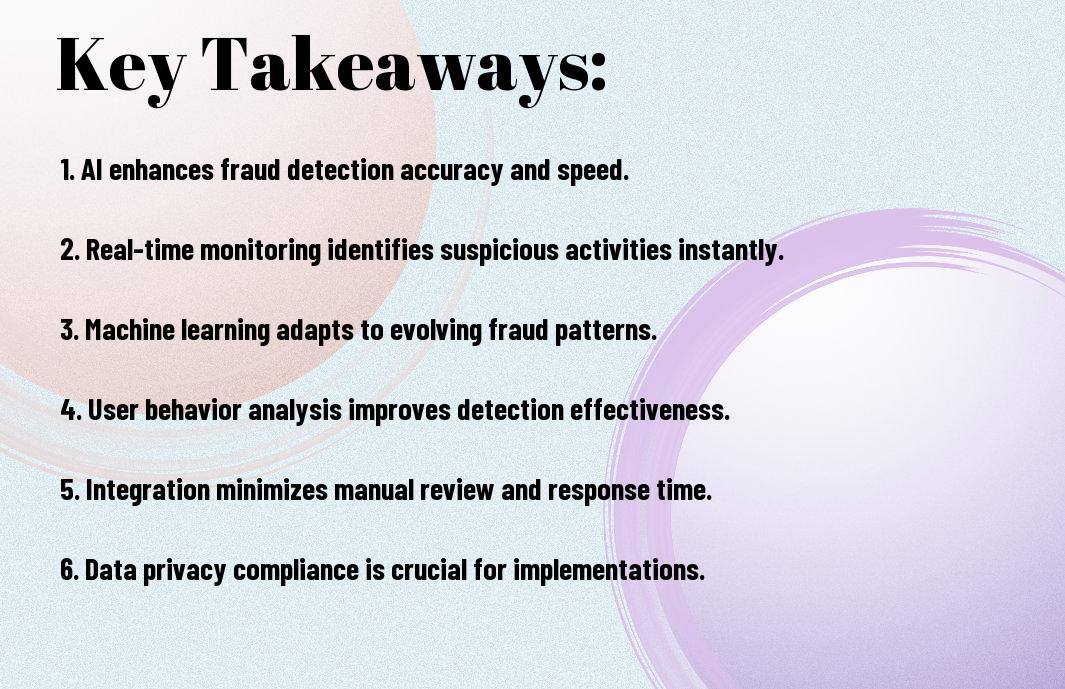
Key Takeaways:

  • Implementing AI-powered security solutions can significantly enhance app security by detecting and preventing fraudulent activities in real-time, reducing the risk of financial losses and reputational damage.
  • AI-driven fraud detection systems can analyze vast amounts of data, identify patterns, and flag suspicious behavior, allowing for swift action to be taken against potential threats.
  • Machine learning algorithms can be trained to recognize and adapt to new fraud patterns, enabling apps to stay ahead of emerging threats and improve their overall security posture.
  • AI-powered security tools can also help apps comply with regulatory requirements and industry standards, such as GDPR and PCI-DSS, by providing robust security measures and audit trails.
  • By leveraging AI for app security and fraud detection, businesses can improve customer trust, reduce false positives, and create a safer and more secure user experience.
    AI Security Foundations

    A solid understanding of AI security foundations is necessary for you to leverage AI for enhanced app security and fraud detection. You can learn more about AI Best Practices for Fraud Detection in FinTech to improve your security measures.

    Machine Learning Models in Security

    Alongside your security efforts, you’ll find that machine learning models play a significant role in detecting and preventing threats, allowing you to strengthen your app’s security posture.

    Neural Networks for Threat Detection

    Around the clock, neural networks can help you detect threats in real-time, enabling you to respond quickly to potential security breaches and protect your users’ data.

    Indeed, as you explore deeper into neural networks for threat detection, you’ll discover that they can be trained to identify complex patterns and anomalies, helping you stay one step ahead of potential threats and ensuring your app’s security is always up-to-date.

    Real-time Threat Monitoring

    You can significantly enhance your app’s security by implementing real-time threat monitoring, which enables you to detect and respond to potential threats as they emerge.

    Behavioral Analysis Systems

    To effectively identify suspicious activity, you can utilize behavioral analysis systems that track user behavior and flag deviations from normal patterns, allowing you to take swift action to protect your app.

    Pattern Recognition Algorithms

    Among the most effective tools for real-time threat monitoring are pattern recognition algorithms, which enable you to identify and flag potential threats based on established patterns of malicious behavior.

    Pattern recognition algorithms are a key component of your app’s security arsenal, allowing you to analyze vast amounts of data and identify potential threats in real-time, giving you the ability to respond quickly and effectively to emerging threats, thereby protecting your users and your business from potential harm, and ensuring the integrity of your app.

    Fraud Prevention Mechanisms

    All organizations can benefit from implementing AI-powered fraud prevention mechanisms to protect their apps from malicious activities. You can leverage AI to analyze user behavior, detect anomalies, and prevent fraudulent transactions.

    Transaction Anomaly Detection

    Around the clock, your app’s transactions can be monitored using AI-powered systems that identify suspicious patterns and alert you to potential fraud. You can then take swift action to prevent financial losses and protect your users.

    User Authentication Enhancement

    Only by leveraging AI-driven authentication methods can you significantly enhance the security of your app. You can use machine learning algorithms to analyze user behavior and verify identities, ensuring that only authorized users access your app.

    It is necessary to note that AI-powered user authentication enhancement can be tailored to your specific needs, allowing you to choose the most effective methods for your app, such as biometric authentication or behavioral analysis, to provide an additional layer of security and protect your users’ sensitive information.

    AI-Powered Risk Assessment

    Once again, you can leverage AI to enhance your app’s security by implementing AI-powered risk assessment, which helps identify potential threats and vulnerabilities in your system, allowing you to take proactive measures to mitigate them.

    Predictive Analysis Models

    Models like machine learning algorithms and statistical models enable you to analyze patterns and anomalies in user behavior, helping you detect and prevent fraudulent activities, and improve your app’s overall security posture.

    Risk Scoring Systems

    Among the various tools at your disposal, risk scoring systems are particularly effective in evaluating the likelihood of a user posing a threat to your app, assigning a score based on their behavior and other factors, and enabling you to take targeted actions.

    And as you implement risk scoring systems, you’ll be able to refine your approach over time, incorporating new data and insights to improve the accuracy of your risk assessments, and making more informed decisions about how to protect your app and your users from potential threats.

    Security Response Automation

    Many organizations are turning to AI-powered security response automation to enhance their app security and fraud detection capabilities. You can leverage AI to analyze threats, identify patterns, and respond to incidents in real-time, freeing up your security team to focus on more strategic tasks.

    Incident Response Integration

    Among the key benefits of security response automation is the ability to integrate incident response into your existing security infrastructure. You can use AI to streamline your incident response processes, ensuring that your team is notified and equipped to handle threats as they arise, and that your users are protected from potential harm.

    Automated Mitigation Protocols

    Across the various aspects of app security, automated mitigation protocols play a significant role in preventing and responding to threats. You can use AI to develop and implement automated protocols that detect and mitigate threats in real-time, reducing the risk of damage to your app and protecting your users’ sensitive information.

    Indeed, automated mitigation protocols are a powerful tool in your arsenal against app security threats. You can use AI to analyze traffic patterns, identify potential threats, and automatically block malicious activity, ensuring that your app remains secure and your users are protected. By leveraging AI-powered automated mitigation protocols, you can enhance your app’s security posture and stay one step ahead of emerging threats.

    Data Privacy Compliance

    Not only is AI-enhanced security a powerful tool for detecting fraud, but it also plays a significant role in ensuring your app’s data privacy compliance, allowing you to protect your users’ sensitive information and maintain their trust.

    AI Ethics in Security

    Ethically, you must consider the implications of using AI in your app’s security measures, ensuring that your implementation is fair, transparent, and respectful of your users’ rights, which helps you build a secure and trustworthy environment for them.

    Regulatory Framework Integration

    Along with the integration of AI in your app’s security, you need to ensure that your approach aligns with regulatory requirements, allowing you to navigate the complex landscape of data protection laws and regulations that apply to your app and its users.

    Further, as you probe into regulatory framework integration, you will find that understanding the specific laws and regulations applicable to your app, such as GDPR or CCPA, is crucial for your compliance strategy, enabling you to make informed decisions about your AI-powered security measures and ensure your app meets the necessary standards for data privacy and protection, giving you and your users peace of mind.

    Summing up

    Conclusively, you can leverage AI to bolster your app’s security and detect fraud more effectively. By integrating AI-powered solutions, you can significantly reduce the risk of cyber threats. For more insights, visit How AI is Revolutionizing Financial Cybersecurity to learn how you can protect your digital assets and stay ahead of potential threats.

    FAQ

    Q: What role does AI play in enhancing app security and fraud detection?

    A: AI plays a significant role in enhancing app security and fraud detection by utilizing machine learning algorithms to analyze user behavior, identify patterns, and detect anomalies in real-time. This enables apps to stay one step ahead of potential threats and prevent fraudulent activities, thereby protecting user data and maintaining the integrity of the app. By integrating AI-powered security measures, apps can reduce the risk of cyber attacks, data breaches, and other security threats, ensuring a safe and secure user experience.

    Q: How does AI-powered fraud detection work in mobile apps?

    A: AI-powered fraud detection in mobile apps works by analyzing various parameters such as user behavior, device information, and transaction patterns to identify potential fraudulent activities. The AI algorithm is trained on a large dataset of legitimate and fraudulent transactions, enabling it to learn and improve its detection capabilities over time. When a suspicious activity is detected, the AI system alerts the app’s security team, allowing them to take prompt action to prevent further damage. This proactive approach helps to minimize losses and protect users from financial and identity theft.

    Q: Can AI completely eliminate the risk of fraud and security threats in mobile apps?

    A: While AI significantly enhances app security and fraud detection, it is not a foolproof solution that can completely eliminate the risk of fraud and security threats. AI systems can be evaded by sophisticated attackers using advanced techniques such as deepfake technology, social engineering, and zero-day exploits. Therefore, it is vital to implement a multi-layered security approach that combines AI-powered detection with other security measures, such as encryption, two-factor authentication, and regular security updates, to provide comprehensive protection against various types of threats and ensure the security and integrity of mobile apps.

Using AI for Real-Time Fraud Detection in Mobile Applications

As you develop and manage mobile applications, you need to protect your users from fraudulent activities. You can leverage artificial intelligence (AI) to detect and prevent fraud in real-time. By implementing AI-powered solutions, you can significantly reduce the risk of fraud and improve your app’s security. For more information on this topic, you can visit Leveraging AI for Real-Time Fraud Detection – GoPenAI to learn how to safeguard your mobile application and your users’ sensitive data.

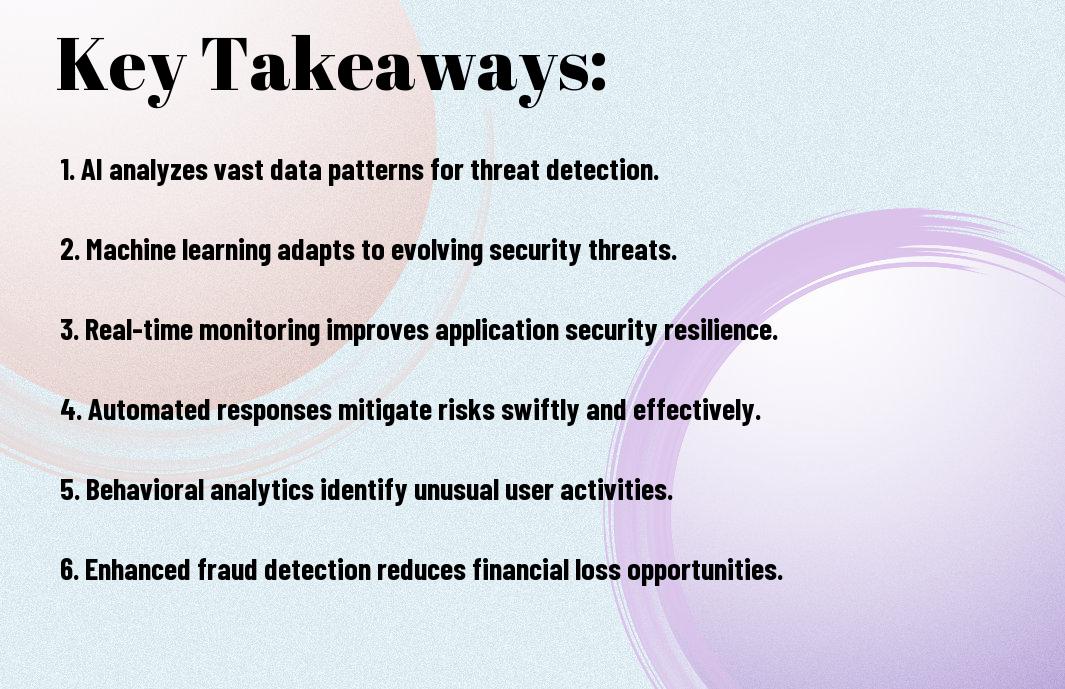
Key Takeaways:

  • Implementing AI-powered fraud detection in mobile applications can significantly reduce the risk of financial losses by identifying and preventing fraudulent transactions in real-time, thereby protecting users’ sensitive information.
  • AI algorithms can analyze vast amounts of data, including user behavior and transaction patterns, to detect anomalies and predict potential fraud, enabling swift action to be taken to prevent financial losses.
  • Machine learning models can be trained on historical data to improve the accuracy of fraud detection, allowing for more effective identification of legitimate and fraudulent transactions, and reducing the number of false positives.
  • Real-time fraud detection using AI can also help to enhance the overall user experience by minimizing the risk of account takeovers and unauthorized transactions, thereby increasing trust and confidence in mobile applications.
  • Continuous monitoring and updating of AI models is necessary to stay ahead of emerging fraud patterns and techniques, ensuring that mobile applications remain secure and protected against increasingly sophisticated fraud attempts.

AI Architecture in Mobile Fraud Detection

Before designing an AI-powered fraud detection system for your mobile application, you need to understand the underlying architecture. You will be using a combination of machine learning models and neural networks to identify and prevent fraudulent activities in real-time.

Neural Network Components

Against the backdrop of increasing fraud attempts, you will be utilizing neural network components that can analyze patterns and anomalies in user behavior. You can use these components to build a robust system that can detect and prevent fraud.

Machine Learning Models

By leveraging machine learning models, you can develop a system that can learn from data and improve its detection capabilities over time. You will be able to identify potential fraud patterns and take proactive measures to prevent them.

A key aspect of machine learning models is their ability to adapt to new fraud patterns and behaviors. As you collect more data, you can refine your models to improve their accuracy and effectiveness in detecting fraud, allowing you to better protect your users and prevent financial losses.

Real-Time Detection Mechanisms

You can leverage AI-powered solutions to detect fraud in real-time, and to learn more about this, you can visit How AI is Helping Companies Combat Fraud | Machine Learning, Predictive Analytics, and Real-Time Threat Detection to explore the possibilities.

Behavioral Pattern Analysis

To identify fraudulent activities, you need to analyze user behavior and detect anomalies in their patterns, enabling you to take prompt action against suspicious transactions.

Transaction Monitoring Systems

The key to effective fraud detection lies in implementing robust transaction monitoring systems that can track and analyze your transactions in real-time.

But as you explore deeper into transaction monitoring systems, you will discover that they can be customized to fit your specific needs, allowing you to set rules and parameters that align with your business goals, and enabling you to respond quickly to potential threats, thereby protecting your users and your reputation.

Data Processing Pipeline

Your data processing pipeline is the backbone of your fraud detection system, enabling you to analyze user behavior and identify potential threats in real-time.

Data Collection Methods

Any mobile application can leverage various data collection methods, such as user input, device information, and transaction history, to gather relevant data for fraud detection.

Feature Extraction Techniques

On the surface, feature extraction techniques may seem complex, but they involve converting raw data into meaningful features that your AI model can analyze to detect fraudulent patterns.

Consequently, you will need to select the most effective feature extraction techniques for your specific use case, such as natural language processing or machine learning algorithms, to ensure your AI model can accurately identify fraudulent activity and alert you in real-time.

Security Implementation

Not all security measures are created equal, and when it comes to real-time fraud detection in mobile applications, you need to ensure that your security implementation is robust and effective.

Encryption Protocols

By utilizing advanced encryption protocols, you can protect your users’ sensitive data and prevent unauthorized access to your application, giving you an added layer of security against potential threats.

Authentication Layers

Beneath the surface of your application, you can implement multiple authentication layers to verify user identities and detect suspicious activity, allowing you to respond quickly to potential security breaches.

Indeed, as you research deeper into the world of authentication layers, you will find that implementing a combination of password protection, biometric authentication, and behavioral analysis can significantly enhance your application’s security, giving you greater control over who accesses your platform and when, allowing you to focus on providing a seamless user experience while maintaining the integrity of your application.

Performance Optimization

Once again, you’ll need to focus on optimizing your AI-powered fraud detection system for maximum performance, ensuring it can handle the demands of real-time processing without compromising your mobile application’s overall user experience.

Response Time Management

Against the backdrop of rising user expectations, you must prioritize response time management, ensuring your system can detect and flag fraudulent activity swiftly, typically within milliseconds, to prevent financial losses and maintain user trust.

Resource Utilization

Any inefficiency in resource utilization can significantly impact your system’s performance, so you should closely monitor and optimize your AI model’s computational resources, such as CPU and memory usage, to ensure seamless and efficient operation.

Management of your resources is key to maintaining optimal performance, and you can achieve this by implementing strategies such as load balancing, caching, and scaling, which will enable your system to handle sudden spikes in traffic or usage, ensuring your AI-powered fraud detection system remains effective and efficient in detecting and preventing fraudulent activity in real-time.

Risk Assessment Framework

After implementing AI in your mobile application, you need to establish a risk assessment framework to identify potential threats and vulnerabilities, enabling you to take proactive measures to prevent fraud.

Threat Level Classification

Besides identifying threats, you must classify them based on their severity and potential impact on your application, allowing you to prioritize your efforts and allocate resources effectively to mitigate these threats.

Alert Generation Systems

After detecting suspicious activity, you can set up alert generation systems to notify you of potential fraud, enabling you to take swift action to prevent financial losses and protect your users.

A key aspect of alert generation systems is their ability to provide you with real-time notifications, allowing you to respond quickly to emerging threats and minimize the risk of fraud in your mobile application, thereby protecting your business and maintaining your users’ trust in your services.

Summing up

From above, you can see that using AI for real-time fraud detection in mobile applications enhances your security. You can protect your users’ sensitive information and prevent financial losses. Your mobile application’s reputation will also improve, as you can detect and prevent fraudulent activities efficiently. You will be able to provide a safer experience for your users, which is vital for your business’s success.

FAQ

Q: What are the benefits of using AI for real-time fraud detection in mobile applications?

A: The use of AI for real-time fraud detection in mobile applications provides several benefits, including enhanced security, improved user experience, and reduced financial losses. AI-powered systems can analyze vast amounts of data in real-time, identifying patterns and anomalies that may indicate fraudulent activity. This enables swift action to be taken, protecting both the user and the application from potential threats. Furthermore, AI-driven fraud detection systems can learn and adapt over time, becoming increasingly effective at identifying and preventing fraud.

Q: How does AI-powered real-time fraud detection work in mobile applications?

A: AI-powered real-time fraud detection in mobile applications typically involves the use of machine learning algorithms that analyze user behavior, transaction data, and other relevant information to identify potential fraud. These algorithms can be trained on historical data to learn patterns and anomalies associated with fraudulent activity. In real-time, as users interact with the application, their behavior is compared against these patterns, and if suspicious activity is detected, alerts can be triggered, and appropriate actions can be taken. This process happens rapidly, often in a matter of milliseconds, allowing for immediate intervention when necessary.

Q: What kinds of fraud can AI detect in real-time in mobile applications, and how accurate is it?

A: AI can detect a variety of fraud types in real-time in mobile applications, including but not limited to, phishing attempts, account takeover attacks, and transactional fraud. The accuracy of AI in detecting fraud depends on several factors, including the quality of the training data, the sophistication of the algorithms used, and the specific characteristics of the fraud attempts. Advanced AI systems, particularly those utilizing deep learning techniques, can achieve high accuracy rates, often exceeding 90%. However, the effectiveness of AI in fraud detection also depends on continuous updates and refinements to the system, as fraud patterns and methods evolve over time.

Skip to content