Business

The Rise Of AI Agents – A Comprehensive Guide To Automating Your Business

As you navigate the ever-evolving landscape of business technology, you’re likely considering how to streamline your operations and stay ahead of the competition. You’re probably aware that artificial intelligence (AI) is revolutionizing industries, and AI agents are at the forefront of this transformation. You can leverage AI agents to automate repetitive tasks, enhance customer experiences, and drive growth. This guide will walk you through the process of implementing AI agents to automate your business, helping you make informed decisions about your technology investments and strategies.

Key Takeaways:

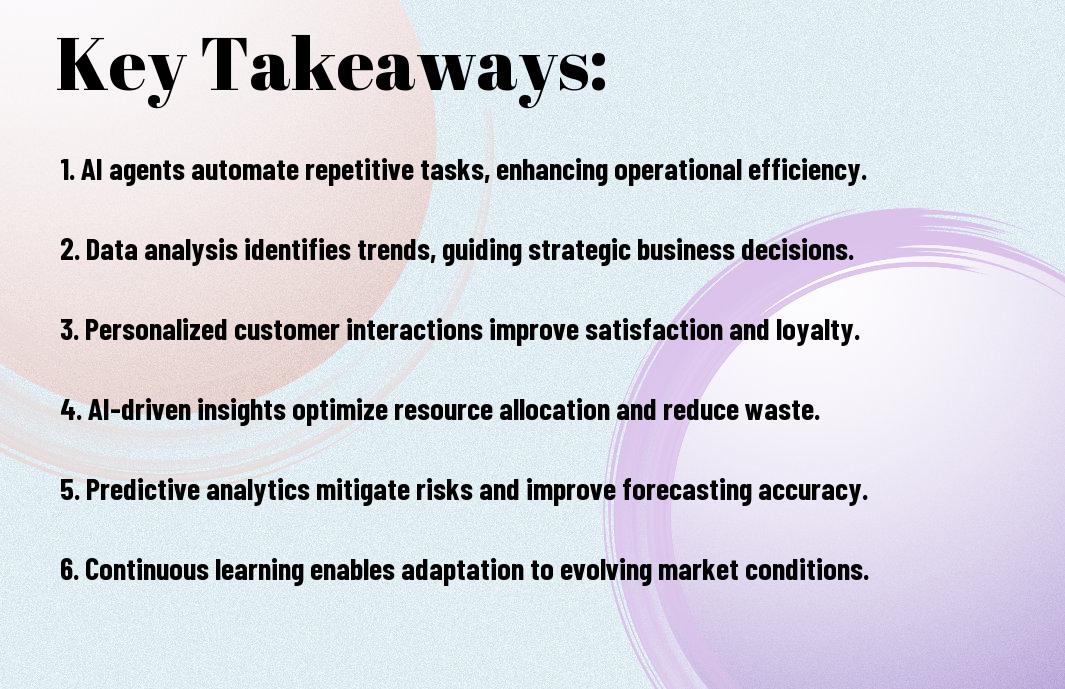
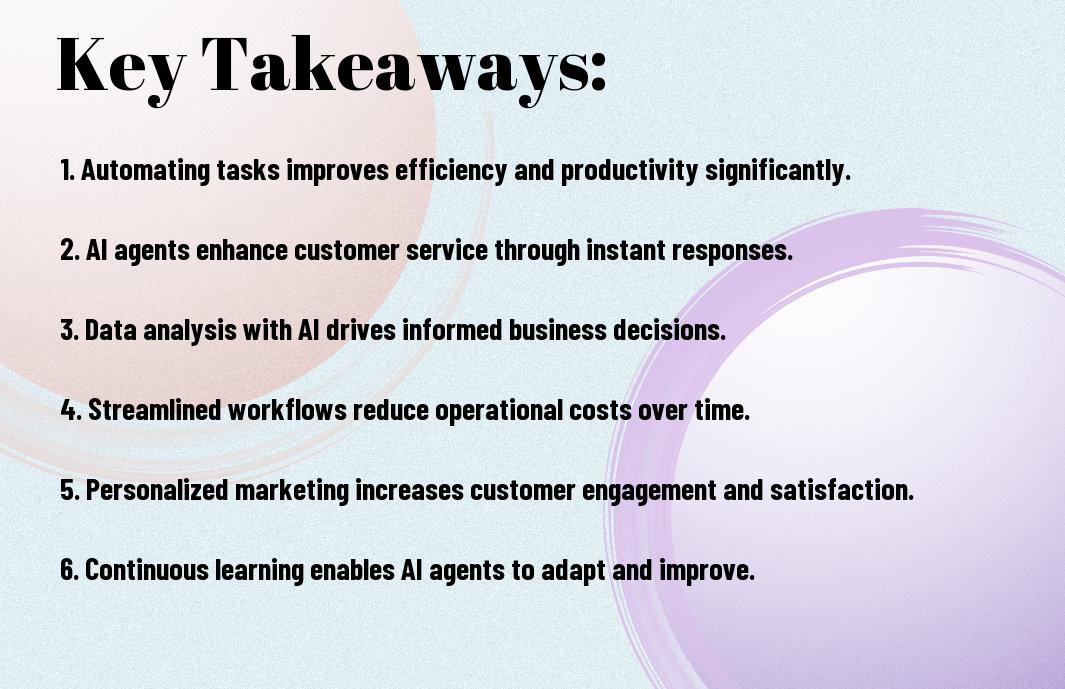
  • Implementing AI agents can significantly streamline business operations by automating repetitive tasks, allowing for increased productivity and efficiency across various departments and functions.
  • The integration of AI agents enables businesses to provide 24/7 customer support, enhancing user experience through instant responses and personalized interactions, which can lead to improved customer satisfaction and loyalty.
  • As AI technology continues to evolve, businesses can leverage AI agents to analyze large datasets, make informed decisions, and predict market trends, ultimately driving innovation and competitive advantage in their respective industries.
    The Evolution of AI Agents

    Before entering into the world of AI agents, you can learn more about their capabilities by visiting What are AI Agents? An Informative Guide – Automation to understand how they can transform your business.

    From Simple Automation to Intelligent Systems

    Along with the advancements in technology, you are now able to witness the transition of AI agents from simple automation tools to intelligent systems that can learn and adapt to your business needs.

    Key Technologies Driving AI Agents

    Intelligent technologies such as machine learning and natural language processing are driving the development of AI agents, enabling you to automate complex tasks and improve your business efficiency.

    Technologies like deep learning and computer vision are also playing a significant role in enhancing the capabilities of AI agents, allowing you to analyze large amounts of data and make informed decisions to grow your business.

    Core Components of Business AI Agents

    Some of the key elements that make up business AI agents include natural language processing, machine learning integration, and data analysis. As you explore these components, you’ll discover how they work together to automate your business processes.

    Natural Language Processing

    One of the most significant aspects of business AI agents is their ability to understand and generate human-like language, enabling you to interact with your customers more effectively. You can use this feature to automate customer support and improve user experience.

    Machine Learning Integration

    One key benefit of machine learning integration is its ability to analyze large datasets and make predictions, allowing you to make informed decisions about your business. You can use this feature to optimize your operations and improve efficiency.

    This machine learning integration enables your AI agent to learn from your data and adapt to your business needs over time. As you implement machine learning integration, you’ll be able to automate tasks such as data analysis, customer segmentation, and personalized marketing, freeing up more time for you to focus on strategic decision-making and growth.

    Implementation Strategies

    Many businesses are turning to AI agents to automate their operations, and you can do the same by developing a solid implementation strategy. This involves understanding your business needs and identifying areas where AI can add value.

    Assessment and Planning

    The first step in implementing AI agents is to assess your current systems and plan for integration, allowing you to identify potential roadblocks and develop a smooth transition plan, which you can use to guide your implementation process.

    Integration Frameworks

    Assessing your existing infrastructure is necessary to determine the best integration frameworks for your AI agents, enabling you to choose the most suitable tools and technologies for your business, and you will be able to make informed decisions about your implementation.

    Considering the various integration frameworks available, you will need to evaluate factors such as scalability, compatibility, and security to ensure seamless integration of AI agents into your business operations, and you should also consider the potential impact on your existing workflows and processes, allowing you to make adjustments as needed to maximize the benefits of AI automation.

    Business Process Transformation

    Your business can greatly benefit from AI agents, which can automate repetitive tasks and streamline operations, leading to increased efficiency and productivity.

    Workflow Optimization

    Around the concept of workflow optimization, you’ll find that AI agents can analyze your processes and identify areas for improvement, allowing you to make data-driven decisions and refine your workflows.

    Employee Adaptation

    Alongside the implementation of AI agents, you’ll need to consider how your employees will adapt to the new technology, as they will need to learn to work alongside these agents and understand how to leverage their capabilities.

    Another aspect of employee adaptation is the potential for AI agents to augment your employees’ skills, freeing them up to focus on higher-value tasks that require creativity, problem-solving, and human intuition, allowing you to get the most out of your team and the technology you’re investing in.

    Risk Management and Security

    After implementing AI agents in your business, you need to consider the potential risks and security threats. You must assess the vulnerabilities of your system and take measures to mitigate them, ensuring the protection of your data and operations.

    Data Protection Protocols

    The primary concern is safeguarding your sensitive information, and you should establish robust protocols to prevent unauthorized access and data breaches, ensuring your AI system’s integrity and security.

    Compliance Considerations

    Compliant with regulatory requirements, you should ensure your AI agents adhere to relevant laws and standards, such as data protection and privacy regulations, to avoid potential legal issues and reputational damage.

    Even when you have implemented compliance measures, you should continuously monitor and update your AI system to ensure it aligns with evolving regulatory requirements, protecting your business from potential risks and maintaining trust with your customers and stakeholders, as you navigate the complex landscape of AI-driven operations, you need to stay informed about the latest developments and best practices in AI risk management and security.

    Measuring AI Agent Success

    Once again, you’ll need to assess your AI agents’ effectiveness to ensure they’re meeting your business goals. This involves tracking key performance indicators and analyzing the return on investment.

    Performance Metrics

    Productively, you can evaluate your AI agents’ success by monitoring metrics such as task completion rates, accuracy, and user engagement. This data will help you identify areas for improvement and optimize your AI agents’ performance.

    ROI Analysis

    Behind every successful AI implementation is a thorough analysis of its financial impact. You’ll need to calculate the costs and benefits of using AI agents in your business to determine their overall value.

    Indeed, calculating the return on investment for your AI agents can be complex, but it’s vital to understanding their true value. You’ll need to consider factors such as cost savings, increased revenue, and improved efficiency, and weigh these against the costs of implementing and maintaining your AI agents. By doing so, you’ll be able to make informed decisions about your AI strategy and ensure that your AI agents are driving real business results.

    Conclusion

    Presently, you have gained a thorough understanding of the rise of AI agents and their potential to automate your business. You can now leverage this knowledge to streamline your operations, enhance efficiency, and drive growth. By implementing AI agents, you will be able to optimize your workflow, reduce costs, and improve your overall business performance, allowing you to stay ahead in the competitive market and achieve your goals.

    FAQ

    Q: What is the main purpose of implementing AI agents in business operations?

    A: The primary goal of integrating AI agents into business operations is to automate repetitive and mundane tasks, thereby increasing efficiency, reducing manual errors, and enhancing overall productivity. By leveraging AI agents, businesses can streamline their processes, free up human resources for more strategic and creative work, and ultimately drive growth and innovation.

    Q: How can AI agents be used to improve customer service and experience?

    A: AI agents can be employed to provide 24/7 customer support, helping to resolve queries and issues in a timely and personalized manner. They can be used to power chatbots, virtual assistants, and other interactive systems that offer instant responses to customer inquiries, route complex issues to human representatives, and analyze customer feedback to identify areas for improvement. By doing so, AI agents can significantly enhance the overall customer experience, leading to increased satisfaction, loyalty, and retention.

    Q: What are the key benefits of automating business processes with AI agents?

    A: The benefits of automating business processes with AI agents are numerous and include increased efficiency, reduced costs, improved accuracy, and enhanced scalability. AI agents can process large volumes of data quickly and accurately, identify patterns and anomalies, and make informed decisions in real-time. Additionally, AI agents can help businesses to reduce manual errors, minimize the risk of human bias, and optimize resource allocation, leading to significant cost savings and improved competitiveness.

    Q: How can businesses ensure the security and integrity of their data when using AI agents?

    A: To ensure the security and integrity of their data, businesses should implement robust security measures when using AI agents, such as encrypting sensitive information, using secure authentication protocols, and regularly updating software and systems. Additionally, businesses should establish clear guidelines and policies for AI agent usage, monitor their activity, and perform regular audits to detect and prevent potential security breaches. By taking these precautions, businesses can minimize the risk of data compromise and maintain the trust of their customers and stakeholders.

    Q: What is the future of AI agents in business, and how will they continue to evolve and improve?

    A: The future of AI agents in business is promising, with ongoing advancements in machine learning, natural language processing, and computer vision expected to drive significant improvements in their capabilities and applications. As AI agents become more sophisticated, they will be able to perform increasingly complex tasks, such as predictive analytics, decision-making, and strategy development. Moreover, the integration of AI agents with emerging technologies like blockchain, IoT, and cloud computing will enable businesses to create more seamless, efficient, and automated workflows, leading to unprecedented levels of innovation and competitiveness.

From Startups To Giants – How AI Agents Are Changing The Landscape Of Business Management

As you navigate the evolving business landscape, you’re likely noticing the significant impact of AI agents on management. Your organization can benefit from understanding how AI is transforming industries. To learn more about the next wave of enterprise automation, you can explore resources like Beyond Bots: How AI Agents Are Driving the Next Wave of Enterprise Automation, which sheds light on the role of AI agents in revolutionizing business operations.

Key Takeaways:

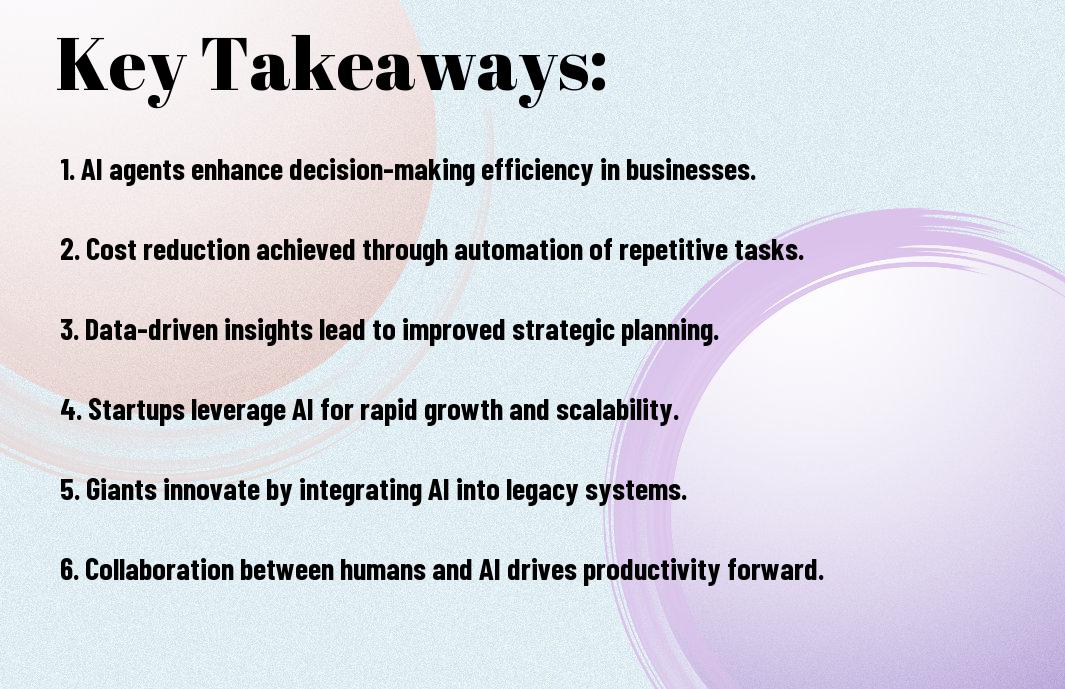
  • AI agents are transforming business management by automating routine tasks, enhancing decision-making, and improving operational efficiency, allowing companies to focus on strategic growth and innovation.
  • The integration of AI agents enables startups to scale quickly and compete with established giants, while also allowing large corporations to become more agile and responsive to changing market conditions.
  • The effective adoption of AI agents requires a fundamental shift in organizational culture, with a focus on developing new skills, fostering collaboration between humans and machines, and establishing clear governance and ethics frameworks to ensure responsible AI deployment.

    The Evolution of AI in Management

    For years, you’ve seen AI agents transform the business landscape, and as you explore their potential, you may come across articles like AI Agents: Not Ready for Business | The Reality Check, but the truth is, AI is here to stay. You’re likely wondering how AI will impact your management style and what the future holds.

    Traditional Management vs AI-Enhanced Leadership

    Managing your business with traditional methods may not be enough; you need to adapt to the changing landscape, and AI-enhanced leadership can help you make data-driven decisions, increasing your chances of success.

    Key Technological Breakthroughs

    Behind the scenes, advancements in machine learning and natural language processing have enabled AI agents to analyze vast amounts of data, providing you with valuable insights to inform your business strategy.

    Considering the rapid pace of technological advancements, you can expect even more sophisticated AI-powered tools to emerge, further revolutionizing the way you manage your business, from automating routine tasks to predicting market trends, and you’ll need to stay ahead of the curve to remain competitive.

    AI Agents in Startup Environments

    The integration of AI agents in startup environments is transforming the way you manage your business. As you explore the potential of AI, you can learn more about How AI Agents are changing Customer Journey: Marketing in the Digital Age and how it can impact your operations.

    Cost-Effective Decision Making

    Among the key benefits of AI agents is their ability to provide you with data-driven insights, enabling you to make informed decisions that drive your business forward, and ultimately, reduce costs.

    Scaling Operations with Limited Resources

    Limited resources are often a challenge for startups, but AI agents can help you scale your operations efficiently, streamlining processes and maximizing productivity.

    Consequently, as you leverage AI agents to scale your operations, you’ll be able to allocate your resources more effectively, focusing on high-priority tasks and driving growth, which will ultimately give you a competitive edge in the market, allowing you to achieve your business goals with greater ease and precision, and helping your startup thrive in a rapidly changing landscape.

    Enterprise-Level AI Implementation

    Not all businesses are equipped to handle the complexities of AI integration, but you can learn from those that have successfully implemented AI agents into their operations, streamlining management and improving efficiency.

    Corporate Integration Strategies

    Following the initial adoption, you will need to develop a plan for integrating AI into your existing infrastructure, which can be a daunting task, but you can start by assessing your current systems and identifying areas where AI can have the most impact.

    Risk Management and Compliance

    Above all, you must consider the potential risks associated with AI implementation, including data security and regulatory compliance, to ensure that your business is protected and adhering to relevant laws and guidelines.

    A key aspect of risk management and compliance is understanding the potential vulnerabilities of your AI system and taking steps to mitigate them, such as implementing robust security protocols and conducting regular audits to ensure that your AI agents are operating within established parameters, allowing you to minimize risks and maximize the benefits of AI in your business.

    Human-AI Collaboration

    After implementing AI agents in your business, you’ll notice a significant shift in operations, as these agents can automate tasks, analyze data, and provide insights, allowing you to focus on strategic decision-making, and with this collaboration, your management style will evolve.

    Redefining Management Roles

    Cooperation between humans and AI will lead to a change in your management approach, as you will need to oversee AI agents, ensuring they are aligned with your business goals, and you will have to develop new skills to effectively manage these agents and get the most out of this collaboration.

    Skills Adaptation and Training

    Management of AI agents requires you to acquire new skills, such as understanding data analysis and interpretation, as well as developing strategic thinking to make informed decisions based on the insights provided by these agents, and you will need to invest time in training to get the most out of this technology.

    HumanAI collaboration is key to successful implementation, and as you investigate deeper into skills adaptation and training, you will find that your ability to work with AI agents will significantly improve, allowing you to make better decisions, and you will need to stay up-to-date with the latest developments in AI to ensure your business remains competitive, and by doing so, you will be able to unlock the full potential of AI agents in your business management.

    Performance Metrics and Analytics

    To effectively manage your business, you need to track key performance indicators (KPIs) and analyze data to make informed decisions. This involves leveraging AI agents to monitor and evaluate your company’s performance, providing valuable insights to drive growth.

    Data-Driven Decision Making

    With access to real-time data, you can make informed decisions that impact your business’s bottom line. Your AI agents will provide you with actionable insights, enabling you to adjust your strategies and optimize operations for better outcomes.

    Predictive Management Models

    One of the significant advantages of AI agents is their ability to forecast future trends and patterns. Your predictive models will help you anticipate potential challenges and opportunities, allowing you to proactively adjust your business strategies.

    Analytics plays a significant role in developing predictive management models, as you will be able to analyze historical data, identify patterns, and forecast future trends. By leveraging your AI agents’ analytical capabilities, you can create robust predictive models that inform your decision-making, enabling you to stay ahead of the competition and drive your business forward. You will be able to identify areas of improvement, optimize resources, and make data-driven decisions that propel your business towards success.

    Future Implications

    Your business is on the cusp of a revolution, as AI agents transform the landscape of management, bringing unprecedented efficiency and innovation to your operations.

    Emerging Management Paradigms

    Prior to this shift, traditional management models dominated, but now you’re witnessing a seismic change, with AI-driven approaches taking center stage, offering you new ways to streamline your business.

    Industry-Specific Transformations

    Towards a more automated future, you’re seeing AI agents disrupt various sectors, from healthcare to finance, bringing about significant changes in how you manage your organization and make informed decisions.

    In addition, as you research deeper into the potential of AI agents, you’ll discover that industry-specific transformations will require you to adapt and evolve your management strategies, leveraging the unique capabilities of AI to drive growth, improve customer experiences, and stay ahead of the competition, ultimately revolutionizing the way you do business.

    Summing up

    Ultimately, as you navigate the evolving business landscape, you will find that AI agents are revolutionizing management practices. You can leverage these agents to streamline operations, enhance decision-making, and drive growth. By embracing AI, you will be able to stay ahead of the competition and achieve your business goals more efficiently. Your ability to adapt to this technology will be key to unlocking your company’s full potential and succeeding in an increasingly complex market.

    FAQ

    Q: What role do AI agents play in the transformation of startups into giant businesses?

    A: AI agents are revolutionizing the landscape of business management by automating tasks, providing data-driven insights, and enhancing decision-making processes. They help startups streamline their operations, improve efficiency, and scale up their businesses, ultimately transforming them into giant corporations. By leveraging AI agents, companies can focus on strategic growth, innovation, and customer satisfaction, driving their journey from startup to giant.

    Q: How do AI agents improve business management in terms of data analysis and interpretation?

    A: AI agents are equipped with advanced algorithms and machine learning capabilities, enabling them to analyze vast amounts of data, identify patterns, and provide actionable insights. They help businesses make informed decisions by interpreting complex data, predicting market trends, and detecting potential risks. By leveraging AI-driven data analysis, companies can optimize their operations, reduce costs, and drive growth, ultimately gaining a competitive edge in the market.

    Q: Can AI agents enhance customer experience and engagement in business management?

    A: Yes, AI agents can significantly enhance customer experience and engagement by providing personalized support, responding to queries, and offering tailored recommendations. They can analyze customer behavior, preferences, and feedback, enabling businesses to develop targeted marketing strategies and improve customer satisfaction. AI-powered chatbots and virtual assistants can also help companies provide 24/7 customer support, resolving issues promptly and efficiently, and fostering loyalty and retention.

    Q: How do AI agents impact the operational efficiency and productivity of businesses?

    A: AI agents can substantially improve operational efficiency and productivity by automating repetitive and mundane tasks, freeing up human resources for more strategic and creative work. They can optimize workflows, manage inventory, and predict maintenance needs, reducing downtime and increasing overall productivity. By leveraging AI agents, businesses can streamline their operations, reduce costs, and enhance their competitiveness, ultimately driving growth and profitability.

    Q: What are the potential challenges and limitations of implementing AI agents in business management?

    A: While AI agents offer numerous benefits, their implementation can also pose challenges, such as data quality issues, algorithmic bias, and job displacement. Businesses must ensure that they have high-quality data, robust infrastructure, and skilled personnel to effectively integrate AI agents into their operations. Additionally, companies must address concerns around transparency, accountability, and ethics, ensuring that AI agents are aligned with their values and goals. By understanding these challenges and limitations, businesses can mitigate risks and maximize the benefits of AI agents in their management practices.

Navigating Challenges – How AI Agents Overcome Common Business Obstacles

As you integrate AI agents into your business, you will inevitably encounter obstacles that can hinder your progress. Your ability to overcome these challenges will be key to unlocking the full potential of AI. You will face issues such as data quality, scalability, and implementation, but with the right strategies, you can navigate these hurdles and achieve your goals. This post will guide you through the process of overcoming common business obstacles with AI agents.

Key Takeaways:

  • AI agents can effectively overcome common business obstacles by leveraging their ability to process and analyze large amounts of data, identifying patterns and trends that may not be immediately apparent to human decision-makers.
  • By automating routine tasks and providing personalized support, AI agents can help businesses streamline their operations, improve customer satisfaction, and increase overall efficiency, ultimately driving growth and revenue.
  • As AI technology continues to evolve, it is likely that AI agents will become even more sophisticated in their ability to navigate complex business challenges, making them an increasingly valuable asset for organizations looking to stay ahead of the curve.

AI Agents in Modern Business

Your business can benefit from AI agents, which help overcome common obstacles, as discussed in Overcoming Challenges in AI Implementation – Velocity Media, to improve overall performance.

Evolution of AI Solutions

With the advancement of technology, AI solutions have become more sophisticated, enabling you to automate tasks and make data-driven decisions.

Core Capabilities and Functions

At the heart of AI agents are their core capabilities, which include data analysis, machine learning, and natural language processing, allowing you to streamline your operations.

But as you research deeper into the core capabilities and functions of AI agents, you will discover that they can be tailored to your specific business needs, providing you with a competitive edge in the market, and enabling you to make informed decisions, drive innovation, and enhance customer experience.

Common Business Bottlenecks

Some of the most significant challenges you face in your business are common bottlenecks that can hinder growth and productivity. Identifying these bottlenecks is crucial to overcoming them and achieving your goals.

Resource Allocation Issues

Along with other challenges, you may encounter issues with allocating resources effectively, which can impact your ability to deliver projects on time and within budget. You need to assess your resources and prioritize tasks to ensure optimal allocation.

Decision-Making Delays

Around every corner, you may face decisions that require careful consideration, and delays in making these decisions can have significant consequences. You must develop strategies to make informed decisions quickly and confidently.

Indeed, decision-making delays can be particularly problematic, as they can lead to missed opportunities, decreased competitiveness, and reduced customer satisfaction. You can overcome these delays by implementing decision-making frameworks, leveraging data and analytics, and empowering your team to make decisions autonomously, allowing you to respond rapidly to changing market conditions and stay ahead of the competition.

AI Problem-Solving Mechanisms

Not all business obstacles are insurmountable, as AI agents can help you overcome them with advanced problem-solving mechanisms, enabling your business to thrive in a competitive environment.

Pattern Recognition Systems

One of the key components of AI problem-solving is pattern recognition, which allows you to identify trends and anomalies in your business data, helping you make informed decisions to drive growth.

Predictive Analytics Tools

Around the clock, predictive analytics tools work to analyze your business data, providing you with valuable insights to forecast future outcomes and make strategic decisions to stay ahead of the competition.

And as you investigate deeper into predictive analytics tools, you’ll discover that they can help you identify potential roadblocks and opportunities, enabling you to adjust your business strategy accordingly, and make data-driven decisions to drive success, allowing you to navigate challenges with confidence and precision, and ultimately, achieve your business goals.

Implementation Strategies

Keep in mind that successful AI agent implementation requires careful planning and execution. You will need to assess your business needs and develop a tailored strategy to overcome common obstacles.

Integration Frameworks

On the path to integration, you will encounter various frameworks that can facilitate the process. You can leverage these frameworks to streamline your AI agent implementation and ensure seamless interaction with your existing systems.

Adaptation Protocols

At the core of effective AI agent implementation lies the ability to adapt to changing business environments. You must develop protocols that enable your AI agents to learn from experience and adjust to new situations, ensuring your business remains competitive.

Strategies for adaptation protocols involve continuous monitoring and evaluation of your AI agents’ performance. You can refine your protocols by analyzing data and feedback, allowing you to make informed decisions and drive improvement. As you navigate the challenges of AI agent implementation, your ability to adapt and evolve will be vital to achieving your business goals.

Risk Management Through AI

Despite the numerous benefits of AI, you still face significant risks when implementing it in your business. You can use AI to identify and mitigate these risks, ensuring your business remains secure and efficient.

Threat Detection Systems

Beneath the surface of your AI systems, you have threat detection capabilities that alert you to potential risks, allowing you to take proactive measures to protect your business.

Mitigation Strategies

Around the clock, your AI systems can monitor your business for potential risks, and with the right mitigation strategies in place, you can minimize the impact of any issues that arise.

A key aspect of mitigation strategies is having a comprehensive plan in place, which you can use to quickly respond to and contain any threats, ensuring your business continues to operate smoothly, and you can maintain your competitive edge.

Measuring AI Impact

Once again, you find yourself at a crossroads, evaluating the effectiveness of your AI agents in overcoming business obstacles. As you navigate the complexities of AI integration, measuring impact becomes a vital step in assessing your strategy’s success.

Performance Metrics

Against the backdrop of your business goals, you will need to establish key performance indicators to gauge the success of your AI agents, allowing you to refine your approach and make data-driven decisions that drive your business forward.

ROI Assessment

To accurately assess the return on investment of your AI initiatives, you must consider factors such as cost savings, revenue growth, and process efficiency, enabling you to make informed decisions about your AI strategy.

Another aspect of ROI assessment involves tracking the long-term benefits of AI adoption, such as enhanced customer experience and improved competitiveness, which can have a significant impact on your business’s bottom line and overall success, helping you to justify the investment in AI agents and informing your future business decisions.

Final Words

As a reminder, you now have the tools to tackle common business obstacles with AI agents. You can apply these strategies to enhance your business operations. For more insights on overcoming challenges, visit Navigating the Common Challenges of Implementing AI in Business to optimize your approach and improve your outcomes, ensuring your business thrives with AI agents by your side, guiding your decision-making process and helping you achieve your goals, making your business more efficient and effective.

FAQ

Q: What are the most common business obstacles that AI agents face, and how do they navigate these challenges?

A: AI agents often encounter obstacles such as data quality issues, lack of transparency, and limited domain knowledge. To overcome these challenges, AI agents use techniques like data preprocessing, feature engineering, and transfer learning to improve their performance and adapt to new situations. Additionally, they can be designed to provide explanations for their decisions, making them more transparent and trustworthy. By leveraging these strategies, AI agents can effectively navigate common business obstacles and provide valuable insights to support informed decision-making.

Q: How do AI agents handle ambiguity and uncertainty in business environments, and what strategies do they use to mitigate these issues?

A: AI agents can handle ambiguity and uncertainty by using probabilistic models, such as Bayesian networks or decision trees, which allow them to quantify and manage uncertainty. They can also employ techniques like robust optimization, which helps to identify solutions that are less sensitive to uncertainty. Furthermore, AI agents can be designed to learn from feedback and adapt to changing conditions, enabling them to mitigate the effects of ambiguity and uncertainty. By using these strategies, AI agents can provide more accurate and reliable outputs, even in complex and dynamic business environments.

Q: Can AI agents effectively handle human bias and ensure fairness in business decision-making, and what methods do they use to achieve this?

A: AI agents can be designed to detect and mitigate human bias by using techniques like data debiasing, fairness metrics, and regular auditing. They can also employ methods like transfer learning and domain adaptation to adapt to new datasets and environments, reducing the risk of bias. Additionally, AI agents can be programmed to provide transparent and explainable outputs, enabling stakeholders to identify and address potential biases. By using these methods, AI agents can help ensure fairness and equity in business decision-making, leading to more informed and responsible outcomes.

Q: How do AI agents maintain security and protect sensitive business data, and what measures do they take to prevent data breaches?

A: AI agents can maintain security and protect sensitive business data by using encryption, access controls, and secure authentication protocols. They can also employ techniques like anomaly detection and intrusion detection to identify potential security threats. Furthermore, AI agents can be designed to follow strict data governance policies and comply with regulatory requirements, ensuring that sensitive data is handled and stored securely. By using these measures, AI agents can help prevent data breaches and maintain the confidentiality, integrity, and availability of business data.

Q: Can AI agents scale to meet the needs of large and complex business environments, and what strategies do they use to achieve scalability?

A: AI agents can scale to meet the needs of large and complex business environments by using distributed computing, cloud computing, and parallel processing. They can also employ techniques like model pruning, knowledge distillation, and transfer learning to reduce computational requirements and improve efficiency. Additionally, AI agents can be designed to adapt to changing business needs and priorities, enabling them to scale up or down as required. By using these strategies, AI agents can provide fast and accurate outputs, even in large and complex business environments, and support informed decision-making at scale.

These Headlines Aim To Attract Readers Interested In The Role Of AI In Business And Are Structured To Remain Relevant Over Time.

As you explore the intersection of artificial intelligence and business, you’ll find that understanding the role of AI is necessary for your success. You can stay ahead of the curve by learning about the latest developments, such as those discussed in AI and News: What’s next?. David Caswell …, which sheds light on the evolving landscape of AI in the industry, helping you make informed decisions for your business.

Key Takeaways:

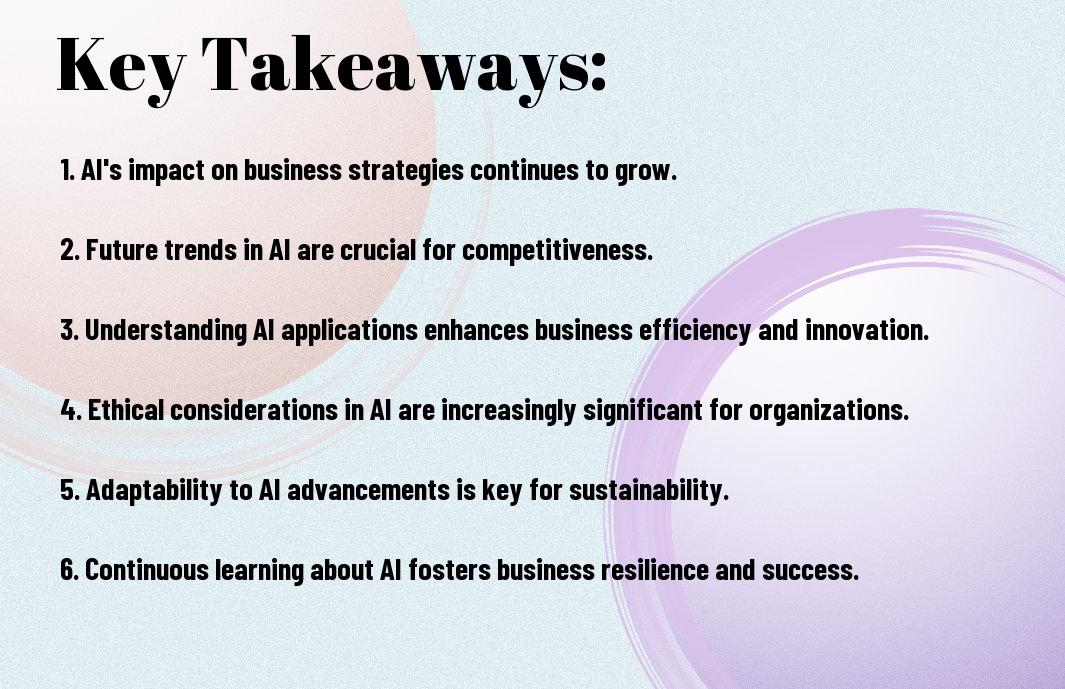
  • These headlines are designed to appeal to individuals interested in the intersection of artificial intelligence and business, making them a valuable resource for those looking to stay informed about the latest developments in this field.
  • The structure of these headlines allows them to maintain their relevance over time, providing long-term value to readers who are interested in the evolving role of AI in business and its potential applications.
  • By focusing on the role of AI in business, these headlines offer insights into the ways in which artificial intelligence is transforming industries and operations, making them a useful tool for professionals and entrepreneurs looking to leverage AI for success.

The Evolution of AI in Modern Business

Your business is likely already using AI in some capacity, and its role will only continue to grow as technology advances, enabling you to streamline processes and make more informed decisions.

From Data Processing to Decision Making

Meanwhile, advancements in AI have transformed the way you approach data, taking it from simple processing to complex decision making, allowing you to tap into new insights and opportunities.

The Shift in Business Intelligence

Around the time you started using AI, you may have noticed a significant shift in business intelligence, with AI-powered tools providing you with more accurate and timely information to drive your business forward.

And as you research deeper into the world of AI, you will find that the shift in business intelligence is not just about adopting new technology, but also about changing your mindset and approach to decision making, allowing you to stay ahead of the competition and drive innovation in your industry.

Headlines as Strategic Business Tools

The use of headlines in business is a deliberate strategy to capture your audience’s attention and convey your message effectively. You can leverage headlines to promote your brand, products, or services, and establish your authority in the industry.

Crafting AI-Focused Business Headlines

Creating compelling headlines that incorporate AI-related topics requires a deep understanding of your target audience and the latest trends in the field. You should focus on crafting headlines that highlight the benefits and applications of AI in business, making them relevant and engaging to your readers.

Psychological Impact on Reader Engagement

Affecting your readers’ emotions and perceptions, effective headlines can significantly influence their decision to engage with your content. You will find that well-crafted headlines can increase your click-through rates, boost your website traffic, and ultimately drive more conversions.

To maximize the psychological impact of your headlines on reader engagement, you should consider the emotional resonance of your words and the level of curiosity they spark. You can use action-oriented verbs, questions, or statistics to make your headlines more compelling and thought-provoking, encouraging your readers to click and learn more about the role of AI in business and its potential applications.

Time-Resistant Content Strategy

Not all content is created equal, and when it comes to the role of AI in business, you want your headlines to stand the test of time. A well-crafted strategy can help your content stay relevant, even as the landscape evolves.

Evergreen Principles in AI Headlines

Across various industries, you’ll find that timeless headlines often focus on the fundamentals of AI’s impact on business, allowing you to create content that remains valuable to your audience over time.

Future-Proofing Business Content

Between the latest trends and emerging technologies, you need to consider how your content will hold up in the long run, and that’s where a thoughtful approach to future-proofing comes in.

But as you probe deeper into future-proofing your business content, you’ll find that it’s not just about anticipating the next big thing, but also about understanding your audience’s ongoing needs and concerns, and creating content that addresses those needs in a way that’s both informative and engaging, allowing you to build trust and establish your authority in the field of AI and business.

AI Integration Points

Keep in mind that AI integration is a multifaceted process that involves various aspects of your business, from operational transformation to customer experience enhancement. As you consider implementing AI, you’ll need to identify the most effective integration points to maximize its benefits.

Operational Transformation

Among the key areas where AI can have a significant impact is in streamlining your operations, making them more efficient and cost-effective. You can leverage AI to automate routine tasks, optimize resource allocation, and improve overall productivity.

Customer Experience Enhancement

Between the various ways AI can enhance customer experience, personalization and predictive analytics stand out as particularly effective. You can use AI to analyze customer data, preferences, and behavior, and tailor your services to meet their unique needs.

To take your customer experience enhancement to the next level, you can use AI-powered chatbots, virtual assistants, and sentiment analysis tools to provide personalized support, resolve issues promptly, and gain valuable insights into customer satisfaction. By doing so, you can build stronger relationships with your customers, increase loyalty, and drive business growth.

Measuring AI Content Impact

To effectively assess the influence of AI on your business, you can explore research like The role of artificial intelligence in business transformation to gain insights.

Analytics and Performance Metrics

Behind every successful AI integration lies a thorough analysis of its performance, which you can achieve by tracking key metrics that reflect your business goals.

Reader Response Patterns

Among the various aspects to consider when evaluating AI content impact, you will find that understanding your audience’s response patterns is vital to adjusting your strategy.

Impact of your AI-driven content on your audience can be further understood by analyzing their engagement patterns, which will help you refine your approach to better suit their needs, allowing you to make informed decisions about your AI content strategy, and ultimately, enhance your business’s overall performance, as you strive to leverage AI in the most effective way possible.

Ethical Considerations

All businesses leveraging AI must consider the ethical implications of their actions, as you navigate the complex landscape of artificial intelligence in your organization, you can learn more about the future of AI at AI and journalism: What’s next? – Reuters Institute.

Transparency in AI Communication

Alongside this, an imperative aspect of ethical AI use is being open with your audience about how you’re using AI, ensuring that you’re not misleading your customers or stakeholders about the role of AI in your business.

Responsible Content Creation

Across various industries, you’ll find that responsible content creation is key to maintaining trust with your audience, as you use AI to generate or curate content, you must consider the potential impact on your readers.

Even as you explore the benefits of AI-generated content, you should prioritize fact-checking and verifying the accuracy of the information you’re presenting to your audience, to maintain the integrity of your brand and build trust with your readers, you must be diligent in your content creation processes, ensuring that AI is used in a way that supports, rather than undermines, your values and mission.

Conclusion

The headlines are designed to capture your attention, as you explore the impact of AI on business. You will find them structured to remain relevant, providing valuable insights into the role of AI in your industry, allowing you to make informed decisions about your business’s future, and stay ahead of the curve as you navigate the evolving landscape of AI in business.

FAQ

Q: What is the primary goal of headlines about AI in business?

A: The primary goal of these headlines is to attract readers who are interested in understanding the role of Artificial Intelligence (AI) in the business world. By crafting headlines that highlight the impact, applications, and future of AI in various industries, the aim is to engage readers and encourage them to explore how AI can transform their businesses and stay ahead in the competitive market.

Q: How are these headlines structured to maintain relevance over time?

A: These headlines are structured to focus on the long-term implications and applications of AI in business, rather than short-term trends or fleeting news. By emphasizing the strategic, operational, and innovative aspects of AI adoption, the headlines aim to provide readers with valuable insights that will be relevant for months and years to come, rather than just for a brief moment.

Q: What kind of readers are these headlines intended to attract?

A: These headlines are designed to attract readers who are interested in the intersection of technology and business, particularly those who are looking to leverage AI to drive growth, improve efficiency, and gain a competitive edge. This may include business leaders, entrepreneurs, innovators, and professionals working in industries where AI is having a significant impact, such as finance, healthcare, and manufacturing.

Q: How do these headlines address the evolving nature of AI in business?

A: These headlines take into account the rapidly evolving nature of AI and its applications in business. By highlighting emerging trends, new technologies, and innovative use cases, the headlines aim to keep readers informed about the latest developments and advancements in the field. This helps readers stay up-to-date with the changing landscape and make informed decisions about how to harness the power of AI in their own organizations.

Q: What benefits can readers expect to gain from engaging with these headlines and related content?

A: Readers can expect to gain a deeper understanding of the role of AI in business and its potential to drive transformation and growth. By exploring these headlines and related content, readers can develop insights into how AI can be applied to solve real-world problems, improve operations, and create new opportunities. This knowledge can help readers make more informed decisions, stay ahead of the competition, and unlock the full potential of AI in their own businesses.

Skip to content