
Branding

Building Your Brand On Social Media – Key Steps For Successful Promotion

You are likely aware of the significance of social media in promoting your brand, and now you’re looking to leverage its power. As you initiate on this journey, you will need to establish a strong online presence that showcases your unique identity and resonates with your target audience. Your goal is to build a loyal community that engages with your content, and you can achieve this by following a well-planned strategy that highlights your brand’s values and mission.

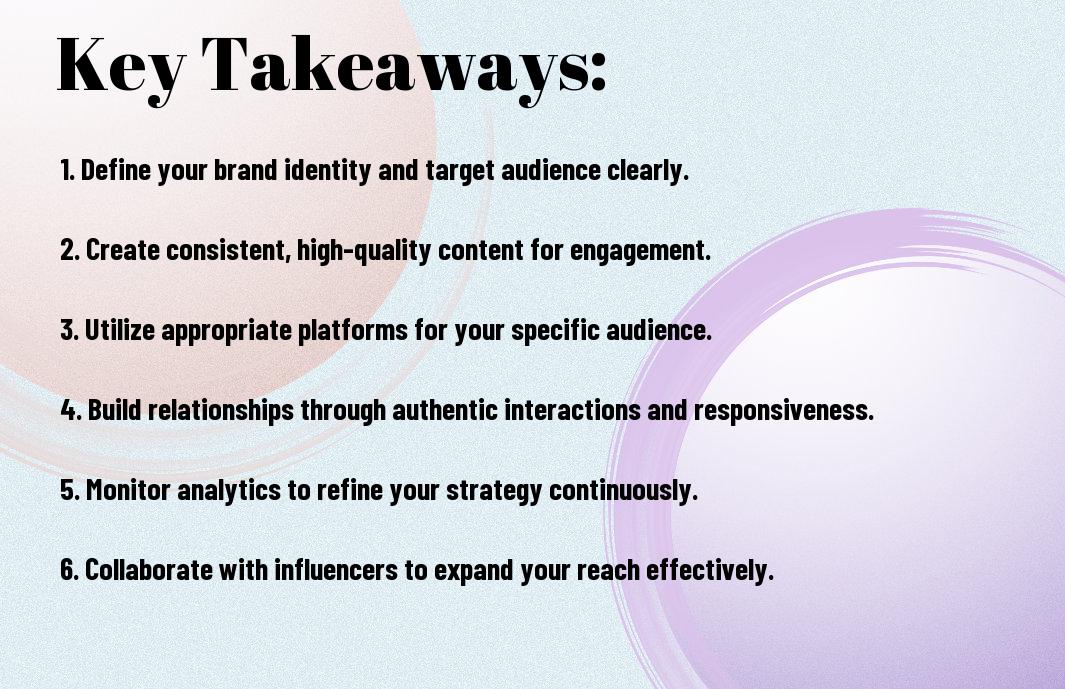
Key Takeaways:

  • Define your target audience and create content that resonates with them to establish a strong brand presence on social media, increasing the likelihood of engagement and loyalty.
  • Develop a consistent visual brand identity across all social media platforms, including logos, color schemes, and tone of voice, to build recognition and authenticity.
  • Engage with your audience through regular posting, responding to comments and messages, and utilizing relevant hashtags to expand your reach and foster a sense of community around your brand.
Defining Your Brand Identity

To establish a strong online presence, you need to define your brand identity. You can learn more about this process through An Introduction to Brand Building Through Social Media, which provides valuable insights into creating a unique brand.

Core Values and Mission

Branding starts with defining your core values and mission, which will serve as the foundation of your brand identity, helping you to create a consistent message that resonates with your audience, and guiding your actions as you build your brand on social media.

Visual Elements and Voice

On the surface, your brand identity is represented by visual elements such as your logo, color palette, and typography, as well as the tone and voice you use in your communications, all of which should align with your core values and mission to create a cohesive brand image.

With a well-defined visual identity and voice, you can create a recognizable and memorable brand that stands out on social media, allowing you to connect with your target audience and build a loyal following, which is imperative for successful promotion and growth of your brand online.

Choosing The Right Platforms

If you want to build a strong brand on social media, selecting the right platforms is important. You need to consider your target audience and where they are most active. This will help you focus your efforts and increase your online visibility.

Platform Demographics

One of the key factors to consider is the demographics of each platform. You should research the age, location, and interests of users on each platform to determine which ones align with your target audience.

Content Format Alignment

Between the various social media platforms, you will find different content formats, such as videos, images, and text-based posts. You should choose platforms that support the type of content you want to create and that your audience prefers.

With content format alignment in mind, you can create a cohesive content strategy that showcases your brand’s personality and resonates with your audience. You can use platforms like Instagram for visual content, Twitter for short-form updates, and YouTube for in-depth videos, allowing you to tailor your content to each platform’s unique features and user preferences, ultimately enhancing your brand’s online presence.

Content Strategy Development

Many businesses struggle to create a content strategy that resonates with their audience. You need to develop a plan that showcases your brand’s unique voice and tone, and aligns with your overall marketing goals. This will help you create content that engages your target audience and sets you apart from the competition.

Storytelling Techniques

Narrating your brand’s story is an effective way to connect with your audience. You can use storytelling techniques to share your brand’s history, mission, and values, and to highlight your products or services. This will help you build a strong emotional connection with your audience and increase brand loyalty.

Engagement Triggers

Before creating content, you should consider what triggers engagement with your audience. You need to identify the types of content that encourage likes, shares, and comments, and use this information to inform your content strategy. This will help you create content that resonates with your audience and drives engagement.

Another key aspect of engagement triggers is understanding what motivates your audience to take action. You can use social media analytics to track engagement metrics and identify patterns and trends. This will help you refine your content strategy and create content that drives real results for your business, such as increased website traffic, lead generation, and sales. You can then use this information to adjust your content strategy and optimize your results.

Community Building

Not only is community building vital for your brand’s success on social media, but it also helps you establish a loyal following. You can achieve this by creating engaging content and encouraging conversations with your audience.

Audience Interaction

One of the most effective ways to build a community is by interacting with your audience. You can do this by responding to comments, answering questions, and using social media listening to stay on top of industry trends and join relevant conversations.

Relationship Nurturing

Before you can establish a strong community, you need to nurture relationships with your followers. You can do this by showing appreciation for their engagement and loyalty, and by consistently providing them with valuable content.

Considering the importance of relationship nurturing, you should focus on building trust and rapport with your audience. You can achieve this by being transparent, responsive, and authentic in your interactions, which will help you establish a loyal community that will support your brand and advocate for it on social media.

Measuring Success

For effective social media promotion, you need to track your progress, and you can learn more about this by visiting 8 Steps To Create Successful Social Media Marketing Strategies to understand what works best for your brand.

Key Performance Indicators

Between the various metrics available, you will need to identify the ones that matter most to your brand, such as engagement rates and follower growth, to gauge your success.

Analytics Tools

After setting up your social media accounts, you will need to utilize analytics tools to monitor your performance and make data-driven decisions to improve your strategy.

In fact, analytics tools provide you with detailed insights into your audience demographics, allowing you to tailor your content and advertising efforts to better target your desired audience, thereby enhancing your brand’s online presence and overall social media marketing effectiveness, which you can use to adjust your strategy and optimize your results.

Crisis Management

After establishing your brand on social media, you must be prepared to handle any potential crises that may arise, as they can significantly impact your reputation and customer loyalty, and you should have a plan in place to mitigate these risks.

Response Protocols

Between the time a crisis occurs and your response, you will be judged by your audience, so you should develop a set of protocols to follow in such situations, enabling you to act swiftly and effectively to protect your brand.

Brand Protection

After a crisis has passed, you should assess the damage and take steps to protect your brand from similar situations in the future, which involves learning from the experience and implementing new strategies to prevent or minimize the impact of future crises.

Indeed, protecting your brand is an ongoing process that requires constant vigilance and a proactive approach, as you need to stay alert to potential threats and be prepared to respond quickly and effectively to maintain the trust and loyalty of your customers, and you should regularly review and update your crisis management plan to ensure it remains relevant and effective in safeguarding your brand’s reputation.

Summing up

Following this guide, you can establish a strong online presence by building your brand on social media. You will be able to promote your brand effectively by creating engaging content, identifying your target audience, and using relevant platforms. As you implement these key steps, your brand’s visibility and credibility will increase, allowing you to reach a wider audience and achieve your marketing goals, ultimately growing your business and expanding your customer base through successful social media promotion.

FAQ

Q: What are the initial steps to building my brand on social media?

A: To start building your brand on social media, define your target audience and the unique value proposition of your brand. Choose the social media platforms where your audience is most active and create consistent profiles with your brand’s name, logo, and bio. Ensure your profiles are complete, including a profile picture, cover photo, and contact information. This foundation will help you establish a recognizable presence across different platforms.

Q: How do I create engaging content to attract and retain followers on social media?

A: Creating engaging content is key to attracting and retaining followers. Develop a content strategy that includes a mix of promotional, educational, and entertaining posts. Use high-quality visuals, such as images and videos, and write captions that are informative, yet concise and engaging. Utilize hashtags to increase the discoverability of your content and engage with your followers by responding to comments and messages promptly. Consistency in posting and interacting with your audience will help build a loyal community around your brand.

Q: What role does influencer marketing play in promoting my brand on social media?

A: Influencer marketing can be a highly effective strategy for promoting your brand on social media. Identify influencers who have a genuine interest in your brand or niche and a following that aligns with your target audience. Collaborate with influencers to create sponsored content, product reviews, or takeovers that showcase your brand in an authentic way. This can help expand your brand’s reach, build credibility, and drive sales. Ensure that any partnership is transparent and complies with social media platforms’ guidelines on sponsored content.

Q: How can I measure the success of my social media branding efforts?

A: Measuring the success of your social media branding efforts involves tracking key performance indicators (KPIs) such as follower growth rate, engagement rate (likes, comments, shares), website traffic driven from social media, and conversion rates (sales, sign-ups, etc.). Utilize the analytics tools provided by each social media platform, as well as third-party analytics software, to monitor these metrics. Adjust your strategy based on the insights gained from your analytics to optimize your content and engagement strategies for better results.

Q: What are some common mistakes to avoid when building my brand on social media?

A: Common mistakes to avoid include inconsistency in posting and engaging with your audience, posting content that does not resonate with your target audience, and neglecting to respond to both positive and negative feedback. Additionally, buying followers or using bots to inflate engagement metrics can harm your brand’s credibility and violate social media platforms’ terms of service. Focus on building a genuine community, and prioritize quality over quantity in terms of both content and followers. This approach will help you build a strong, loyal following and a positive brand image on social media.

How can social media marketing strategies help drive traffic to a website

Traffic to your website is crucial for its success, and social media marketing strategies can be a powerful tool in increasing visitor numbers. By strategically utilizing platforms like Facebook, Instagram, and Twitter, you can engage with your audience, drive brand awareness, and ultimately direct more users to your site. By creating compelling content, running targeted ads, and leveraging influencers, you can effectively boost your online presence and attract valuable traffic that can lead to conversions. In this blog post, we will explore how social media marketing strategies can help drive traffic to your website.

Key Takeaways:

  • Increased Visibility: Using social media marketing can significantly increase the visibility of a website through sharing content across various platforms.
  • Targeted Promotion: Social media allows for the targeting of specific audiences based on demographics, interests, and behaviors, helping to drive relevant traffic to the website.
  • Engagement and Interaction: By engaging with followers through social media, businesses can build relationships, gain trust, and ultimately drive more traffic to their website.

The Power of Social Media

Why Social Media Matters for Website Traffic

Before we research into how social media marketing strategies can boost traffic to your website, it’s crucial to understand why social media is crucial in driving audience engagement. One of the key reasons social media is vital for website traffic is its ability to reach a vast and diverse audience. By leveraging platforms like Facebook, Instagram, Twitter, and LinkedIn, you can connect with people from different demographics, interests, and locations, directing them to your website.

The Rise of Social Media Platforms

Traffic to websites has been significantly influenced by the rise of various social media platforms over the years. With billions of active users on platforms like Facebook, Instagram, and YouTube, the potential reach and impact of social media on driving website traffic are immense. These platforms provide a dynamic space for sharing content, engaging with followers, and promoting your website, leading to increased visibility and click-through rates.

The prevalence of social media in people’s daily lives has transformed the way businesses market their products and services. By tapping into the extensive user base of platforms like Instagram and Twitter, you can effectively promote your website and attract visitors who are genuinely interested in what you have to offer. The interactive nature of social media allows for real-time communication and feedback, enabling you to tailor your marketing strategies to resonate with your target audience.

Identifying Your Target Audience

Little can be achieved in social media marketing without a clear understanding of your target audience. Knowing who you want to reach is important for crafting effective campaigns that resonate with potential customers. Without this crucial step, your efforts may not yield the desired results.

Knowing Your Ideal Customer

Target your ideal customer by defining demographics, interests, behaviors, and needs. Understanding these aspects will help tailor your content to attract and engage the right audience. By analyzing data from your website and social media platforms, you can gain valuable insights into the type of content that resonates with your audience and adjust your strategies accordingly.

Creating Buyer Personas

One effective way to understand your target audience better is by creating buyer personas. These are detailed profiles representing your ideal customers, complete with demographic information, goals, pain points, and preferences. By developing these personas, you can humanize your target audience and tailor your marketing efforts to address their specific needs and interests.

Personas help you visualize and empathize with your target audience, allowing you to create more personalized and relevant content. By putting yourself in the shoes of your ideal customers, you can better understand their motivations and challenges, ultimately leading to more effective social media marketing strategies.

Analyzing Competitor Audiences

Target your competitor audiences by analyzing their social media presence and audience engagement. By understanding who your competitors are targeting and how they are interacting with their followers, you can gain valuable insights into potential gaps or opportunities in the market. This information can help you refine your own strategies and differentiate your brand in a crowded digital landscape.

With a comprehensive understanding of your target audience and insights from analyzing competitor audiences, you can fine-tune your social media marketing strategies to drive traffic to your website effectively. By leveraging this knowledge, you can create compelling content that resonates with your audience and ultimately leads to increased website traffic and engagement.

Crafting Engaging Content

To drive traffic to your website using social media marketing strategies, crafting engaging content is crucial. When your content is compelling, relevant, and valuable to your audience, they are more likely to click through to your website. It’s imperative to create content that resonates with your target audience and prompts them to take action.

Types of Content that Drive Traffic

  • Blog posts
  • Infographics
  • Videos
  • Podcasts
  • Social media posts

Perceiving what type of content your audience prefers and tailoring your content strategy accordingly can significantly impact your website traffic. Bear in mind, quality over quantity is key when it comes to content creation.

Content Engaging blog posts with eye-catching visuals and actionable tips can drive traffic to your website.
Infographics Visually appealing and easy-to-digest infographics can attract clicks and shares on social media platforms.
Videos Informative and entertaining videos have the potential to go viral, driving a significant amount of traffic to your website.
Podcasts Engaging podcasts featuring industry experts and valuable insights can attract a loyal audience to your website.
Social media posts Engaging social media posts with compelling visuals and relevant hashtags can drive traffic to your website organically.

Creating Shareable Content

Any content you create for social media should be shareable to maximize its reach and impact. This means crafting content that your audience finds valuable, interesting, and worth sharing with their networks. Shareable content is more likely to go viral, significantly increasing your website traffic.

Drive engagement by including elements such as interactive polls, quizzes, or user-generated content to make your content more shareable. Encourage your audience to share their thoughts, experiences, and opinions, creating a sense of community around your brand.

Measuring Content Performance

Types of metrics to consider when measuring the performance of your content include website traffic, click-through rates, social media shares, and conversions. By analyzing these metrics, you can gain valuable insights into what type of content resonates best with your audience and drives the most traffic to your website.

Understanding which content performs well and which doesn’t can help you optimize your content strategy for better results. It’s imperative to track the performance of your content regularly and make adjustments as needed to maximize its impact on driving traffic to your website.

Leveraging Social Media Channels

Facebook: The Most Popular Platform

Keep in mind that Facebook is the most widely used social media platform with billions of active users. Leveraging Facebook for your social media marketing strategies can significantly help drive traffic to your website. By creating engaging posts, sharing links to your website, and utilizing Facebook ads, you can reach a vast audience and direct them to your site.

Facebook also offers robust targeting options, allowing you to tailor your content to specific demographics, interests, and behaviors. Engaging with your audience through comments, messages, and posts can further enhance your brand visibility and attract more visitors to your website.

Instagram: Visual Storytelling

Storytelling on Instagram through captivating visuals is a powerful way to drive traffic to your website. With a focus on stunning images and engaging videos, you can showcase your products or services in a visually appealing way that resonates with your audience. By adding a call-to-action in your captions and stories, you can prompt users to visit your website for more information or to make a purchase.

Social media users are drawn to compelling visual content that tells a story, evokes emotions, and sparks their curiosity. By incorporating storytelling elements into your Instagram posts, you can create a deeper connection with your audience and entice them to learn more by visiting your website.

Twitter: Real-Time Engagement

Popular for its real-time interactions and fast-paced nature, Twitter is an excellent platform for driving immediate traffic to your website. By sharing timely updates, news, and promotions, you can engage your audience and encourage them to click through to your site for more information. Utilizing trending hashtags and participating in conversations can also boost your visibility and attract new visitors to your website.

To maximize your impact on Twitter, ensure your tweets are concise, relevant, and include eye-catching visuals or videos. By fostering genuine interactions with your followers and actively seeking out opportunities to join relevant discussions, you can increase website traffic and strengthen your online presence.

LinkedIn: Professional Networking

Media

Professional

Paid Advertising on Social Media

Despite the vast amount of content on social media platforms, paid advertising can help you stand out and drive traffic to your website. By strategically using paid ads, you can reach a larger audience and increase your website’s visibility.

Facebook Ads: Targeted Reach

Paid Facebook advertising allows you to target specific demographics, interests, and behaviors of users. This targeted approach ensures that your ads are seen by users who are most likely to be interested in your products or services, increasing the chances of driving traffic to your website.

Instagram Ads: Visual Impact

Social media users are highly visual, and Instagram’s ad platform allows you to leverage stunning visuals to capture the attention of your target audience. With creative and visually appealing ads, you can engage users and entice them to visit your website for more information.

It is vital to create visually striking and cohesive ads that align with your brand identity to maximize the impact of Instagram advertising.

Twitter Ads: Real-Time Engagement

Visual content is crucial on social media, and Twitter ads that include compelling visuals tend to perform better. By incorporating eye-catching images or videos into your Twitter ads, you can capture the audience’s attention and drive them to your website for further engagement.

A combination of captivating visuals and concise, engaging copy can make your Twitter ads more effective in driving traffic to your website.

LinkedIn Ads: Professional Targeting

With LinkedIn ads, you can target a professional audience based on factors like job title, industry, and company size. This professional targeting option allows you to reach decision-makers and professionals who are more likely to be interested in your B2B products or services, thus increasing the quality of traffic to your website.

Reach a niche professional audience by tailoring your LinkedIn ads to speak directly to the needs and interests of professionals in your industry, driving qualified traffic to your website.

Measuring Success and Optimizing Strategies

Unlike traditional marketing methods, social media marketing offers a multitude of tools and metrics to track the effectiveness of your strategies. Setting up analytics tools is crucial to understanding how your content is performing and how it’s driving traffic to your website.

Setting Up Analytics Tools

For instance, Google Analytics allows you to monitor the traffic coming to your website from social media platforms. By setting up goals and tracking conversions, you can see which channels are providing the most value and adjust your strategies accordingly. Additionally, social media platforms like Facebook and Instagram offer insights and analytics tools that give you a detailed view of your audience demographics, engagement levels, and post performance.

Tracking Key Performance Indicators (KPIs)

Optimizing your social media marketing strategies involves tracking key performance indicators (KPIs) to measure the success of your efforts. By monitoring metrics such as click-through rates, conversion rates, and engagement levels, you can gain valuable insights into what is resonating with your audience and what isn’t.

For instance, if you notice that a particular type of content is driving high engagement but low conversions, you can tweak your strategy to focus on creating more conversion-focused content. By continuously analyzing your KPIs, you can refine your strategies to ensure maximum impact and drive more traffic to your website.

A/B Testing and Experimentation

Success in social media marketing also hinges on your ability to continuously test and experiment with different strategies. A/B testing involves creating two versions of a piece of content or an ad and measuring which one performs better. By experimenting with different visuals, copy, or calls-to-action, you can identify what resonates best with your audience and optimize your campaigns for better results.

Indicators such as engagement rates, click-through rates, and conversion rates can help you determine which version of your content is more effective in driving traffic to your website. By leveraging A/B testing and experimentation, you can refine your strategies and tailor your content to better meet the needs and preferences of your audience, ultimately driving more traffic and achieving your marketing goals.

Final Words

As a reminder, utilizing social media marketing strategies can significantly boost traffic to your website. By effectively leveraging platforms like Facebook, Instagram, and Twitter, you can engage with your audience, drive brand awareness, and ultimately direct users to your site. To research deeper into this topic, check out Social Media Strategies for Driving Traffic to Your Website for more insights and actionable tips to enhance your online presence.

Q: How can social media marketing strategies help drive traffic to a website?

A: Social media marketing strategies can help drive traffic to a website by increasing brand awareness, engaging with followers, sharing valuable content, and promoting products or services. By utilizing platforms such as Facebook, Instagram, Twitter, and LinkedIn, businesses can reach a wider audience and direct them to their website through targeted posts and advertisements.

Q: What are some effective social media marketing strategies to drive traffic to a website?

A: Some effective social media marketing strategies to drive traffic to a website include creating engaging and shareable content, utilizing hashtags to increase visibility, running social media contests or giveaways, collaborating with influencers, and engaging with followers through comments and direct messages. By consistently posting relevant content and interacting with the audience, businesses can attract more visitors to their website.

Q: How can businesses track the success of their social media marketing strategies in driving website traffic?

A: Businesses can track the success of their social media marketing strategies in driving website traffic by using analytics tools provided by social media platforms, such as Facebook Insights, Twitter Analytics, and Instagram Insights. These tools can help businesses monitor the performance of their posts, track clicks to their website, measure engagement metrics, and identify trends in audience behavior. Additionally, businesses can use UTM parameters in their URLs to track specific campaigns and sources of traffic from social media platforms.

Skip to content