How can retargeting ads help convert website visitors into customers

There’s a powerful marketing strategy that can significantly increase your website’s conversion rates: retargeting ads. By strategically displaying personalized ads to users who have previously visited your website, you can stay top of mind and entice them to return and make a purchase. In this article, you’ll learn how retargeting ads work, why they are effective, and how you can implement them to convert more of your website visitors into satisfied customers.

Key Takeaways:

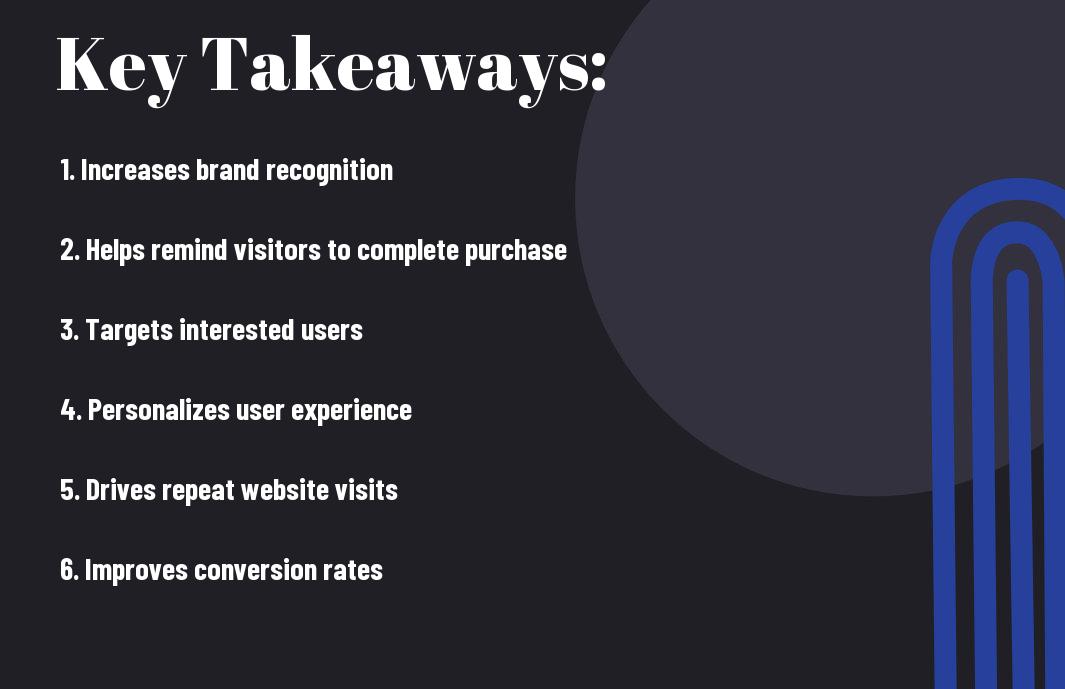
  • Increased Conversion Rates: Retargeting ads remind website visitors of your products or services, keeping your brand top of mind and increasing the likelihood of conversion.
  • Personalized Approach: These ads can be customized based on the visitor’s behavior on your site, targeting specific products or services they showed interest in, leading to a more personalized experience.
  • Improved ROI: Retargeting ads are a cost-effective way to re-engage with potential customers who have already shown interest in your brand, leading to a higher return on investment compared to traditional advertising methods.

The Power of Retargeting Ads

What are Retargeting Ads?

While browsing the internet, you may have noticed that after visiting a website, ads from that site start following you around. These are retargeting ads – a powerful tool used by businesses to reconnect with visitors who didn’t make a purchase or complete a desired action on their website. By placing a simple piece of code on their site, companies can track your activity and show you targeted ads as you browse elsewhere online.

Why Do Website Visitors Leave Without Converting?

Powerful as they are, it’s a fact that not every visitor to your website will convert into a customer right away. There are various reasons why people leave without making a purchase or taking the desired action. It could be due to distractions, comparison shopping, or simply not being ready to commit. This is where retargeting ads come into play, giving you the chance to stay top of mind and gently nudge these potential customers back towards making a decision.

The key to successful retargeting is understanding the customer journey and providing relevant, personalized content to address their specific needs or concerns. By strategically showing ads that remind visitors of what they were interested in, you can increase the likelihood of them returning to your site and completing the desired action.

Identifying Valuable Website Visitors

There’s a wealth of valuable information you can gather from your website visitors to tailor your retargeting ads effectively. According to How retargeting campaigns help you reach 98% of your potential customers, understanding who your ideal customers are and what pages they visit on your website is crucial for converting them into actual customers.

Who are Your Ideal Customers?

For you to effectively convert website visitors into customers, it’s imperative to know who your ideal customers are. By analyzing data such as demographics, behavior patterns, and interests, you can create detailed customer personas. These personas will help you tailor your retargeting ads to reach the right audience, increasing the chances of conversion.

What Pages Do They Visit on Your Website?

Customers often visit specific pages on your website that indicate their level of interest in your products or services. By tracking the pages they frequent, such as product pages, pricing information, or contact pages, you can gain valuable insights into their intent. This information allows you to create retargeting ads that directly address their needs and concerns, nudging them towards making a purchase.

Setting Up Effective Retargeting Campaigns

Despite having the right intent and data, setting up effective retargeting campaigns can be a daunting task. To help you navigate this process, it’s crucial to pay attention to two key elements: choosing the right retargeting platform and creating compelling ad creative.

Choosing the Right Retargeting Platform

Any successful retargeting campaign starts with selecting the right platform that aligns with your goals and target audience. With a plethora of options available, ranging from Google Ads to social media platforms like Facebook and Instagram, you must choose the platform that best suits your business. Different platforms offer varying capabilities, such as dynamic product ads or personalized recommendations, so it’s necessary to align your objectives with the platform’s strengths.

Creating Compelling Ad Creative

Compelling ad creative is the heart of any retargeting campaign. Your ad content needs to resonate with your potential customers and entice them to revisit your website. Consider crafting personalized messages that address the specific needs or pain points of your audience. Visual elements such as eye-catching images or videos can also significantly impact the success of your campaign. Note, the goal is to make your ads stand out and inspire action from your audience.

The imagery and messaging in your ads should be consistent with your brand identity and values. By maintaining a cohesive look and feel across all ad creatives, you can reinforce brand recognition and trust with your audience. Additionally, A/B testing different ad variations can help you identify which creatives perform best and optimize your campaigns for better results.
Targeting Strategies for Maximum Impact

Behavioral Targeting: Reach Users Based on Actions

Maximum impact in retargeting ads comes from understanding your website visitors’ behavior. By tracking their actions on your site, such as the pages they visit, products they view, or items they add to their cart but don’t purchase, you can tailor your retargeting ads to remind them of their interests and encourage them to complete the desired action.

Demographic Targeting: Reach Users Based on Characteristics

Reach users based on their demographic information, such as age, gender, location, and interests. This allows you to create highly targeted retargeting ads that resonate with specific audience segments. By analyzing the characteristics of your website visitors, you can personalize your ad content to better appeal to their preferences and increase the likelihood of conversions.

This targeted approach helps you create more relevant and engaging ad campaigns that speak directly to the needs and interests of different user groups. By segmenting your audience based on demographics, you can deliver personalized messages that are more likely to capture their attention and drive them to take action on your site.

Measuring and Optimizing Retargeting Ad Performance

Key Metrics to Track for Retargeting Success

To ensure the success of your retargeting ads, it’s crucial to track key metrics that indicate how well your campaigns are performing. Some necessary metrics to monitor include click-through rates (CTR), conversion rates, cost per acquisition (CPA), and return on ad spend (ROAS). By analyzing these metrics, you can identify which ads are driving the most engagement and conversions, allowing you to optimize your retargeting strategy for better results.

A/B Testing for Continuous Improvement

Success in retargeting ads often hinges on continuous improvement through A/B testing. By running A/B tests on different ad creatives, messages, or target audiences, you can identify what resonates best with your audience and refine your campaigns accordingly. This iterative process allows you to optimize your ads for higher performance over time, ultimately leading to increased conversions and ROI.

Through A/B testing, you can uncover valuable insights about your target audience’s preferences and behavior, enabling you to tailor your retargeting ads for maximum impact. By testing and refining your ad elements based on real data, you can ensure that your campaigns are always evolving to meet the changing needs and expectations of your potential customers.
Common Mistakes to Avoid in Retargeting Ads

Many businesses make errors in their retargeting ad strategies that can hinder their effectiveness. These mistakes can result in wasted ad spend and even drive potential customers away. Here are some common pitfalls to steer clear of when running retargeting campaigns.

Over-Retargeting: Don’t Annoy Your Visitors

To begin with, bombarding your website visitors with a high frequency of retargeting ads can lead to ad fatigue and annoyance. While it’s important to stay top of mind, showing your ads too frequently can have the opposite effect and turn potential customers off. Be strategic in your approach by setting frequency caps and carefully monitoring the number of times an individual sees your ad within a specific timeframe.

Under-Retargeting: Don’t Miss Opportunities

Any visitor who has engaged with your website has shown some level of interest in your products or services. Therefore, failing to retarget these individuals means missing out on valuable opportunities to convert them into customers. Ensure you have a comprehensive retargeting strategy in place that targets different segments of your website visitors based on their level of interaction and behavior.

For instance, visitors who abandoned their shopping carts should be targeted with specific ads encouraging them to complete their purchase. On the other hand, those who have browsed multiple product pages but haven’t made a purchase could be retargeted with ads showcasing popular products or special promotions.
To wrap up

Conclusively, retargeting ads serve as a powerful tool to convert website visitors into customers by reminding them of your products or services and effectively guiding them back to your site for a purchase. By strategically placing these ads in front of individuals who have already shown interest in your offerings, you can significantly increase your chances of closing a sale. Remember to tailor your messaging and offers to entice potential customers and keep your brand top of mind as they navigate through their online journey.

Q: How can retargeting ads help convert website visitors into customers?

A: Retargeting ads can help convert website visitors into customers by showing personalized ads to users who have already visited your website. These ads remind users of your products or services, keeping your brand top of mind and encouraging them to return and make a purchase.

Q: What are the benefits of using retargeting ads for conversion?

A: Retargeting ads can increase conversion rates by reaching users who have shown interest in your products or services. By targeting these engaged visitors with relevant ads, you can encourage them to come back to your site and complete a desired action, such as making a purchase or signing up for a newsletter.

Q: How can I set up retargeting ads to convert website visitors into customers?

A: To set up retargeting ads, you can use tools like Facebook Pixel, Google Ads Remarketing, or other retargeting platforms to track website visitors and display personalized ads to them across the web. By creating compelling ad creatives and targeting specific audience segments, you can effectively engage with past visitors and guide them towards conversion.

What are some effective call-to-action (CTA) strategies for converting traffic into sales

Sales are the lifeblood of any business, and converting traffic into sales is crucial for success. To maximize your website’s potential, you must master the art of creating compelling call-to-action (CTA) strategies. By implementing effective CTAs, you can guide your visitors towards making a purchase or taking a desired action. To learn more about what makes a great CTA and discover 31 examples to inspire your own, check out What Is a Call to Action + 31 Call to Action Examples. Your business’s growth depends on it!

Key Takeaways:

  • Clear and Direct Language: Use concise and compelling language in your CTA to clearly communicate the action you want the visitor to take.
  • Create a Sense of Urgency: Encourage immediate action by incorporating words like “limited time offer” or “act now” in your CTA.
  • Use Action-oriented Verbs: Use strong action verbs like “Shop Now,” “Buy Now,” or “Sign Up Today” to prompt visitors to take the desired action.

Identifying Your Target Audience

Knowing Your Customer’s Pain Points

Targeting your audience effectively starts with understanding their pain points. What are the challenges, problems, or frustrations that your potential customers are facing? By identifying these pain points, you can tailor your call-to-action (CTA) strategies to address their specific needs and offer solutions that resonate with them.

When you can show that you understand your audience’s pain points and have a solution that can help alleviate them, you build trust and credibility. This can make your CTAs more compelling and persuasive, leading to higher conversion rates and ultimately more sales.

Creating Buyer Personas

For effective targeting, you need to create detailed buyer personas that represent your ideal customers. These personas should include demographic information, such as age, gender, occupation, and location, as well as psychographic details like interests, values, and buying behaviors. By creating buyer personas, you can better tailor your CTAs to appeal to specific customer segments.

Your buyer personas should not be based on assumptions but on data and research. Conduct surveys, interviews, and market research to gather insights into your target audience’s preferences, behaviors, and motivations. This will help you create more accurate and effective CTAs that speak directly to your customers’ needs and desires.

Crafting Compelling CTAs

Some of the most effective call-to-action (CTA) strategies involve crafting compelling messages that prompt your audience to take action. By utilizing action-oriented language, creating a sense of urgency, and making your CTAs visible and prominent, you can significantly increase your conversion rates.

Using Action-Oriented Language

Any successful CTA utilizes action-oriented language that encourages the reader to do something specific. Instead of passive phrases like ‘Learn More,’ opt for compelling phrases like ‘Start Your Free Trial’ or ‘Shop Now.’ By using verbs that prompt immediate action, you create a sense of urgency and drive your audience to engage with your offer.

Creating a Sense of Urgency

One effective way to increase conversions is by creating a sense of urgency in your CTAs. By incorporating time-sensitive language such as ‘Limited Time Offer’ or ‘Act Now,’ you motivate your audience to make a decision quickly. Urgency prompts people to act before they miss out on an opportunity, leading to higher click-through rates and conversions.

Another aspect of urgency is promoting scarcity, highlighting the limited availability of a product or service. By mentioning limited stock or a countdown timer, you instill a fear of missing out (FOMO) in your audience, compelling them to take action before it’s too late.

Making It Visible and Prominent

Language plays a crucial role in making your CTA stand out. Use bold and attention-grabbing phrases that clearly convey the benefit of clicking on the button. Whether it’s ‘Unlock Exclusive Access’ or ‘Join Now for Instant Savings,’ make sure your language is concise, engaging, and relevant to your offer.

Visible

To improve visibility, place your CTAs strategically on your webpage or email, ensuring they are easily noticeable. Use contrasting colors, ample white space, and eye-catching design elements to draw attention to the CTA button. By making it visually prominent, you guide your audience towards the desired action and increase the likelihood of conversions.

Optimizing CTA Placement

All successful websites understand the importance of strategically placing their call-to-action (CTA) buttons to maximize conversions. In the context of CTA placement, a key consideration is whether to position them above the fold or below the fold on your webpage.

Above the Fold vs. Below the Fold

Placement of your CTA above the fold ensures that it is immediately visible to visitors without the need for scrolling. This can be particularly effective for capturing the attention of users who may not explore the entire page. However, placing CTAs below the fold can also be beneficial as it allows you to provide more information before asking for the conversion, catering to users who prefer to learn more before committing.

Using Heat Maps to Inform CTA Placement

Informing your CTA placement with the help of heat maps can provide valuable insights into where users are focusing their attention on your website. By analyzing these heat maps, you can identify the most viewed areas of your site and strategically place your CTAs in these high-traffic zones to increase their visibility and effectiveness.

To make the most of heat maps, consider tools like Crazy Egg or Hotjar, which offer detailed visual representations of user interactions on your site. By leveraging this data, you can make data-driven decisions to optimize your CTA placement and improve your conversion rates.

Mobile-Friendliness and CTA Placement

One critical aspect to consider when optimizing CTA placement is ensuring that your CTAs are mobile-friendly. With a growing number of users accessing websites on mobile devices, it’s important to design your CTAs with smaller screens in mind. Place your CTAs where they are easily accessible and clickable on mobile devices to provide a seamless user experience and encourage conversions.

Placement of CTAs on mobile should consider factors like thumb reach, avoiding cluttered layouts, and ensuring that buttons are large enough to tap without errors. By prioritizing mobile-friendliness in your CTA placement strategy, you can cater to a wide range of users and increase the chances of converting mobile traffic into sales.

The Power of Social Proof

Leveraging Customer Testimonials

The key to converting traffic into sales lies in providing social proof. Unlike other forms of marketing, customer testimonials are a powerful tool in your arsenal. When potential customers see real-life experiences and positive feedback from satisfied clients, they are more likely to trust your brand and make a purchase.

By showcasing customer testimonials prominently on your website or product pages, you are demonstrating trust and credibility. Encourage your satisfied customers to leave reviews and testimonials, and consider incorporating them into your CTA strategy to drive conversions.

Showcasing Trust Badges and Certifications

Leveraging trust badges and certifications is another effective way to boost credibility and reassure potential customers. Displaying badges such as SSL secure checkout, industry certifications, or partner affiliations can help alleviate any doubts or concerns your visitors may have about making a purchase on your site.

Proof of security and legitimacy can go a long way in building trust with your audience. Make sure to place these trust badges strategically near your CTAs to enhance their impact and increase the likelihood of conversion.

Highlighting Social Media Endorsements

Power up your CTAs by highlighting social media endorsements from influencers, celebrities, or satisfied customers. Social media endorsements add a layer of authenticity and influence to your brand, making it more attractive to potential buyers.

Creating a Sense of Scarcity

Limited-Time Offers and Discounts

For effective call-to-action (CTA) strategies that convert traffic into sales, scarcity is a powerful tool. Limited-time offers and discounts create a sense of urgency and FOMO (fear of missing out) among your audience. By highlighting that the deal is available for a short period only, you prompt potential customers to make a quick decision, increasing the likelihood of a sale.

Creating a Sense of Exclusivity

Scarcity can also be leveraged through creating a sense of exclusivity. When customers feel like they are part of an exclusive group or have access to limited edition products or services, they are more inclined to make a purchase. By positioning your offerings as unique and restricted, you appeal to the desire for special treatment and exclusivity.

The psychological principle of scarcity plays a fundamental role in consumer behavior. When products or services are perceived as rare or exclusive, their perceived value increases, making them more desirable to customers. Creating a sense of exclusivity through limited availability or membership-only offers can significantly boost your conversion rates.

Using Countdown Timers

To enhance the sense of scarcity and drive immediate action from your audience, consider using countdown timers on your website or in your marketing materials. Countdown timers visually display the limited time remaining for a particular offer or promotion, instilling a sense of urgency in visitors. This visual cue can push hesitant customers to make a purchasing decision before the time runs out, increasing your sales conversions.

Countdown timers can be effective in creating a sense of urgency and prompting quick decision-making. By setting a deadline for your offers, you encourage visitors to act swiftly to take advantage of the limited-time deal. This strategy not only boosts conversions but also helps in reducing cart abandonment rates and increasing overall sales revenue.

Measuring and Optimizing CTA Performance

Once again, measuring and optimizing your call-to-action (CTA) performance is crucial for converting traffic into sales. By analyzing key metrics and implementing actionable insights, you can fine-tune your CTAs to drive higher conversion rates and maximize your sales potential.

Setting Up Conversion Tracking

Any effective CTA strategy begins with setting up proper conversion tracking. By utilizing tools like Google Analytics, you can track the performance of your CTAs, understand user behavior, and identify where potential drop-off points occur in the conversion funnel. This data is invaluable in optimizing your CTAs for maximum impact.

Analyzing CTA Metrics and KPIs

Metrics such as click-through rates, conversion rates, bounce rates, and average time on page provide important insights into how your CTAs are performing. Key Performance Indicators (KPIs) like conversion value, revenue per click, and customer acquisition cost help you measure the effectiveness of your CTAs in driving sales and revenue growth.

Performance monitoring is a continuous process that involves tracking and analyzing CTA metrics to understand what is working well and what can be improved upon. By regularly reviewing and optimizing your CTAs based on these metrics, you can refine your strategy to achieve better results and increased conversions.

A/B Testing and Iteration

Performance optimization through A/B testing and iteration is important for fine-tuning your CTAs and maximizing their effectiveness. By creating variations of your CTAs and testing them against each other, you can identify which elements resonate better with your audience and drive higher conversions. Continuously iterating based on these insights allows you to optimize your CTAs for improved performance over time.

Another important aspect of A/B testing is to only change one element at a time to accurately measure its impact on conversion rates. This iterative approach helps you pinpoint the most effective strategies for your CTAs, leading to better overall performance and increased sales.

Final Words

Following this detailed exploration of effective call-to-action (CTA) strategies for converting traffic into sales, you now have a clear roadmap to enhance your conversion rates. Remember that simplicity is key – ensure your CTAs are clear, concise, and prominently displayed on your website. By utilizing action-oriented language, offering value, and creating a sense of urgency, you can motivate your visitors to take that next step towards making a purchase.

So, go ahead and implement these strategies on your website today. Continuously test and optimize your CTAs to see what works best for your audience. With a strategic approach to your calls-to-action, you can effectively convert your website traffic into valuable sales and drive the growth of your business.

Q: What is a call-to-action (CTA) strategy?

A: A call-to-action (CTA) strategy is a marketing tactic used to prompt an immediate response or action from a potential customer. It typically involves using compelling language and design elements to encourage the audience to take a specific action, such as making a purchase, signing up for a newsletter, or contacting a business.

Q: What are some effective CTA strategies for converting traffic into sales?

A: Some effective CTA strategies for converting traffic into sales include using action-oriented language, creating a sense of urgency, offering incentives or discounts, using visually appealing buttons or banners, and ensuring that the CTA is prominently displayed on the website or promotional materials.

Q: How can I measure the success of my CTA strategies?

A: You can measure the success of your CTA strategies by tracking conversion rates, click-through rates, and engagement metrics. Utilizing A/B testing can also help determine which CTAs are most effective with your target audience. Additionally, monitoring sales data and customer feedback can provide valuable insights into the impact of your CTA strategies on overall sales performance.

How can customer reviews and testimonials influence conversion rates

Most customers rely heavily on the experiences and opinions of others when making purchasing decisions. When you come across positive reviews and testimonials from satisfied customers, it builds trust and credibility in the product or service. This social proof not only reassures you but also influences your decision-making process, ultimately leading to higher conversion rates. Understanding the impact of customer feedback can help you leverage it to your advantage and boost your sales.

Key Takeaways:

  • Builds trust: Customer reviews and testimonials provide social proof which helps build trust with potential customers.
  • Increases credibility: Positive reviews from satisfied customers can increase the credibility of your products or services.
  • Boosts conversions: By showcasing real customer experiences and feedback, you can persuade more visitors to make a purchase, thus boosting conversion rates.

The Power of Social Proof

Defining Social Proof

To understand the influence of customer reviews and testimonials on conversion rates, you need to grasp the concept of social proof. Essentially, social proof is the idea that people tend to follow the actions of others when making decisions, especially in uncertain situations. In the context of e-commerce, this means that when potential customers see positive reviews and testimonials from satisfied buyers, they are more likely to trust the product or service being offered.

The Psychology Behind Social Proof

On a psychological level, social proof taps into our innate desire to conform and seek validation from others. When you see that a product or service has been positively recommended by others, you are more inclined to believe that it is a safe and wise choice. This phenomenon is rooted in the idea that the wisdom of the crowd often surpasses individual judgment, making social proof a powerful tool for influencing consumer behavior.

An interesting aspect of the psychology behind social proof is the principle of informational social influence. This means that when you are unsure about a decision, you are more likely to look to others for guidance. By showcasing positive customer reviews and testimonials on your website or product pages, you are providing valuable information that can help sway potential customers towards making a purchase.

Customer Reviews as a Conversion Driver

The Impact of Positive Reviews

Positive customer reviews are a powerful tool in driving conversion rates. When potential customers see glowing testimonials from satisfied buyers like yourself, it creates a sense of trust and credibility in the product or service. These positive reviews serve as social proof, assuring you that others have had a great experience, making you more likely to make a purchase decision.

The Detrimental Effect of Negative Reviews

Impact

Negative reviews can have a significant impact on conversion rates. When you come across unfavorable feedback from other customers, it raises doubts about the product or service quality in your mind. You may start questioning whether you should proceed with the purchase, leading to hesitation and ultimately, abandonment of the transaction.

Conversion

It’s crucial to address negative reviews promptly and effectively. Offering solutions, compensations, or simply acknowledging the issues raised can help rebuild trust with potential customers like you who may have been discouraged by the negative feedback.

The Role of Review Quantity and Quality

Role

Both the quantity and quality of reviews play a crucial role in influencing conversion rates. When you see a product with a large number of positive reviews, you are more likely to trust the overall rating and feel confident in your purchase decision. Additionally, detailed and descriptive reviews can provide you with valuable insights into the product, helping you make an informed choice.

Detrimental

On the other hand, a lack of reviews or an abundance of vague, low-quality feedback can deter you from proceeding with a purchase. It’s important for businesses to encourage satisfied customers like you to leave detailed and authentic reviews to help build credibility and trust among potential buyers.

Testimonials: A More Personal Touch

Many times, when you are researching a product or service, you come across customer reviews that provide valuable insights into the quality and reliability of what you are interested in. However, there is a distinction between customer reviews and testimonials that you should be aware of.

The Difference Between Reviews and Testimonials

For understanding, reviews are typically brief and focus on the overall experience with the product or service, highlighting the pros and cons. On the other hand, testimonials are more in-depth and personal. They often tell a story of how the product or service positively impacted the customer’s life, creating an emotional connection that reviews might lack.

Using Testimonials to Build Trust

Touching on the emotional aspect, testimonials have the power to build trust and credibility in a way that reviews may not. When you read a testimonial from someone who shares a similar background or problem as yours, you can relate to their experience and envision how the product or service could benefit you as well.

Testimonials offer a more personal touch compared to reviews, making them more persuasive and impactful in influencing your decision-making process. The detailed accounts of how a product or service solved a specific issue for a customer can resonate with you on a deeper level, creating a sense of trust and reliability in the brand.

Effective Testimonial Placement Strategies

An important aspect of using testimonials effectively is where and how you place them on your website or marketing materials. Testimonials strategically placed near a call-to-action or product description can provide that final nudge needed to convert a potential customer into a paying one. By placing testimonials in high-visibility areas, you ensure that potential customers see positive feedback right when they need it.

Testimonials can act as social proof, reassuring you of your decision to purchase a product or service. Seeing positive testimonials from satisfied customers can alleviate any doubts or concerns you may have, serving as a critical factor in your decision-making process.

Building Credibility with Customer Endorsements

Despite the ever-growing digital landscape, trust remains a crucial factor in a consumer’s decision-making process. One of the most effective ways to build trust and credibility with your audience is through customer endorsements. Whether it’s in the form of reviews, testimonials, or case studies, showcasing positive experiences from real customers can significantly influence conversion rates.

The Importance of Authenticity

Building authenticity in your customer endorsements is key to earning the trust of your audience. When potential customers see genuine reviews and testimonials from others who have had positive experiences with your products or services, they are more likely to believe in the value you offer. Authentic endorsements create a sense of transparency and integrity, showing that you have nothing to hide and are confident in the quality of what you provide.

Highlighting Expert Endorsements

Authenticity is crucial, but highlighting expert endorsements can take your credibility to the next level. When industry experts or influencers endorse your brand, it not only validates your offerings but also positions you as a trusted authority in your field. Expert endorsements can help you reach a wider audience and attract customers who value the opinions of thought leaders in the industry.

Customer endorsements are powerful tools that can significantly impact your conversion rates. By showcasing positive feedback from satisfied customers, you provide social proof that reassures potential buyers and helps them feel more confident in their decision to purchase from you.

Leveraging User-Generated Content

Leveraging user-generated content, such as customer reviews, photos, and videos, can further strengthen your credibility. User-generated content adds a level of authenticity that traditional marketing tactics often lack. When potential customers see real people using and enjoying your products or services, they are more likely to trust your brand and be swayed towards making a purchase.

Credibility is the foundation of trust in the digital age, and customer endorsements play a crucial role in establishing that credibility. By authentically showcasing positive experiences from both customers and experts, you can build trust, attract new customers, and ultimately increase your conversion rates.

The Role of Reviews and Testimonials in the Buyer’s Journey

Awareness Stage: Building Trust

All successful relationships are built on trust, and the same applies to the relationship between a consumer and a brand. One way to establish trust at the Awareness Stage of the buyer’s journey is through authentic customer reviews and testimonials. When you come across positive reviews from real customers who have had a good experience with a product or service, it sets a foundation of reliability and credibility in your mind. This initial trust is crucial as you start your journey as a potential buyer.

Consideration Stage: Addressing Concerns

To further address any doubts or concerns you may have during the Consideration Stage of the buyer’s journey, reviews and testimonials play a vital role. You can read about other customers’ experiences, both positive and negative, which can provide valuable insights into how the product or service performs in real life. This information helps you weigh the pros and cons effectively, guiding your decision-making process. Moreover, testimonials that resonate with your specific needs and challenges can reassure you that the product or service is the right choice for you.

Considering reviews and testimonials during the Consideration Stage not only helps you make an informed decision but also adds a layer of transparency to the brand-consumer relationship. By sharing honest feedback, previous customers contribute to a community of trust and empowerment, aiding you in evaluating options and making the best possible choice.

Decision Stage: Sealing the Deal

As you reach the Decision Stage of the buyer’s journey, the accumulation of positive reviews and testimonials can significantly influence your final decision. Trust plays a pivotal role here, as you are more inclined to trust the collective voice of many satisfied customers than just the brand’s self-promotion. The social proof provided by reviews and testimonials can give you the confidence needed to move forward with your purchase, knowing that others have been happy with the same decision.

Understanding the impact of reviews and testimonials at the Decision Stage is crucial for brands looking to convert potential customers into loyal ones. By showcasing the positive experiences of past customers, brands can create a sense of trust and credibility that resonates with you as you make your final purchasing choice.

Overcoming Common Objections

Once again, customer reviews and testimonials can significantly impact your conversion rates, but it’s crucial to address common objections that may arise. By proactively tackling skepticism and doubts, dealing with fake or biased reviews, and managing your online reputation, you can build trust and credibility with potential customers.

Addressing Skepticism and Doubt

Overcoming skepticism and doubt is crucial when it comes to customer reviews and testimonials. People may question the authenticity of the feedback or wonder if the reviews are cherry-picked to only show the positive aspects of your products or services. To address this, ensure that your reviews come from verified customers, display a range of opinions – both positive and negative, and respond transparently to any concerns raised in the reviews.

Dealing with Fake or Biased Reviews

Common concerns about customer reviews include the possibility of fake or biased feedback influencing perceptions. It’s important to implement measures to detect and remove fake reviews. Remember that authenticity is key to building trust, so prioritize gathering genuine feedback from real customers to provide an accurate representation of your business.

With the rise of online review platforms, the issue of fake or biased reviews has become increasingly prevalent. Some businesses may resort to unethical practices to boost their ratings, leading to distrust among consumers. By actively monitoring and addressing any suspected fake reviews, you can maintain credibility and demonstrate your commitment to transparency.

Managing Online Reputation

For businesses, managing your online reputation is a continuous effort that involves monitoring feedback, addressing customer concerns promptly, and maintaining a positive brand image. Your online reputation is a reflection of how your customers perceive your business, so it’s crucial to actively engage with reviews and testimonials to build a strong, trustworthy reputation.

Understanding the impact of customer reviews on your online reputation is key to leveraging their potential to influence conversion rates. By consistently delivering quality products or services, actively seeking and responding to feedback, and showcasing authentic customer testimonials, you can enhance your online reputation and ultimately drive conversions.

Conclusion

With these considerations in mind, it is clear that customer reviews and testimonials play a crucial role in influencing conversion rates. By providing social proof and building credibility for your business, positive reviews can significantly impact a potential customer’s decision-making process. People are more likely to trust the opinions of others who have had first-hand experience with a product or service, making reviews a powerful tool for increasing conversions.

Keep in mind, the quality and quantity of reviews matter, so encourage your satisfied customers to leave feedback and engage with any negative reviews in a constructive manner. By actively managing and leveraging customer testimonials, you can create a positive image for your brand and ultimately improve your conversion rates. Harness the power of social proof and watch your business thrive!

FAQ

Q: How can customer reviews and testimonials influence conversion rates?

A: Customer reviews and testimonials provide social proof for your products or services, helping to build trust and credibility with potential customers. When shoppers see positive reviews from other satisfied customers, they are more likely to trust your brand and make a purchase, ultimately resulting in higher conversion rates.

Q: Are customer reviews and testimonials important for e-commerce businesses?

A: Yes, customer reviews and testimonials are crucial for e-commerce businesses. They help create a sense of transparency and authenticity, which can significantly impact a customer’s decision-making process. Positive reviews can also help differentiate your brand from competitors and build long-term customer loyalty.

How can businesses effectively leverage customer reviews and testimonials to boost conversion rates?

A: Businesses can leverage customer reviews and testimonials by prominently displaying them on their website, product pages, or marketing materials. They can also encourage satisfied customers to leave reviews by offering incentives or making the process seamless. Responding to reviews, both positive and negative, shows that you value customer feedback and can further enhance your brand’s reputation.

What are the best practices for using chatbots and live chat to increase conversions

You want to maximize your website’s conversion rates, and chatbots and live chat are powerful tools to help you achieve that. By following a few best practices, you can enhance the effectiveness of these communication channels and drive more conversions. In this blog post, we’ll explore some actionable strategies to make the most out of chatbots and live chat and ultimately boost your online sales.

Key Takeaways:

  • Personalization is key: Tailoring chatbot responses and live chat interactions to address individual customer needs can significantly increase conversions.
  • Provide quick and relevant answers: Speed and accuracy in providing information through chatbots and live chat can lead to higher conversion rates as it enhances customer satisfaction.
  • Utilize chatbots for lead qualification: Use chatbots to ask qualifying questions and direct leads to appropriate resources or sales representatives, streamlining the conversion process.

Setting Up for Success

Defining Your Conversion Goals

With any chatbot or live chat implementation, it’s crucial to start by clearly defining your conversion goals. Ask yourself what specific actions you want users to take when they interact with your chatbot or live chat. Whether it’s driving product purchases, generating leads, or increasing subscriptions, having a clear goal in mind will guide the design and messaging of your chatbot to optimize for conversions.

Identifying Your Target Audience

Your target audience plays a significant role in the success of your chatbot or live chat strategy. Understanding who your audience is, their preferences, pain points, and communication style will help you tailor your chatbot interactions to meet their needs. By creating user personas and conducting market research, you can develop a chatbot that resonates with your target audience, increasing the likelihood of conversions.

Identifying your target audience involves delving deep into demographics, psychographics, and behavioral patterns. By segmenting your audience based on these factors, you can personalize the chatbot experience to cater to the specific needs and preferences of different user groups. This targeted approach will not only enhance user satisfaction but also boost conversion rates by delivering more relevant and engaging interactions.

Chatbot Best Practices

Keep it Simple and Conversational

Practices for using chatbots effectively include keeping the communication simple and conversational. Your bot should engage users in a friendly and easy-to-understand manner. Avoid using jargon or complex language that might confuse visitors. By keeping it simple, you create a more engaging user experience that encourages interaction and ultimately leads to higher conversion rates.

Use Personalization to Build Trust

For a more personalized experience, consider using chatbots to build trust with your website visitors. Personalization can involve addressing users by their first name or providing tailored recommendations based on their browsing history or preferences. By making interactions more personalized, you can enhance the user’s trust in your brand and increase the likelihood of conversions.

Plus, personalization can help your chatbot stand out from the crowd and create a more memorable experience for users. By leveraging personalized data, you can tailor your conversations to better meet the needs of each individual visitor, increasing the chances of conversion and building a loyal customer base.

Implement a Clear Call-to-Action

Best practices for chatbots include implementing a clear call-to-action to guide users towards conversion. Whether it’s directing visitors to a product page, offering a discount code, or encouraging them to sign up for your newsletter, a clear and compelling call-to-action can significantly impact your conversion rates. Make sure your chatbot provides clear and concise prompts that prompt users to take the desired action, making it easy for them to move further down the sales funnel.

Chatbot interactions should be designed with a specific goal in mind, whether it’s completing a purchase, scheduling a demo, or signing up for a service. By integrating a clear call-to-action into your chatbot conversations, you can effectively guide users towards conversion and drive business growth.

Live Chat Best Practices

Be Responsive and Timely

Not responding promptly to customer inquiries can lead to frustration and abandonment. An ideal best practice is to have a dedicated team member available to respond to chat messages in real-time. This not only shows your customers that you value their time but also helps in guiding them through their purchase journey effectively.

Use Proactive Engagement to Reduce Abandonment

One effective way to increase conversions is by using proactive engagement tactics. Initiate chat conversations with website visitors who have spent a significant amount of time on your site or have added items to their cart but not checked out. By offering assistance or a personalized recommendation, you can encourage them to complete their purchase.

Plus, you can set up automated messages triggered by specific user actions, such as hovering over the exit button. These proactive engagements can intercept potential abandonment and guide the visitor towards making a purchase.

Ensure Seamless Handovers to Human Agents

Timely handovers to human agents are crucial for maintaining a high level of customer service. If a customer query goes beyond the capabilities of the chatbot or requires a more personalized touch, ensure a seamless transition to a human agent. This can prevent frustration and ensure that the customer receives the assistance they need to make a purchase decision.

Engagement with customers should be consistent throughout the chat experience. Transitioning from chatbot to human agent should feel natural and maintain the flow of the conversation, providing a seamless experience for the customer.

Integrating Chatbots and Live Chat

Creating a Unified Customer Experience

With the integration of chatbots and live chat on your website, you can create a seamless and unified customer experience. By incorporating both tools effectively, you can provide instant responses to customer queries while also offering personalized interactions through the live chat feature. This ensures that your customers receive consistent support and information throughout their journey on your website.

Using Chatbots to Route Customers to Live Chat

Route your customers seamlessly from chatbots to live chat when their queries require a more personalized touch. By setting up your chatbots to identify complex questions or specific customer needs, you can smoothly transfer them to a live chat agent who can provide detailed assistance. This escalation process ensures that customers feel taken care of and receive the attention they require, increasing the chances of conversion.

Chatbots can act as the first line of defense for customer inquiries, handling common questions efficiently and directing more complex queries to live chat agents. This strategic approach not only optimizes your customer support process but also enhances the overall customer experience, leading to higher conversions on your website.

Ensuring Consistency Across Channels

On every platform where you deploy chatbots and live chat, it’s crucial to maintain consistency in messaging, tone, and branding. Whether a customer interacts with your chatbots on your website, social media, or messaging apps, the experience should feel cohesive and aligned with your brand identity. This consistency builds trust and reliability, making customers more likely to engage and convert.

Channels, such as your website, social media platforms, and messaging apps, should all reflect the same level of professionalism and brand voice when using chatbots and live chat. By ensuring consistency across these channels, you reinforce your brand identity and create a cohesive customer experience that resonates with your audience, ultimately driving conversions and increasing customer loyalty.

Measuring and Optimizing Performance

Tracking Key Metrics for Conversions

Many businesses underestimate the importance of tracking key metrics when it comes to chatbots and live chat. Metrics such as response time, resolution time, conversion rate, and customer satisfaction are crucial in understanding how effective your chat systems are in driving conversions. By closely monitoring these metrics, you can identify areas for improvement and make data-driven decisions to optimize performance.

Analyzing Chatbot and Live Chat Data

Live chat and chatbot data provide valuable insights into customer behavior, preferences, and pain points. By analyzing this data, you can gain a deeper understanding of your audience and tailor your chat strategies to better meet their needs. Pay attention to trends in customer inquiries, frequently asked questions, and areas where customers are dropping off. This information can help you enhance the user experience and ultimately boost conversions.

Tracking the effectiveness of your chat systems is imperative for making informed decisions on how to optimize performance and increase conversions. By leveraging data analytics tools and regularly reviewing chatbot and live chat data, you can continuously refine your strategies to better serve your customers and drive desired actions.

Using A/B Testing to Refine Strategies

Measuring the success of your chatbots and live chat interactions can be further enhanced through A/B testing. By creating variations of your chat scripts, designs, or functionalities, you can test which elements are more effective in engaging users and driving conversions. Keep track of metrics such as click-through rates, response rates, and conversion rates to determine which version performs better. This iterative process of testing and refining allows you to continuously optimize your chat strategies for maximum impact.

Another valuable aspect of A/B testing is the ability to experiment with different approaches and gather insights on what resonates best with your audience. By testing small changes and analyzing the results, you can fine-tune your chatbot and live chat strategies to align more closely with user preferences and behaviors, ultimately leading to higher conversion rates.

Overcoming Common Challenges

Handling Complex Customer Inquiries

One challenge you may face when using chatbots and live chat for increasing conversions is handling complex customer inquiries. While chatbots are great for basic queries, they may struggle with more intricate questions that require human intervention. In such cases, it’s important to ensure a seamless handoff to a live agent who can provide personalized assistance and address the customer’s specific needs.

Managing High Volume Conversations

The sheer volume of conversations that chatbots and live chat can generate can be overwhelming. The key here is to set up efficient routing and prioritization systems to ensure that high-priority inquiries are addressed promptly. You can also use chatbot analytics to identify bottlenecks in the conversation flow and optimize the process for better handling of high volume.

To effectively manage high volume conversations, consider implementing chatbots with smart escalation protocols that can seamlessly transfer complex queries to human agents without disrupting the customer experience. By striking the right balance between automation and human intervention, you can streamline the conversation flow and enhance customer satisfaction.

Maintaining Brand Voice and Tone

To maintain consistency in your brand voice and tone across chatbot interactions, it’s crucial to establish clear guidelines and train your chatbot on your brand’s messaging style. An AI-powered chatbot can be programmed with predefined responses that reflect your brand’s personality, ensuring that every interaction resonates with your audience.

An additional tip for maintaining brand voice and tone is to regularly monitor and review chatbot conversations to identify any deviations from your brand guidelines. By staying vigilant and making necessary adjustments, you can ensure that your chatbot continues to reinforce your brand identity and build trust with your customers.

Conclusion

Ultimately, when it comes to utilizing chatbots and live chat to drive conversions on your e-commerce website, implementing the best practices is key. By following the strategies outlined in the article 20 Strategies to Increase Sales Using Live Chat – Inflow, you can improve customer engagement, provide personalized assistance, and address objections in real-time, all of which can lead to higher conversion rates and increased sales for your business. Remember to continuously analyze data, optimize your chat features, and train your team to ensure a seamless and efficient customer experience throughout the conversion process.

Q: What are the benefits of using chatbots and live chat to increase conversions?

A: Chatbots and live chat can provide instant customer support, answer queries in real-time, guide customers through the sales funnel, and offer personalized recommendations based on customer interactions. These tools can also enhance user experience and build trust with potential customers, ultimately leading to higher conversion rates.

Q: How can chatbots and live chat be effectively implemented to increase conversions?

A: To effectively use chatbots and live chat to increase conversions, businesses should design chatbots with clear goals in mind, provide seamless integration with their website, offer proactive assistance to visitors, personalize responses based on customer data, and continuously analyze data to improve chatbot performance. Additionally, businesses should ensure that live chat agents are well-trained, responsive, and equipped to handle customer inquiries efficiently.

What are some best practices for optimizing chatbots and live chat for conversion rate optimization?

A: Some best practices for optimizing chatbots and live chat for conversion rate optimization include setting up automated triggers to initiate conversations with website visitors, utilizing chatbots for lead generation and qualification, integrating chatbots with CRM systems for streamlined customer data management, conducting A/B testing to optimize chatbot performance, and using chat analytics to track key metrics and identify areas for improvement.

How can offering discounts or promotions boost conversion rates

Conversion rates can significantly benefit from strategic discount or promotion offerings. In this blog post, you will discover how implementing discounts and promotions can enhance your conversion rates, ultimately leading to increased sales and customer acquisition. By understanding the psychology behind discounts and promotions, you can effectively leverage these strategies to drive conversions and grow your business.

Key Takeaways:

  • Incentivize Purchase: Offering discounts or promotions can motivate hesitant customers to make a purchase by giving them a perceived value for their money.
  • Attract New Customers: Promotions can attract new customers who may be enticed by the perceived savings or benefits of the discount, ultimately increasing conversion rates.
  • Create a Sense of Urgency: Limited-time discounts or promotions create a sense of urgency, encouraging customers to make a quick decision to take advantage of the offer, leading to increased conversions.

The Psychology of Discounts

The Power of Scarcity

The human mind is wired to desire things that are limited in quantity. When something is scarce or exclusive, it automatically becomes more valuable in our eyes. This principle is widely used in marketing and sales to drive conversions. By offering discounts or promotions for a limited time only, you create a sense of urgency that pushes customers to make a purchase.

The Fear of Missing Out (FOMO)

One of the most powerful psychological triggers when it comes to discounts and promotions is the fear of missing out (FOMO). When customers see a limited-time offer or a product with a discount, they worry about missing the opportunity to save money or get a special deal. This fear drives them to take action quickly before the promotion ends.

It’s necessary to understand that FOMO is a real phenomenon that can significantly impact consumer behavior. By tapping into this fear and strategically using discounts and promotions, you can effectively boost your conversion rates and drive sales.

Types of Discounts and Promotions

There’s no shortage of ways to offer discounts and promotions to your customers. Each type has its unique benefits and can be used strategically to boost your conversion rates. Here are some popular types of discounts and promotions that you can consider implementing:

Percentage-Based Discounts Fixed Amount Discounts
Buy-One-Get-One-Free (BOGO) Deals Limited-Time Offers

Promotions: Percentage-Based Discounts

Percentage-based discounts offer a percentage off the total purchase price. This type of promotion can be enticing to customers as they feel like they are getting a good deal. For example, offering a 20% discount on all items can encourage customers to make a purchase they were hesitant about. It also allows you to easily adjust the discount amount based on your goals and inventory levels.

With Fixed Amount Discounts

Fixed amount discounts offer a specific dollar amount off the total purchase price. This type of promotion is straightforward and easy for customers to understand. For example, offering $10 off any purchase over $50 can incentivize customers to spend more to reach the discount threshold. With fixed amount discounts, you can control your promotional costs more effectively and set clear expectations for your customers.

The Buy-One-Get-One-Free (BOGO) Deals

With BOGO deals, customers receive an additional item for free when they purchase one item at full price. This type of promotion is attractive as customers feel like they are getting extra value for their money. BOGO deals can help increase the average order value and clear out excess inventory. By offering BOGO deals, you can entice customers to buy more items than they initially planned, leading to increased sales and conversion rates.

The Limited-Time Offers

The sense of urgency created by limited-time offers can drive customers to make a purchase quickly. By setting a deadline for the promotion, you encourage customers to act fast to take advantage of the deal. Limited-time offers can create excitement and buzz around your brand, attracting new customers and retaining existing ones. Additionally, they can help you test different promotions and analyze their impact on conversion rates.

BOGO promotions are especially effective during holiday seasons or special events when customers are looking to buy gifts or stock up on products. By offering a BOGO deal, you can attract more customers to your store and increase sales volume. The perceived value of getting two items for the price of one can be a powerful incentive for customers to make a purchase.

How Discounts Affect Consumer Behavior

Increasing Impulse Purchases

Unlike planned purchases where consumers carefully research and consider their options, discounts can trigger impulse purchases. When you offer a limited-time discount or promotion, it creates a sense of urgency and excitement, prompting consumers to make quick decisions. The fear of missing out on a good deal often drives impulse purchases, leading to an immediate boost in conversion rates.

Encouraging Repeat Business

To encourage repeat business, offering discounts or promotions can be highly effective. By providing exclusive deals to existing customers, you not only show appreciation for their loyalty but also incentivize them to continue shopping with you. This repeat engagement can significantly increase your conversion rates over time as satisfied customers are more likely to make repeat purchases.

Discounts can also help you gather valuable customer data that can inform future marketing strategies. By tracking which discounts are most popular with your customers, you can tailor your promotions to their preferences, further increasing the likelihood of repeat business.

Building Brand Loyalty

Repeat exposure to discounts and promotions can create a sense of loyalty to your brand. When customers consistently receive special offers and discounts, they develop a positive association with your brand and are more likely to choose your products or services over competitors. This loyalty can lead to long-term relationships with customers, increasing their lifetime value to your business.

Understanding the impact of discounts on consumer behavior is crucial for leveraging promotions to boost your conversion rates effectively. By strategically offering discounts to increase impulse purchases, encourage repeat business, and build brand loyalty, you can optimize your marketing efforts and drive overall sales growth.

Strategies for Effective Discounting

Targeted Discounts

Keep your discounts relevant by offering targeted discounts to specific customer segments. By analyzing customer data and purchase history, you can identify patterns and preferences that allow you to tailor discounts to individual customers. This personalized approach makes customers feel valued and increases the likelihood of conversion.

Tiered Pricing

For tiered pricing, you can offer discounts based on the quantity or value of the purchase. This strategy encourages customers to buy more to avail of a higher discount percentage. For example, you can offer a 10% discount for purchases over $50 and a 20% discount for purchases over $100. This incentivizes customers to spend more to get a better deal, ultimately boosting your conversion rates.

The tiered pricing strategy is effective because it taps into the psychology of consumers who are always looking for ways to save money. By presenting them with the option to save more by spending more, you are more likely to convince them to make a larger purchase.

Bundle Deals

Understanding that customers love a good deal, bundle deals offer products or services at a discounted rate when purchased together. This strategy not only increases the average order value but also promotes related or complementary products. By bundling products that are frequently purchased together, you make it convenient for customers to buy everything they need in one go, increasing the likelihood of conversion.

Pricing bundle deals strategically can also help you clear out slow-moving inventory or promote new products by pairing them with popular items. This tactic not only boosts your conversion rates but also helps you manage your inventory effectively.

Measuring the Success of Discounts and Promotions

Conversion Rate Analysis

All successful businesses understand the importance of measuring their conversion rates when offering discounts or promotions. By analyzing your conversion rates, you can see the impact of these strategies on your sales numbers. Calculate the conversion rate by dividing the number of conversions by the total number of visitors to your website or store during the promotion period. This will give you a clear picture of how effective your discounts or promotions are in converting leads into customers.

Return on Investment (ROI) Calculation

The return on investment (ROI) calculation is crucial for determining the success of your discounts and promotions. You can calculate ROI by subtracting the cost of the discount from the additional revenue generated by the promotion, then dividing that number by the cost of the discount. This will give you a percentage that indicates whether your promotions are profitable or not. It’s crucial to regularly track and analyze your ROI to ensure that your marketing efforts are yielding positive results.

The ROI calculation provides a tangible way to assess the effectiveness of your discount and promotion strategies. By understanding the financial impact of these marketing tactics, you can make informed decisions on where to allocate your resources for maximum return.

Customer Retention Metrics

Customer retention metrics are another important factor to consider when evaluating the success of your discounts and promotions. These metrics help you understand how many customers you retain after the promotion period ends. By tracking metrics such as repeat purchase rate, customer lifetime value, and churn rate, you can gauge the long-term impact of your promotional efforts on customer loyalty and retention.

For instance, by analyzing your customer retention metrics, you can determine if the discounts and promotions you offer are attracting one-time deal seekers or fostering loyal, repeat customers. This information is invaluable for tailoring future marketing strategies to maintain a loyal customer base and drive sustainable growth for your business.

Common Mistakes to Avoid

Over-Discounting

On your quest to boost conversion rates through discounts and promotions, it’s imperative to be mindful of over-discounting. Offering too steep of a discount can devalue your products or services in the eyes of the consumers. If customers come to expect significant discounts regularly, they may hold off on making a purchase until the next promotion, ultimately undermining your revenue.

It’s crucial to strike a balance and offer discounts strategically, such as to reward loyal customers or during specific seasonal promotions, to maintain the perceived value of your offerings.

Lack of Clear Communication

An imperative aspect of running successful discount campaigns is ensuring clear communication with your audience. If your promotion’s terms and conditions are ambiguous or not clearly stated, it can lead to confusion and frustration among customers. This lack of clarity may result in customers abandoning their carts or feeling misled.

This is why it’s crucial to clearly outline the details of your discounts or promotions, including any restrictions or expiration dates, to set transparent expectations and avoid any misunderstandings.

Unfair or Misleading Offers

One common mistake to avoid when offering discounts or promotions is presenting unfair or misleading offers. Making exaggerated claims about the discount percentage or using deceptive tactics to lure customers can damage your brand’s credibility and erode trust with your audience. It’s important to be honest and transparent in your promotional strategies to build long-term relationships with your customers.

Over-discounting can be tempting to drive immediate sales, but it’s imperative to consider the long-term impact on your brand’s perceived value. By avoiding these common mistakes, you can optimize your discount strategies to effectively boost conversion rates while maintaining the integrity of your brand.

Summing up

From above, it is evident that offering discounts or promotions can significantly boost conversion rates for your business. By providing incentives for customers to make a purchase, you can entice them to take action and increase your sales. Discounts can create a sense of urgency and drive customers to complete their purchase, while promotions can attract new customers and retain existing ones.

Ultimately, utilizing discounts and promotions strategically can help you not only increase your conversion rates but also build customer loyalty and drive revenue for your business. Remember to carefully plan and execute your offers, monitor their impact on your conversion rates, and adjust your strategies accordingly to maximize their effectiveness.

FAQ

Q: How do discounts and promotions boost conversion rates?

A: Offering discounts or promotions can create a sense of urgency and encourage customers to make a purchase they may have been hesitant about. By providing an incentive, such as a limited-time discount or a buy-one-get-one deal, you can motivate customers to take action, leading to an increase in conversion rates.

Q: What types of discounts are most effective for boosting conversion rates?

A: Different types of discounts can be effective for boosting conversion rates, including percentage discounts, dollar amount discounts, free shipping offers, and bundling products together for a reduced price. It’s necessary to test and analyze different discount strategies to see which ones resonate most with your target audience and lead to the highest conversion rates.

Q: Are there any potential drawbacks to offering discounts or promotions to boost conversion rates?

A: While discounts and promotions can be beneficial for increasing conversion rates, there are some potential drawbacks to consider. These include the potential impact on profit margins, the risk of devaluing your products or services in the eyes of customers, and the challenge of attracting repeat customers who may come to expect discounts regularly. It’s important to strike a balance and carefully plan your discount strategies to maximize their effectiveness.

Skip to content