Top AI Frameworks to Create Next-Gen Applications

As you begin on building innovative applications, you’ll need to leverage the power of artificial intelligence. Your goal is to create cutting-edge solutions that transform industries and revolutionize user experiences. To achieve this, you require the right tools and technologies. You’ll explore the best AI frameworks that enable you to develop next-generation applications, unlocking new possibilities and driving business success. Your journey to creating intelligent and interactive applications starts with the right foundation, and this post will guide you through the top AI frameworks to get you started.

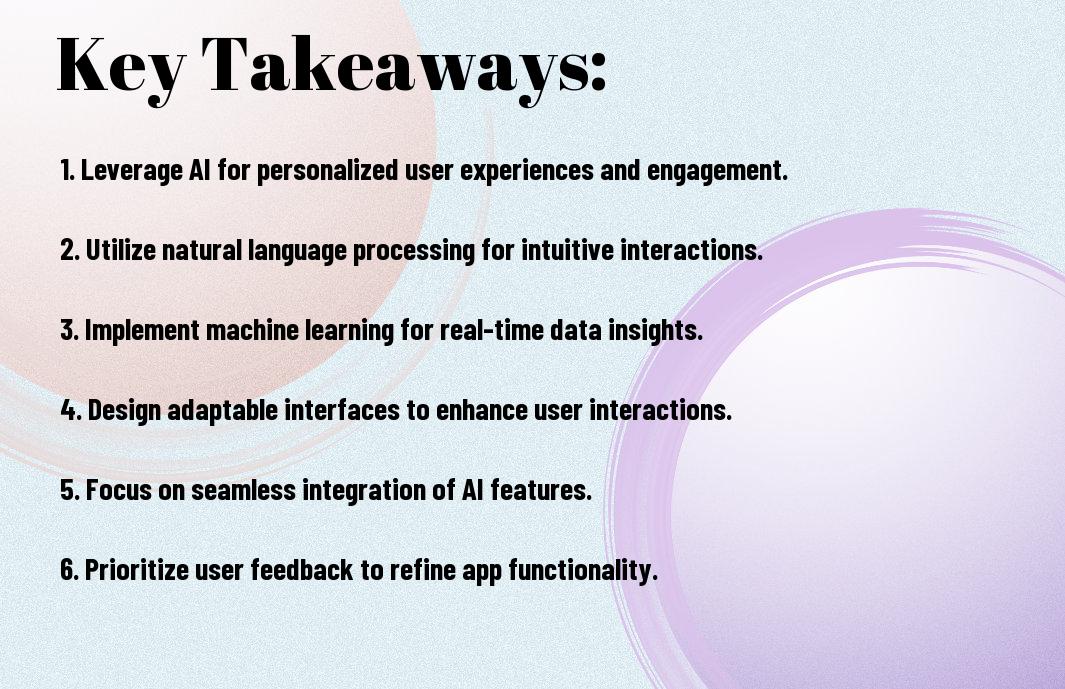
Key Takeaways:

  • TensorFlow and PyTorch are two of the most popular AI frameworks used for building next-gen applications, offering a wide range of tools and libraries for tasks such as computer vision, natural language processing, and predictive analytics.
  • Microsoft Cognitive Toolkit (CNTK) is another powerful AI framework that allows developers to build and train deep learning models, with a focus on scalability and performance.
  • Keras is a high-level AI framework that provides an easy-to-use interface for building and training neural networks, making it a great choice for developers who are new to AI and machine learning.
  • OpenCV is a computer vision framework that provides a wide range of tools and libraries for tasks such as image and video processing, object detection, and facial recognition, making it a great choice for building applications that require computer vision capabilities.
  • Scikit-learn is a machine learning framework that provides a wide range of algorithms and tools for tasks such as classification, regression, and clustering, making it a great choice for building applications that require predictive analytics and data analysis capabilities.
    Evolution of AI Frameworks

    Your journey to creating next-gen applications begins with understanding the evolution of AI frameworks, which have transformed significantly over the years, and you can explore the List of Top Generative AI Frameworks and Tools for 2025 to stay updated.

    Historical Development

    Developing from simple machine learning algorithms, AI frameworks have come a long way, and as you research into their history, you’ll discover how they paved the way for modern applications.

    Current Technology Landscape

    Against the backdrop of rapid technological advancements, you’re now faced with a plethora of AI frameworks to choose from, each with its unique features and capabilities.

    Current advancements in AI frameworks have led to the development of more sophisticated and specialized tools, allowing you to create complex applications with ease, and as you explore these frameworks, you’ll find that they cater to your specific needs, whether it’s natural language processing, computer vision, or predictive analytics.

    Popular AI Development Tools

    Even with numerous AI frameworks available, you can narrow down your options by focusing on the most popular ones, which offer extensive community support and a wide range of resources to help you get started with your next-gen application development.

    TensorFlow Ecosystem

    Besides being an open-source framework, TensorFlow offers a comprehensive ecosystem that includes tools like TensorFlow Lite and TensorFlow.js, allowing you to develop and deploy AI models across various platforms, making it a versatile choice for your AI development needs.

    PyTorch Framework

    Below the surface of PyTorch’s dynamic computation graph lies a powerful framework that enables you to build and train AI models rapidly, thanks to its modular design and automatic differentiation capabilities, making it an ideal choice for your rapid prototyping and development requirements.

    Due to its simplicity and flexibility, PyTorch has become a favorite among developers, allowing you to easily integrate it with other tools and frameworks, and its strong GPU support enables you to train complex models quickly, giving you a significant edge in developing and deploying your next-gen applications.

    Deep Learning Frameworks

    Keep in mind that deep learning frameworks are vital for building next-gen applications, as they provide the necessary tools and libraries to create complex models. You can utilize these frameworks to develop applications with advanced capabilities, such as image and speech recognition, natural language processing, and more.

    Core Components

    For instance, when working with deep learning frameworks, you will typically encounter core components like tensors, automatic differentiation, and optimization algorithms, which are necessary for building and training your models. You can use these components to create custom models tailored to your specific needs.

    Neural Network Architecture

    For example, when designing a neural network architecture, you will need to consider factors like layer types, connections, and activation functions, which can significantly impact your model’s performance. You can experiment with different architectures to find the one that best suits your application.

    Due to the complexity of neural network architectures, you will need to carefully evaluate your design choices to ensure they align with your project’s goals. You can use your knowledge of deep learning frameworks to create and train models that achieve state-of-the-art performance, and your applications will benefit from the advanced capabilities they provide.

    Natural Language Processing Tools

    After exploring various AI frameworks, you’ll find that natural language processing (NLP) tools are vital for creating next-gen applications that can understand and interact with users in a more human-like way, enabling you to build more sophisticated and engaging interfaces.

    Framework Capabilities

    Prior to selecting an NLP framework, you should consider the capabilities you need, as you will want to choose one that aligns with your project’s requirements, allowing you to leverage features such as sentiment analysis, entity recognition, and language translation to enhance your application.

    Implementation Methods

    Along with choosing the right framework, you need to consider the implementation methods, as you will want to ensure that your NLP tool integrates seamlessly with your existing infrastructure, enabling you to focus on developing innovative features and improving user experience.

    Language support is a key aspect of implementation methods, as you will need to decide which languages your application will support, and ensure that your NLP framework can handle the nuances of each language, allowing you to reach a broader audience and provide a more personalized experience for your users.

    Computer Vision Frameworks

    Once again, you’ll find that computer vision frameworks are crucial for creating next-gen applications, enabling your system to interpret and understand visual data from images and videos, and make informed decisions based on that data.

    Image Processing Tools

    After selecting a suitable framework, you can utilize image processing tools to enhance, manipulate, and analyze your images, allowing your application to extract valuable insights and features from visual data.

    Video Analysis Systems

    Across various industries, you can leverage video analysis systems to detect objects, track movements, and recognize patterns, making it possible to develop innovative applications such as surveillance systems and autonomous vehicles.

    Frameworks like OpenCV and TensorFlow provide you with the necessary tools to build and deploy video analysis systems, enabling your application to process and analyze video feeds in real-time, and make data-driven decisions based on the insights extracted from the video data, allowing you to create more sophisticated and intelligent applications.

    Edge Computing AI Solutions

    Not all AI frameworks are created equal, and when it comes to edge computing, you need solutions that can process data in real-time, reducing latency and improving performance, which is imperative for your next-gen applications.

    Mobile Development Frameworks

    For instance, when developing mobile applications, you can leverage frameworks like TensorFlow Lite or Core ML to create seamless user experiences, enabling your apps to run efficiently on edge devices.

    IoT Integration Tools

    Edge computing enables you to integrate AI with IoT devices, allowing your applications to collect and process data from various sources, making your solutions more intelligent and responsive to user needs.

    In fact, as you examine deeper into IoT integration tools, you will discover a wide range of libraries and software development kits (SDKs) that simplify the process of connecting your AI models to IoT devices, enabling you to create more sophisticated and automated applications that can analyze data and make decisions in real-time.

    Final Words

    As a reminder, you now have the knowledge to create next-gen applications using top AI frameworks. You can leverage your newfound understanding to develop innovative solutions, enhancing your applications and staying ahead in the market. With your skills, you will be able to build cutting-edge products, driving your business forward and improving your customers’ experiences. Your ability to harness AI will unlock new opportunities, enabling you to achieve your goals and succeed in the rapidly evolving tech landscape.

    FAQ

    Q: What are the most popular AI frameworks used to create next-gen applications?

    A: The most popular AI frameworks used to create next-gen applications include TensorFlow, PyTorch, and Keras. TensorFlow is an open-source framework developed by Google, known for its extensive community support and wide range of tools. PyTorch, developed by Facebook, is popular for its ease of use and rapid prototyping capabilities. Keras, on the other hand, is a high-level framework that provides an easy-to-use interface for building neural networks. These frameworks are widely used in various applications, including natural language processing, computer vision, and predictive analytics.

    Q: What are the key factors to consider when selecting an AI framework for next-gen application development?

    A: When dicking out an AI framework for next-gen application development, several key factors should be considered. These include the type of application being developed, the level of complexity, and the required scalability. Additionally, the framework’s compatibility with existing infrastructure, the size and activity of its community, and the availability of documentation and support are also important considerations. Furthermore, the framework’s support for various AI and machine learning algorithms, as well as its integration with other tools and technologies, should also be evaluated. By carefully considering these factors, developers can choose the most suitable framework for their specific needs and ensure the success of their next-gen application.

    Q: How do AI frameworks contribute to the development of next-gen applications, and what benefits do they offer?

    A: AI frameworks significantly contribute to the development of next-gen applications by providing pre-built components, tools, and libraries that simplify and accelerate the development process. These frameworks offer a range of benefits, including improved efficiency, increased accuracy, and enhanced scalability. They enable developers to focus on building innovative applications, rather than starting from scratch, and provide access to advanced AI and machine learning capabilities. Additionally, AI frameworks facilitate collaboration and knowledge sharing among developers, promoting the creation of more sophisticated and powerful next-gen applications. By leveraging these frameworks, developers can create applications that are more intelligent, interactive, and user-friendly, leading to improved user experiences and increased business value.

Designing Interactive Apps with Advanced AI Technologies

As you explore into the world of app design, you’ll discover the potential of advanced AI technologies to enhance user experience. You can create interactive apps that learn and adapt to your users’ behavior, providing personalized interactions. With your skills and knowledge, you can harness the power of AI to develop innovative and engaging apps that set you apart from the rest. Your ability to leverage AI will enable you to craft unique experiences that captivate and retain users.

Key Takeaways:

  • Integrating advanced AI technologies into interactive apps can significantly enhance user experience by providing personalized and dynamic interactions, such as voice assistants, facial recognition, and predictive analytics.
  • AI-powered apps can leverage machine learning algorithms to analyze user behavior and adapt to their preferences, leading to increased engagement and loyalty.
  • Designing interactive apps with AI requires a deep understanding of human-computer interaction principles, including intuitive interfaces, natural language processing, and emotional intelligence.
  • Advanced AI technologies, such as computer vision and augmented reality, can enable innovative features like object detection, image recognition, and immersive experiences, expanding the possibilities of interactive app design.
  • Effective design of AI-powered interactive apps involves balancing technological capabilities with ethical considerations, such as data privacy, bias, and transparency, to ensure a trustworthy and responsible user experience.

Core AI Technologies in App Design

While designing interactive apps, you will encounter various AI technologies that can enhance your app’s functionality. You will need to understand these technologies to create an engaging user experience. Your app’s success depends on the effective integration of these technologies.

Machine Learning Integration

Besides other AI technologies, machine learning enables your app to learn from user behavior and adapt to their needs. You can use machine learning to personalize your app’s content and improve user engagement. Your app will become more intuitive and user-friendly with machine learning integration.

Natural Language Processing Components

Alongside other technologies, natural language processing (NLP) components allow your app to understand and process human language. You can use NLP to create chatbots, voice assistants, and other interactive features that enhance user experience. Your app will be able to communicate with users more effectively with NLP components.

In addition to the basic functions of NLP, you can also use it to analyze user feedback and sentiment. You can then use this information to improve your app’s performance and user experience. Your app will become more responsive to user needs, and you will be able to make data-driven decisions to drive your app’s success.

User Experience and AI Interaction

Assuming you want to create an engaging and intuitive app, you’ll need to consider how users interact with AI technologies, and design an experience that feels seamless and natural, allowing you to build trust with your users.

Predictive Interface Design

Around the concept of predictive interface design, you’ll find that AI can help you anticipate user needs, providing a more personalized experience, and enabling you to make data-driven design decisions that enhance your app’s overall usability.

Adaptive Learning Systems

Against the backdrop of evolving user behaviors, you’ll need to incorporate adaptive learning systems that adjust to individual preferences, allowing you to deliver targeted content and improve user engagement, and as you investigate deeper, you’ll discover the full potential of these systems.

Adaptive learning systems enable you to create a unique experience for each user, as they learn and adapt to individual behaviors, you can refine your app’s performance, and make adjustments to better meet the needs of your users, ultimately leading to increased satisfaction and loyalty.

Data Management and Processing

Keep in mind that effective data management is vital for designing interactive apps with advanced AI technologies. You will need to consider how your app will collect, store, and process user data to ensure seamless functionality and personalized experiences.

Real-time Analytics

Driven by the need for instant insights, you can leverage real-time analytics to monitor user behavior and make data-driven decisions to improve your app’s performance and user engagement.

Privacy and Security Protocols

Before implementing any data management strategy, you should consider the privacy and security implications of collecting and storing user data, ensuring that your app complies with relevant regulations and protects your users’ sensitive information.

Privacy is a top concern for your users, and you must prioritize it when designing your app’s data management system. You should implement robust security measures, such as encryption and access controls, to safeguard user data and prevent unauthorized access or breaches, maintaining trust and credibility with your users.

AI-Driven Personalization

To create a truly immersive experience, you can leverage AI-driven personalization in your interactive app, allowing you to tailor the user experience to individual preferences and behaviors.

User Behavior Analysis

On the basis of user interactions, you can analyze behavior patterns, identifying trends and preferences that inform your personalization strategy, enabling you to create a more engaging experience for your users.

Dynamic Content Adaptation

To further enhance the user experience, you can implement dynamic content adaptation, adjusting the content and layout in real-time to match your users’ evolving needs and interests.

Considering the complexities of dynamic content adaptation, you will need to develop a system that can process user data, preferences, and behavior in real-time, adjusting the content seamlessly to create a unique experience for each user, making your app more engaging and increasing user retention.

Performance Optimization

Unlike other aspects of app design, performance optimization requires careful consideration of various factors to ensure a seamless user experience. You need to balance functionality with efficiency to create an app that is both feature-rich and fast.

Resource Management

Beneath the surface of your app’s interface, you’ll find a complex system of resources that need to be managed effectively. You can optimize your app’s performance by allocating resources wisely, ensuring that your app runs smoothly and efficiently on various devices.

Response Time Enhancement

Performing regular checks on your app’s response time is imperative to identify areas for improvement. You can enhance your app’s response time by optimizing code, reducing latency, and leveraging advanced AI technologies to streamline processes.

Time is of the essence when it comes to response time enhancement, and you should focus on creating an app that responds quickly to user input. You can achieve this by using advanced AI-powered tools to analyze user behavior, predict interactions, and optimize your app’s performance accordingly, resulting in a more engaging and interactive user experience for your users.

Testing and Quality Assurance

Not only is testing crucial, but you also need to ensure your app’s AI integration is seamless. You can explore 15 AI Tools for Designers in 2025 to improve your design process.

AI Model Validation

By validating your AI models, you ensure they function as intended, and you can identify potential errors early on, saving you time and resources in the long run.

User Interaction Testing

Assurance of a smooth user experience is vital, and you achieve this by testing how users interact with your app, identifying areas that need improvement.

Validation of user interaction is an ongoing process, and as you test your app, you will uncover new ways to enhance the user experience, making your app more engaging and effective, allowing you to make data-driven decisions to refine your design and improve your app’s overall performance.

Conclusion

Hence, as you examine into designing interactive apps with advanced AI technologies, you will uncover new possibilities for enhancing your user experience. You will be able to create personalized and dynamic interfaces that adapt to your users’ needs. By leveraging AI, you can streamline your development process and focus on crafting innovative solutions that set your apps apart. Your ability to integrate AI will ultimately determine the success of your interactive apps in today’s competitive market.

FAQ

Q: What are the key considerations when designing interactive apps with advanced AI technologies?

A: When designing interactive apps with advanced AI technologies, it’s crucial to consider the user experience, ensuring that the AI-driven features are intuitive and seamless. This involves understanding the target audience, their needs, and preferences to create a user-friendly interface. Additionally, developers should prioritize data privacy and security, as AI technologies often rely on vast amounts of user data. By balancing innovation with user-centric design, developers can create engaging and effective interactive apps that leverage the power of AI.

Q: How can developers integrate AI technologies into their app design to enhance user engagement?

A: Developers can integrate AI technologies into their app design by incorporating features such as natural language processing (NLP), machine learning algorithms, and computer vision. These technologies can enable personalized recommendations, predictive analytics, and interactive interfaces that adapt to user behavior. For instance, chatbots powered by NLP can provide users with tailored support and guidance, while machine learning algorithms can help apps learn from user interactions and improve over time. By leveraging these AI-driven features, developers can create immersive and dynamic experiences that captivate and retain users.

Q: What are the potential challenges and limitations of designing interactive apps with advanced AI technologies?

A: One of the primary challenges of designing interactive apps with advanced AI technologies is ensuring that the AI systems are transparent, explainable, and fair. Developers must also address concerns around data bias, as AI algorithms can perpetuate existing biases if trained on biased data. Furthermore, the complexity of AI technologies can lead to increased development time and costs, requiring significant expertise and resources. To overcome these challenges, developers should prioritize testing, validation, and iteration, as well as collaborate with AI ethicists and experts to ensure that their apps are both innovative and responsible.

The Ultimate Guide to AI-Powered App Creation

As you launch on creating your own app, you’re likely aware of the impact artificial intelligence can have on its success. You want to harness the power of AI to streamline development, enhance user experience, and drive engagement. Your goal is to create an app that stands out from the crowd, and AI can help you achieve that. In this guide, you will learn how to leverage AI to bring your app vision to life, from design to deployment, and unlock your full potential as a developer.

Key Takeaways:

  • AI-powered app creation enables developers to build more intelligent and interactive applications, enhancing user experience and engagement through personalized features and automated processes.
  • To get started with AI-powered app development, it’s necessary to choose the right tools and frameworks that align with your project goals, such as machine learning libraries and natural language processing APIs.
  • Designing an AI-powered app requires a deep understanding of user needs and behaviors, allowing developers to create tailored solutions that meet specific demands and preferences.
  • Integrating AI into app development can significantly reduce development time and costs, as automated testing and debugging tools help identify and fix issues more efficiently.
  • As AI technology continues to evolve, staying up-to-date with the latest trends and advancements is vital for creating innovative and competitive AI-powered apps that drive business success and customer satisfaction.

AI Development Fundamentals

For a successful AI-powered app, you need to understand the basics of AI development, including machine learning and neural networks, to create an effective and efficient application that meets your needs and goals.

Machine Learning Frameworks

Beyond the basics, you’ll find that machine learning frameworks such as TensorFlow and PyTorch provide you with the tools and libraries necessary to build and train your AI models, allowing you to focus on developing your app’s unique features and functionality.

Neural Network Basics

Beneath the surface of AI development, you’ll discover that neural networks are a fundamental component, consisting of layers of interconnected nodes that process and transmit information, enabling your app to learn and make decisions based on the data it receives.

Further exploration of neural network basics will help you understand how to design and optimize your networks to achieve the best results for your app, taking into account factors such as data quality, network architecture, and training algorithms, to ensure your AI-powered app performs at its best and provides your users with a seamless and intuitive experience.

App Creation Tools

Some of the most popular app creation tools utilize AI to streamline the development process, making it easier for you to bring your ideas to life. These tools offer a range of features, from automated coding to design assistance, allowing you to focus on the creative aspects of your app.

No-Code AI Platforms

Along with the rise of AI, no-code platforms have become increasingly popular, enabling you to create apps without extensive coding knowledge. These platforms provide drag-and-drop interfaces and pre-built templates, making it easy for you to get started.

Advanced Development Environments

Before stepping into advanced development environments, you should consider the following tools:

  1. AI-powered IDEs
  2. Machine learning frameworks

Development Tools

Tool Description
AI-powered IDEs Intelligent coding assistance
Machine learning frameworks Pre-built algorithms for complex tasks

You can use these tools to create complex apps with ease.

Understanding the capabilities of advanced development environments is key to creating sophisticated apps. You can leverage these environments to:

  1. Build custom AI models
  2. Integrate with existing systems

Advanced Development Features

Feature Benefit
Custom AI models Tailored to your app’s specific needs
System integration Seamless data exchange and workflow automation

By utilizing these features, you can take your app development to the next level and create innovative, AI-powered solutions.

Data Integration

After setting up your AI-powered app, you’ll need to integrate data from various sources. You can explore tools like The 6 best AI app builders in 2025 to streamline your data integration process, making it easier for you to manage your app’s data.

Data Collection Methods

Alongside other methods, an crucial step in data integration is collecting data from various sources, which you can do through APIs, web scraping, or user input, allowing you to gather the data you need to power your app.

Processing and Analysis

Before you can use your data, you’ll need to process and analyze it, which involves cleaning, transforming, and modeling your data to extract insights that inform your app’s decision-making processes, helping you to make the most of your data.

Plus, as you examine deeper into processing and analysis, you’ll discover that you can use machine learning algorithms to identify patterns and trends in your data, enabling you to make predictions and improve your app’s performance, which is crucial for creating a seamless user experience and driving business success, and you can use this information to refine your app and make data-driven decisions.

User Experience Design

Now that you’re considering creating an AI-powered app, you’ll want to learn more about the process, which you can find in How to Build an AI app in 2025 [Complete Guide], to ensure your app provides a seamless user experience.

AI-Driven Interface Elements

Around the time you start designing your app, you’ll need to think about incorporating AI-driven interface elements that will enhance your user’s experience and make your app more engaging.

Predictive Interactions

To take your app to the next level, you’ll want to focus on creating predictive interactions that anticipate your user’s needs and provide personalized experiences.

Indeed, by leveraging AI-powered predictive interactions, you can create an app that learns your user’s behavior and adapts to their preferences, making it more likely that they will continue to use your app and become loyal customers, which is necessary for the success of your app, and as you examine deeper into the world of AI-powered app creation, you’ll discover more ways to utilize predictive interactions to enhance your user’s experience.

App Intelligence Features

All AI-powered apps rely on intelligent features to enhance user experience. You can integrate various features, such as natural language processing and computer vision, to make your app more interactive and engaging.

Natural Language Processing

One of the key features you can incorporate is natural language processing, which enables your app to understand and respond to user input in a more human-like way, allowing you to create a more personalized experience for your users.

Computer Vision Integration

Between the various features, computer vision integration stands out, enabling your app to interpret and understand visual data from images and videos, allowing you to create more immersive experiences for your users.

In fact, with computer vision integration, you can develop apps that can detect objects, recognize faces, and even track movements, opening up a wide range of possibilities for your app’s functionality and user engagement, and you can use this technology to create more sophisticated and interactive features that set your app apart from others.

Testing and Optimization

Your app’s performance is key to its success, and testing is an vital step in ensuring it meets your standards, with AI-powered tools streamlining the process and providing valuable insights.

Performance Metrics

Any assessment of your app’s performance relies on tracking key metrics, such as load times, crash rates, and user engagement, which AI can analyze to identify areas for improvement.

User Behavior Analysis

Users expect a seamless experience, and analyzing their behavior helps you understand how they interact with your app, allowing you to make data-driven decisions to enhance their experience.

A deeper explore user behavior analysis reveals that you can leverage AI to study user patterns, preferences, and pain points, enabling you to refine your app’s features, fix issues, and ultimately boost user satisfaction and retention, which is vital for your app’s long-term success.

Conclusion

Drawing together the insights from this guide, you now have a comprehensive understanding of AI-powered app creation. You can leverage your newfound knowledge to develop innovative apps that transform your business and enhance your users’ experience. With your skills and expertise, you can unlock the full potential of AI and create cutting-edge apps that drive success and growth for your organization, taking your mobile strategy to the next level with your expertise in AI-powered app creation.

FAQ

Q: What is the main benefit of using AI in app creation, and how can it enhance the development process?

A: The main benefit of using AI in app creation is that it enables developers to automate repetitive tasks, improve app performance, and provide personalized user experiences. AI-powered tools can help with tasks such as data analysis, code generation, and testing, allowing developers to focus on more complex and creative aspects of app development. Additionally, AI can help improve app security, reduce bugs, and enhance overall user engagement, making it an imperative component of modern app creation.

Q: What kind of skills and knowledge are required to create an AI-powered app, and are there any specific tools or platforms that can facilitate the process?

A: To create an AI-powered app, developers should have a solid understanding of programming languages such as Python, Java, or Swift, as well as experience with machine learning frameworks like TensorFlow or Core ML. Familiarity with data structures, algorithms, and software design patterns is also necessary. Additionally, developers can leverage various tools and platforms, such as Google Cloud AI Platform, Microsoft Azure Machine Learning, or Apple’s Core ML, to streamline the development process and integrate AI capabilities into their apps. These platforms provide pre-built models, APIs, and development kits that can help simplify the process of building AI-powered apps.

Q: How can developers ensure that their AI-powered apps are transparent, fair, and unbiased, and what steps can be taken to address potential ethical concerns?

A: To ensure that AI-powered apps are transparent, fair, and unbiased, developers should prioritize data quality, implement robust testing and validation procedures, and regularly audit their AI models for potential biases. They should also provide clear explanations of how the AI system works, what data it collects, and how it makes decisions. Furthermore, developers can adopt ethical guidelines and frameworks, such as those provided by the AI Now Institute or the IEEE, to help address potential concerns around AI transparency, accountability, and fairness. By taking these steps, developers can build trust with their users and create AI-powered apps that are both effective and responsible.

How AI Models are Revolutionizing App Design

As you probe into the world of app design, you’ll notice a significant shift towards incorporating AI models. Your experience with apps is about to become more personalized and intuitive. With AI-powered design, you can expect more efficient and user-friendly interfaces. You’ll see how AI models are transforming the way apps are created, making your interactions more seamless and enjoyable. Your apps will learn and adapt to your behavior, providing a unique experience tailored to your needs.

Key Takeaways:

  • AI models are transforming the app design process by enabling developers to create personalized user experiences through predictive analytics and machine learning algorithms.
  • AI-powered design tools can automate repetitive tasks, such as layout and formatting, allowing designers to focus on high-level creative decisions and improving overall design efficiency.
  • AI-driven design systems can analyze user behavior and preferences, providing valuable insights that inform design decisions and help create more intuitive and engaging user interfaces.
  • AI models can also facilitate the development of accessible design, by automatically generating design elements that meet accessibility standards and guidelines, such as high contrast colors and clear typography.
  • The integration of AI in app design is enabling the creation of more dynamic and adaptive user interfaces, which can adjust to individual user needs and preferences in real-time, leading to a more seamless and enjoyable user experience.

The Evolution of App Design

Before the advent of AI models, app design was a tedious and time-consuming process, relying on manual efforts and limited creativity. You had to depend on your own skills and experience to create engaging and user-friendly interfaces.

Traditional Design Approaches

Beneath the surface of traditional design approaches lies a complex process of trial and error, where you had to test and refine your designs multiple times to get the desired outcome, often resulting in delayed project timelines and increased costs.

Rise of AI-Driven Solutions

With the integration of AI models, you can now create app designs that are not only visually appealing but also highly functional and personalized to your target audience, enabling you to stay ahead of the competition.

At the forefront of this revolution, AI-driven solutions are empowering you to automate repetitive tasks, analyze user behavior, and make data-driven decisions to optimize your app’s performance and user experience, allowing you to focus on high-level creative decisions and strategy.

Core AI Technologies in App Design

There’s a range of AI technologies driving innovation in app design, and you can learn more about How AI Is Revolutionizing Mobile App Development in 2024? to stay ahead of the curve.

Machine Learning Algorithms

Technologies like machine learning algorithms enable your apps to learn from user interactions, making them more intuitive and user-friendly, allowing you to create personalized experiences.

Neural Networks and Pattern Recognition

Against the backdrop of evolving user needs, neural networks and pattern recognition play a significant role in enhancing your app’s functionality and overall performance.

Understanding how neural networks and pattern recognition work can help you leverage these technologies to improve your app’s ability to analyze and respond to user behavior, creating a more dynamic and engaging experience for your users.

AI-Powered Design Features

Despite the initial skepticism, AI is transforming the app design landscape, and you can learn more about How AI Is Changing the Landscape of UX and Product Design. As you explore AI-powered design features, you’ll discover new possibilities for creating engaging user experiences.

Automated Layout Generation

With automated layout generation, you can create adaptive and responsive designs that adjust to different screen sizes and devices, saving you time and effort in the design process.

Smart Color Schemes and Typography

AIPowered tools help you create visually appealing color schemes and typography, enabling you to establish a strong brand identity and enhance your app’s overall aesthetic.

Smart color schemes and typography play a significant role in capturing your users’ attention, and with AI, you can experiment with various combinations to find the perfect fit for your app, making it more engaging and user-friendly.

Personalization Through AI

Once again, AI models are transforming the app design landscape by enabling personalized experiences tailored to your preferences and behaviors, making your interactions more engaging and intuitive.

User Behavior Analysis

Following the implementation of AI, you can analyze user behavior to identify patterns and trends, allowing you to refine your app’s design and functionality to better meet your users’ needs.

Dynamic Interface Adaptation

The ability to adapt your app’s interface in real-time is a key benefit of AI-powered design, enabling you to create a unique experience for each user based on their individual preferences and behaviors.

But as you research deeper into dynamic interface adaptation, you’ll find that it’s not just about changing the layout or color scheme – it’s about creating a seamless and intuitive experience that anticipates your users’ needs and provides them with the most relevant information and features at the right time, making your app more engaging and increasing user retention.

Design Process Transformation

After integrating AI models into your design workflow, you’ll notice a significant shift in your approach to app design. AI-powered tools enable you to automate repetitive tasks, focus on high-level creative decisions, and streamline your overall design process.

Rapid Prototyping

On the heels of this transformation, you can leverage AI-driven design tools to rapidly create and test prototypes, allowing you to validate your ideas and gather feedback from users more efficiently.

Iterative Improvements

Behind the scenes, AI models are continuously learning from user interactions and adapting to your design preferences, enabling you to make data-driven decisions and refine your app’s design.

Considering the iterative nature of AI-driven design, you can refine your app’s user experience through continuous testing and refinement, ensuring that your design meets the evolving needs of your users and stays competitive in the market.

Human-AI Collaboration

All aspects of app design are being transformed by the integration of AI models, enabling you to create more intuitive and user-friendly interfaces. You can leverage AI to automate repetitive tasks, freeing up your time to focus on high-level creative decisions.

Designer’s New Role

Across various design disciplines, you will notice a shift in your responsibilities as AI takes over mundane tasks, allowing you to concentrate on strategy and innovation, making your job more exciting and challenging.

Creative Augmentation

With the assistance of AI, you can explore new design possibilities, generating unique and innovative solutions that might not have been possible through human effort alone, enhancing your overall design capabilities.

And as you probe deeper into the potential of creative augmentation, you will discover that AI can help you identify trends, predict user behavior, and provide valuable insights, enabling you to make data-driven design decisions and create apps that meet your users’ evolving needs.

Conclusion

Hence, as you explore the world of app design, you’ll notice how AI models are transforming your experience. You can leverage AI to create personalized and intuitive interfaces, streamlining your development process. With AI, your apps will become more engaging, efficient, and user-friendly, allowing you to stay ahead in the competitive market. By embracing AI in app design, you’ll unlock new possibilities and take your user experience to the next level.

FAQ

Q: What role do AI models play in revolutionizing app design, and how are they impacting the user experience?

A: AI models are significantly transforming the app design landscape by enabling the creation of more personalized, intuitive, and adaptive user interfaces. Through machine learning algorithms, AI can analyze user behavior, preferences, and patterns, allowing designers to craft tailored experiences that enhance engagement and satisfaction. Furthermore, AI-driven design tools can automate routine tasks, provide predictive analytics, and offer real-time feedback, thereby streamlining the design process and fostering innovation.

Q: How are AI models being utilized in the app design process to improve efficiency and productivity?

A: AI models are being integrated into various stages of the app design process to boost efficiency and productivity. For instance, AI-powered design tools can assist in generating wireframes, prototypes, and high-fidelity designs, saving time and effort. Additionally, AI-driven project management tools can help prioritize tasks, allocate resources, and predict potential roadblocks, ensuring that design projects are completed on time and within budget. Moreover, AI-based testing and validation tools can identify usability issues, detect bugs, and provide actionable insights, enabling designers to iterate and refine their designs more effectively.

Q: What are the potential benefits and challenges of incorporating AI models into app design, and how can designers ensure a successful integration?

A: The incorporation of AI models into app design offers numerous benefits, including enhanced user experience, increased efficiency, and improved decision-making. However, it also poses challenges such as data quality issues, algorithmic bias, and the need for specialized skills. To ensure a successful integration, designers should focus on developing a deep understanding of AI principles, collaborating with cross-functional teams, and prioritizing transparency, explainability, and accountability in AI-driven design decisions. By adopting a human-centered approach and addressing potential challenges proactively, designers can harness the full potential of AI models to create innovative, user-centric, and effective app designs.

Step-by-Step – Developing Apps with AI Technology

As you initiate on creating innovative mobile applications, you’ll discover the vast potential of Artificial Intelligence (AI) technology. You can leverage AI to streamline your development process, enhance user experience, and drive business growth. Your journey to developing cutting-edge apps with AI technology begins here, where you’ll learn the fundamentals and gain insights into the latest trends and tools, empowering you to bring your vision to life.

Key Takeaways:

  • Developing apps with AI technology involves integrating machine learning algorithms and natural language processing to create intelligent and interactive user experiences.
  • A thorough understanding of AI fundamentals, such as data analysis and model training, is necessary for building effective AI-powered apps.
  • AI technology can be used to automate tasks, provide personalized recommendations, and enhance user engagement in various app categories, including entertainment, education, and healthcare.
  • When developing AI-driven apps, it’s imperative to consider factors like data privacy, security, and ethics to ensure responsible AI implementation.
  • Continuous testing, iteration, and refinement are necessary to optimize AI app performance, improve accuracy, and adapt to evolving user needs and preferences.

Foundations of AI Development

While developing apps with AI technology, you need to understand the basics of AI and its applications. You will learn about the key concepts and technologies that power AI systems, enabling you to create intelligent and innovative apps.

Essential AI Technologies

Around the core of AI development, you will find machine learning, natural language processing, and computer vision, which are imperative for building intelligent apps that can learn, understand, and interact with users in a more human-like way, allowing you to create personalized experiences for your users.

Development Environment Setup

Along with learning AI concepts, you need to set up a suitable development environment, which includes choosing the right programming languages, frameworks, and tools that will help you build, test, and deploy your AI-powered apps efficiently, enabling you to focus on your app’s development.

In fact, setting up your development environment is an ongoing process that will evolve as you progress with your app development, and you will need to stay up-to-date with the latest technologies and trends to ensure your app stays competitive and meets your users’ expectations, so you should be prepared to continuously learn and adapt your environment as needed.

Planning Your AI Application

The first step in developing an app with AI technology is planning. You can learn more about the process by visiting How to create an app with AI: The undisputed guide to get started.

Project Scope Definition

Your project’s scope is defined by identifying the key features and functionalities you want to include in your app, helping you stay focused on your goals.

Resource Requirements

On the other hand, determining the resources you need is necessary for a successful project, including personnel, equipment, and budget.

This includes considering the cost of AI tools, infrastructure, and personnel with expertise in AI development, which you will need to allocate to ensure your project’s success, and you should plan accordingly to meet your app’s requirements.

Data Management

For effective app development with AI technology, you need to manage your data efficiently. This involves collecting, preprocessing, and analyzing data to train your AI models.

Data Collection Methods

Beneath the surface of AI technology lies the foundation of data collection. You will use various methods to gather data, such as surveys, sensors, and social media platforms, to fuel your app’s development.

Data Preprocessing Techniques

Any inconsistencies in your data can affect your AI model’s performance. You will need to clean and preprocess your data to ensure it is accurate and reliable, using techniques such as data normalization and feature scaling.

Even with a solid understanding of data preprocessing techniques, you will still need to consider the specific requirements of your app. You should explore different methods to handle missing values, outliers, and noisy data, and select the ones that best fit your project’s needs, allowing you to develop a robust and efficient AI-powered app.

AI Model Selection

Despite the numerous AI models available, selecting the right one for your app development is vital. You need to consider factors such as data type, complexity, and performance requirements to make an informed decision.

Machine Learning Algorithms

Along with the development of AI, you will encounter various machine learning algorithms that can be used to train your model, including decision trees, random forests, and support vector machines, which you can choose from based on your specific needs.

Neural Network Architectures

Behind the success of many AI-powered apps are neural network architectures, which you can utilize to build complex models that can learn and improve over time, allowing you to create more sophisticated and accurate AI systems.

Neural network architectures are designed to mimic the human brain, and as you examine deeper into developing your app, you will discover that they can be customized and fine-tuned to suit your specific requirements, enabling you to create highly efficient and effective AI models that can drive your app’s success.

Implementation Process

All aspects of your app development process will be influenced by the integration of AI technology. You will need to consider how AI will impact your design, functionality, and overall user experience.

Code Structure

Around the organization of your code, you will need to consider how AI components will be integrated into your existing architecture. You should consider creating a modular structure to facilitate easy integration and maintenance of AI-powered features.

Integration Guidelines

Before you begin integrating AI technology into your app, you should establish clear guidelines for how AI will be used and how it will impact your development process. You will need to consider factors such as data privacy and security.

Process of integrating AI technology into your app requires careful planning and execution. You will need to consider how AI will impact your app’s performance, scalability, and user experience, and make adjustments accordingly to ensure a seamless integration that meets your goals and expectations.

Testing and Optimization

Keep in mind that testing and optimization are imperative steps in developing apps with AI technology. You need to ensure that your app functions as intended and provides a seamless user experience.

Performance Metrics

With the help of various tools, you can measure your app’s performance and identify areas for improvement, allowing you to make data-driven decisions to optimize your app’s functionality and user experience.

Quality Assurance

With a thorough testing process, you can ensure that your app meets the required standards and is free from bugs and errors, giving you confidence in your app’s quality and reliability.

This quality assurance process involves testing your app on various devices and platforms, and you should also conduct user testing to gather feedback and make necessary improvements to your app, ensuring that it meets your users’ needs and expectations, and ultimately enhancing your app’s overall quality and user satisfaction.

Final Words

With this in mind, you now have a comprehensive understanding of developing apps with AI technology. You can apply your knowledge to create innovative solutions, enhancing your skills and productivity. As you move forward, your ability to integrate AI will elevate your app development, allowing you to deliver cutting-edge products that meet your users’ evolving needs, and stay ahead in the competitive market with your advanced skills.

FAQ

Q: What is the first step in developing apps with AI technology?

A: The first step in developing apps with AI technology is to define the problem you want to solve and identify the type of AI technology that can be applied to solve it. This involves conducting market research, analyzing user needs, and determining the feasibility of integrating AI into your app. You should also consider the type of data you will need to collect and process, as well as the computational resources required to support AI-driven functionality.

Q: How do I choose the right AI framework and tools for my app development project?

A: Choosing the right AI framework and tools for your app development project depends on several factors, including the type of AI technology you want to use, the programming languages you are working with, and the level of complexity you are comfortable with. Popular AI frameworks include TensorFlow, PyTorch, and Core ML, each with its own strengths and weaknesses. You should also consider factors such as scalability, compatibility, and community support when selecting an AI framework and tools for your project. Additionally, you may want to experiment with different frameworks and tools to determine which ones work best for your specific use case.

Q: What are some best practices for integrating AI technology into my app to ensure a seamless user experience?

A: To ensure a seamless user experience when integrating AI technology into your app, it’s imperative to prioritize transparency, explainability, and user control. This means providing clear and concise explanations of how AI-driven features work, as well as offering users the ability to opt-out or customize AI-driven functionality. You should also focus on optimizing app performance, minimizing latency, and ensuring that AI-driven features are intuitive and easy to use. Furthermore, you should continuously collect user feedback and iterate on your AI-driven features to ensure they meet user needs and expectations, and align with your app’s overall goals and objectives.

Skip to content