Personalization At Scale – How AI Is Shaping Customer Experience In Marketing

As you navigate the ever-evolving marketing landscape, you’re likely aware that delivering personalized experiences is key to captivating your audience. Your customers expect tailored interactions that reflect their unique preferences and behaviors. With the advent of AI, you can now achieve personalization at scale, revolutionizing the way you connect with your customers and driving meaningful engagement. You’ll discover how AI-powered solutions are transforming the marketing landscape, enabling you to create bespoke experiences that foster loyalty and drive growth.

Key Takeaways:

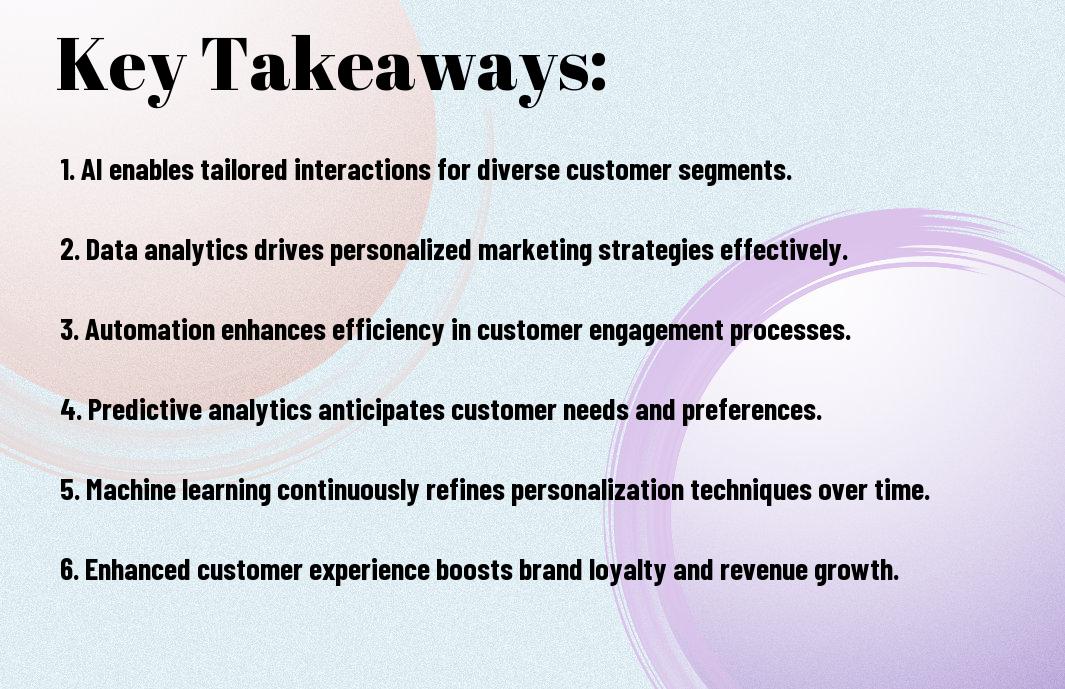
  • AI-driven personalization is revolutionizing the marketing landscape by enabling businesses to deliver tailored experiences to individual customers, leading to increased engagement and loyalty.
  • Advanced algorithms and machine learning capabilities allow marketers to analyze vast amounts of customer data, identify patterns, and create targeted campaigns that resonate with specific audience segments.
  • The integration of AI in marketing automation enables companies to scale personalization efforts, streamlining processes and improving efficiency, while also providing real-time insights to inform future marketing strategies.
    The Evolution of Customer Experience

    A significant shift has occurred in the way businesses approach customer experience, and you are now expected to deliver personalized interactions at every touchpoint.

    From Mass Marketing to Individual Attention

    Marketers have moved away from traditional mass marketing techniques, focusing instead on providing your customers with unique experiences tailored to their needs and preferences, allowing you to build stronger relationships with them.

    The Digital Transformation Catalyst

    At the heart of this transformation is technology, which has enabled you to collect and analyze vast amounts of customer data, allowing for more targeted and effective marketing strategies that meet your customers’ evolving expectations.

    In fact, as you examine deeper into the digital transformation, you will find that it has not only changed the way you interact with your customers but also raised the bar for customer experience, making it imperative for you to stay ahead of the curve and adapt to the latest trends and technologies to remain competitive.

    AI’s Role in Modern Personalization

    There’s no denying that AI has revolutionized the way you approach customer experience in marketing, enabling you to tailor your interactions to individual preferences and behaviors, thereby enhancing your overall marketing strategy.

    Machine Learning Algorithms

    With the help of machine learning algorithms, you can analyze vast amounts of data and identify patterns that inform your personalization efforts, allowing you to create more targeted and effective marketing campaigns that resonate with your audience.

    Predictive Analytics Systems

    At the heart of AI-driven personalization are predictive analytics systems that enable you to forecast customer behavior and tailor your marketing efforts accordingly, giving you a competitive edge in the market and allowing you to stay ahead of the curve.

    And as you investigate deeper into predictive analytics systems, you’ll discover that they can help you identify high-value customer segments, anticipate their needs, and deliver personalized experiences that drive engagement, loyalty, and ultimately, revenue growth, enabling you to maximize your marketing ROI and achieve your business goals.

    Data Collection and Pattern Recognition

    Now that you’re exploring personalization at scale, you need to understand how AI collects and analyzes data to shape customer experiences. This involves gathering information from various sources, identifying patterns, and using them to inform marketing strategies.

    Customer Behavior Tracking

    Analyzing customer behavior helps you understand their preferences and tailor your approach. You can track their interactions with your brand, including website visits, social media engagement, and purchase history, to create a comprehensive picture of their needs and interests.

    Real-time Analytics Implementation

    Right away, you can implement real-time analytics to monitor customer interactions and respond promptly to their needs. This enables you to adjust your marketing strategies in real-time, ensuring that you’re always providing relevant and personalized experiences.

    Recognition of patterns in customer behavior is key to successful real-time analytics implementation. As you collect and analyze data, you can identify trends and anomalies, allowing you to refine your marketing approach and improve customer satisfaction. You can use this information to create targeted campaigns, offer personalized recommendations, and enhance the overall customer experience, driving loyalty and revenue growth for your business.

    Personalization Technologies

    Keep in mind that personalization technologies are the backbone of your marketing strategy, enabling you to deliver tailored experiences to your customers. You can leverage these technologies to analyze customer data, behavior, and preferences, and create targeted campaigns that drive engagement and conversion.

    Recommendation Engines

    Personalizing your approach to customer interaction, you can use recommendation engines to suggest products or services based on their interests and purchase history, making your marketing efforts more effective and relevant to your audience.

    Dynamic Content Delivery

    Optimizing your content strategy, you can use dynamic content delivery to serve personalized content to your customers in real-time, ensuring that your message resonates with them and addresses their specific needs.

    It allows you to create a unique experience for each customer, taking into account their location, device, and behavior, and adjusting your content accordingly, enabling you to build a stronger connection with your audience and drive business results.

    Customer Journey Optimization

    Despite the complexity of customer journeys, AI-powered tools can help you optimize each stage, from awareness to conversion, by analyzing customer behavior and preferences.

    Touchpoint Personalization

    Across various touchpoints, you can leverage AI to deliver personalized experiences, tailoring your message and content to individual customers, increasing engagement and loyalty.

    Cross-channel Experience Integration

    To create a seamless experience, you need to integrate your channels, ensuring consistency and cohesion across online and offline interactions, which AI can facilitate by analyzing customer data and behavior.

    Integration of cross-channel experiences allows you to understand your customers’ preferences and behaviors, enabling you to deliver a unified and personalized experience, which you can achieve by using AI to analyze customer interactions and tailor your marketing strategy accordingly, helping you to build stronger relationships with your customers.

    Privacy and Ethical Considerations

    Many marketers are now faced with the challenge of balancing personalization with privacy concerns, as you collect and analyze large amounts of customer data to create targeted experiences.

    Data Protection Measures

    Along with the increasing use of AI, you need to implement robust data protection measures to safeguard your customers’ sensitive information and maintain their trust.

    Transparent AI Practices

    Across the marketing landscape, you are expected to prioritize transparency in your AI-driven initiatives, ensuring that your customers understand how their data is being used to personalize their experiences.

    This transparency is necessary in building trust with your audience, as you provide them with clear explanations of how AI algorithms make decisions and offer choices to opt-out of personalized experiences, giving you control over your data and preferences, allowing you to make informed decisions about your interactions with your brand.

    To wrap up

    Presently, you can leverage AI to deliver personalized experiences at scale, revolutionizing your marketing strategy. As you explore the potential of AI in customer experience, you’ll find that it enables you to tailor interactions to individual preferences. To learn more about How AI is Transforming Customer Experience for Businesses, you can discover new ways to enhance your customer experience, ultimately driving loyalty and growth for your business.

    FAQ

    Q: What is personalization at scale in marketing, and how does it impact customer experience?

    A: Personalization at scale refers to the ability of businesses to tailor their marketing efforts to individual customers on a large scale, using data and analytics to create unique experiences. This approach has revolutionized the way companies interact with their customers, enabling them to deliver targeted and relevant content, offers, and recommendations that meet their specific needs and preferences, leading to increased customer satisfaction, loyalty, and ultimately, revenue growth.

    Q: How does AI contribute to personalization at scale in marketing, and what are its key benefits?

    A: Artificial Intelligence (AI) plays a significant role in personalization at scale by analyzing vast amounts of customer data, identifying patterns, and making predictions about individual behavior. AI-powered algorithms enable businesses to automate and optimize their marketing efforts, providing real-time personalized recommendations, content, and offers to customers across various channels. The key benefits of AI-driven personalization include enhanced customer experience, improved conversion rates, increased efficiency, and reduced costs.

    Q: What types of data do marketers use to create personalized customer experiences at scale, and how is it collected?

    A: Marketers use various types of data to create personalized customer experiences, including demographic, behavioral, transactional, and preference data. This data is collected from multiple sources, such as customer interactions, website analytics, social media, customer relationship management (CRM) systems, and loyalty programs. Additionally, businesses may also leverage external data sources, like market research and social media listening tools, to gain a deeper understanding of their customers’ needs and preferences.

    Q: How do AI-powered chatbots and virtual assistants contribute to personalized customer experience in marketing?

    A: AI-powered chatbots and virtual assistants are increasingly being used in marketing to provide personalized customer experiences. These tools use natural language processing (NLP) and machine learning algorithms to understand customer inquiries, preferences, and behavior, enabling them to offer tailored responses, recommendations, and support. By leveraging chatbots and virtual assistants, businesses can provide 24/7 customer support, improve response times, and enhance the overall customer experience, leading to increased satisfaction and loyalty.

    Q: What are the future implications of AI-driven personalization at scale in marketing, and how will it continue to evolve?

    A: The future of AI-driven personalization at scale in marketing holds significant promise, with ongoing advancements in AI, machine learning, and data analytics expected to drive even more sophisticated and effective personalized experiences. As businesses continue to invest in AI-powered marketing technologies, we can expect to see increased use of emerging technologies like augmented reality, virtual reality, and the Internet of Things (IoT) to create immersive and interactive customer experiences. Moreover, the integration of AI with other technologies, such as blockchain and 5G networks, will further enhance the security, speed, and efficiency of personalized marketing efforts, enabling businesses to deliver seamless, omnichannel experiences that meet the evolving needs and expectations of their customers.

From Automation To Insights – The Comprehensive Impact Of AI On Marketing Practices

As you navigate the evolving landscape of marketing, you’re likely aware of the significant role artificial intelligence (AI) plays in shaping your strategies. You’re witnessing firsthand how AI transforms your marketing practices, from automating routine tasks to providing valuable insights that inform your decisions. Your ability to leverage AI effectively will be key to staying ahead of the competition, and understanding its comprehensive impact is imperative to maximizing your marketing potential.

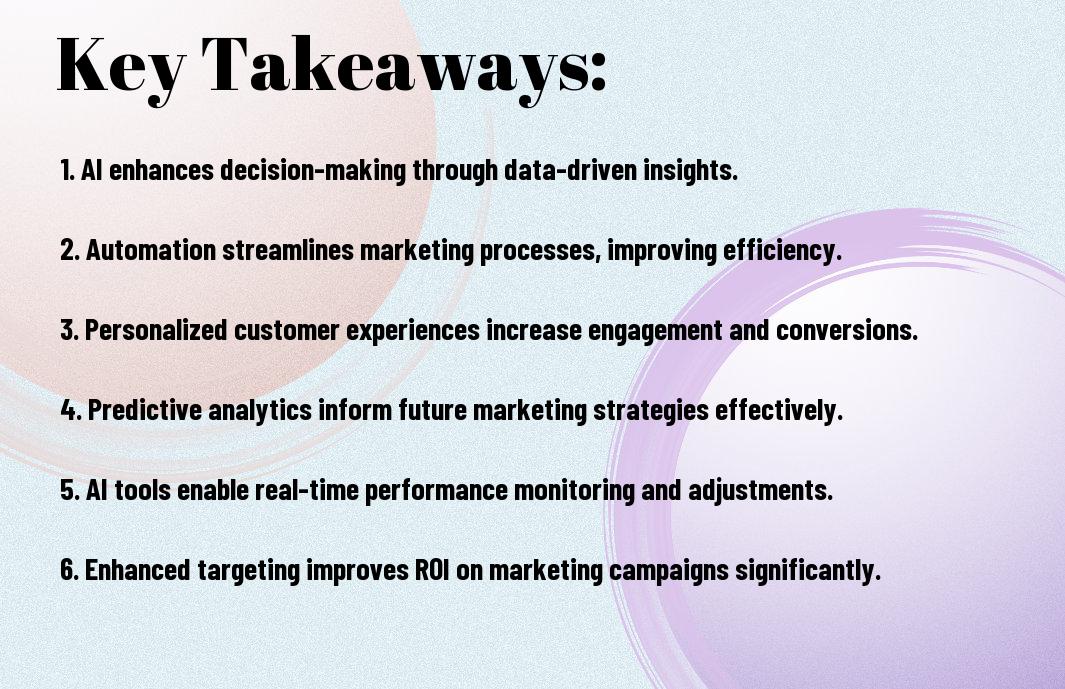
Key Takeaways:

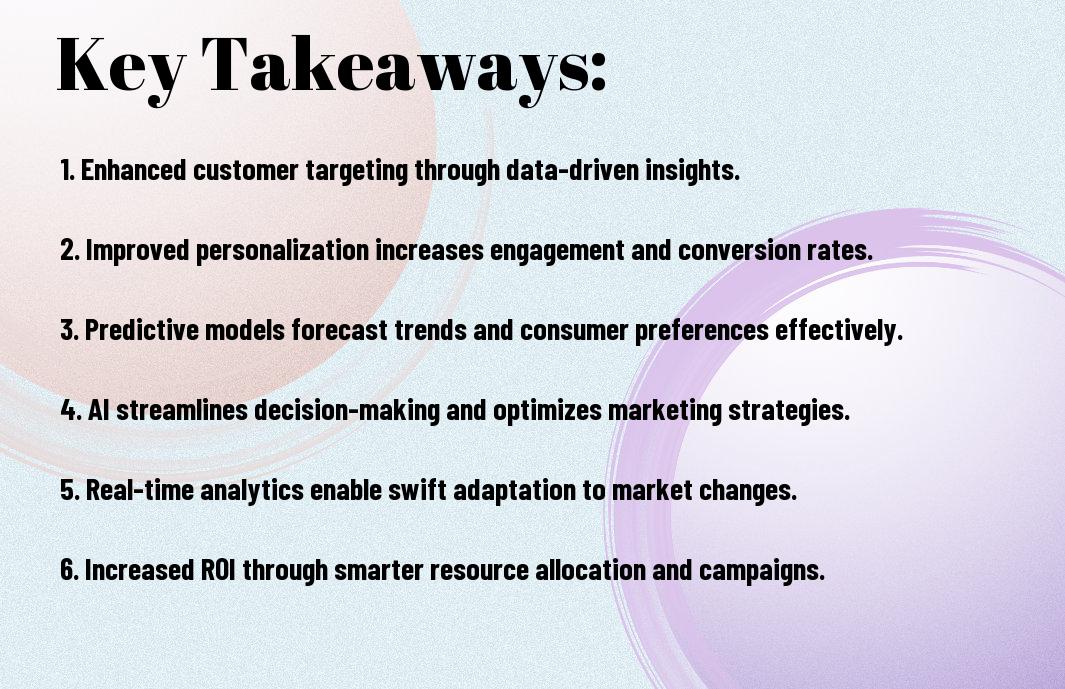
  • The integration of AI in marketing practices has significantly enhanced the ability to automate repetitive tasks, allowing marketers to focus on strategic and creative aspects of their work, thereby increasing overall efficiency and productivity.
  • AI-driven analytics and machine learning algorithms provide marketers with deeper insights into consumer behavior, enabling them to create more personalized and targeted campaigns that resonate with their audience and drive better engagement.
  • The use of AI in marketing also raises important considerations around data privacy and ethics, highlighting the need for marketers to prioritize transparency and accountability in their use of consumer data to maintain trust and credibility with their target audience.

The Evolution of Marketing Automation

A significant shift has occurred in marketing practices, and you are now witnessing the impact of AI on your marketing strategies. As you explore the evolution of marketing automation, you will discover how AI has transformed the way you approach marketing, enabling you to make data-driven decisions and personalize your customer interactions.

Traditional Marketing vs AI-Enhanced Approaches

Markedly, your marketing efforts have changed with the introduction of AI-enhanced approaches, allowing you to target your audience more effectively and measure the success of your campaigns with greater precision, enabling you to refine your strategies and improve your overall marketing performance.

Key Technological Drivers in Marketing AI

Meanwhile, your understanding of marketing AI is influenced by the technological drivers that power it, and as you research deeper, you will find that machine learning, natural language processing, and data analytics are key components that enable you to leverage AI in your marketing practices, enhancing your ability to analyze customer data and create personalized experiences.

For instance, as you explore the capabilities of marketing AI, you will find that machine learning algorithms can help you analyze vast amounts of customer data, identifying patterns and preferences that inform your marketing strategies, while natural language processing enables you to create chatbots and virtual assistants that interact with your customers in a more human-like way, providing personalized support and enhancing their overall experience with your brand.

Data Analytics and Consumer Behavior

Even with the vast amount of data available, you need to leverage it to understand your consumers’ behavior and preferences, enabling you to make informed decisions and drive your marketing strategies.

Predictive Analytics in Customer Journey

Any attempt to analyze customer behavior without predictive analytics will fall short, as you will be able to forecast their actions and personalize their experiences, leading to increased engagement and loyalty.

Real-time Behavioral Pattern Recognition

Journey mapping is vital, but you can take it to the next level by recognizing patterns in real-time, allowing you to respond promptly to changes in your customers’ behavior and preferences.

Behavioral insights gathered through real-time pattern recognition enable you to tailor your marketing efforts to your audience’s needs, creating a more personalized and effective experience, and as you examine deeper into the data, you will uncover new opportunities to optimize your strategies and drive growth.

Personalization at Scale

Many marketers are leveraging AI to deliver personalized experiences, as discussed in The Impact of AI in Marketing: How Automation is Reshaping the Industry. This enables you to tailor your marketing efforts to individual preferences, increasing engagement and conversion rates.

Dynamic Content Generation

One key aspect of personalization is generating content that resonates with your target audience, allowing you to create messages that speak directly to your customers’ needs and interests.

Individual Customer Experience Mapping

With the help of AI, you can create detailed maps of your customers’ journeys, identifying touchpoints and pain points to inform your marketing strategies and improve your overall customer experience.

Experience is at the heart of individual customer experience mapping, as you seek to understand your customers’ thoughts, feelings, and behaviors at every stage of their interaction with your brand, enabling you to craft personalized experiences that meet their unique needs and preferences, and drive long-term loyalty and advocacy for your business.

AI-Powered Marketing Channels

For marketers, AI-powered marketing channels are revolutionizing the way you approach your campaigns, and as you can learn more about The Impact of AI on Marketing: Transforming Strategies and Enhancing Consumer Experiences, you’ll discover new opportunities to optimize your strategies.

Social Media Intelligence

Meanwhile, media platforms are leveraging AI to help you better understand your audience and create more effective social media campaigns, enabling you to make data-driven decisions.

Email Marketing Optimization

Around the clock, AI is working to optimize your email marketing efforts, helping you personalize your messages and improve your conversion rates, allowing you to reach your target audience more effectively.

For instance, with AI-powered email marketing optimization, you can analyze your subscribers’ behavior and preferences, creating targeted campaigns that resonate with your audience, and as a result, you can expect to see significant improvements in your email marketing performance, leading to increased engagement and ultimately, driving more sales and revenue for your business.

Marketing Decision Support Systems

Not surprisingly, you will find that marketing decision support systems are a vital component of your marketing strategy, enabling you to make informed decisions with the help of AI-driven insights and data analysis.

Automated Campaign Management

Prior to implementing AI, you had to manually manage your marketing campaigns, but now you can automate this process, allowing you to focus on higher-level tasks and improve your overall marketing efficiency.

Budget Allocation Intelligence

Automatically, you will be able to optimize your budget allocation with AI-powered marketing decision support systems, ensuring that your marketing spend is being utilized in the most effective way possible to achieve your goals.

Also, as you investigate deeper into budget allocation intelligence, you will discover that AI can help you identify areas where you can cut costs and allocate your budget more efficiently, allowing you to maximize your return on investment and make data-driven decisions to drive your marketing strategy forward.

Privacy and Ethical Considerations

Unlike other aspects of marketing, AI raises significant concerns about your customers’ data and privacy, which you must address to maintain trust and credibility.

Data Protection Frameworks

Among the various measures you can take, implementing robust data protection frameworks is important to safeguard your customers’ sensitive information and ensure compliance with regulations.

Ethical AI Implementation

For your AI systems to be effective and trustworthy, you need to prioritize ethical considerations, such as transparency, accountability, and fairness, in your AI implementation strategies.

Ethical AI implementation involves considering the potential impact of your AI systems on your customers and society as a whole, and taking steps to mitigate any negative consequences, such as bias or discrimination, to ensure that your AI systems align with your values and principles, and you can use them to make informed decisions that benefit your business and your customers.

Final Words

Following this comprehensive overview, you now understand the significant impact of AI on marketing practices. As you continue to navigate the evolving landscape, you can explore The Impact of AI on Market Research and Consumer Insights to further enhance your knowledge. By leveraging AI, you can unlock your marketing potential and drive your business forward with data-driven insights and automation, ultimately transforming your marketing strategy and boosting your brand’s success.

FAQ

Q: What is the role of Artificial Intelligence (AI) in transforming marketing practices?

A: AI is revolutionizing marketing by automating routine tasks, enhancing customer experiences, and providing data-driven insights. With AI, marketers can analyze vast amounts of data, identify patterns, and make informed decisions to optimize their marketing strategies. AI-powered tools enable personalization, predict customer behavior, and help marketers to create targeted campaigns that drive better engagement and conversion rates.

Q: How does AI impact the customer journey in marketing?

A: AI significantly enhances the customer journey by enabling personalized interactions, streamlining customer service, and offering tailored recommendations. AI-powered chatbots and virtual assistants provide 24/7 support, helping customers to find what they need quickly and efficiently. Moreover, AI-driven analytics help marketers to understand customer preferences, behaviors, and pain points, allowing them to create targeted content and offers that resonate with their audience.

Q: What are the key benefits of using AI in marketing analytics and reporting?

A: The key benefits of using AI in marketing analytics and reporting include improved data accuracy, faster insights, and enhanced decision-making capabilities. AI-powered analytics tools can process large datasets, identify trends, and detect anomalies, providing marketers with actionable insights to optimize their campaigns. Additionally, AI-driven reporting enables marketers to track key performance indicators (KPIs) in real-time, making it easier to measure the effectiveness of their marketing efforts and make data-driven decisions.

Q: Can AI replace human marketers, or is it a tool to augment their capabilities?

A: AI is designed to augment the capabilities of human marketers, not replace them. While AI can automate routine tasks, analyze data, and provide insights, human marketers are crucial for strategic decision-making, creativity, and empathy. AI helps marketers to focus on high-value tasks such as strategy development, content creation, and customer engagement, allowing them to work more efficiently and effectively. The collaboration between humans and AI enables marketers to achieve better outcomes and drive business growth.

Q: What are the future implications of AI on marketing practices, and how can marketers prepare for these changes?

A: The future implications of AI on marketing practices include increased use of automation, enhanced personalization, and greater emphasis on data-driven decision-making. To prepare for these changes, marketers should develop skills in AI, machine learning, and data analysis. They should also stay up-to-date with the latest AI trends, technologies, and best practices, and be willing to experiment and innovate in their marketing strategies. By embracing AI and its potential, marketers can stay ahead of the curve and drive business success in a rapidly evolving marketing landscape.

Predictive Analytics In Marketing – The AI Advantage For Anticipating Consumer Behavior

As you navigate the complex world of marketing, you’re likely aware of the importance of staying one step ahead of your competitors. You understand that anticipating your consumers’ needs and behaviors is key to driving sales and growth. With the help of predictive analytics and artificial intelligence, you can now unlock the power of data-driven insights to forecast your customers’ actions, allowing you to make informed decisions and tailor your marketing strategies to meet their evolving needs, giving your business a significant edge in the market.

Key Takeaways:

  • Predictive analytics in marketing enables businesses to anticipate consumer behavior by analyzing historical data and real-time trends, allowing for more effective targeting and personalization of marketing efforts.
  • The integration of Artificial Intelligence (AI) in predictive analytics enhances the accuracy of forecasts, enabling marketers to make data-driven decisions and stay ahead of the competition in a rapidly changing market landscape.
  • By leveraging predictive analytics and AI, marketers can identify high-value customer segments, optimize marketing campaigns, and improve customer engagement, ultimately driving revenue growth and improving return on investment (ROI) for marketing initiatives.

The Evolution of Marketing Analytics

Your understanding of consumer behavior is about to take a significant leap forward with the integration of predictive analytics in marketing, enabling you to anticipate and respond to customer needs more effectively.

Traditional Marketing Methods

The traditional approach to marketing relied heavily on historical data and manual analysis, limiting your ability to respond quickly to changing consumer trends and preferences.

The AI Revolution in Consumer Insights

Against the backdrop of rapid technological advancements, you are now empowered with AI-driven tools that can process vast amounts of data, uncovering hidden patterns and predicting future behavior with unprecedented accuracy.

Indeed, as you probe deeper into the capabilities of AI in marketing analytics, you will discover that it not only enhances your understanding of consumer behavior but also enables you to create highly personalized and targeted marketing campaigns, significantly improving your return on investment and customer engagement metrics, allowing you to stay ahead of the competition in an increasingly complex and dynamic market landscape.

Core Components of Predictive Analytics

While exploring predictive analytics, you’ll discover that it involves several key elements that work together to anticipate consumer behavior, enabling you to make informed decisions and drive your marketing strategy forward.

Data Collection and Processing

For instance, gathering and processing data is vital, as you will be relying on this information to build accurate models and make predictions about your target audience’s behavior, allowing you to tailor your marketing efforts to their needs.

Machine Learning Algorithms

About the algorithms used in predictive analytics, you should know that they play a significant role in analyzing data and identifying patterns, helping you to uncover insights that can inform your marketing strategy and improve your overall customer experience.

It is worth noting that machine learning algorithms can be applied in various ways, such as clustering, decision trees, and regression analysis, enabling you to analyze complex data sets and make predictions about future outcomes, which can be used to optimize your marketing campaigns and improve your return on investment, allowing you to stay ahead of the competition and achieve your business goals.

Consumer Behavior Patterns

To understand your target audience, you need to analyze their behavior patterns, which can be achieved through predictive analytics, enabling you to make informed decisions and stay ahead of the competition.

Digital Footprint Analysis

Across various online platforms, you can collect data on your customers’ digital footprints, including their browsing history, search queries, and social media activities, to gain insights into their preferences and interests.

Purchase Pattern Recognition

An analysis of your customers’ purchase history and behavior can help you identify patterns and trends, allowing you to predict their future purchases and tailor your marketing strategies accordingly, giving you a competitive edge in the market.

Consumer purchase patterns can be complex and influenced by various factors, including seasonal trends, personal preferences, and economic conditions, so when you recognize and understand these patterns, you can develop targeted marketing campaigns that resonate with your audience, increasing the likelihood of conversion and driving business growth, and as you explore deeper into the data, you can refine your strategies to meet the evolving needs of your customers.

AI-Powered Marketing Tools

Once again, you can leverage AI to enhance your marketing strategy, and to learn more about this, you can visit Predictive Analytics: Anticipating Customer Behavior With AI to get insights on how to anticipate consumer behavior.

Recommendation Engines

At this point, you can utilize recommendation engines to suggest products to your customers based on their past purchases and browsing history, allowing you to personalize their experience.

Dynamic Pricing Systems

Between the various AI-powered marketing tools, dynamic pricing systems stand out as they enable you to adjust prices in real-time based on demand and supply.

This allows you to maximize your revenue and stay competitive in the market, as you can respond quickly to changes in demand, ensuring that your prices are always optimal, and you can make data-driven decisions to drive your business forward, ultimately leading to increased profitability and customer satisfaction.

Real-Time Decision Making

Unlike traditional marketing methods, predictive analytics enables you to make informed decisions quickly. You can learn more about Predictive Analytics in Marketing to improve your strategy.

Automated Campaign Optimization

Around the clock, your marketing campaigns can be optimized using predictive analytics, allowing you to target your audience more effectively and increase your return on investment.

Personalization at Scale

An necessary aspect of predictive analytics is personalization, enabling you to tailor your marketing efforts to individual consumers, thereby enhancing their experience and fostering brand loyalty.

Another significant benefit of personalization at scale is that it allows you to analyze vast amounts of consumer data, identifying patterns and preferences that can inform your marketing strategy, helping you to create targeted campaigns that resonate with your audience and drive engagement, ultimately leading to increased conversions and revenue for your business.

Privacy and Ethical Considerations

After implementing predictive analytics in your marketing strategy, you should consider the ethical implications, as discussed in Predictive Analytics in Marketing: Anticipating Customer Behavior with AI, to ensure your methods are transparent and respectful of consumer data.

Data Protection Frameworks

Betwixt the lines of data collection and analysis, you must establish robust data protection frameworks to safeguard consumer information and maintain compliance with regulations.

Consumer Trust Building

The foundation of successful predictive analytics lies in building trust with your consumers, which can be achieved by being open about your data collection and usage practices.

Trust is a key factor in consumer trust building, as you need to demonstrate that you value and protect their personal information, and use it to provide them with relevant and personalized experiences, rather than exploiting it for your own gain, allowing you to foster a loyal customer base and drive long-term growth.

Final Words

The ability to anticipate consumer behavior is now at your fingertips with predictive analytics in marketing. You can leverage AI to analyze your data and make informed decisions. Your marketing strategies will become more effective, allowing you to stay ahead of the competition. You will be able to personalize your approach, increasing the likelihood of successful campaigns and driving business growth. By embracing predictive analytics, you will unlock new opportunities and take your marketing to the next level.

FAQ

Q: What is Predictive Analytics in Marketing and how does it help in anticipating consumer behavior?

A: Predictive Analytics in Marketing is the use of advanced statistical models and machine learning algorithms to analyze historical data and predict future consumer behavior. It helps marketers anticipate consumer needs, preferences, and actions, enabling them to make informed decisions and create targeted marketing campaigns that drive engagement, conversion, and revenue. By leveraging predictive analytics, marketers can identify high-value customer segments, optimize marketing channels, and personalize customer experiences, ultimately gaining a competitive edge in the market.

Q: How does Artificial Intelligence (AI) enhance Predictive Analytics in Marketing?

A: Artificial Intelligence (AI) significantly enhances Predictive Analytics in Marketing by enabling the analysis of large datasets, identifying complex patterns, and making predictions with high accuracy. AI-powered predictive models can process vast amounts of data, including social media, customer feedback, and transactional data, to identify trends and anomalies that may not be apparent through traditional analysis. Additionally, AI-driven predictive analytics can automate many marketing tasks, such as lead scoring, customer segmentation, and campaign optimization, freeing up marketers to focus on strategic decision-making and creative campaign development.

Q: What types of data are used in Predictive Analytics for Marketing, and how is it collected?

A: Predictive Analytics for Marketing uses a wide range of data types, including customer demographic data, transactional data, social media data, customer feedback, and behavioral data. This data is collected from various sources, such as customer relationship management (CRM) systems, social media platforms, customer surveys, and website analytics tools. Additionally, marketers can collect data from external sources, such as market research reports, industry trends, and economic indicators, to gain a more comprehensive understanding of consumer behavior and market dynamics.

Q: How can Predictive Analytics help marketers measure the effectiveness of their marketing campaigns and optimize their marketing strategies?

A: Predictive Analytics helps marketers measure the effectiveness of their marketing campaigns by providing insights into key performance indicators (KPIs) such as conversion rates, customer acquisition costs, and return on investment (ROI). By analyzing these metrics, marketers can identify which marketing channels, campaigns, and tactics are driving the most value and adjust their strategies accordingly. Predictive analytics can also help marketers optimize their marketing strategies by identifying areas of improvement, such as optimizing email subject lines, personalizing content, and refining targeting parameters, to maximize campaign effectiveness and minimize waste.

Q: What are some common challenges and limitations of implementing Predictive Analytics in Marketing, and how can they be overcome?

A: Common challenges and limitations of implementing Predictive Analytics in Marketing include data quality issues, lack of skilled resources, and integration with existing marketing systems. To overcome these challenges, marketers should prioritize data quality and governance, invest in training and upskilling their teams, and ensure seamless integration with existing marketing technologies. Additionally, marketers should start with small-scale pilot projects, focus on high-impact use cases, and continuously monitor and evaluate the effectiveness of their predictive analytics initiatives to ensure maximum ROI and business impact.

Chatbots And Beyond – Exploring The Transformative Effects Of AI On Customer Service

Key Takeaways:
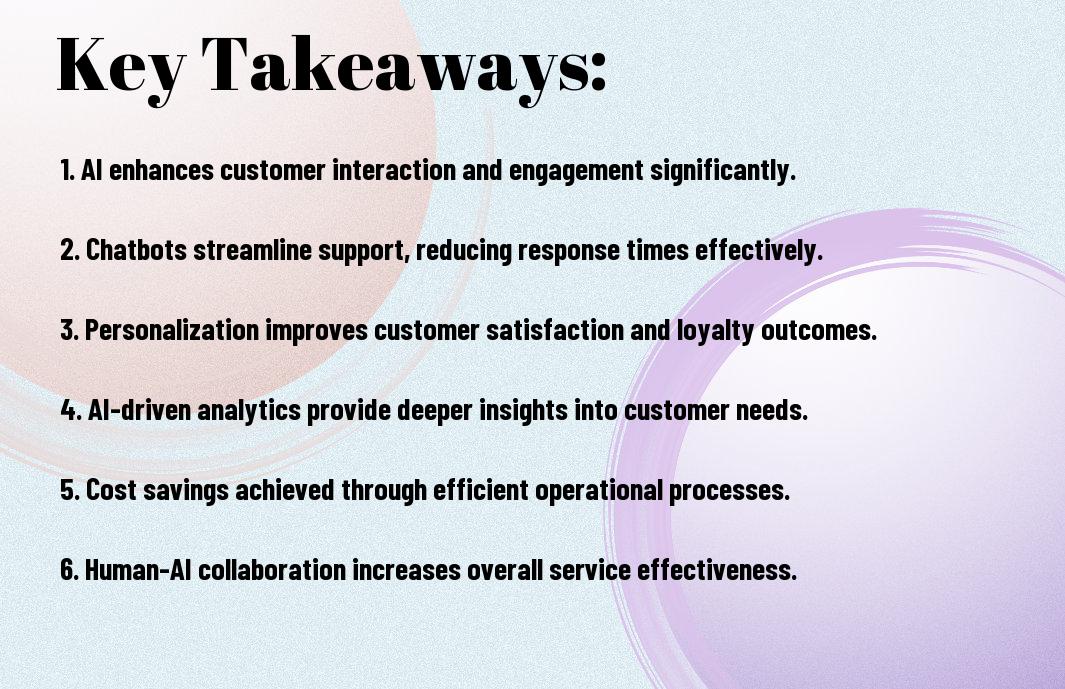
  • Chatbots are revolutionizing customer service by providing 24/7 support, automating routine inquiries, and enabling businesses to handle a high volume of customer interactions efficiently, thereby enhancing the overall customer experience.
  • The integration of AI in customer service is transforming the way companies interact with their customers, offering personalized support, and helping to build stronger relationships through data-driven insights and tailored responses.
  • The future of customer service will likely involve a seamless blend of human and artificial intelligence, where chatbots and human agents collaborate to deliver exceptional service, with AI handling routine tasks and humans focusing on complex, emotionally nuanced issues that require empathy and understanding.

    The Evolution of Customer Service

    While navigating the landscape of customer service, you’ll notice significant changes over the years, driven by technological advancements and shifting consumer expectations, ultimately transforming the way you interact with customers.

    Traditional Customer Support Models

    Around the early days of customer service, you were likely to encounter face-to-face interactions or phone support, which were the primary means of addressing customer inquiries and concerns, limiting your accessibility and efficiency.

    Digital Transformation Wave

    Service delivery has undergone a significant shift with the advent of digital technologies, enabling you to leverage various channels, such as email, chat, and social media, to connect with your customers and provide support, thereby expanding your reach and capabilities.

    It is through this digital transformation wave that you can now automate routine tasks, analyze customer data, and offer personalized experiences, allowing you to streamline your operations, enhance customer satisfaction, and stay competitive in the market, as you continue to adapt to the evolving needs and preferences of your customers.

    Rise of AI-Powered Chatbots

    It is evident that AI-powered chatbots have revolutionized the customer service landscape, enabling you to interact with businesses in a more efficient and personalized manner. You can now expect timely and accurate responses to your queries, making your overall experience more satisfying.

    Natural Language Processing Advances

    Naturally, the development of natural language processing has been a key factor in the success of chatbots, allowing you to communicate with them in a more human-like way. You can express your thoughts and feelings, and the chatbot will understand and respond accordingly, making the interaction more intuitive and user-friendly.

    Machine Learning Integration

    Advancing technology has led to the integration of machine learning in chatbots, enabling you to benefit from more accurate and personalized responses. You can expect the chatbot to learn from your interactions and adapt to your preferences, making the experience more tailored to your needs.

    For instance, as you continue to interact with a chatbot, you will notice that it becomes more proficient in understanding your language and behavior, allowing it to provide more relevant and helpful responses. You will be able to access a more personalized level of service, with the chatbot anticipating your needs and offering solutions before you even have to ask, making your experience more efficient and enjoyable.

    Human-AI Collaboration

    To achieve seamless customer service, you can leverage the power of AI chatbots, as discussed in THE IMPACT OF AI CHATBOTS ON CUSTOMER EXPERIENCE AND LOYALTY, to enhance your support capabilities.

    Redefining Service Roles

    AFTER implementing AI-powered chatbots, you’ll notice a shift in your service roles, as agents focus on complex issues while chatbots handle routine inquiries, freeing up your team to provide more personalized support.

    Skill Adaptation in Modern Support

    ONE key aspect of successful human-AI collaboration is adapting your skills to work effectively with chatbots, ensuring you can provide the best possible support to your customers.

    The ability to work alongside AI systems will become imperative for you, as you develop skills to analyze data, identify patterns, and make informed decisions to improve your customer service, ultimately enhancing your overall support experience.

    Personalization Through AI

    After implementing AI in your customer service, you can expect a significant shift towards personalized experiences, allowing you to cater to individual customer needs more effectively.

    Data-Driven Customer Insights

    With access to vast amounts of customer data, you can gain valuable insights into their behavior and preferences, enabling you to tailor your services to meet their unique requirements.

    Predictive Service Solutions

    By leveraging AI-powered predictive analytics, you can anticipate customer issues and provide proactive solutions, enhancing their overall experience and fostering loyalty.

    Considering the capabilities of predictive service solutions, you can take your customer service to the next level by identifying potential problems before they arise, and offering targeted support to address them, ultimately leading to increased customer satisfaction and retention, as you continue to refine your services to meet their evolving needs.

    Beyond Text-Based Interactions

    Not limited to just text, AI-powered customer service is evolving to include more interactive and immersive experiences, allowing you to engage with customers in new and innovative ways, enhancing your overall customer service strategy.

    Voice-Enabled AI Assistants

    Textlike conversations are now possible with voice-enabled AI assistants, enabling you to offer your customers a more natural and intuitive way to interact with your brand, using voice commands to access information and services.

    Multi-Channel Integration

    About the various channels you use to interact with your customers, you can now integrate them seamlessly, allowing you to provide a consistent and cohesive experience across all platforms, from social media to messaging apps and more.

    It is worth noting that multi-channel integration enables you to manage all your customer interactions from a single platform, giving you a unified view of your customer’s journey and allowing you to respond promptly to their queries, regardless of the channel they use to contact you, thereby enhancing your customer service capabilities and improving your overall customer experience.

    Impact on Business Metrics

    Despite the initial investment, AI-powered chatbots can significantly improve your business’s bottom line by reducing operational costs and enhancing customer experience, ultimately leading to increased revenue and growth.

    Cost Efficiency Analysis

    On the financial side, you will notice a substantial reduction in costs associated with customer service, as chatbots can handle a large volume of inquiries without requiring additional staff or infrastructure, allowing you to allocate resources more efficiently.

    Customer Satisfaction Metrics

    Among the key performance indicators, you will likely see an improvement in customer satisfaction rates, as chatbots provide 24/7 support, quick response times, and personalized interactions, enabling you to deliver a better overall experience for your customers.

    Understanding the impact of chatbots on customer satisfaction metrics is vital to refine your strategy and maximize the benefits of AI-powered customer service. You can analyze metrics such as resolution rates, response times, and customer feedback to identify areas for improvement and optimize your chatbot’s performance to meet your customers’ evolving needs and expectations, ultimately driving loyalty and retention for your business.

    Summing up

    To wrap up, you now have a deeper understanding of the transformative effects of AI on customer service. As you explore the potential of chatbots, you can learn more about The Rise of AI-Powered Chatbots: Transforming Customer Service and how it can enhance your business. You will be able to leverage AI to improve your customer service and stay ahead of the curve.

    FAQ

    Q: What are chatbots and how are they changing the customer service landscape?

    A: Chatbots are artificial intelligence (AI) powered computer programs designed to simulate conversations with human users, either through text or voice interactions. They are revolutionizing the customer service industry by providing 24/7 support, automating routine inquiries, and enabling businesses to handle a high volume of customer interactions efficiently. With chatbots, customers can get instant answers to their queries, and businesses can reduce their support costs and improve customer satisfaction.

    Q: How do chatbots use AI to improve customer service?

    A: Chatbots utilize AI technologies such as natural language processing (NLP) and machine learning (ML) to understand and respond to customer inquiries. NLP enables chatbots to comprehend the nuances of human language, while ML allows them to learn from customer interactions and improve their responses over time. This enables chatbots to provide personalized and accurate support, routing complex issues to human customer support agents when necessary. By leveraging AI, chatbots can help businesses provide seamless and efficient customer service experiences.

    Q: What are the benefits of implementing chatbots in customer service?

    A: The benefits of implementing chatbots in customer service are numerous. Chatbots can help businesses reduce support costs, increase customer engagement, and improve response times. They can also provide 24/7 support, freeing human customer support agents to focus on complex and high-value issues. Additionally, chatbots can help businesses gather valuable customer data and insights, enabling them to improve their products and services. Overall, chatbots can help businesses provide better customer service, improve customer satisfaction, and drive business growth.

    Q: Can chatbots completely replace human customer support agents?

    A: While chatbots are capable of handling a wide range of customer inquiries, they are not yet able to completely replace human customer support agents. Chatbots are best suited for routine and straightforward inquiries, while human agents are better equipped to handle complex and emotionally charged issues. Human agents can provide empathy, understanding, and personalized support, which are necessary for building strong customer relationships. However, chatbots can help businesses augment their customer support capabilities, freeing human agents to focus on high-value and complex issues.

    Q: What does the future hold for chatbots and customer service?

    A: The future of chatbots and customer service is exciting and rapidly evolving. As AI technologies continue to advance, we can expect to see chatbots become even more sophisticated and capable of handling complex customer inquiries. We may also see the emergence of new chatbot technologies, such as voice-activated chatbots and augmented reality-powered chatbots. Additionally, businesses will need to focus on integrating chatbots with other customer service channels, such as social media and messaging apps, to provide seamless and omnichannel customer experiences. As chatbots continue to transform the customer service landscape, businesses that adopt and innovate with these technologies will be well-positioned to thrive in a rapidly changing market.

Ethical Considerations – Navigating AI In Marketing For Responsible Practices

As you probe into the world of AI in marketing, you’ll encounter a complex landscape of benefits and challenges. You need to consider the ethical implications of your actions, ensuring your practices are responsible and transparent. According to Smith, A. and Jones, B. (2023) Ethical Considerations in AI-Driven Marketing Strategies, your approach to AI marketing will significantly impact your brand’s reputation and customer trust. You must navigate these considerations to maintain a positive image and foster long-term relationships with your audience.

Key Takeaways:

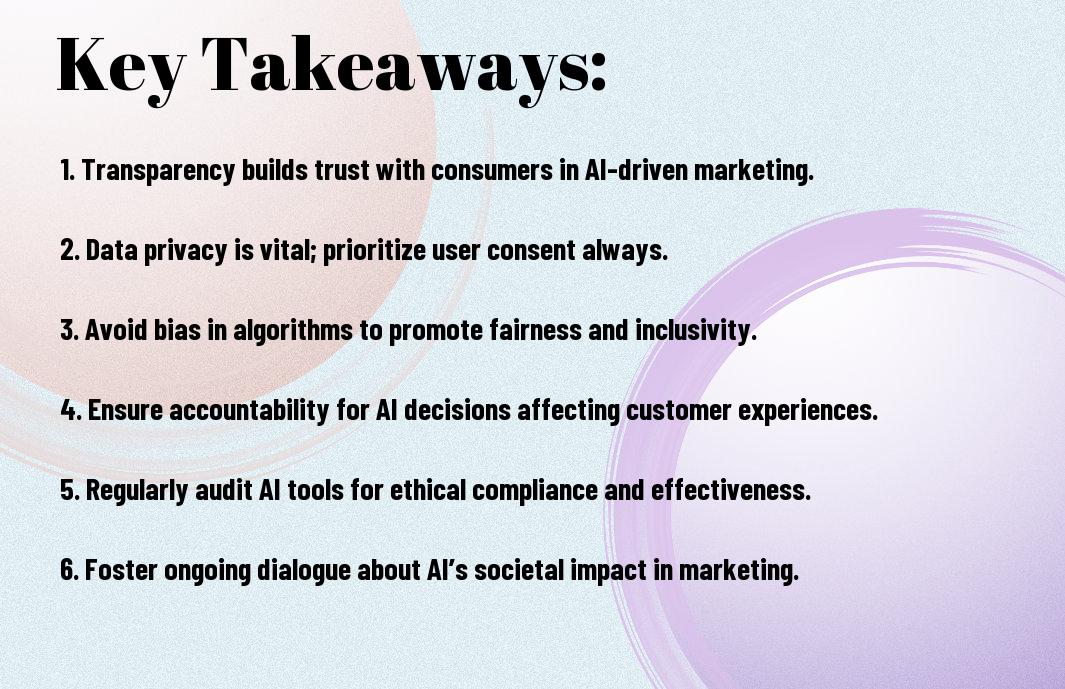
  • As AI becomes more prevalent in marketing, businesses must prioritize transparency and accountability in their use of AI-driven technologies to maintain consumer trust and avoid potential reputational damage.
  • Marketers should be aware of the potential for AI systems to perpetuate biases and discrimination, and take steps to mitigate these risks through regular auditing and testing of their AI algorithms.
  • Effective governance and regulatory frameworks are necessary to ensure that AI in marketing is used in a responsible and ethical manner, and businesses should proactively engage with stakeholders to develop and implement best practices for AI adoption.

    The Digital Ethics Landscape

    A midst the rapid evolution of AI in marketing, you are faced with a complex web of ethical considerations that impact your business and customers. As you navigate this landscape, you must consider the implications of your actions on your audience and the industry as a whole.

    Core Ethical Principles in AI Marketing

    Central to your approach should be a commitment to transparency, accountability, and fairness in your AI-driven marketing strategies, ensuring that you prioritize your customers’ needs and well-being above all else.

    Current Regulatory Framework

    Aligned with the growing use of AI, you will find that regulatory bodies are establishing guidelines to govern the use of AI in marketing, aiming to protect consumers and promote ethical practices.

    To further understand the current regulatory framework, you should familiarize yourself with the existing laws and guidelines that govern AI marketing, such as data protection regulations and consumer protection laws, which will help you ensure that your marketing practices are compliant and ethical, ultimately protecting your business and your customers.

    Data Privacy and Consumer Trust

    Some of the most significant ethical considerations in AI marketing involve data privacy and consumer trust. You must prioritize these aspects to maintain a positive reputation and comply with regulations. Your approach to data collection and protection will directly impact your relationship with customers.

    Transparent Data Collection Methods

    Before implementing any data collection methods, you should ensure that they are transparent and clearly communicated to your customers. You need to inform them about the data you collect, how you use it, and with whom you share it, to build trust and avoid any potential backlash.

    Protection of Personal Information

    Against the backdrop of increasing data breaches, you must take robust measures to protect your customers’ personal information. You should implement stringent security protocols to safeguard sensitive data and ensure that your AI systems are designed with privacy in mind.

    Personal information protection is an ongoing process that requires your constant attention and investment. You should regularly review and update your security measures to stay ahead of potential threats and maintain the trust of your customers, who expect you to handle their data responsibly and keep it safe from unauthorized access or misuse.

    AI Bias and Fairness

    Your marketing efforts can be compromised by AI bias, which can lead to unfair outcomes and damage your brand’s reputation.

    Identifying Algorithmic Bias

    Against the backdrop of increasing AI adoption, you must be vigilant in detecting bias in your algorithms to ensure fairness and equity in your marketing practices.

    Implementing Fair Marketing Practices

    Above all, you should prioritize transparency and accountability in your AI-driven marketing strategies to foster trust with your audience.

    Marketing teams like yours are now expected to take a proactive approach to implementing fair marketing practices, which involves regularly auditing your AI systems for bias, using diverse and representative data sets, and being open about your methods and intentions, allowing you to build a strong foundation for ethical marketing and maintain a positive relationship with your customers.

    Transparency in AI-Driven Marketing

    Not all AI-driven marketing practices are transparent, which can lead to mistrust among your customers. As you navigate the use of AI in marketing, it’s necessary to prioritize transparency to maintain a positive reputation and build trust with your audience.

    Disclosure of AI Usage

    Alongside regulatory requirements, announcing the use of AI in your marketing efforts is vital for transparency. As you develop your AI-driven marketing strategy, you should consider disclosing the role of AI in your marketing practices to your customers.

    Clear Communication with Stakeholders

    Meanwhile, maintaining open communication with your stakeholders is key to successful AI-driven marketing. You should ensure that your stakeholders understand how AI is being used in your marketing efforts and how it may impact them.

    Also, as you communicate with your stakeholders, you will need to provide them with detailed information about your AI-driven marketing practices, including data collection and usage. You should be prepared to address any concerns they may have and provide regular updates on your AI-driven marketing initiatives, ensuring that your stakeholders are informed and aligned with your marketing strategy.

    Social Impact and Responsibility

    Unlike other marketing tools, AI raises unique ethical concerns, and as you navigate its applications, you must consider the broader social implications of your actions, ensuring that your use of AI aligns with your values and promotes responsible practices.

    Community Implications

    Beneath the surface of AI-driven marketing strategies, you’ll find potential effects on local communities, and as you implement these strategies, you should consider how they might impact the people your business serves, taking care to prioritize their needs and well-being.

    Corporate Accountability

    Any organization using AI in marketing must acknowledge the importance of transparency and accountability, and as you develop your AI-driven marketing plans, you should be prepared to address questions and concerns from your audience, maintaining open communication channels to build trust.

    Also, as you explore deeper into corporate accountability, you’ll need to establish clear guidelines and protocols for the use of AI in your marketing efforts, ensuring that your team understands the ethical boundaries and is equipped to make informed decisions that align with your company’s values and mission, ultimately protecting your brand’s reputation and fostering a positive relationship with your customers.

    Risk Management

    After implementing AI in your marketing strategy, you must consider the potential risks involved, ensuring that your practices are responsible and ethical, and that you are prepared to address any issues that may arise.

    Ethical Risk Assessment

    Between the benefits and drawbacks of AI in marketing, you need to conduct a thorough ethical risk assessment to identify potential pitfalls and develop strategies to avoid them, considering the impact on your brand and stakeholders.

    Mitigation Strategies

    Behind every successful AI marketing campaign is a well-planned mitigation strategy, where you anticipate and prepare for potential risks, ensuring that your use of AI is transparent, fair, and respectful of your audience’s rights and privacy.

    But as you research deeper into mitigation strategies, you will find that it involves not only identifying potential risks but also developing a plan to address them, which includes establishing clear guidelines for AI use, monitoring its impact, and being prepared to adjust your strategy as needed to maintain the trust and loyalty of your audience, ultimately protecting your brand’s reputation and ensuring long-term success.

    Final Words

    Hence, as you navigate AI in marketing, you must consider the ethical implications of your actions. You have the power to shape your brand’s values and promote responsible practices. By being mindful of bias, transparency, and data privacy, you can ensure your AI-driven marketing strategies align with your values and respect your audience’s trust. You will ultimately determine the impact of AI on your marketing efforts, so prioritize ethics to build a positive and lasting relationship with your customers.

    FAQ

    Q: What are the key ethical considerations when implementing AI in marketing strategies?

    A: When navigating AI in marketing, it’s important to consider transparency, accountability, and fairness. This includes being open about the use of AI-generated content, ensuring that AI-driven decisions are explainable and unbiased, and avoiding practices that could be deceptive or discriminatory. Marketers must also prioritize data privacy and security, adhering to regulations like GDPR and CCPA to protect consumer information.

    Q: How can marketers ensure that AI-driven marketing practices are fair and unbiased?

    A: To ensure fairness and avoid bias in AI-driven marketing, it’s vital to regularly audit and test AI algorithms for discriminatory outcomes. This involves diversifying training data to include a wide range of demographics and scenarios, as well as implementing human oversight to correct any biases detected. Additionally, marketers should establish clear guidelines and standards for AI development and deployment that prioritize equity and inclusivity.

    Q: What role does transparency play in ethical AI marketing practices?

    A: Transparency is fundamental in ethical AI marketing, as it builds trust with consumers and helps to maintain a positive brand reputation. Marketers should clearly disclose when AI is used to generate content, interact with customers, or make decisions that affect them. This transparency also extends to data collection and usage, with marketers needing to clearly communicate how consumer data is collected, stored, and used in AI-driven marketing efforts.

    Q: How do data privacy regulations impact the use of AI in marketing?

    A: Data privacy regulations, such as the General Data Protection Regulation (GDPR) and the California Consumer Privacy Act (CCPA), significantly impact the use of AI in marketing by imposing strict guidelines on how consumer data can be collected, processed, and used. Marketers must ensure that their AI systems comply with these regulations, obtaining explicit consent when necessary, providing clear opt-out mechanisms, and safeguarding data against unauthorized access or breaches. Compliance with these regulations is not only legally mandatory but also ethically necessary to respect consumers’ rights over their personal information.

    Q: What steps can marketers take to educate themselves and their teams about ethical AI marketing practices?

    A: Marketers can take several steps to educate themselves and their teams about ethical AI marketing practices. This includes participating in workshops and webinars focused on AI ethics, staying updated with the latest research and guidelines from regulatory bodies and industry leaders, and engaging in internal discussions to develop and implement ethical AI policies. Additionally, collaborating with ethical AI experts and advocating for ethical considerations in AI development can further enhance a marketer’s understanding and application of responsible AI practices in their marketing strategies.

Skip to content