Uncategorized

How can affiliate marketing be used to promote an ebook

You have poured your heart and soul into creating an amazing ebook, but now comes the challenge of getting it in front of the right audience. This is where affiliate marketing can be a game-changer for you. By harnessing the power of affiliate partnerships, you can leverage the reach and influence of others to promote your ebook effectively. In this guide, we will explore how you can utilize affiliate marketing tactics to boost your ebook sales and amplify your online presence. Let’s dive in and unlock the full potential of your ebook with affiliate marketing strategies.

Key Takeaways:

  • Targeted audience: Affiliate marketing allows you to reach a specific audience interested in your ebook niche.
  • Increased exposure: By partnering with affiliates, you can expand your ebook’s reach to new audiences across different platforms and channels.
  • Cost-effective promotion: Affiliate marketing is a performance-based strategy, meaning you only pay for actual sales generated through affiliates, making it a cost-effective way to promote your ebook.

The Basics of Affiliate Marketing

What is Affiliate Marketing?

Affiliate marketing is a performance-based marketing strategy where you, as the product owner, partner with affiliates to promote your product in exchange for a commission. These affiliates can be individuals or companies who have an audience that aligns with your target market. They earn a commission for every sale or lead they drive to your ebook. If you want to research deeper into how affiliate marketing can help sell your ebook, you can check out Do You Want to Use Affiliate Marketing to Sell Your E-book?

How Does it Work?

Affiliate marketing works by setting up a system where affiliates are provided with unique tracking links. When they promote your ebook using these links and a sale is made through that link, the affiliate earns a commission. This model is beneficial for you as the product owner because you only pay for the marketing efforts that result in a sale. It’s a cost-effective way to reach a wider audience and increase your ebook sales.

Plus, affiliate marketing can help you leverage the power of influencers and experts in your niche. By partnering with affiliates who have a strong following or authority in your industry, you can tap into their audience and credibility to promote your ebook effectively.

Why Affiliate Marketing is Ideal for Ebook Promotion

There’s a reason why affiliate marketing is considered one of the best strategies for promoting ebooks. Not only does it allow you to reach a wider audience, but it also enables you to specifically target those who are most likely to be interested in your content. By partnering with affiliates who have a strong online presence in your niche, you can leverage their influence to promote your ebook to a highly targeted audience.

Targeted Audience

Targeted audience is important when it comes to promoting your ebook effectively. With affiliate marketing, you can tap into the existing fan base of your affiliates, who have already built trust with their followers. This means that your ebook will be showcased to an audience that is more likely to be interested in your content, increasing the chances of conversions.

Cost-Effective

Promotion of ebooks through affiliate marketing is cost-effective compared to traditional advertising methods. You only pay affiliates a commission for the sales they generate, eliminating the need for upfront advertising costs. This pay-for-performance model ensures that you are only spending money when you see results, making it a budget-friendly option for promoting your ebook.

Plus, affiliate marketing allows you to scale your promotional efforts without incurring additional costs. As you engage more affiliates and expand your reach, you can increase your ebook sales without worrying about escalating advertising expenses.

Measurable Results

With affiliate marketing, you can easily track and measure the performance of your ebook promotion campaigns. Affiliate platforms provide detailed analytics that show you metrics such as clicks, conversions, and revenue generated by each affiliate. This data gives you valuable insights into which affiliates are driving the most sales and which promotional tactics are most effective.

Measurable results are crucial for optimizing your ebook promotion strategy. By analyzing the performance data, you can identify top-performing affiliates, optimize your promotional tactics, and refine your targeting to maximize your sales potential.

Choosing the Right Affiliate Program for Your Ebook

Once again, in order to effectively promote your ebook using affiliate marketing, it is crucial to choose the right affiliate program that aligns with your goals and target audience. Here are some key steps to consider when selecting the perfect affiliate program for your ebook:

Researching Affiliate Networks

Affiliate networks are platforms that connect publishers (affiliates) with merchants who have products or services to sell. Research different affiliate networks to find one that has a good reputation, offers a wide range of products related to your ebook’s niche, and provides tools and support for affiliates.

Selecting Relevant Products or Services

With your ebook in mind, choose products or services that are relevant and complementary to its content. This will make it easier to create engaging promotional materials and increase the likelihood of conversions. For example, if your ebook is about healthy cooking, you could partner with affiliate programs that offer kitchen gadgets or organic food delivery services.

It’s imperative to ensure that the products or services you promote are high-quality and valuable to your audience. By selecting relevant affiliate products, you can build trust with your readers and enhance the overall customer experience.

Evaluating Commission Rates and Terms

Selecting the right affiliate program also involves evaluating the commission rates and terms offered by different merchants. Consider the commission structure, cookie duration, payment schedule, and any additional incentives or bonuses offered to affiliates. You want to choose affiliate programs that provide fair compensation for your marketing efforts and have favorable terms that benefit both parties.

The commission rates can vary widely across different affiliate programs, so take the time to compare and choose ones that offer competitive rates and favorable terms. This will ensure that you are maximizing your earning potential while promoting your ebook effectively.

Creating Effective Affiliate Marketing Campaigns

Crafting Compelling Copy

Creating compelling copy is crucial for attracting potential customers to your ebook through affiliate marketing. Your copy should be persuasive, engaging, and informative. Make sure to highlight the unique selling points of your ebook and clearly communicate the benefits of purchasing it. Use strong calls-to-action to encourage readers to click on your affiliate links and make a purchase.

Designing Eye-Catching Visuals

With the rise of visual content on the internet, designing eye-catching visuals for your affiliate marketing campaigns can significantly boost your ebook’s visibility. Eye-catching graphics, banners, and images can capture your audience’s attention and make them more likely to click on your affiliate links. Visuals that are aligned with your ebook’s branding and messaging can also help establish credibility and trust with your audience.

It is important to ensure that the visuals you create are high-quality, visually appealing, and relevant to your target audience. You can use tools like Canva or hire a graphic designer to create professional-looking visuals that will enhance your affiliate marketing efforts.

Utilizing Social Media and Email Marketing

With the power of social media and email marketing, you can reach a wider audience and drive more traffic to your ebook through affiliate marketing. By leveraging platforms like Facebook, Instagram, Twitter, and LinkedIn, you can promote your ebook to a larger audience and attract potential buyers. Similarly, utilizing email marketing campaigns can help you nurture leads, build relationships with your audience, and ultimately increase your ebook sales.

Marketing your ebook through social media and email marketing allows you to engage with your audience on a more personal level and tailor your promotional messages to their specific interests and needs. By providing valuable content, exclusive offers, and incentives, you can encourage your audience to purchase your ebook through your affiliate links.

Building a Network of Affiliate Marketers

Despite being an effective way to promote your ebook, affiliate marketing relies heavily on building a network of affiliate marketers who can help spread the word about your product. This network is imperative for reaching a wider audience and driving more sales.

Identifying Potential Affiliates

The first step in building your network is to identify potential affiliates who align with your ebook’s target audience. Look for individuals or businesses with a strong online presence, a similar niche, or a large following that would be interested in promoting your ebook.

Recruiting and Onboarding Affiliates

Onboarding new affiliates is crucial for setting them up for success in promoting your ebook. Provide them with all the necessary materials, such as affiliate links, banners, and promotional content, to make it easy for them to start promoting your ebook right away.

Onboarding affiliates also involves educating them about your ebook, your brand, and the benefits of promoting your product. Communication is key during this process to ensure that affiliates feel supported and motivated to promote your ebook effectively.

Providing Ongoing Support and Resources

Identifying ways to support your affiliates throughout their promotional efforts is imperative for the success of your affiliate marketing campaign. Regularly check in with your affiliates, provide them with updated resources and promotional materials, and offer incentives to keep them engaged and motivated.

Marketers who feel supported and valued are more likely to put in the effort to promote your ebook effectively and drive sales. By building a strong network of affiliates and providing ongoing support, you can maximize the impact of your affiliate marketing efforts and see increased success in promoting your ebook.

Tracking and Optimizing Your Affiliate Marketing Efforts

Many successful affiliate marketers understand the importance of tracking and optimizing their efforts to maximize their earnings and ensure the success of their promotional campaigns. Setting up analytics and tracking tools is crucial in monitoring the performance of your affiliate marketing activities and identifying areas for improvement.

Setting Up Analytics and Tracking Tools

Your first step in tracking and optimizing your affiliate marketing efforts is to set up analytics and tracking tools. By using tools like Google Analytics, you can track the performance of your affiliate links, monitor which channels are driving the most traffic and conversion, and gain valuable insights into your audience’s behavior. These tools allow you to make data-driven decisions and adjust your strategies accordingly to achieve better results.

Monitoring Performance and Identifying Areas for Improvement

Analytics tools provide you with crucial data points that can help you monitor the performance of your affiliate marketing efforts. By analyzing metrics such as click-through rates, conversion rates, and average order value, you can identify areas that need improvement. For example, if you notice that a particular affiliate link is not performing well, you can explore why and make necessary adjustments to improve its performance.

Improvement

With the help of analytics tools, you can continuously monitor the performance of your affiliate marketing campaigns and make data-driven decisions to optimize your strategies. By identifying areas for improvement and making necessary changes, you can enhance the effectiveness of your promotional efforts and maximize your earnings from affiliate marketing.

To wrap up

Following this guide, you now have a clear understanding of how affiliate marketing can be used effectively to promote an ebook. By teaming up with affiliates who can reach a wider audience, you can increase visibility and sales of your ebook. Remember to choose affiliates that align with your target audience and offer enticing incentives to motivate them to promote your ebook.

Keep track of your affiliate marketing efforts by monitoring performance metrics and adjusting your strategy as needed. With a well-planned affiliate marketing campaign, you can leverage the power of partnerships to boost your ebook sales and expand your reach in the competitive world of digital publishing. By implementing the tips and techniques outlined in this guide, you can maximize your ebook’s potential and achieve success in the digital market.

Q: How can affiliate marketing help promote an ebook?

A: Affiliate marketing can help promote an ebook by allowing individuals or businesses to earn a commission for driving sales to the ebook. Affiliates promote the ebook through their websites, blogs, social media, or email lists, reaching a wider audience and driving more traffic to the ebook’s sales page.

Q: What are the benefits of using affiliate marketing to promote an ebook?

A: Using affiliate marketing to promote an ebook has several benefits, including reaching a larger audience, increasing brand visibility, driving more traffic and potential customers to the ebook’s sales page, and leveraging the affiliate’s credibility and influence to increase sales and conversions.

Q: How can I set up an affiliate marketing program to promote my ebook?

A: To set up an affiliate marketing program to promote your ebook, you can start by creating an affiliate program with clear terms and commission rates, reaching out to potential affiliates in your niche, providing them with promotional materials and tracking links, and monitoring and optimizing your affiliate program to maximize results and sales for your ebook.


What are some ways to use analytics and metrics to measure the success of ebook promotion campaigns

Success in ebook promotion campaigns hinges on your ability to effectively measure their impact using analytics and metrics. By delving into data such as conversion rates, click-through rates, and download numbers, you can gain profound insights into the performance of your campaigns. Understanding these metrics will allow you to tweak your strategies, optimize your promotions, and ultimately enhance the success of your ebook promotions. In this blog post, we will explore some key ways you can use analytics to measure the effectiveness of your ebook promotion efforts.

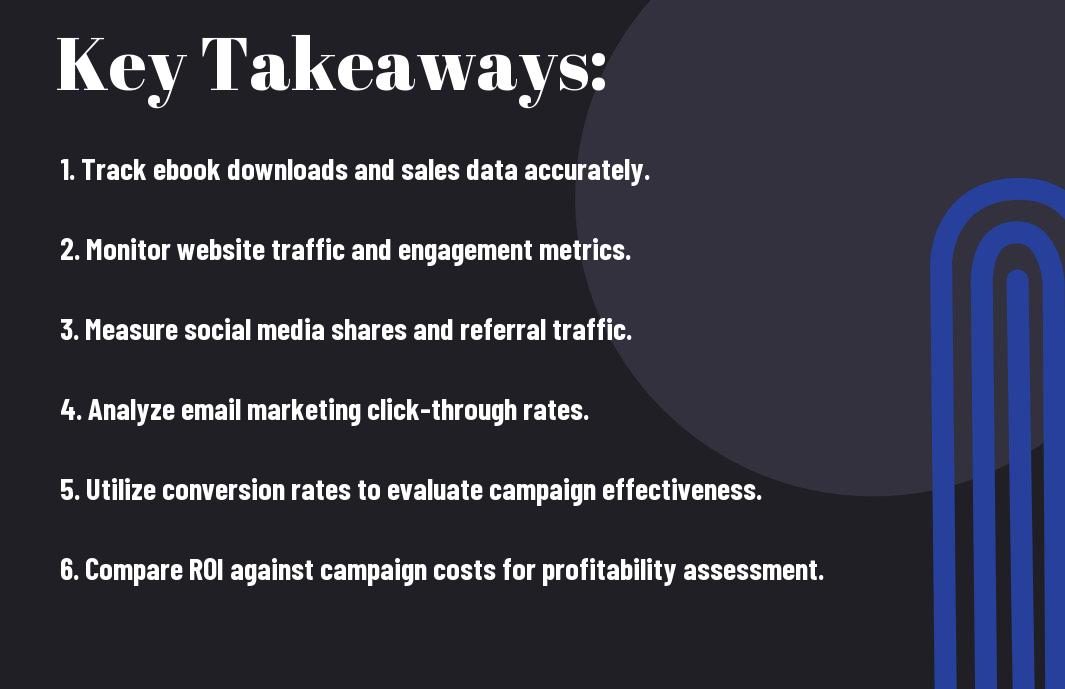
Key Takeaways:

  • Track Conversion Rates: Use analytics to monitor the number of e-book downloads or purchases resulting from the promotion campaign.
  • Utilize Click-through Rates: Measure the effectiveness of the campaign by tracking the number of clicks on the promotional content or links to the e-book.
  • Analyze Engagement Metrics: Look at metrics such as time spent on the e-book landing page, bounce rates, and social media interactions to gauge the level of engagement generated by the promotion.

Setting Goals and Objectives

While initiateing on an ebook promotion campaign, it is crucial to start by setting clear goals and objectives. These goals will guide your efforts and help you measure the success of your campaign. Consider what you aim to achieve with the promotion of your ebook, whether it’s increasing downloads, generating leads, driving website traffic, or boosting sales.

Defining Success Metrics for Ebook Promotion

Goals like increasing brand awareness, expanding your customer base, or gaining authority in your industry can be translated into specific metrics for your ebook promotion campaign. These metrics could include the number of downloads, the conversion rate from downloads to purchases, the increase in website traffic, or the growth in email subscribers.

Identifying Key Performance Indicators (KPIs)

One of the crucial steps in measuring the success of your ebook promotion campaign is identifying the key performance indicators (KPIs) that will help you track progress towards your goals. KPIs are quantifiable metrics that reflect the critical success factors of your campaign. Depending on your goals, KPIs could include click-through rates, conversion rates, social media engagement, or return on investment (ROI).

It is important to choose KPIs that directly align with your objectives and provide valuable insights into the effectiveness of your ebook promotion efforts. By regularly monitoring these KPIs throughout your campaign, you can make informed decisions, optimize your strategies, and drive better results.

Tracking Website Analytics

Google Analytics for Ebook Promotion Campaigns

For your ebook promotion campaigns, Google Analytics is a powerful tool that allows you to track the performance of your website and measure the success of your marketing efforts. By setting up goals and tracking conversions, you can see which promotional tactics are driving the most engagement and ultimately leading to conversions. This data can help you identify what is working well and make informed decisions on where to focus your resources for maximum impact.

Monitoring Website Traffic and Engagement

Monitoring your website traffic and engagement metrics is crucial for evaluating the effectiveness of your ebook promotion campaigns. By analyzing metrics such as page views, bounce rate, and time on page, you can gain valuable insights into how visitors are interacting with your site. This information can help you optimize your website content and user experience to better engage your audience and drive conversions.

Website traffic and engagement are key indicators of the success of your ebook promotion efforts. By regularly monitoring these metrics and making data-driven decisions, you can improve the performance of your campaigns and achieve your marketing goals more effectively.

Measuring Social Media Impact

Once again, social media plays a crucial role in the success of your ebook promotion campaigns. To accurately measure its impact, you need to leverage analytics and metrics effectively.

Social Media Metrics for Ebook Promotion

One of the key metrics to track when it comes to social media promotion for your ebook is the number of clicks and shares your posts receive. This data provides insight into how engaging your content is and how well it resonates with your audience. Additionally, monitoring the number of new followers or likes your social media accounts gain during the promotion period can help you gauge the growth of your online presence.

Analyzing Engagement and Reach

To explore deeper into the effectiveness of your social media promotion efforts, analyze the level of engagement and reach your posts achieve. Engagement metrics such as likes, comments, and shares indicate how actively involved your audience is with your content. Moreover, tracking the reach of your posts reveals how many unique users have seen your content, giving you a sense of your campaign’s visibility and impact.

Ebook promotion campaigns can benefit significantly from a strategic approach to social media measurement. By monitoring the right metrics and analyzing the engagement and reach of your posts, you can gain valuable insights into the effectiveness of your promotional efforts and make data-driven decisions to optimize your strategy.

Email Marketing Metrics

Open Rates, Click-Through Rates, and Conversion Rates

Now, you can measure the success of your ebook promotion campaigns through various email marketing metrics. Open rates tell you how many recipients opened your email, click-through rates indicate how many people clicked on a link within your email, and conversion rates show how many of those clicks led to a desired action, such as downloading your ebook.

Measuring Email Campaign Effectiveness

With email marketing metrics, you can track the effectiveness of your email campaigns over time. By analyzing trends in open rates, click-through rates, and conversion rates, you can see which strategies are working well and which ones may need adjustment. This allows you to optimize your campaigns for better engagement and results.

Campaign monitoring not only provides valuable insights into the performance of your ebook promotion efforts but also helps you make data-driven decisions for future campaigns. By paying attention to these metrics, you can refine your email marketing strategies to reach a wider audience and drive more conversions.

Paid Advertising and ROI Analysis

Measuring Return on Ad Spend (ROAS)

Return on ad spend (ROAS) is a crucial metric that helps you evaluate the effectiveness of your paid advertising campaigns. By calculating ROAS, you can determine how much revenue you are generating for every dollar spent on advertising. To calculate ROAS, divide the revenue generated from the campaign by the total ad spend. A ROAS greater than 1 indicates that the campaign is profitable, while a ROAS less than 1 means you are not generating enough revenue to cover the advertising costs.

Calculating Cost Per Acquisition (CPA)

Cost per acquisition (CPA) is another important metric to consider when analyzing the performance of your paid advertising campaigns. CPA helps you understand how much it costs to acquire a new customer through your advertising efforts. To calculate CPA, divide the total cost of the campaign by the number of new customers acquired. A lower CPA indicates that you are acquiring customers at a lower cost, which is favorable for your business.

Cost per acquisition (CPA) is a key metric in digital marketing that can provide valuable insights into the efficiency and effectiveness of your advertising campaigns. By tracking and analyzing CPA, you can optimize your ad spend, target the right audience, and improve the overall performance of your ebook promotion campaigns.

Customer Behavior and Retention

Analyzing Customer Journey and Behavior

To truly understand the success of your ebook promotion campaigns, you need to explore into the intricacies of customer behavior and journey. Analytics can help you track how customers interact with your promotion – from the moment they first discover it to the point of conversion. By analyzing metrics such as click-through rates, time spent on the promotion page, and conversion rates, you can gain valuable insights into what resonates with your audience and what may need improvement in your campaigns.

Measuring Customer Retention and Loyalty

With the help of analytics and metrics, you can also measure customer retention and loyalty. It’s not just about acquiring new customers through your ebook promotions; it’s equally important to retain existing customers and build loyalty. By tracking metrics like repeat purchases, customer lifetime value, and customer satisfaction scores, you can gauge how well your promotion campaigns are engaging and retaining your audience over time.

Analyzing customer retention and loyalty allows you to see the long-term impact of your ebook promotion campaigns. Are customers coming back for more? Are they turning into loyal advocates for your brand? By keeping a close eye on these metrics, you can fine-tune your campaigns to not only attract new customers but also keep them coming back for more.

Conclusion

As a reminder, using analytics and metrics is crucial to measure the success of your ebook promotion campaigns. By tracking key performance indicators such as click-through rates, conversion rates, and engagement metrics, you can gain valuable insights into the effectiveness of your promotional efforts.

Recall, analyzing the data gathered from these metrics will help you make data-driven decisions to optimize your ebook promotion strategies. By continuously monitoring and adjusting your campaigns based on the insights gained from analytics, you can improve your ROI and achieve greater success in promoting your ebooks to a wider audience.

FAQ

Q: How can analytics and metrics be used to measure the success of ebook promotion campaigns?

A: Analytics and metrics can be used in various ways to measure the success of ebook promotion campaigns. Key performance indicators (KPIs) such as conversion rates, click-through rates, downloads, and sales can provide valuable insights into the effectiveness of the campaign. By tracking these metrics, marketers can gauge the campaign’s impact on driving engagement, generating leads, and ultimately increasing revenue.

Q: What are some specific metrics that can be used to evaluate the performance of ebook promotion campaigns?

A: Some specific metrics that can be used to evaluate the performance of ebook promotion campaigns include:

  • Conversion Rate: The percentage of users who take a desired action, such as downloading the ebook or making a purchase, after engaging with the campaign.
  • Click-Through Rate (CTR): The percentage of individuals who click on a link or call-to-action within the campaign.
  • Downloads: The number of times the ebook is downloaded by users.
  • Sales: The number of ebook sales directly attributed to the campaign.

These metrics can help marketers assess the campaign’s performance and make data-driven decisions to optimize future promotional efforts.

Q: How can A/B testing be utilized to improve the effectiveness of ebook promotion campaigns?

A: A/B testing, also known as split testing, can be a valuable tool for optimizing ebook promotion campaigns. By creating variations of the campaign (e.g., different ad copy, images, or call-to-action buttons) and testing them against each other, marketers can identify which elements resonate most with their target audience. By analyzing the results of A/B tests, marketers can fine-tune their campaigns to improve conversion rates, click-through rates, and overall performance.

How can cross-promotion with other authors or books enhance the visibility of your ebook

There’s a powerful way to boost the visibility of your ebook – cross-promotion with other authors or books. By collaborating with fellow writers, you can tap into each other’s audiences and reach a wider reader base. When you join forces and promote each other’s work, it not only expands your reach but also builds a sense of community among authors and readers alike. This strategy can drive more traffic to your ebook, increase sales, and create long-lasting connections in the literary world. Discover how cross-promotion can elevate the visibility of your ebook and help you stand out in a crowded market.

Key Takeaways:

  • Expand Audience Reach: Cross-promoting with other authors or books introduces your ebook to a new audience that may not have been previously aware of it.
  • Build Author Connections: Collaborating with other authors for cross-promotion not only benefits your ebook’s visibility but also helps in establishing valuable connections within the writing community.
  • Enhance Credibility: Partnering with well-known authors or books can lend credibility to your own work, making it more attractive to readers who trust the judgment of those authors.

The Power of Community

Building relationships with fellow authors

The community of writers can be a powerful ally in promoting your ebook. By building relationships with fellow authors, you can tap into each other’s networks and reach a wider audience. Support and collaboration within the writing community can lead to cross-promotional opportunities, where you can showcase each other’s work to your respective fan bases.

Joining online writing communities and forums

Forums and online writing communities are valuable resources for ebook authors looking to enhance their visibility. By joining these platforms, you can connect with like-minded individuals, share insights, and participate in promotional activities. These communities often have dedicated threads or spaces for authors to promote their work, providing you with a targeted audience interested in ebooks.

This engagement not only helps in promoting your ebook but also allows you to learn from others, seek advice, and stay updated on the latest trends in the ebook market. Recall, the writing community is a two-way street – by actively participating and contributing, you can also support your peers in their promotional efforts.

Identifying Compatible Partners

Researching authors with similar genres or audiences

Little did you know that finding the right partners for cross-promotion can significantly boost your ebook’s visibility. Start by researching authors who share similar genres or target audiences as your book. Identify authors whose writing style and themes align with yours, as partnering with them can attract readers who are interested in your content.

Analyzing their online presence and engagement

With a list of potential partners in hand, the next step is to probe into their online presence and engagement levels. Look at their social media accounts, website traffic, and reader interactions to gauge their reach and influence. Authors with a strong online following and engaged readership can help amplify your ebook’s exposure when you collaborate with them.

Authors with a large following on social media platforms like Twitter, Instagram, or Facebook can introduce your ebook to a wider audience and generate buzz around your book. Additionally, authors who actively engage with their readers through blog posts, newsletters, or online events are more likely to create meaningful connections with their audience, making them valuable partners for cross-promotion.

Strategies for Cross-Promotion

Co-authoring a blog post or article

CrossPromotion with other authors can be an excellent way to expand your audience reach and increase visibility for your ebook. One effective strategy is co-authoring a blog post or article with a fellow writer whose work complements yours. By collaborating on a piece of content, you can both bring your unique perspectives and writing styles to the table, offering readers a fresh and engaging perspective.

Hosting a joint giveaway or contest

Coauthoring a giveaway or contest with another author is a fun and interactive way to attract attention to both of your ebooks. By combining your resources and fan bases, you can create a more enticing prize package that appeals to a wider audience. Consider offering signed copies of your books, exclusive merchandise, or even a virtual meet-and-greet with both authors as incentives for participants.

Hosting a joint giveaway or contest allows you to leverage each other’s networks and increase visibility for your ebooks. It creates buzz around your work and encourages readers to explore both of your writing styles, leading to potential new fans and increased sales.

Participating in a podcast or video interview together

Joint podcast or video interviews are a powerful way to engage with your audience and introduce them to new authors and books. By collaborating on an interview, you can discuss your writing process, inspiration, and upcoming projects while also promoting each other’s ebooks. This interactive format allows you to showcase your personalities and build a connection with listeners or viewers, making them more likely to check out your ebooks after the interview.

Participating in a podcast or video interview together provides a dynamic platform for you to share your passion for writing and connect with a broader audience. It allows you to tap into different fan bases and reach readers who may not have discovered your ebook otherwise.

Leveraging Social Media

Your ebook can greatly benefit from cross-promotion through various social media platforms. By collaborating with other authors or books, you have the opportunity to enhance your visibility and reach a wider audience. Here are some ways to leverage social media for cross-promotion:

Collaborative social media posts and shares

Social media is a powerful tool for authors to connect with their readers and fellow writers. By teaming up with other authors or books in your genre, you can create engaging collaborative posts that highlight each other’s work. This can introduce your ebook to a new set of followers who may be interested in your writing.

Hosting a Twitter chat or Facebook Live session

With a Twitter chat or Facebook Live session, you can engage directly with your audience in real time. By inviting other authors to join you in these discussions, you can attract a larger viewership and promote each other’s ebooks. This interactive approach allows you to showcase your personality, expertise, and ebook simultaneously.

It’s necessary to promote the event beforehand on all social media platforms to build anticipation, and encourage participants to share the event with their followers, further expanding your reach.

Creating a joint Pinterest board or Instagram account

Any visually driven platform like Pinterest or Instagram is perfect for showcasing book covers, quotes, and behind-the-scenes glimpses of your writing process. By collaborating with other authors on a joint board or account, you can curate content that appeals to both your audiences. This not only introduces your ebook to new potential readers but also creates a sense of community among followers.

It’s necessary to maintain consistency in posting and engage with your audience regularly to keep them interested and connected to your collaborative efforts on these platforms.

Content Collaboration

Many authors find that collaborating with other writers can not only be a creatively fulfilling experience but also a strategic way to enhance the visibility of your ebook through cross-promotion.

Writing a joint short story or anthology

With a joint short story or anthology, you and another author can combine your writing styles and fan bases to create a compelling piece of work that showcases both of your talents. By promoting the collaboration to your respective audiences, you can introduce your ebook to a whole new group of potential readers who may be fans of your co-author.

Creating a shared character or universe

Storytelling is a powerful tool that can bring authors together to create a shared character or universe for your ebooks. By intertwining your stories with another author’s, you can build a rich and interconnected world that keeps readers engaged and eager to explore more of your work. This shared universe can lead to cross-promotion opportunities as readers discover new authors and ebooks within the same narrative landscape.

Developing a companion guide or workbook

With a companion guide or workbook, you can offer your readers additional content that complements your ebook and provides them with further value. By collaborating with another author on creating these supplementary materials, you can attract a broader audience interested in your combined expertise and unique insights. This cross-promotion strategy not only increases the visibility of your ebook but also enhances the overall reading experience for your audience.

Developing a companion guide or workbook

The creation of a companion guide or workbook gives readers a deeper insight into your ebook’s themes, characters, and world. By working with another author on this additional content, you can expand the reach of your ebook by tapping into each other’s strengths and attracting a wider range of readers. This collaborative effort can lead to increased visibility and interest in your ebook, driving more sales and engagements.

Maximizing Visibility

Featuring each other’s work on your website or blog

Featuring each other’s work on your website or blog is a fantastic way to cross-promote ebooks and increase visibility. By showcasing fellow authors or books that complement your own content, you create a symbiotic relationship that can attract a wider audience. Whether through guest blog posts, author interviews, or book reviews, you provide mutual support and introduce your readers to new and exciting content.

Sharing behind-the-scenes content and insights

On the other hand, sharing behind-the-scenes content and insights can also be a powerful tool for enhancing visibility. Offering a glimpse into your writing process, inspirations, challenges, and triumphs can deeply engage readers and pique their interest in your ebook. This personal touch creates a connection with your audience and makes your work more relatable and intriguing.

Sharing behind-the-scenes content and insights allows your readers to see the human side of your writing journey. By revealing the inner workings of your creative process, you invite them to be part of your world and establish a deeper connection that goes beyond just reading your ebook.

Offering exclusive content or promotions to each other’s audiences

By offering exclusive content or promotions to each other’s audiences, you can tap into a new pool of potential readers. This mutually beneficial arrangement allows you to reach a broader demographic and leverage each other’s followers. Whether it’s a special discount, a sneak peek of upcoming projects, or a joint giveaway, providing unique incentives can attract attention and drive traffic to both ebooks.

Engaging with each other’s audiences through exclusive content or promotions is a strategic way to expand your reach and generate buzz around your ebook. By offering something special to another author’s followers, you not only attract new readers but also show the value of collaboration in the literary world. This shared experience can lead to increased visibility and a stronger online presence for both parties involved.

To wrap up

Hence, by collaborating with other authors or books through cross-promotion, you can significantly enhance the visibility of your ebook. This strategy allows you to tap into the existing fan base of other authors, reaching a wider audience that may have not been exposed to your work otherwise. Furthermore, by forming relationships with other authors, you can create a supportive community that can help boost each other’s visibility and success in the competitive world of ebook publishing.

FAQ

Q: How can cross-promotion with other authors or books enhance the visibility of your ebook?

A: Cross-promotion with other authors or books can enhance the visibility of your ebook by tapping into each other’s existing fan bases. By collaborating with authors in a similar genre or audience, you can reach a wider audience that is already interested in the type of content you are offering. This can lead to increased exposure, more downloads, and potentially new fans for your ebook.

Q: What are some effective ways to cross-promote your ebook with other authors or books?

A: Some effective ways to cross-promote your ebook with other authors or books include featuring each other’s ebooks on your websites or social media platforms, co-hosting online events or giveaways, writing guest posts for each other’s blogs, or offering bundle deals where readers can purchase multiple ebooks at a discounted price. These collaborative efforts can help increase visibility and attract new readers to your ebook.

Q: Are there any potential challenges to consider when engaging in cross-promotion with other authors or books?

A: Yes, there are potential challenges to consider when engaging in cross-promotion with other authors or books. These can include differences in writing styles, branding conflicts, or disagreements over promotional strategies. It is important to communicate openly with your cross-promotion partners, set clear expectations, and establish mutual goals to ensure a successful collaboration. Additionally, make sure to choose authors or books that align with your target audience to maximize the impact of your cross-promotion efforts.

What are the most effective methods for driving organic traffic to a website

It’s crucial to implement proven strategies to boost organic traffic to your website. By focusing on techniques such as search engine optimization (SEO), creating valuable content, and leveraging social media channels, you can effectively drive more visitors to your site. If you’re looking for more ways to increase your website traffic, check out HubSpot’s article on 30 Ways to Drive Traffic to Your Website for additional insights.

Key Takeaways:

  • Content Marketing: Creating high-quality, valuable content that targets keywords and provides valuable information can attract organic traffic.
  • SEO Optimization: Optimizing website content, meta tags, and images for search engines can improve organic search rankings and drive more traffic.
  • Social Media Engagement: Sharing content on social media platforms, engaging with followers, and participating in discussions can drive organic traffic to a website.

Identifying Your Target Audience

A crucial step in driving organic traffic to your website is identifying your target audience. Understanding who your ideal customers are can help tailor your content and marketing strategies to attract the right visitors to your site.

Defining Your Ideal Customer

An important part of identifying your target audience is defining your ideal customer. Start by creating buyer personas that represent your typical customers. Consider factors such as demographics, preferences, behaviors, and pain points. This information will help you create targeted content that resonates with your audience and drives organic traffic to your website.

Analyzing Competitor Websites

Ideally, analyzing your competitor’s websites can provide valuable insights into their target audience and marketing strategies. By studying their content, keywords, and engagement tactics, you can identify opportunities to differentiate your website and attract a similar audience. Pay attention to the type of content they produce, their social media presence, and the keywords they rank for to inform your own organic traffic strategy.

Targeting your competitors’ audience can be an effective way to drive organic traffic to your website. By identifying what works for them and what gaps exist in their approach, you can tailor your content and marketing efforts to attract and engage those visitors. This strategy can help you stand out in a competitive landscape and capture a share of their organic traffic.

Optimizing On-Page Elements

Crafting Compelling Page Titles

One of the most crucial on-page elements for driving organic traffic to your website is crafting compelling page titles. Page titles are the first thing users see in search engine results, so they need to be attention-grabbing and relevant to the content on your page. Make sure to include relevant keywords in your page titles to improve search engine visibility and click-through rates.

Writing Engaging Meta Descriptions

Crafting engaging meta descriptions is another imperative aspect of optimizing on-page elements. Meta descriptions provide a brief summary of what your page is about, enticing users to click through to your site. Consider including a call-to-action or highlighting unique selling points to encourage users to visit your website.

Compelling meta descriptions can improve your click-through rate, which can positively impact your website’s organic traffic and search engine rankings. Keep your meta descriptions concise, informative, and relevant to attract users and increase engagement on your website.

Optimizing Header Tags and Subheadings

Optimizing header tags and subheadings is key to organizing your content effectively and improving your website’s SEO. Headers not only break up your content into digestible sections for readers but also help search engines understand the structure of your page. Use relevant keywords in your headers and subheadings to signal the main topics of your content to search engines.

Page headers also play a crucial role in improving user experience by providing a clear hierarchy of information on your page. By optimizing your header tags and subheadings, you can enhance the readability of your content and keep visitors engaged on your website for longer periods.

Creating High-Quality, Relevant Content

High-quality, relevant content is the foundation of a successful website that drives organic traffic. Creating valuable and informative content that addresses the needs and interests of your target audience can establish your site as a credible source of information. Make sure your content is well-researched, original, and offers unique insights to captivate and retain your audience.

Subheadings within your content help to break up large blocks of text, making it easier for readers to scan and find the information they are looking for. Utilize subheadings to introduce new sections and guide readers through your content, improving the overall user experience on your website.

Building High-Quality Backlinks

Keep in mind that backlinks are a crucial factor in improving your website’s search engine rankings. By building high-quality backlinks from reputable sources, you can significantly boost your organic traffic. Here are some effective strategies to help you build strong backlinks:

Leveraging Guest Blogging Opportunities

Building backlinks through guest blogging is a classic yet powerful method. By contributing valuable content to high-authority websites in your niche, you can earn quality backlinks that drive traffic to your site. Make sure to choose relevant websites with a good domain authority and focus on providing informative and engaging content that adds value to readers.

Participating in Online Communities

Opportunities abound in online communities such as forums, social media groups, and Q&A sites like Quora. By actively engaging in discussions and providing helpful insights, you can establish yourself as an authority in your field. This credibility can lead to other community members naturally linking back to your website when referencing your expertise.

Plus, actively participating in online communities allows you to connect with like-minded individuals and potential collaborators, opening up more opportunities for building backlinks and expanding your reach.

Utilizing Resource Pages and Broken Link Building

Blogging on resource pages is another effective way to secure quality backlinks. Resource pages are curated lists of helpful websites or tools in a specific industry. By reaching out to website owners and suggesting your content as a valuable addition, you can earn relevant backlinks that drive targeted traffic to your site.

Creating Linkable Assets

HighQuality Creating compelling and informative content that serves as a valuable resource in your niche can attract natural backlinks. By developing linkable assets such as in-depth guides, case studies, or infographics, you provide other websites with valuable content worth referencing. This not only enhances your website’s authority but also drives organic traffic from reputable sources.

Leveraging Content Marketing

Many successful websites drive organic traffic through the strategic use of content marketing. By creating valuable and informative blog posts, you can attract visitors who are searching for relevant information in your niche. Your blog can serve as a hub of knowledge, drawing in users through search engines and providing them with the answers and solutions they seek. To maximize the effectiveness of your blog posts, focus on addressing common pain points, offering unique insights, and keeping your content up-to-date.

Creating Valuable and Informative Blog Posts

Leveraging content marketing involves creating blog posts that not only engage your audience but also provide them with real value. When you consistently produce high-quality, informative content, you establish your website as a go-to resource in your industry. This can lead to increased organic traffic as readers share your posts and search engines recognize your site as an authority on the subject matter.

Utilizing Video Content and Podcasts

Creating video content and podcasts is another effective way to enhance your content marketing strategy. Visual and audio formats can help you reach a broader audience and cater to different learning preferences. Videos and podcasts can be repurposed across various platforms, driving more traffic back to your website. Additionally, these formats can increase user engagement and time spent on your site, which are important SEO factors.

Posts

When utilizing video content and podcasts, remember to optimize them for search engines by including relevant keywords in titles, descriptions, and transcripts. This will make your content more discoverable and improve its ranking in search results, ultimately driving more organic traffic to your website.

Repurposing Content for Social Media

Content repurposing is a powerful strategy that allows you to extend the reach of your original content. By sharing snippets, infographics, or quotes from your blog posts, videos, or podcasts on social media platforms, you can attract new audiences and drive traffic back to your website. Repurposing content also helps you stay visible and top-of-mind with your followers, leading to increased brand awareness and credibility.

Content

When repurposing content for social media, tailor your posts to suit each platform’s unique audience and formatting requirements. This will help you maximize engagement and encourage users to click through to your website for more valuable content.

Measuring Content Performance

Valuable insights can be gained by measuring the performance of your content marketing efforts. By tracking metrics such as website traffic, engagement rates, bounce rates, and conversions, you can determine which types of content are resonating with your audience and driving the most traffic. This data can inform future content creation strategies and help you optimize your website for increased organic traffic.

Informative

For instance, if you notice that your video content is generating more traffic than your blog posts, you may want to focus on creating more videos to attract and retain visitors. By continually analyzing and adjusting your content strategy based on performance metrics, you can ensure that your efforts are driving sustainable organic traffic to your website.

Improving Technical SEO

Despite creating high-quality content and optimizing your on-page elements, your website may still struggle to attract organic traffic if you neglect technical SEO. By focusing on technical aspects, you can enhance your website’s performance and visibility in search engine results pages.

Optimizing Website Speed and Mobile Responsiveness

Any delays in loading your website can lead to higher bounce rates and lower search engine rankings. To improve website speed, optimize images, use browser caching, and leverage content delivery networks. Additionally, ensure your website is mobile-responsive to cater to the growing number of users accessing the internet via mobile devices.

Ensuring Proper Website Architecture

Website architecture plays a crucial role in both user experience and search engine crawlers’ ability to index your site efficiently. A well-structured website with clear navigation and organized content helps users find what they’re looking for and encourages search engines to crawl and index your pages effectively.

Architecture also involves creating XML sitemaps, improving internal linking, and fixing broken links to ensure smooth navigation for both users and search engines.

Implementing SSL Certificates and HTTPS

For improved security and rankings, it is crucial to implement SSL certificates and migrate your website to HTTPS. Secure websites are favored by search engines and users alike, leading to better visibility and trustworthiness in search results.

Website security is necessary in today’s digital landscape, and implementing SSL certificates not only boosts your SEO but also protects your website and users’ data from potential cyber threats.

Monitoring and Fixing Technical SEO Issues

Improving your technical SEO involves regularly monitoring your website for issues such as crawl errors, duplicate content, and broken links. By using tools like Google Search Console and website auditing software, you can identify and fix these issues to ensure your website is performing optimally in search results.

Optimizing technical SEO is an ongoing process that requires attention to detail and a proactive approach to maintaining your website’s health and performance.

Utilizing Social Media and Email Marketing

Building a Strong Social Media Presence

Social media platforms are powerful tools for driving organic traffic to your website. By building a strong presence on platforms such as Facebook, Instagram, Twitter, and LinkedIn, you can reach a larger audience and drive traffic back to your site. To establish a solid social media presence, you should regularly post engaging content, interact with your followers, and participate in conversations within your industry.

Creating Engaging Social Media Content

In terms of social media, creating engaging content is key to capturing your audience’s attention. You need to share content that is not only informative but also visually appealing and shareable. This can include a mix of blog posts, videos, infographics, and interactive posts that encourage likes, shares, and comments.

Social media algorithms prioritize content that sparks conversations and interactions, so make sure your content is designed to drive engagement and foster meaningful connections with your audience.

Leveraging Email Marketing Campaigns

One of the most effective ways to drive organic traffic to your website is through email marketing campaigns. By building and nurturing an email list, you can directly reach your audience’s inbox with targeted content and promotions. Personalized emails and automation can help you deliver the right message to the right people at the right time, increasing the chances of driving traffic to your site.

With email marketing, you can also track the performance of your campaigns, segment your audience based on their interests and behaviors, and continually optimize your strategies to drive more traffic and conversions.

Integrating Social Media and Email Marketing Efforts

Efforts

Integrating your social media and email marketing efforts can amplify the impact of your organic traffic strategies. By strategically cross-promoting your content between social media platforms and email campaigns, you can increase your reach and engagement. Encourage your social media followers to subscribe to your email list for exclusive content, promotions, and updates, and vice versa.

Additionally, by using social media to promote your email campaigns and vice versa, you can create a cohesive marketing strategy that keeps your audience engaged across different channels. This integrated approach can help you nurture leads, drive traffic to your website, and ultimately increase conversions and sales.

Summing up

You now have a good understanding of the most effective methods for driving organic traffic to your website. By consistently producing high-quality content, optimizing your website for search engines, building backlinks from reputable sites, and engaging with your audience on social media, you can increase your website’s visibility and attract more organic traffic.

Be mindful of, organic traffic may take time to build, but with patience and persistence, you can see significant growth in your website’s traffic. Stay up to date with the latest SEO trends and continuously analyze your website’s performance to make necessary adjustments to your organic traffic strategies. By implementing these methods, you can drive more organic traffic to your website and increase your online presence.

Q: What are the most effective methods for driving organic traffic to a website?

A: One of the most effective methods for driving organic traffic to a website is through Search Engine Optimization (SEO). This involves optimizing your website content and structure to improve your visibility in search engine results.

Q: How important is content marketing for driving organic traffic?

A: Content marketing plays a crucial role in driving organic traffic to a website. By creating high-quality and relevant content, you can attract your target audience, increase engagement, and improve your search engine rankings.

Q: Are backlinks important for increasing organic traffic?

A: Yes, backlinks are an important factor in driving organic traffic to a website. Acquiring backlinks from reputable and relevant websites can improve your website’s authority and visibility in search engine results, ultimately driving more organic traffic to your site.

How can pay-per-click (PPC) advertising be used to increase website traffic

There’s a powerful tool at your disposal to boost your website traffic – pay-per-click (PPC) advertising. By strategically utilizing PPC campaigns, you can attract targeted traffic to your site, increase visibility, and ultimately drive more conversions. In this blog post, you will learn how to effectively leverage PPC advertising to enhance your online presence and drive valuable traffic to your website.

Key Takeaways:

  • Targeted Keywords: Choose relevant keywords for your PPC campaign to attract your target audience.
  • Compelling Ad Copy: Create engaging and persuasive ad copy to entice users to click on your ads.
  • Landing Page Optimization: Ensure your landing page is optimized for conversion to maximize the effectiveness of your PPC advertising.

Benefits of PPC Advertising

Increased Online Visibility

To increase your online visibility, PPC advertising can be a powerful tool. By placing your ads strategically on search engine results pages, you can ensure that your website gets in front of potential customers when they are actively searching for products or services you offer. This increased visibility can lead to more traffic to your website, boosting your online presence.

Targeted Audience Reach

Increased targeted audience reach is another key benefit of PPC advertising. With PPC campaigns, you have the ability to target specific demographics, locations, and even behaviors of your potential customers. By tailoring your ads to reach the right audience, you can maximize your chances of converting clicks into valuable leads or sales.

With targeted audience reach, you can ensure that your advertising budget is being spent effectively on reaching those most likely to be interested in your products or services. This focused approach can result in higher click-through rates and better return on investment for your advertising efforts.

Measurable Results

One of the significant advantages of PPC advertising is the ability to track and measure results in real-time. You can easily monitor the performance of your ads, see how many clicks they’re getting, and analyze conversion rates. This data allows you to make informed decisions about your advertising strategy, optimizing your campaigns for better results.

Plus, with PPC advertising, you have access to detailed analytics that can provide insights into consumer behavior, helping you refine your target audience and messaging for even greater success. By continually reviewing and adjusting your PPC campaigns based on measurable results, you can continuously improve your website traffic and overall online presence.

Setting Up a PPC Campaign

Clearly, to drive targeted traffic to your website through PPC advertising, you need to set up a well-structured campaign. If you’re unsure about what PPC advertising entails and how it can boost your website traffic, you can learn more about it in this insightful article on What is PPC (Pay-Per-Click) advertising and how to use it to drive targeted traffic to your website.

Choosing the Right Platform (Google Ads, Facebook Ads, etc.)

With a plethora of platforms available for PPC advertising like Google Ads, Facebook Ads, and more, it’s crucial to choose the one that aligns best with your business goals and target audience. Each platform offers unique targeting options, so consider where your audience is most active and where your ads are likely to perform best.

Defining Target Keywords and Ad Groups

Defining target keywords and creating specific ad groups will help you reach the right audience and improve the performance of your PPC campaigns. When choosing keywords, think about what terms your potential customers are searching for and group them into ad groups based on relevance and search intent.

Google recommends using a mix of broad match, phrase match, and exact match keywords to ensure your ads show up for a variety of search queries while maintaining relevance to the user’s search intent.

Creating Compelling Ad Copy and Landing Pages

To capture the attention of your target audience and drive them to your website, it’s vital to create compelling ad copy and relevant landing pages. Your ad copy should be concise, engaging, and highlight the unique selling points of your products or services. Make sure to include a strong call-to-action that encourages users to click on your ad.

Right landing pages play a crucial role in converting clicks into valuable leads or customers. Ensure that your landing pages are optimized for the keywords you are targeting, have a clear and enticing offer, and provide a seamless user experience from ad click to conversion.

Keyword Research and Optimization

Identifying Relevant Keywords and Phrases

Researching relevant keywords and phrases is the first step in optimizing your PPC ad campaigns. By understanding what your target audience is searching for, you can tailor your ads to appear in front of the right people at the right time. Start by brainstorming a list of keywords that are relevant to your business or industry.

Utilize keyword research tools like Google Keyword Planner, SEMrush, or Ahrefs to expand your list of potential keywords and phrases. Look for keywords with high search volume and low competition to maximize the effectiveness of your PPC campaigns.

Analyzing Competitor Keywords and Ad Strategies

Analyzing your competitors’ keywords and ad strategies can provide valuable insights into what is working in your industry. By identifying the keywords they are targeting and the ad copy they are using, you can uncover new opportunities to improve your own campaigns.

For instance, you can see which keywords your competitors are bidding on and incorporate them into your own campaigns. By studying their ad copy, you can learn from their successes and failures to create more compelling and effective ads for your target audience.

Optimizing Ad Copy and Landing Pages for Keywords

Concerning optimizing your ad copy and landing pages for keywords, it’s imperative to ensure that your messaging is consistent and aligns with the search intent of your target audience. Analyzing the performance of your ads based on the keywords used can help you refine your messaging for better results.

Keywords should be strategically placed in your ad copy and landing pages to improve relevance and quality score, which can lead to higher click-through rates and conversions. By continuously testing and optimizing your ad copy for different keywords, you can refine your PPC campaigns for optimal performance.

Budgeting and Bidding Strategies

Now, let’s look into the crucial aspect of budgeting and bidding strategies when it comes to pay-per-click (PPC) advertising. Setting the right budget and choosing the appropriate bidding strategy are necessary to maximize the effectiveness of your campaigns and drive more traffic to your website.

Setting a Realistic Budget for PPC Campaigns

Realistic budgeting is key to the success of your PPC campaigns. You need to consider how much you are willing to spend on a daily or monthly basis. Start by analyzing your goals and determining the potential return on investment (ROI) you hope to achieve through PPC advertising. By setting a budget that aligns with your objectives and financial capabilities, you can ensure that you are investing wisely in driving traffic to your website.

Choosing the Right Bidding Strategy (CPC, CPA, etc.)

Strategy is crucial when it comes to bidding in PPC advertising. There are various bidding strategies available, such as cost-per-click (CPC), cost-per-acquisition (CPA), and others. Your choice of bidding strategy should be based on your campaign goals and budget. CPC bidding may be suitable if you want to drive more traffic to your website, while CPA bidding can help you focus on generating leads or conversions. Understanding the nuances of each bidding strategy will enable you to optimize your campaigns effectively.

Budgeting and bidding strategies go hand in hand in PPC advertising. By setting a realistic budget and choosing the right bidding strategy for your campaigns, you can ensure that your advertisement spend is utilized efficiently to increase website traffic.

Managing and Optimizing Ad Spend

Any successful PPC campaign requires continuous monitoring and optimization of your ad spend. By analyzing the performance of your ads, adjusting your bids, and reallocating your budget to top-performing keywords or ad placements, you can improve the effectiveness of your campaigns over time. Keep in mind, the key to maximizing your website traffic through PPC advertising lies in effectively managing and optimizing your ad spend.

The management and optimization of your ad spend are ongoing processes that require your attention and strategic decision-making. By being proactive in monitoring and refining your campaigns, you can ensure that your budget is being utilized efficiently to drive traffic to your website and achieve your desired outcomes.

Ad Copywriting and Landing Page Optimization

Crafting Compelling Ad Headlines and Descriptions

All successful pay-per-click (PPC) campaigns start with attention-grabbing ad headlines and compelling descriptions. Your ad copy must be concise, engaging, and relevant to the user’s search query. Bear in mind, you only have a few seconds to capture the user’s attention, so make sure your headlines stand out and entice them to click on your ad.

Creating Relevant and Engaging Landing Pages

On the other end of the click, your landing page plays a crucial role in converting the traffic generated from your ads. Your landing page should deliver on the promises made in your ad and provide a seamless user experience. Make sure your landing page is visually appealing, easy to navigate, and has a clear call-to-action to guide users towards your intended goal.

Another crucial aspect of creating relevant and engaging landing pages is ensuring that the content aligns with the user’s intent. Tailor your landing page content to match the keyword and ad copy that brought the user to your site. This alignment increases the likelihood of conversion by providing users with the information they were expecting to find, ultimately improving your click-through and conversion rates.

Optimizing Landing Pages for Conversion Rates

On top of creating engaging landing pages, optimizing them for conversion is key to maximizing the effectiveness of your PPC campaigns. Test different elements on your landing page such as headlines, images, call-to-action buttons, and forms to see what resonates best with your audience. By continuously testing and optimizing your landing pages, you can refine your approach and increase your conversion rates over time.

Optimization is an ongoing process, so don’t be afraid to experiment and make changes based on data and user feedback. By paying attention to the details and fine-tuning your landing pages, you can create a more impactful user experience that drives higher conversion rates and maximizes the return on your PPC investment.

Tracking and Measuring PPC Success

Setting Up Conversion Tracking and Analytics

Tracking the success of your PPC campaigns is necessary to understand how effectively your ads are driving website traffic and conversions. Setting up conversion tracking and analytics allows you to measure the impact of your PPC ads on your website’s goals, such as form submissions, purchases, or sign-ups. By using tools like Google Analytics, you can track which keywords, ads, and campaigns are generating the most valuable traffic for your website.

Monitoring and Analyzing PPC Metrics (CPC, CPA, etc.)

To gauge the success of your PPC campaigns, you need to monitor and analyze key metrics such as Cost Per Click (CPC), Cost Per Acquisition (CPA), click-through rates, and conversion rates. By closely examining these metrics, you can identify which keywords and ads are performing well and which ones need optimization. Monitoring these metrics regularly allows you to make data-driven decisions to improve the effectiveness of your campaigns.

It’s crucial to understand that each metric provides valuable insights into different aspects of your PPC campaigns. For example, a high CPC may indicate strong competition for certain keywords, while a low conversion rate could signal that your landing page needs optimization to better engage visitors and drive conversions.

Using Data to Optimize PPC Campaigns

One of the most powerful benefits of tracking and measuring your PPC campaigns is the ability to use data to optimize your advertising strategy. By analyzing the data collected from conversion tracking and monitoring PPC metrics, you can make informed decisions to improve the performance of your ads. This may involve adjusting bidding strategies, refining ad copy, or targeting specific audience segments more effectively based on the insights gained from your data analysis.

Metrics such as click-through rates, conversion rates, and return on investment (ROI) can provide valuable feedback on the effectiveness of your PPC campaigns. By continuously monitoring and analyzing these metrics, you can refine your targeting, messaging, and overall PPC strategy to maximize the impact of your advertising efforts and drive more quality traffic to your website.

Common PPC Mistakes and Best Practices

Avoiding Common PPC Mistakes (e.g., poor keyword targeting)

Once again, when it comes to PPC advertising, one of the most common mistakes that can drastically impact the success of your campaign is poor keyword targeting. If you’re not strategic with your choice of keywords, you may end up attracting the wrong audience or fail to reach your target customers altogether. To avoid this, make sure to conduct thorough keyword research and continuously refine and update your list based on performance data.

Implementing PPC Best Practices (e.g., regular campaign optimization)

On the flip side, by implementing PPC best practices such as regular campaign optimization, you can greatly enhance the effectiveness of your advertising efforts. Optimization involves analyzing and adjusting various elements of your campaign, including keywords, ad copy, and landing pages, to ensure maximum performance. By regularly monitoring metrics and making data-driven decisions, you can improve your click-through rates, conversions, and ultimately, your ROI.

Plus, don’t forget the importance of A/B testing different elements of your ads to see what resonates best with your audience. By experimenting with variations in headlines, ad copy, and calls-to-action, you can uncover valuable insights that will inform future campaign optimizations and drive better results.

Final Words

Considering all points, you now understand the power of pay-per-click (PPC) advertising in increasing website traffic. By strategically targeting your ads to the right audience, optimizing your keywords, and continuously monitoring and adjusting your campaigns, you can drive more traffic to your website and potentially convert more visitors into customers. With the right approach and tools, PPC advertising can be a valuable asset in your digital marketing strategy.

Q: What is pay-per-click (PPC) advertising?

A: Pay-per-click (PPC) advertising is a digital marketing strategy where advertisers pay a fee each time their ad is clicked. This is a way of buying visits to your site rather than attempting to “earn” those visits organically.

Q: How can PPC advertising increase website traffic?

A: By using PPC advertising, you can strategically target your ads to reach a specific audience based on factors such as keywords, location, device, time of day, and more. This targeted approach can lead to more relevant traffic to your website, increasing the likelihood of conversions.

Q: What are the benefits of using PPC advertising to increase website traffic?

A: Some benefits of using PPC advertising include immediate results, precise targeting options, measurable results, control over budget and spending, and the ability to track and optimize campaigns in real-time. These factors make PPC a powerful tool for driving high-quality traffic to your website.

Skip to content